Tag: Place

  • When Coming Home

    When Coming Home

    When coming home, let there be time to pause.
    Don’t swap the car-keys for door-keys too soon.
    Don’t exchange memories for a list of chores.
    Let the ‘best of album’ play one more tune.
    Before long, home will nag and make its mark;
    craving the fix, demanding attention.
    Just put the car in park, let the dogs bark;
    float a while in a state of suspension.
    Make what you can of now, sit tight, be still;
    leave the seat-belt buckled, don’t do a thing
    that might burst that bubble and cause a spill
    of action: a boot release… a door swing…
    . The estimated time of arrival
    . should accommodate an end that’s idle.

    © Tim Grace, 2 November 2011


    To the reader: You worked hard. You deserved a break. The lead-up was frantic. Exhausted, you began your vacation. The first few days were a blur. Eventually, time relaxed and you shifted your routine to make the most of new surroundings. The weeks away have been all too good. Refreshed, you turn for home. You arrive. The driveway is all too familiar; the same one you greet after a day of work. Exit with care… danger ahead!

    To the poet: Capturing familiar happenings, as common experiences, should be easy; not so. As familiar, the items and activities in a domestic poem have assumed roles. Even the sequence of events requires a predictable story-board. It’s through mundane depictions that this sonnet finds room for curious comparisons; unexpected twists; and misappropriated phrases. A familiar background is a new window.


    when coming home when coming home
     

  • Things Constructed

    Things Constructed

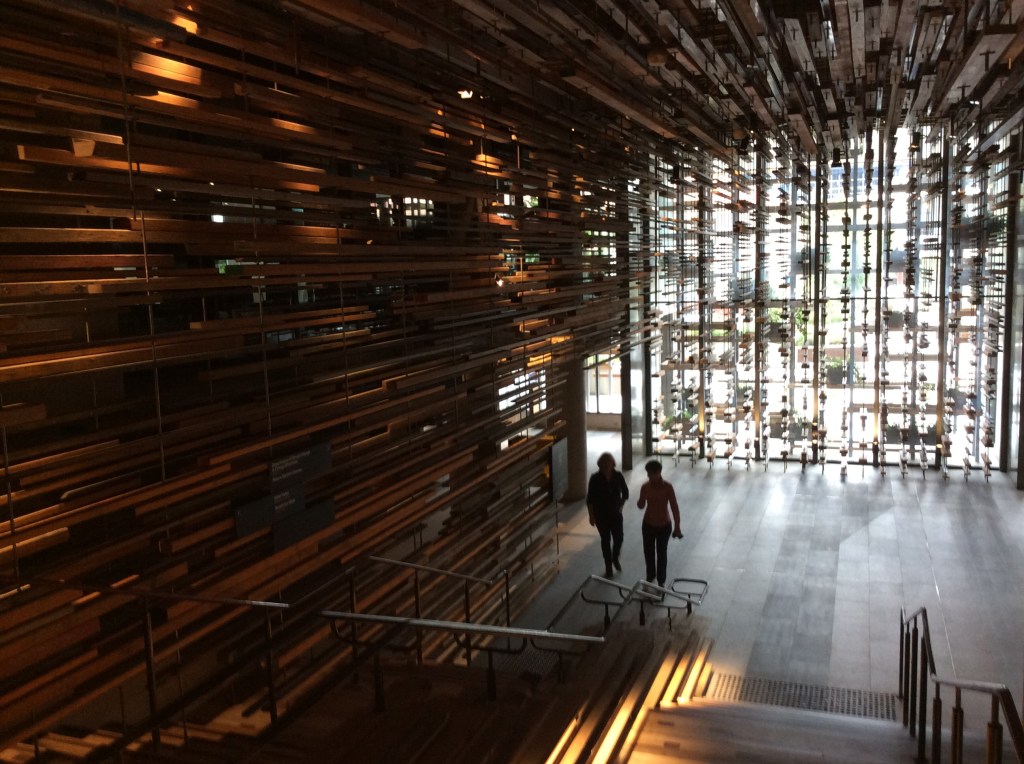
    True to the nature of things constructed,
    this place carries well its form and function.
    Bits combine, as by design, instructed…
    “The finished look is a neat production”.
    Its shapes are solid and its lines are clean,
    there’s strength in its statement, poise in its stance.
    It lends stature to an impressive scene…
    “Rightly deserves an appreciative glance”.
    This place is big and at the same time small,
    it’s a place to visit, or to stay a while.
    It’s imposing, robust, yet comfortable…
    “There’s confidence in its sense of style”.
    . This place extends the obvious line of sight…
    . “It stretches shadows as it plays with light”.

    © Tim Grace, 25 October 2011


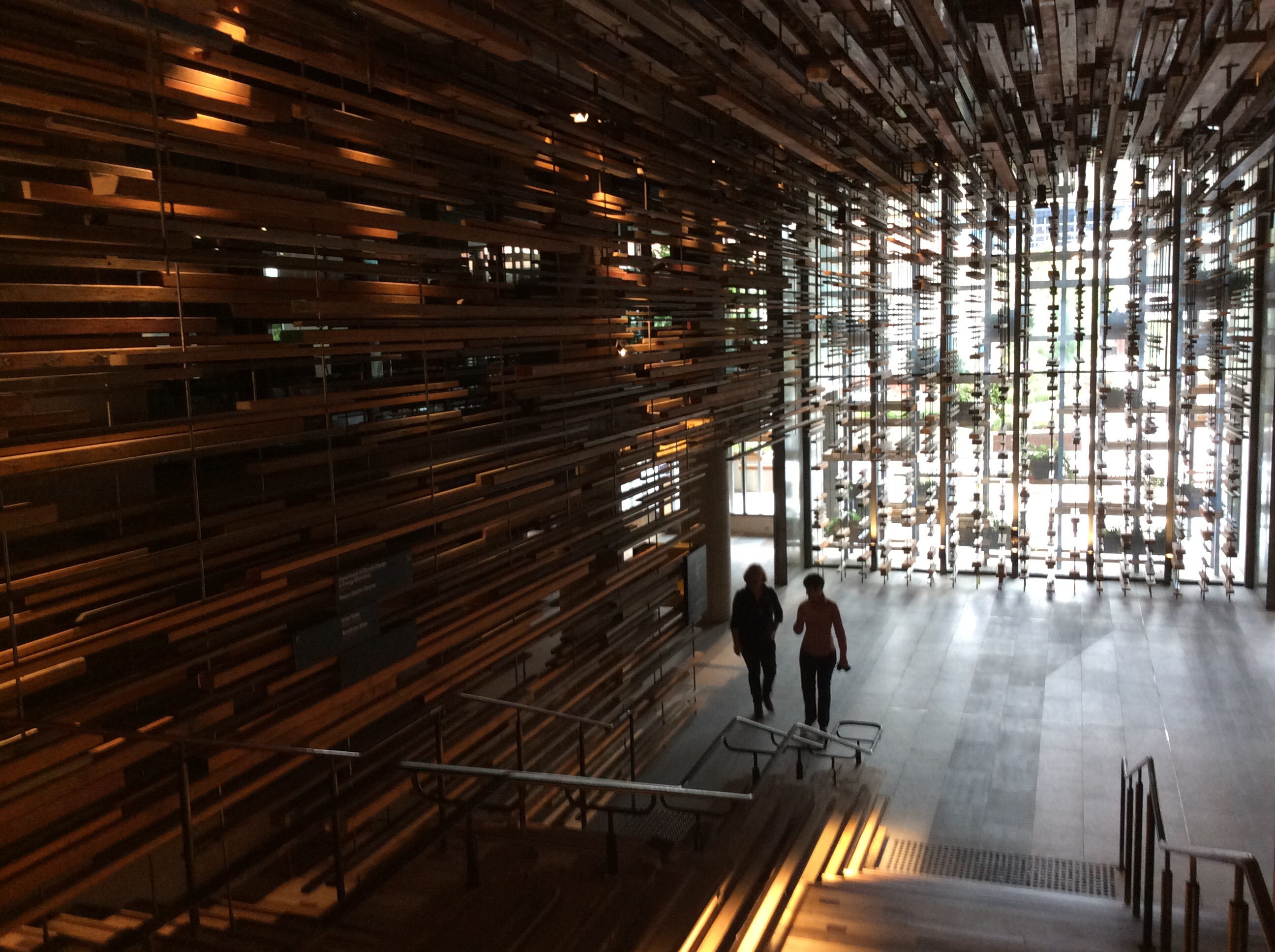
    To the reader: Wow! – that experience of wonderment upon first encountering a massive interior space – “a primal human response”. From cave to cathedral, those upward rising columns produce the dramatic effect of a vaulted ceiling that with supernatural force separate sky from ground – “heaven from earth”. The statement of interior spaces has a powerful impact on behaviour: in the cavern we intermingle with familial groups; in the cathedral we become one of many deferential souls – “in the modern day shopping mall we are the merchants’ river of gold”.

    To the poet: … waiting for a friend to join me. And so, with time to fill, the interior design of where I was had time to impress my appreciation; it was expansive, generous and interesting. Friend arrives, so I share my thoughts… The conversation lent itself to a poetic form of thought-then-statement (not the same as question then answer). The last couplet neatly thinks-then-summarises.


    things constructed things constructed


  • Vague Forms

    Vague Forms

    Behind him lay a field of shattered dreams.
    Dead donkeys, lead balloons and weathered rope.
    Knotted narratives given strangled themes;
    given up as useless and beyond all hope.
    Below him things assembled then dispersed.
    Watercolours washed across his canvas.
    Things happened as things do when unrehearsed;
    and so, moved in accordance with their mass.
    Ahead of him there rose a future tense.
    Vague forms described the shape of things to come.
    Possibilities left an awkward sense.
    The opposable thoughts of a Roman thumb!
    . What to make of this life that comes and goes,
    . of this so fickle life that ebbs and flows?

    © Tim Grace, 19 October 2011


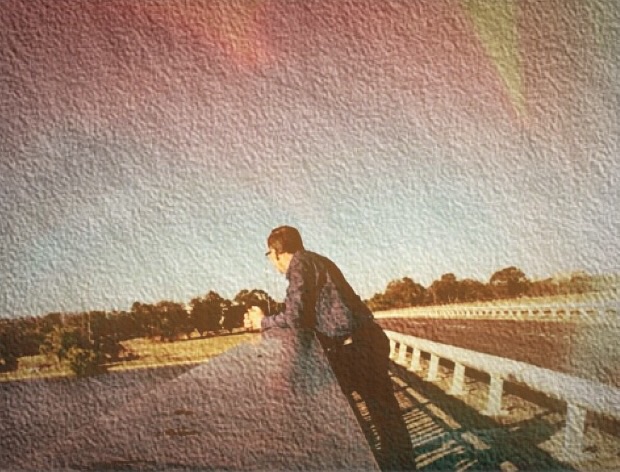
    To the reader: Half a life ago, I drove across the city to an evening of life-drawing classes. I remember the trip as a drive that took me to another time and place. In a few short hours, once a week, I met myself as I’d always imagined I should be; an artist. An amateur artist alive with creativity. The drive there was part of the pleasure. As I crossed a bridge, one evening, I noticed a poised figure – still as a captured photograph: lonely, he stood upon the bridge, to contemplate existence; he looked behind; he looked beneath; he looked into the distance.

    To the poet: I’ve lost all the drawings. The paper yellowed and the charcoal smudged. I remember the physical flow of lines, the sweep of curved forms – foreshortened to compensate for the distortion of perspectives. But most of all, I remember the pleasure of that poem. It hasn’t yellowed. It’s an ever-present reminder of my encounter with a temporal experience; personal but at the same time universal.


    vague forms vague forms


  • Procrastination

    Procrastination

    I think I’ll go and make a cup of tea.
    Not because I need one; it’s more the case
    that it will fill this moment perfectly.
    More the point, that just now I need some space.
    I think I’ll go and strum my old guitar.
    Not that I’m rehearsing a performance,
    perfecting pieces in a repertoire;
    no, it’s more the case I need some distance.
    I think I’ll go and take a pleasant walk.
    A stroll around the garden would be nice.
    Not to tend to patches with spade or fork;
    no need … there are no weeds in paradise.
    . I think I’ll take a little time off task;
    . I’ll take a break and in distraction bask.

    © Tim Grace, 10 October 2011


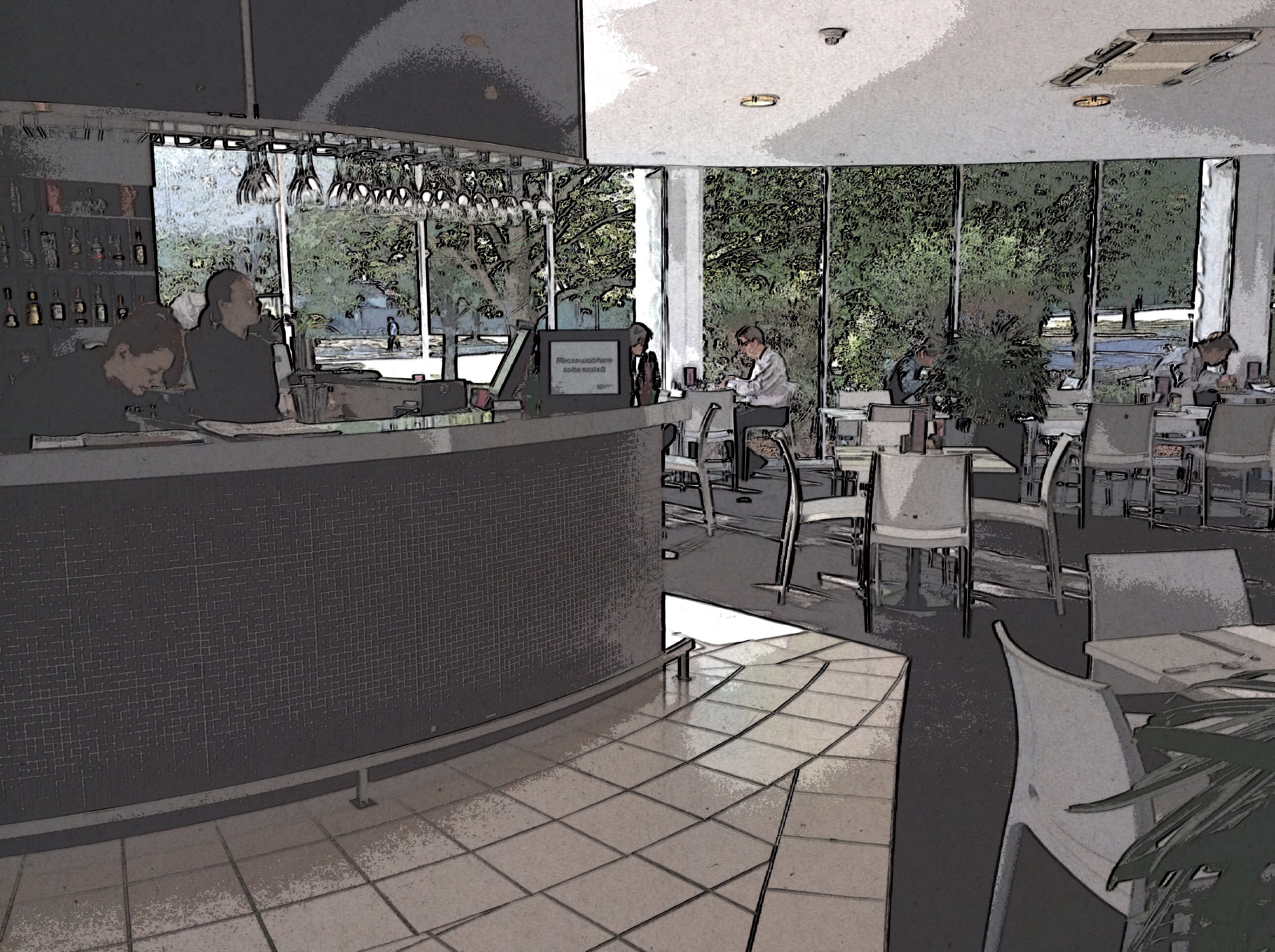
    To the reader: Distraction; a half-deliberate measure, surely that’s procrastination. Allowing yourself to be waylaid, sidelined or set askew is probably not a text-book approach to best-practice delivery. But occasionally, a little time-out can serve your purpose well. The timing of a cup of tea, a musical interlude or a garden walk should be factored into a practical action plan; one that relieves the tedium and drudgery of work.

    To the poet: As a teacher I used to write children’s songs; three verses and a chorus. If the kids were lucky, they got a coda – the tail-end of a song. This sonnet reflects my old habits. Each of the three stanzas follows a predictable pattern; not that I’ve tried, but it’s probably quite easily converted to a rhythmic strum. Don’t be tempted, although the ‘sonnet’ translates from Italian into English as ‘little song’ that’s a trap too easily set; all too predictable.


    image

  • Breakfast

    Breakfast

    Does breakfast make a universal theme?
    Is the smell of toast too sentimental?
    Is one man’s milk just another man’s cream?
    Is it all too light and continental?
    Does breakfast brew the day with full intense?
    What substance from its richness can be drawn?
    What crescendo, what marvel, what essence?
    What potential, what message does it spawn?
    Does breakfast have the fibre, the backbone,
    the spine, the fundamental fortitude
    to steady the course of a rolling stone;
    to sculpt the shape of this day’s attitude?
    . More so than any meal, let breakfast shine,
    . let it feed the spirit and brace the spine.

    © Tim Grace, 7 October 2011


    To the reader: Breakfast is an event as much as it is sustenance. For those who rush the day’s first meal they miss the ritual. The breakfast-room is an old-fashioned concept with enough merit to still exist in the hotel industry. Standards and price differ greatly but in general there are three options: tea & toast; continental; and the full banquet. The occasional ‘big breakfast’ might be warranted but for a poet’s purpose tea & toast is more than sufficient.

    To the poet: Editing poetry requires a thoughtful space, somewhere comfortable and reflective. Re-drafting ‘on the go’ runs the risk of demolishing the poem’s original essence. This sonnet (not a good example) required considerable re-working to pull it into shape. As part of a long sequence it will have to hold its place but it’s hardly delivering the morning-reader much nourishing sustenance; for that I apologise.


    breakfast 1
    breakfast 1


  • Rich with Joy

    Rich with Joy

    Raised on the red dust of the Western Plains,
    this unexpected child of farming stock
    brought with her the hope of September rains;
    the joy of one lamb to a larger flock.
    She weathered seasons of uncertainty,
    faced adversity with dignity and grace.
    She rode a swift horse into modernity.
    Brought new joy to another time and place.
    From new horizons she found much to see:
    a new world to paint, and new songs to sing;
    both she delivered with gusto and glee:
    as brings the flower the colour to Spring.
    . It is not wealth that makes us rich with joy.
    . Better love and grace be our life’s employ.

    © Tim Grace, 25 September 2011


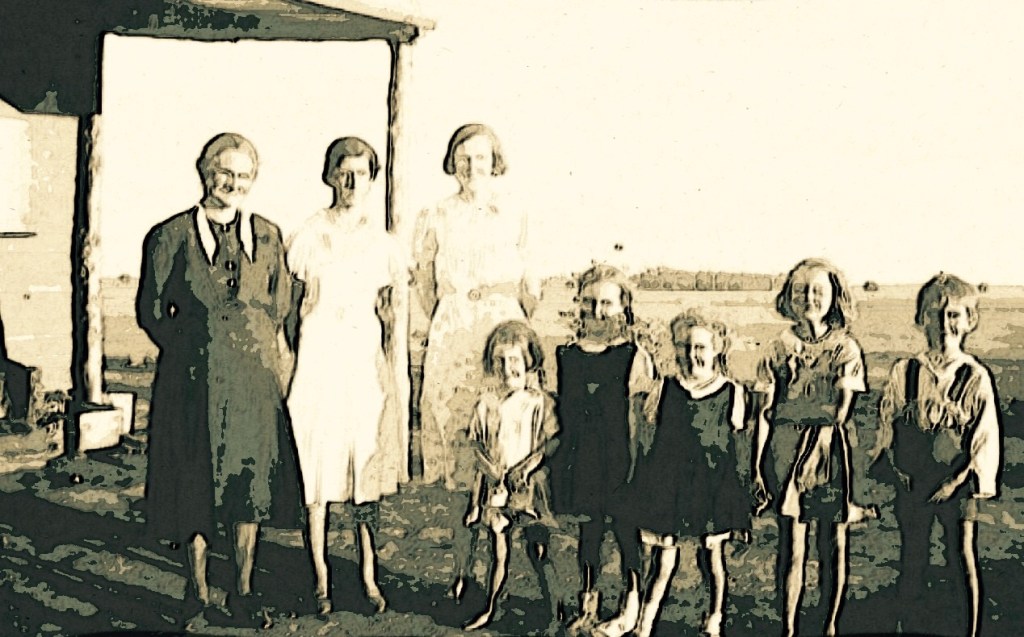
    To the reader: For my mother’s 80th Birthday I wrote this sonnet. Born in 1931, of farming stock she was a child of the depression and the product of subsistence. By war’s end, poorly schooled but well educated, she ventured beyond the strict fundamentals of country life and rode the affluent wave of post-war Australia. For many, not all, the Twentieth Century was lived in two contrasting halves: shadows lifted, chains unshackled, and opportunities arose. Decades on, having lived a full-life, she now looks back with a sense of wholeness; if not completeness.

    To the poet: For the most part we live a scripted existance. Life has a sequence that can be unpacked as history and understood through hindsight. As married to fourteen lines of a sonnet, history and hindsight make quite compatible partners. The trap, ever present, is sentimentality. This poem has an audience beyond my mother and so needs to be personally poignant but meaningful in a general sense. My mother’s name is Joy Grace – you don’t need to know that, but she’ll find herself in the final couplet – a referential trinket; a neat finale.


    rich with joy rich with joy