Tag: sonnet

  • Intensity

    Intensity

    Is intensity a frequency
    Scaled to a pitch?
    Has it got to do with density
    Is it triggered by a switch?
    Is the metaphor electrical,
    So the force is but a buzz,
    Maybe that’s too technical
    And far from what it does.
    Is it chemistry, that holds the key
    To bundling up our nerves?
    What’s the source of energy
    That taps in to reserves?
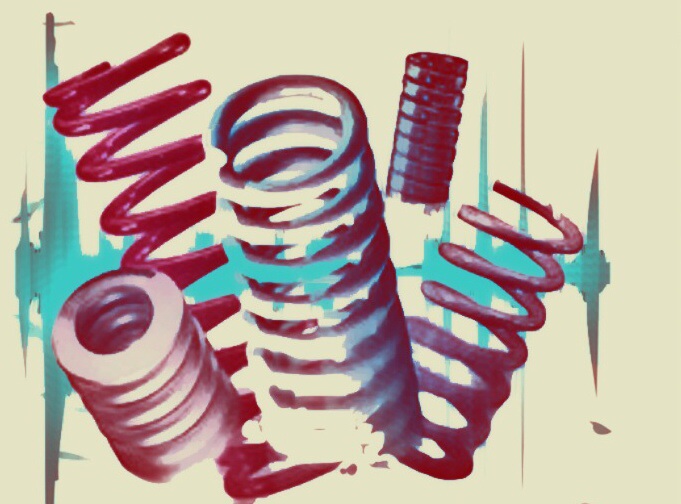
    . Things condense, and things increase,
    . As things in waves, and springs release.

    © Tim Grace, 18 December 2010


    To the reader: Pulling apart an idea, stripping it of meaning, testing its logic; all the stuff of lexical unpacking. It’s what’s done to clarify understanding and guide debate. For the teenage mind, with its ever expanding glossary, the discovery of wordplay is an absorbing pass-time; as driven by dark matter … it has a pervasive attraction.

    To the poet: Not a perfect sonnet, but snippets of it work. The word intensity has a nice syllabic percussion. The self-conscious question of ‘is it?’ (drawn from the letters of intensity) resounds. As a half-posed question ‘is it?’ deserves no answer and consequently receives a series of tentative possibilities. Interesting that the definitive ‘it’ is resolved by ‘things’ in the last couplet.


    intensity intensity
     

  • Square Reminder

    Square Reminder

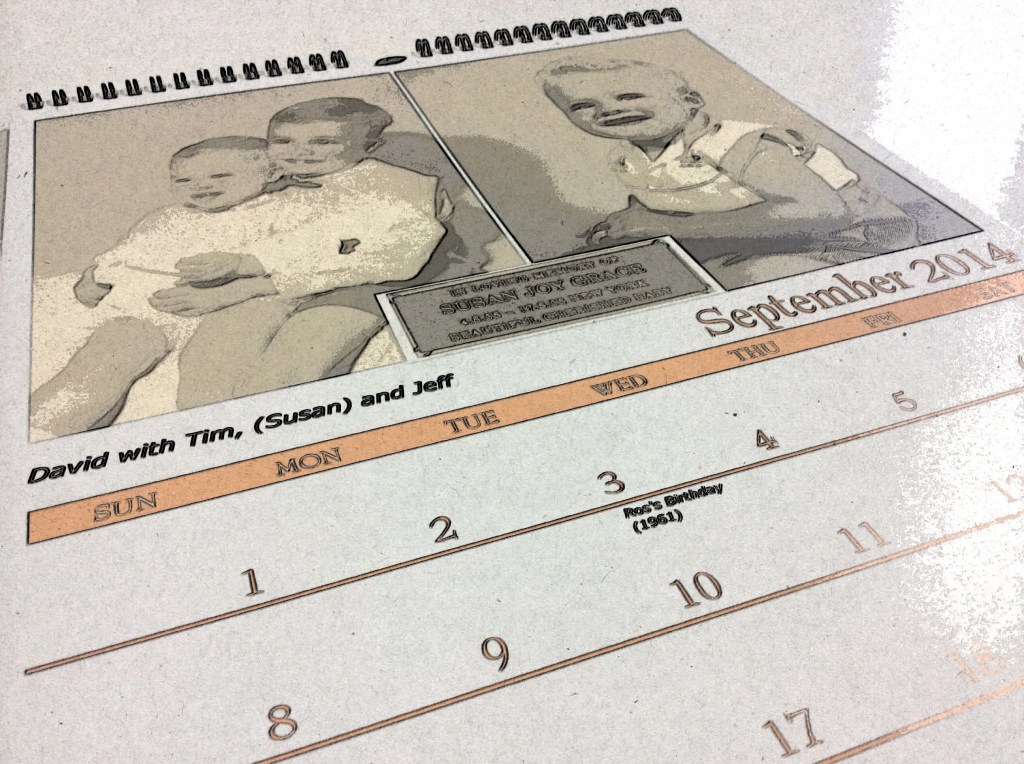
    A calendar, twelve pages long,
    A square reminder of yesteryear,
    Neither script nor song,
    It’s a sketch on a thin veneer.
    Snippets on a month long frame,
    Dates confirmed, appointments missed,
    It’s payday, it’s an insurance claim,
    It’s see the doctor, the vet, the therapist.
    A dozen pages in a sequence of sorts,
    A record of ‘there we go’ and ‘here we come’
    A date from which we anchor thoughts,
    It’s the come again compendium.
    . The hatchings, the matchings, the trouble and strife,
    . The meetings, the greetings, that chronicle life.

    © Tim Grace, 16 December 2010


    To the reader: It’s no mere coincidence that this sonnet was written in mid-December. The Southern Hemisphere’s end-of-year mayhem is compounded by heat and the celebration of Christmas… with not a snowflake in sight. Rather than sliding gracefully from one year to the next we transition with a thud; the continental plates collide, the ground swells, and something has to give. The break comes, and on we go … year after year.

    To the poet: A rapid succession, a concertina; a looming waterfall. This sonnet attempts to capture the compression of time as it careers to a halt. Slow at first, the opening stanza outlines the design of a calendar; beyond the start, the pace of description builds and the phrases shorten. (As an aside I like the rhyming of this sonnet).


    square reminder square reminder


  • Time Is

    Time Is

    Time is a passage, a tunnel,
    That seeds our maturation,
    Time is a direction, a funnel,
    That leads our transformation.
    Time is an altered state,
    Through which dimensions drift,
    Time is a storm that won’t abate,
    It’s the pressure that gives us lift,
    Time is the daily grind, the toil,
    That callouses our skin,
    Time is the fertile ground, the soil,
    Where we plant what we begin.
    . Time is speed over distance,
    . Time is change over difference.

    © Tim Grace, 14 December 2010


    To the reader: The importance of time’s connection with age dawns upon us early in life; an evident grip that strengthens year upon year. My two line poem (age is a barrier, time is its carrier) captures the tension and is well understood by children careering into the teenage years. At once, time is a lost opportunity and a gained potential. The instance of now is too fleeting to offer certainty; and so we become accustomed to change and frustration.

    To the poet: Upon reflection, the neatness to the start of each line is useful in anchoring this sonnet to its theme; referencing itself time after time. This is almost true; but not quite. Just a couple of lines break the rule and it was tempting to adjust them to fit. But, the ‘neatness rule’ (tidy as it is) can also strip a poem of natural character … so I left it as it was.


    time is time is


  • Prattle Scarred

    Prattle Scarred

    Why fight it? The cause is lost,
    They’ll talk until exhausted,
    An exchange of words, wires crossed,
    All reason has been thwarted.
    Empty thoughts spent of use,
    Incessantly dispersed,
    Canons of conversation let loose,
    Loaded barrels burst.
    Incenduries of scattered thought,
    collateral damage hits hard,
    What remains is the odd retort
    The word weary, and the prattle scarred.
    . It’s blood that’s shed, in fields of war,
    . It’s not what’s said, that yields the score.

    © Tim Grace, 10 December 2010


    To the reader: A barrage of words; an incessant round of scattered thoughts … prattle lines are drawn! As a prisoner of words it’s sometimes impossible to withdraw or retreat from the field of discussion; you’re good and captured – well snared. Escape is unlikely, outlasting the word attack is a matter or patience; it will pass but just not soon.

    To the poet:  The play of combative terms was the thrill of this kill. There’s an element of nonsense poetry in the technique. Twisted and contorted phrases are close enough to real to comfortably carry double-barrel meanings. When playing with words the ‘play’ needs to be convincing and controlled; so the aim is steady and the target sure.


    why fight it why fight it


  • Purpose Revealed

    Purpose Revealed

    What’s a possible conclusion,
    What’s a problem yet defined?
    What’s a plausible solution?
    What’s a pattern recombined?
    What’s a process before production?
    What’s a thought before it’s said?
    … a conceptual construction
    tied to a central thread…
    It’s a scaffold, it’s a bridge,
    It’s a design, it’s a build,
    It’s a process, it’s assemblage
    It’s a purpose … so revealed.
    .    An answer defines what’s given … the fixture.
    .    A solution describes what’s needed … the mixture.

    © Tim Grace, 7 December 2010


    To the reader: Between two points there are infinite possibilities. How and why we join dots, bridge gaps and grasp ends indicates a degree of purpose. Understanding our purpose reveals the sharpness of intent and clarifies the nature of activity. There are times when a definitive answer too solidly fixes a problem. Better might have been a softer solution; flexible and adaptable in mix.

    To the poet: Much later, I came back to this sonnet and ironically decided to tighten it up. As a final draft it had far less symmetry and left the reader struggling to find shape and structure. In its current form I may have over-played its pattern; stripped it of variation… left it void of interest. I may have over answered its solution… what’s fixed cannot be mixed.


    purpose revealed purpose revealed


  • Judge or Jury

    Judge or Jury

    To what degree, to what extent?
    To what does it refer?
    Do I agree, do I dissent?
    With what do I concur?
    Am I judge, or am I jury?
    Am I qualified to know?
    Was it grudge, or was it fury?
    Was it justified as so?
    Was it seen, or was it hidden?
    Was it cleverly disguised?
    Had it been forbidden?
    Was it knowingly comprised?
    . Confusion reigns in knots and tangles,
    . And no-one gains when judgement dangles.

    © Tim Grace, 28 November 2010


    To the reader: From confusion and dissent arises argument and in most cases some form of resolution; if not agreement. We’re often confronted with conflicting realities and multi-truths that sit uncomfortably side-by-side. When the distinguishing elements of a decision are to do with ethics there’s a moral dilemma in the making. Good versus good who’s to decide?

    To the poet: As with a babbling brook this poem ripples with small sounds. It has a surface level structure that channels the flow of words through a course of questions. The first twelve lines of the sonnet ask related questions; with an emphasis on the even lines. Following that cascade there comes resolution with the final two lines rounding off in statement; more than answer.


    judge or jury judge or jury