Tag: reading

  • Loosely Applied

    Loosely Applied

    Concrete construction, designer’s despair:
    over-tended landscape, sharp and severe,
    too much exactness, preempted repair;
    nothing left to chance, exhausted idea.
    Made to resemble somewhere else but here:
    rectangled, circled, and ratio-ed square,
    hint of something made transparently clear,
    a misguided homage belongs elsewhere:
    ‘belongs’ – a possessive that’s made to adhere…
    ‘constrained’ – a caught-yard of rarified air…
    ‘suffocated’ – short of depth, too austere…
    ‘made to measure’ – overly shaped with care…
    . The golden rule, best considered a guide;
    . a general frame that’s loosely applied.

    © Tim Grace, 25 August 2013

    To the reader: Great garden designs have an inner quality, a core-strength, an integral thread of inspiration that leaves no doubt about intention. Design has to be a deliberate response to a problem; but more importantly, an authentic and appropriate remedy. The application of a fixed design solution (as in the golden ratio) provides some scaffolded security but overly applied strips away the virtue of design’s natural curiosity; design is an applied art – then a science of sorts.

    To the poet: A poet can fail his own test. As a sonnet written about the over-applied rule, this one goes near to proving the point. A truly responsive design will be so responsive to its context that a distinction of cause and effect will be hard to determine. The environmental need and its fix become one-and-the-same. Nature is the best of all ‘fixers’ it’s also the best of all ‘mimics’ – naturally!

    Loosely Applied
    Loosely Applied
    Picture Source:
    http://youtu.be/aRvzapleXJ4
  • Without Condition

    Without Condition

    He stakes his claim and demands position,
    stipulates his terms and fixes his spot.
    We watch askance, this crude exhibition
    of stubbornness; will he, or will he not?
    Those around him, about his axel spin,
    infantile argument, circular shape,
    centrifugal anger fuelled from within.
    A storm’s eye, vortex, that’s hard to escape.
    He grips tight, pin-points his agitation.
    He asserts his temperament; taciturn.
    Imploding mood centres his rotation.
    With spiralling momentum, so things churn.
    . Stubbornness grips to a fixed position,
    . and so gives no ground without condition.

    © Tim Grace, 24 August 2013

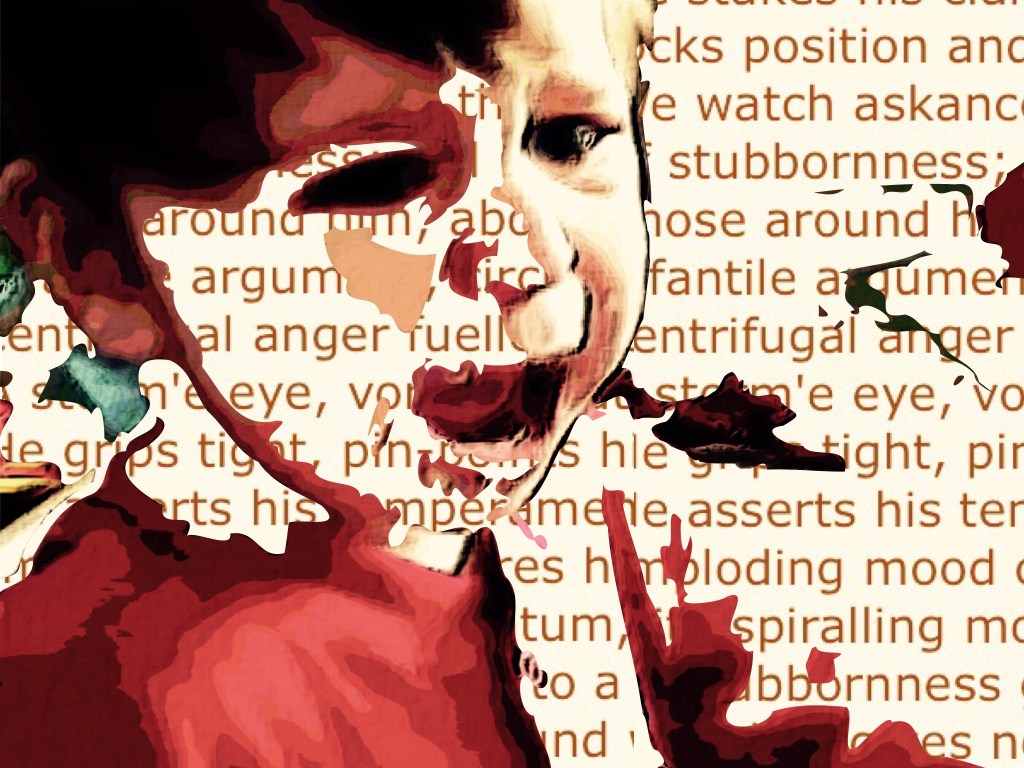
    To the reader: A child’s public tantrum makes an unpleasant scene; psycho-drama writ-large! With crudely-crafted powers of persuasion the toddler tests the strength of new-found tactics; claiming more independent territory with each event. The assertive-aggressive personality matures into an effective form of attention seeking; one that loses its stamp-of-approval with years beyond five or six. The storm quickly brews, tension builds; fury is released – damage is repaired and peace restored… the toddler is tamed!

    To the poet: The public tantrum is no rare occurrence. Little bundles of dynamite regularly ignite; catching those in close-proximity by surprise. With short-wicks these volatile miscreants can derail a train of thought with devastating effect. The passenger-poet is one of many hapless victims. As the wreckage is surveyed, for post-crash forensics, there’s often an unaccounted empty seat … a surrendered supposition.

    Without Condition
    Without Condition
    Picture Source:
    http://youtu.be/OZkRWnXo6YU
  • It was Jack

    It was Jack

    So it was Jack who took the photograph.
    So it was him behind the camera.
    Twas Jack who developed the contoured map.
    Twas him who squared the circles of Canberra.
    It’s through Jack’s lens our city came to light.
    It’s through his eyes our city was revealed.
    Jack of all trades who gave this city sight
    Jack himself citified an open field.
    May not have built the house, but he was there…
    May not have cut the stalks, but so he’d been…
    Jack was at the opening, Jack was at the fair…
    Jack be nimble, Jack be quick … to the scene.
    . What Jack saw yesterday, we see today;
    . Jack’s people at work, Jack’s children at play.

    © Tim Grace, 4 August 2013

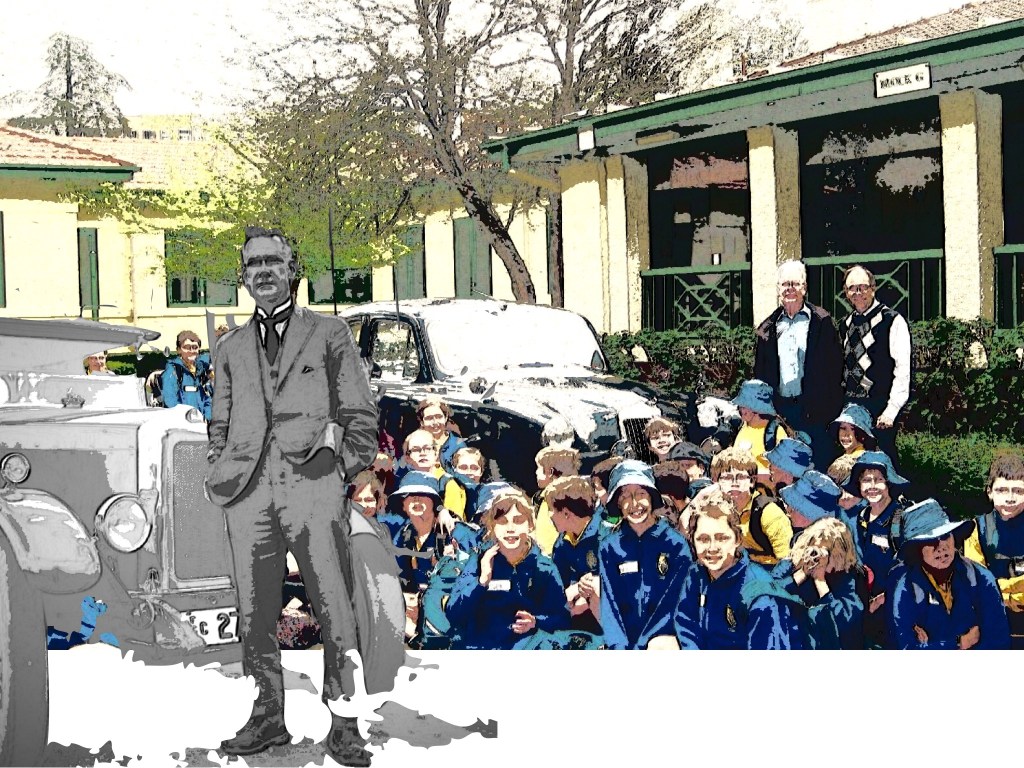
    To the reader: Jack Mildenhall was Canberra’s first official photographer. His active years (1920s and 1930s) captured our social and physical integration into the landscape. In 2013, his vast collection was digitised and put online as part of the city’s centenary activities. For young Canberrans, the Mildenhall Gallery is now an accessible treasure trove of archaic revelations; distantly familiar and curiously connected. The separation of decades has sharpened the contrast of these black and white images.

    To the poet: A teacher’s poem, an advertiser’s jingle…oh no! The temptation to make a story rhyme is sadly irresistible. The trouble is, people are kindly and encouraging; too polite to say stop. And so, with ‘vim and vigour’ we would-be-poets merrily sentence to death a perfectly good story; death by enthusiastic strangulation. With the next rhyme being paramount we lunge desperately to its match; overlooking all other creative courtesies and considerations… that’s nice, but unreadable.

    It was Jack
    It was Jack
  • Sketch of Dawn

    Sketch of Dawn

    Overnight arrival, concealed by dark.
    Uncovered by the scratchy-sketch of dawn.
    Bleak demeanour, drawn as stubborn and stark.
    Bearing the Mistral’s mark; from elsewhere born.
    And so blows the breath of an awkward gust;
    tugs at the rigging with canvas attached;
    agitates, orchestrates a whistling thrust.
    And so throws a whisper; from elsewhere hatched.
    The unknown foreigner, anonymous,
    more shadow than substance; a pirate’s mast
    that bears no scrutiny: Notorious.
    . Best comes the pedigree by light of day.
    . Open to inspection and expose.

    © Tim Grace, 28 July 2013


    To the reader: Built into the fibre and fabric of this nautical replica is a mischievous spirit. I was at ‘the coast’ doing what poets do at sunrise; walking the wharf. And there she appeared … Notorious … a black caravel. Overnight this ‘dark shadow’ had moored itself to the shoreline. As is her habit, she slips the coast of Australia slinking into ports under cover of dark; under pretence of a plundering prank… black comedy?

    To the poet: This poem was written about an experience; a Notorious encounter of sorts. But like so many interesting snippets there’s a larger back-story. While writing the poem I had no idea the ship was built by an Australian, Graeme Wylie, in his backyard, as recuperative therapy. Graeme, a furniture maker by trade, built the Portuguese Caravel by-eye from surplus wood-stock. In a physical sense, the ship is sheer poetry… a compilation of ideas and a floating metaphor.  (reference: http://scienceillustrated.com.au/blog/in-the-mag/vintage/the-mahogany-ship/)


    Sketch of Dawn
    Sketch of Dawn
  • Dust and a Broom

    Dust and a Broom

    ‘Tis one thing to be untaught, ignorant
    of facts and figures; as to be naive.
    Quite another to be belligerent,
    to bludgeon truth and blatantly deceive.
    One can accommodate some innocence,
    show a little slack for lack of nous.
    Such is not the case for arrogance:
    long since the boarder; banished from the house.
    For those with space to wonder, give them keys:
    grant them all access to rooms full of room
    To badgers and bullies who shoot the breeze
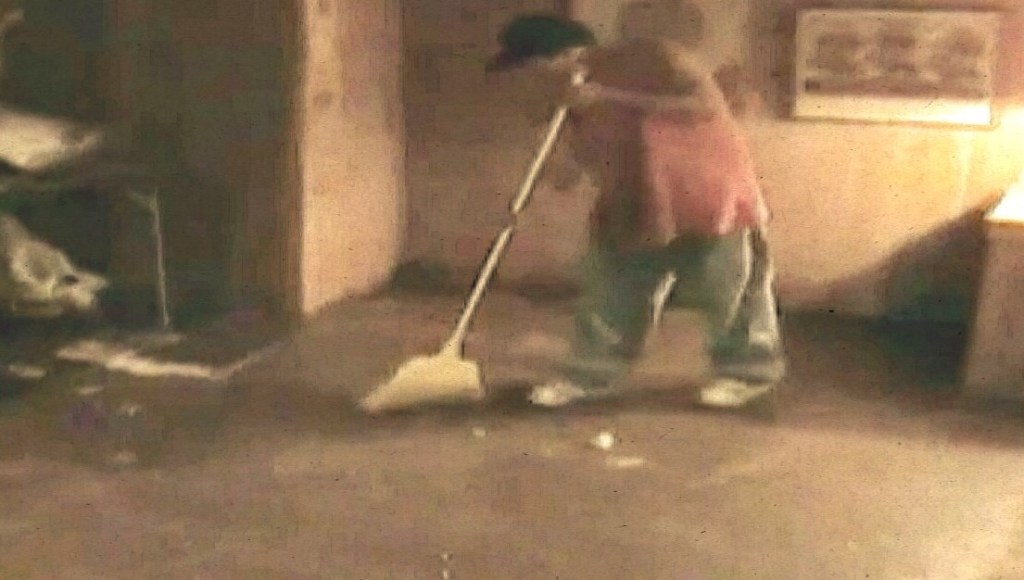
    give to them the basement; dust and a broom.
    . We learn to be wise, to know and believe,
    . to stand in defiance of those who aggrieve.

    © Tim Grace, 14 July 2013


    To the reader: Knowledge without the balance of skills and understanding is as useful as a one-legged stool. Content can not stand alone. Context provides a subject with its reference-point. Our conservative school systems have for decades trained and rewarded the content-collectors to the detriment of children with more broad and practical forms of emotional and social intelligence. The know-all is a renowned nuisance … often a drag on the multi-talented team.

    To the poet: There remain some clunky-lines that hold their place by virtue of adequate fill. In the absence of better content they suffice; for the moment anyway. Otherwise, and after some serious editing, this sonnet has some redeeming features. The context of consonance works well as belligerent emphasis. And I quite-like the line that gives “a little slack for lack of nous”. A poem is more than clever words; for them, we turn to a dictionary; with them, we build vocabulary; for more, we turn to art.


    Dust and a Broom Dust and a Broom
    Picture Source:
    http://youtu.be/FIBOdT86XmI
  • So Be It

    So Be It

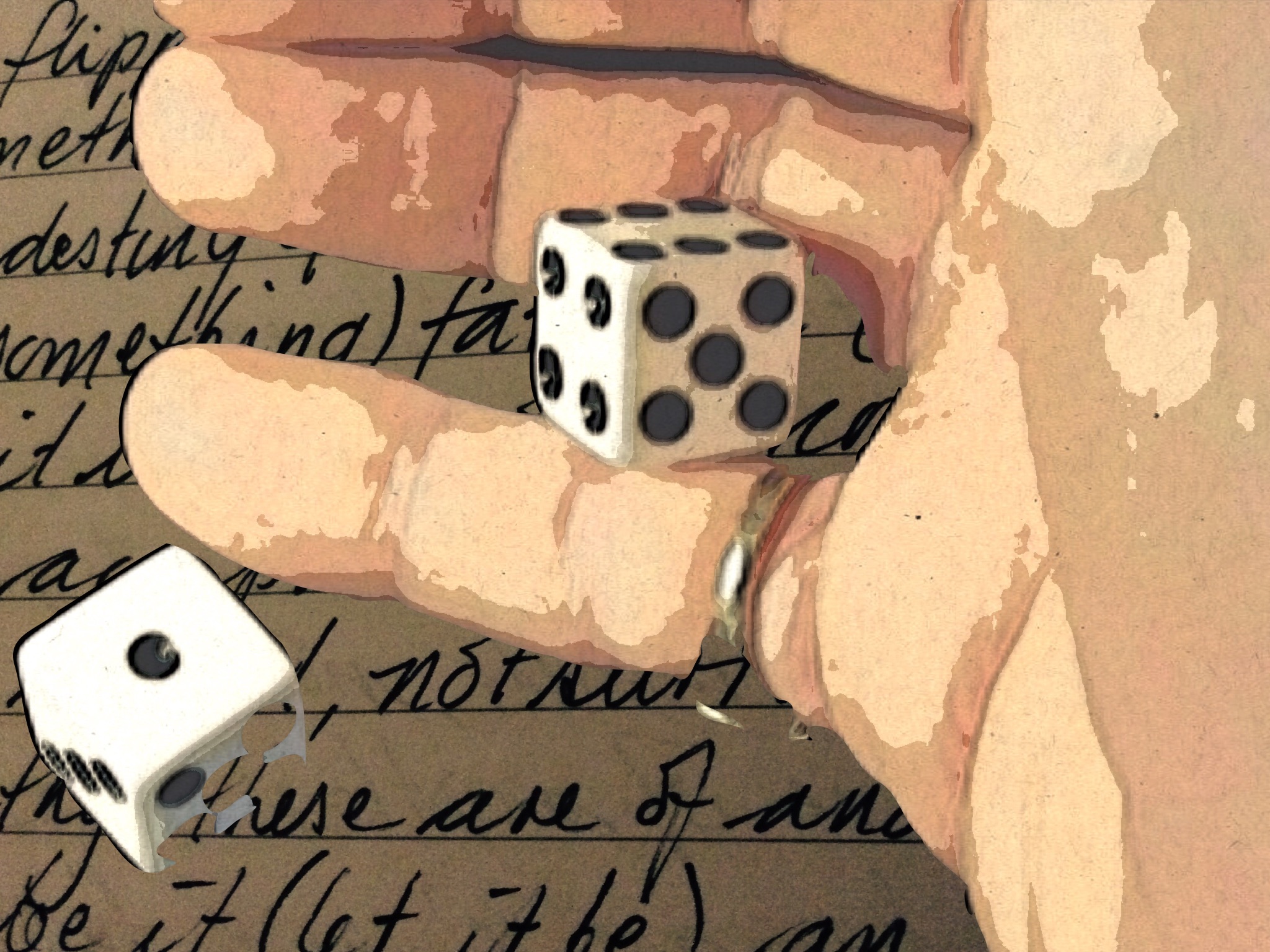
    So be it. Luck and chance have had their fun:
    coins flipped, dice tossed, cards dealt with nonchalance.
    So be it. In the end the deed is done;
    that flippant toss invites a strong response.
    As it is. You now have a given stack:
    Heads not tails, six over one; King not Ace
    As it is. No point missing what you lack;
    take what you’re given, put a plan in place.
    Be as may. Accept that which comes to pass.
    Concede to consequence, be resolute.
    Be as may. Be game. Be as bold as brass;
    Become that which by chance allows you route.
    . So be it, as it is, or be as may
    . By way of luck, or chance, it’s yours to play.

    © Tim Grace, 30 June 2013


    To the reader: Educators increasingly talk about gamification of learning through the lens of human psychology. Observation of ‘gamers’ in action shows a persistent response to challenges on the basis of social rewards. A social-gamer gains kudos and reputation for increasing levels of skill; admired by his or her significant community of peers. Behaviours associated with belonging reward the value-adding learner; they are badged with success.

    To the poet: As I move slowly through the editing process, there’s a pattern appearing. When I meet a stubborn-draft (poorly finished) the easiest solution is to rediscover the original hook; and obviously, hang everything off that – as much as it will bear. And so, the three-word stem for every second line allowed this poem to be reframed with some semblance of original inspiration. Making-do with what you’ve got.


    So Be It
    So Be It
    Picture Source:
    http://youtu.be/FeyhpQRQJew