Tag: Poetry

  • Borrowed Word

    Borrowed Word

    It’s not always me that speaks,
    I’m often just a borrowed word,
    My conversation carries streaks;
    Echoes of the overheard.
    I’m the translated remnant
    Of someone else’s script,
    A turn of phrase, a fragment,
    Through abbreviation clipped.
    I’m a short handed message,
    From a seven second grab,
    A truncated passage,
    Today’s cut, tomorrow’s scab.
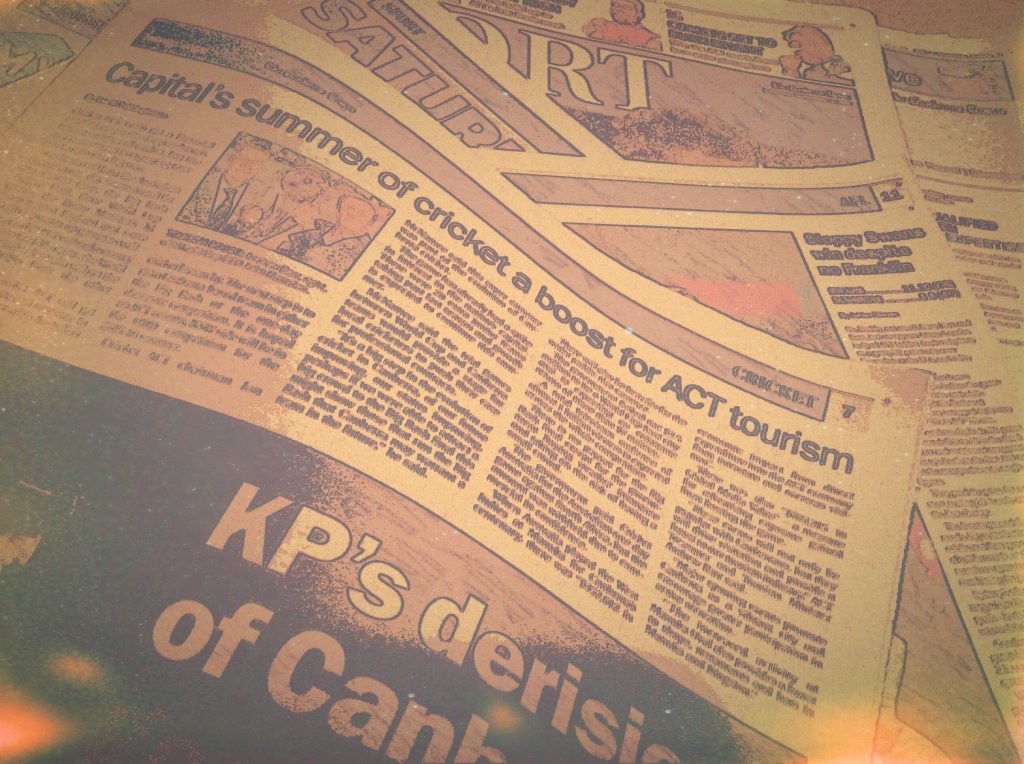
    . Today’s headline … badly dismembered,
    . Tomorrow’s deadline … barely remembered.

    © Tim Grace, 23 October 2010


    To the reader: We hear and read so much of other voices; spin, hype and noise. We probably don’t tune in to much of it but some of it grabs our attention and for a short while resonates through daily chatter. What grabs is the easily digested snippet, or factoid, that’s neatly packed with interest and primed for repeatability. On the back of efficiency catch-phrases and headlines prove themselves robust and sturdy messengers of regurgitated script.

    To the poet: In keeping with the message, the structure of this sonnet is compressed into neat segments. Each bit begins with “I’m” as in: … a borrowed word, …a translated remnant, …a short-handed message; a snippet. The coining of snappy phrases, easily re-used, is emphasised in the final couplet which borrows heavily from its own form and structure; wastes nothing new and does it with less.



    borrowed words borrowed words
     

  • This Table

    This Table

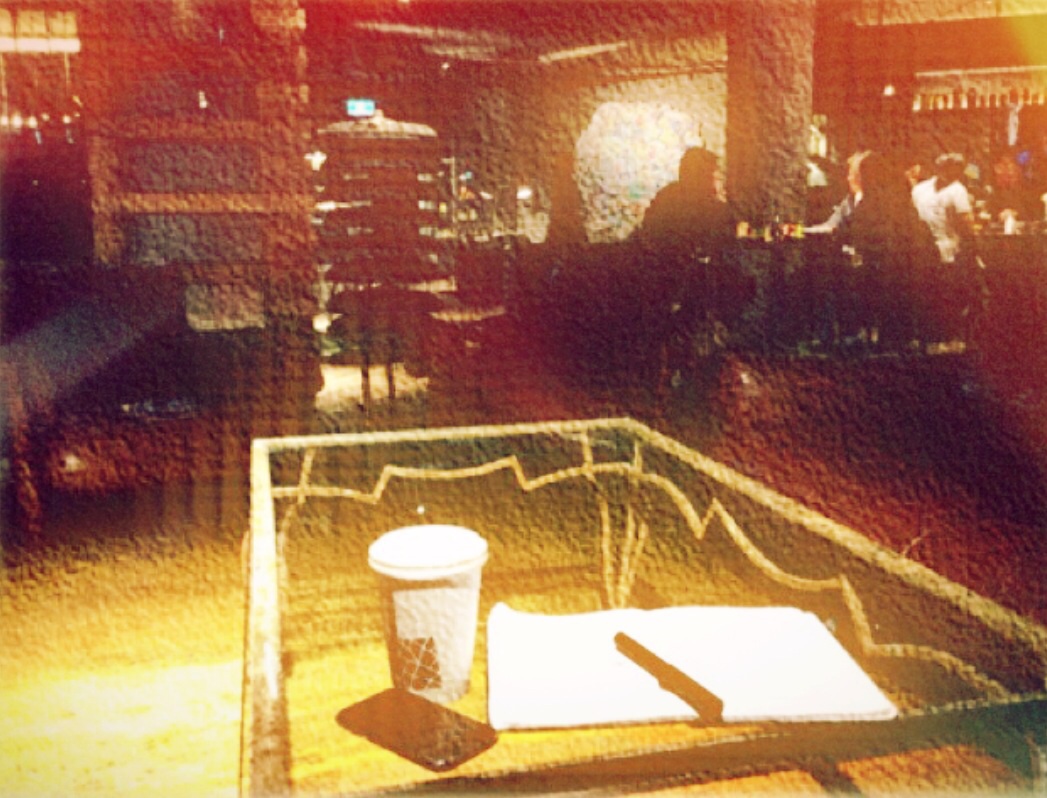
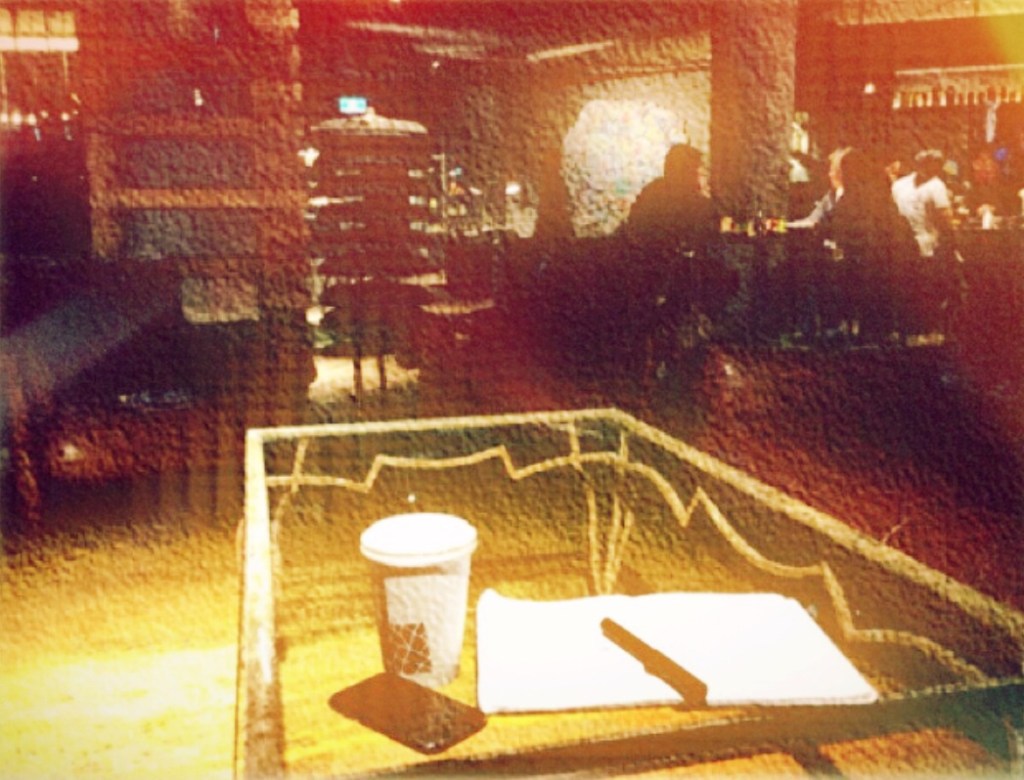
    This table is my point of view,
    Provides a horizontal plane,
    It’s the visual avenue,
    To the peculiar and mundane.
    It’s from where I watch the lives we live,
    Assemble then disperse
    It’s the single-point perspective
    That stimulates my verse
    It’s the in between scene
    Of a mental map
    Where my elbows lean
    and my fingers tap.
    . It’s where clutter finds coordination,
    . And ideas meet their destination.

    © Tim Grace, 17 October 2010


    To the reader: In literal terms a cafe represents an unpretentious coffee house. In practical terms it provides time-out; joins the break between two activities; starts and ends a day; brings together two minds; and as often as not relieves the bladder… and all this for the price of a coffee. The cafe offers a public/private interlude, perfect for introspection and contemplation; people watching.

    To the poet: The passing trade in a cafe forms a poet’s banquet. From the menu comes a feast of subjects including the urbane, the mundane and the insane. Occasionally, the setting not the people deserve attention and that’s how the over-looked table became the subject of this sonnet. A poet’s table is central to the writing process as it defines the angle of observation and locates the presence of mind; it positions the poet.


    this table this table


  • This date

    This date

    Is every day the same day
    As seen through different eyes?
    Is it my awakening, say,
    That shuffles then identifies?
    What’s the likelihood of this date
    Becoming itself discrete?
    Tumbling through the keeper’s gate
    On its way to complete:
    Re-assigned
    Re-vamped
    Re-aligned
    Re-stamped.
    . Different in name – but familiar,
    . If not the same – at least similar.

    19 October 2010


    To the reader: Ponderous thoughts demand no answer! They’re posed as playful, quizzical, metaphysical; far from pointless but vaguely meaningful. How different is one day from the next and does that difference mean much in the bigger scheme of things? Courtesy of a rotating planet, and our fixed location, diurnal patterns turn us on and off. Locally, we share the same day but globally we create billions of variations on that theme. Humanity has no day … humans do.

    To the poet: Three questions tumble to the page with the dynamics of dice; tossed and skittled. The order doesn’t matter. The shape and structure of poetry can be used to reinforce its message. In this case the theme is ‘familiar but similar’ (almost but not quite the same). And so, the last stanza does just that; plays with slight variation. When does a hyphen become a dash?


    this date this date


  • Parallel Dimension

    Parallel Dimension

    At the same time being and becoming,
    Letting go of now,
    It’s the whistle while you’re humming,
    With the puzzlement of how.
    To be the parent of tomorrow,
    And the child of today,
    With the sentiment of sorrow,
    That promises to stay.
    To be oneself and find contentment,
    But to know it won’t endure,
    To struggle with resentment,
    You’re safe but not secure.
    . In a parallel dimension do we still exist?
    . Do archived remnants of ourselves persist?

    © Tim Grace, 10 October 2010


    To the reader: The multi-layered dimensions of life are not neatly stacked into rows nor columns. In a physical sense most of what we did yesterday is irretrievably gone. Likewise, tomorrow’s organization is as much fantasy as it is fact. And so today becomes the main arena, the fleeting zone of action and influence. By necessity then, much of what is done is overlapped with conflicting pressures and contrasting roles; all at once occurring.

    To the poet: The subject of this sonnet is the conundrum. The persistent puzzle of being and becoming all at once. The challenge of writing a convincing argument about puzzlement is to end it still in wonder; and so the last two lines are questions. In this sonnet the rhyming structure (ABAB) could be split into two halves (AABB) and almost keep its sense of narrative.


    parallel dimension
    parallel dimension


  • Commodified

    Commodified

    You have been commodified,
    Digitized of sorts,
    Cleverly identified,
    As a string of ones and naughts.
    You have been commercialized,
    Packaged up as stock,
    Uniformly standardized,
    So your pieces interlock.
    You have been configured,
    Codified and mapped,
    Carefully considered,
    As potential to adapt.
    . You are the generation, named without a name,
    . Be you X or Y, we have made you all the same!

    © Tim Grace, 27 September 2010


    To the reader: The younger generations, we have crafted them as different; for that has served our purpose. From early childhood they have been primed for the marketplace and now they pay the price; they have been commodified. The nameless generations of X and Y have been so individualized that they are powerless to act in concert as a collective independent agent. They resort to social media for voice but that itself is a construction of those who would strip them of identity.

    To the poet: The globalized economy has impacted on how we express the human condition. Life has become digitized, commercialized, and standardized; commodified, identified, and codified. As we describe ourselves we are likely to live. The use of ‘you’ as a distinctive label helps in the creation of distance and separation. From the narrator’s perspective the deal has been done; the package has been sold.


    commodified commodified


  • Simple Solutions

    Simple Solutions

    Nature finds its habitat,
    Where best it finds a fit,
    Accommodates to this and that,
    So together it is knit …
    To the ever changing circumstance,
    To the ravages of time,
    To the vagaries of happenstance,
    That slump as well as climb.
    Nature seeks not certainty,
    Nor acts too far ahead,
    It covets not eternity,
    So accepts its daily bread.
    . Nature is the consequence of patterns in repeat
    . Simple solutions … flexible and neat.

    © Tim Grace, 10 October 2010


    To the reader: The more we marvel at the complexity of life the more we understand its simplicity… simplexity. So many of our great writers, artists, scientists and philosophers have spent their lives reducing their vast intellects into small acts of perfect beauty. In their own way reinterpreting nature; unravelling and revealing its simple patterns. While praising the reductionists it’s nature that deserves the greatest accolade for it is endlessly holistic, forever adaptive and constantly creative.

    To the poet: This is a neat and simple sonnet. The pattern of three four-line stanzas is perfect for an arrival at a concluding couplet. This sonnet being a statement of sorts is emphasized in the ‘so that’ structure of the first and third stanzas. The middle stanza adds content and context to the statement. As summary, it was important the final couple was expressed as a ‘simple solution’.


    simple solutions simple solutions