Tag: Poetry

  • Purpose Revealed

    Purpose Revealed

    What’s a possible conclusion,
    What’s a problem yet defined?
    What’s a plausible solution?
    What’s a pattern recombined?
    What’s a process before production?
    What’s a thought before it’s said?
    … a conceptual construction
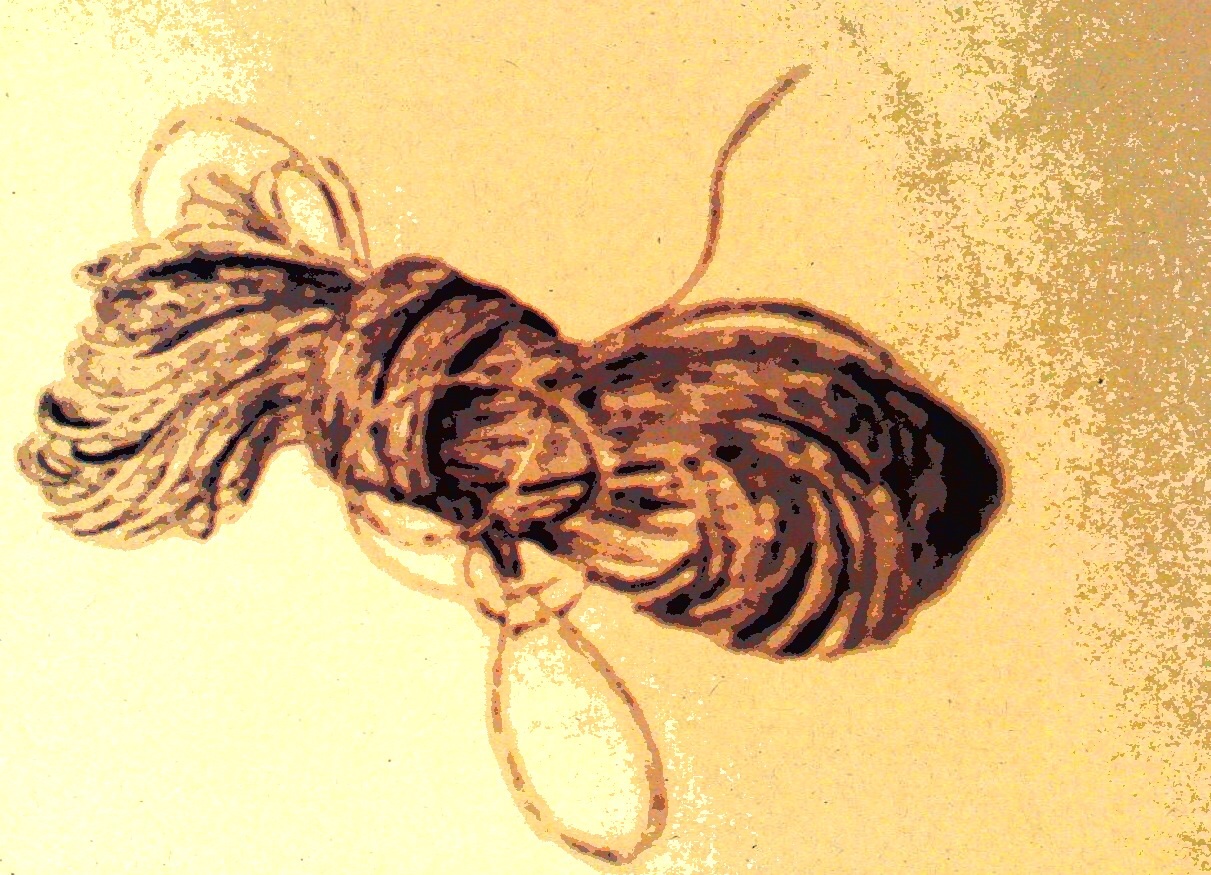
    tied to a central thread…
    It’s a scaffold, it’s a bridge,
    It’s a design, it’s a build,
    It’s a process, it’s assemblage
    It’s a purpose … so revealed.
    .    An answer defines what’s given … the fixture.
    .    A solution describes what’s needed … the mixture.

    © Tim Grace, 7 December 2010


    To the reader: Between two points there are infinite possibilities. How and why we join dots, bridge gaps and grasp ends indicates a degree of purpose. Understanding our purpose reveals the sharpness of intent and clarifies the nature of activity. There are times when a definitive answer too solidly fixes a problem. Better might have been a softer solution; flexible and adaptable in mix.

    To the poet: Much later, I came back to this sonnet and ironically decided to tighten it up. As a final draft it had far less symmetry and left the reader struggling to find shape and structure. In its current form I may have over-played its pattern; stripped it of variation… left it void of interest. I may have over answered its solution… what’s fixed cannot be mixed.



    purpose revealed purpose revealed
     

  • Judge or Jury

    Judge or Jury

    To what degree, to what extent?
    To what does it refer?
    Do I agree, do I dissent?
    With what do I concur?
    Am I judge, or am I jury?
    Am I qualified to know?
    Was it grudge, or was it fury?
    Was it justified as so?
    Was it seen, or was it hidden?
    Was it cleverly disguised?
    Had it been forbidden?
    Was it knowingly comprised?
    . Confusion reigns in knots and tangles,
    . And no-one gains when judgement dangles.

    © Tim Grace, 28 November 2010


    To the reader: From confusion and dissent arises argument and in most cases some form of resolution; if not agreement. We’re often confronted with conflicting realities and multi-truths that sit uncomfortably side-by-side. When the distinguishing elements of a decision are to do with ethics there’s a moral dilemma in the making. Good versus good who’s to decide?

    To the poet: As with a babbling brook this poem ripples with small sounds. It has a surface level structure that channels the flow of words through a course of questions. The first twelve lines of the sonnet ask related questions; with an emphasis on the even lines. Following that cascade there comes resolution with the final two lines rounding off in statement; more than answer.


    judge or jury judge or jury


  • Bank of Clouds

    Bank of Clouds

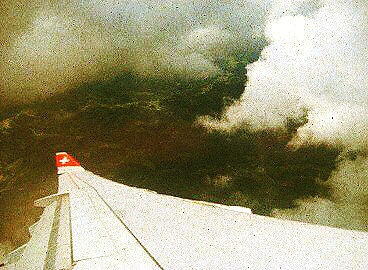
    Below me, a bank of clouds,
    A deceptively solid mass,
    As with mobs, and moving crowds
    It has no guide or compass.
    As if driven by its changing shape,
    It drifts beyond itself,
    As one amorphous cloudscape,
    on its way to somewhere else.
    With dissolving definition,
    It balloons in to a form,
    With potential recognition,
    As an agitated storm
    . What’s coming? … a dull day … humourless,
    . What’s gathering? … cumulous.

    © Tim Grace, 13 November 2010


    To the reader: As terrestrial beings, humans are not often treated to a topside view of clouds. But the occasional flight provides an elevated view of these gaseous textured masterpieces of shape and form. As a natural consequence of rising damp, clouds are in constant manufacture; evolving, transforming, swelling and collapsing … wisping away to nothing, condensing into something.

    To the poet: The achievement in this sonnet comes from its ‘amorphous’ shape and form. The poem’s ‘text’ure is wordy and a little verbose. References to airborne masses float across the lines. Black and white statements are smudged forming grey illusions that drift into one and other with uncertain consequence; if not a clash then to juxtapose.


    bank of clouds bank of clouds


  • Not Incredible

    Not Incredible

    Don’t make of me a case in point
    Or define me as a jewel,
    I’m not a thing you need anoint
    As an exception to the rule.
    I’m not a one-off centre piece,
    Or a brightly shining star,
    Compare me not to say Matisse
    Or call me objet d’art
    Give me not your accolades,
    I need them not to shine,
    Send me not on escapades
    That to a hero you’d assign.
    .    I’m a pillar not a pedestal,
    .    I’m good but not incredible.

    © Tim Grace, 26 November 2010


    To the reader: The burden of expectation is a heavy weight. The mild-mannered super hero is a case in point. Encumbered with a sense of conviction, the archetypal hero bares the load of over-whelming duty. When released of expectation the hero, as centre-piece, is freed of others’ expectations. It’s the pillar not the pedestal that bares weight and distributes the load.

    To the poet: Pulling apart a poem reveals a poet’s word play. Throughout this poem, rhythm falls heavily on the word ‘not’; as repeated in alternating lines. The opening word is ‘don’t’ and from this point on the emphasis is clear: ‘I’m good but not incredible’. The words might say ‘don’t’ but they are expressed with determination and conviction; heroic traits indeed.


    not incredible
    not incredible
  • Faithful Reality

    Faithful Reality

    The reconstruction of reality,
    As captured in good prose,
    Is penned with credibility;
    So easily it flows.
    Natural to its bent,
    Truthful but not chained,
    Busy ‘yes’, but far from spent;
    Unstressed, and not constrained.
    With gently scripted phrases,
    That carve a natural course
    It’s generous with praises;
    And faithful to its source.
    .   Do what it takes, to make the words assemble,
    .   But if it shakes, let it shake … not tremble.

    © Tim Grace, 19 November 2010


    To the reader: A believable recollection if not fully true should at least be credible in its fabrication. The unpolished retell needs grit; not too processed, not too artificial. Reality needs to be plausible so that actions can be resolved through a logical sequence of reactions; consequential responses befitting a tale.

    To the poet: The fear of every poet should be false contrivance. Poems need to be designed and constructed. They need foundations and building blocks. They need to be braced and supported. What they don’t need is fabrication. They don’t need false imagery. They don’t need contrived comparison. They should need no force of will.


    faithful reality faithful reality


  • No Certain Gift

    No Certain Gift

    From high anticipation
    Swells a reservoir of need,
    In relentless expectation
    Dwells avarice and greed.
    With accumulated envy
    In sediments of must,
    There’s fear of what might empty
    And desiccate to dust,
    The certainty of emphasis
    Undelivered cuts a rift,
    And from this pool of promises
    There is no certain gift.
    . The hope of all wishes, is a dream come true.
    . Real or capricious, you can not make it due.

    © Tim Grace, 7 November 2010


    To the reader: Hope is not built upon a promise. That which springs eternal carries no guarantee of service or delivery. When ladened with expectation hope is prone to sour and curdle into a frustrated yearn; a nagging desire. Expectation stretches forward and as with rope can not be pushed.

    To the poet: Sometimes confidence overrides technical issues. The sheer force of short rhythmical phrases ignores a dubious rhyme; and to some extent, makes it all the more interesting. Each pair of lines, within the quatrains, works as one structure of meaning. And then, the meaningful pairs are tied together with conjunctives to form a single, and united, sonnet. A single piece of rope.


    no certain gift no certain gift