Tag: Events

  • Beggars Belief

    Beggars Belief


    The case of the missing sonnet unfolds,
    layers of intrigue, yet to be revealed.
    One: the sonneteer vehemently upholds,
    that crucial evidence has been concealed.
    Two: he claims the sonnet (to date his best)
    was finished and the draft had gone to print;
    and three: as aggrieved plaintiff, he’d suggest
    the weight of evidence does more than hint
    that the crime was payback, a vendetta,
    a deliberate and well executed
    act of retribution; every letter,
    every word, in every way disputed.
    . Why take possession of what causes grief?
    . Such a transgression, it beggars belief!

    © Tim Grace, 29 September 2011


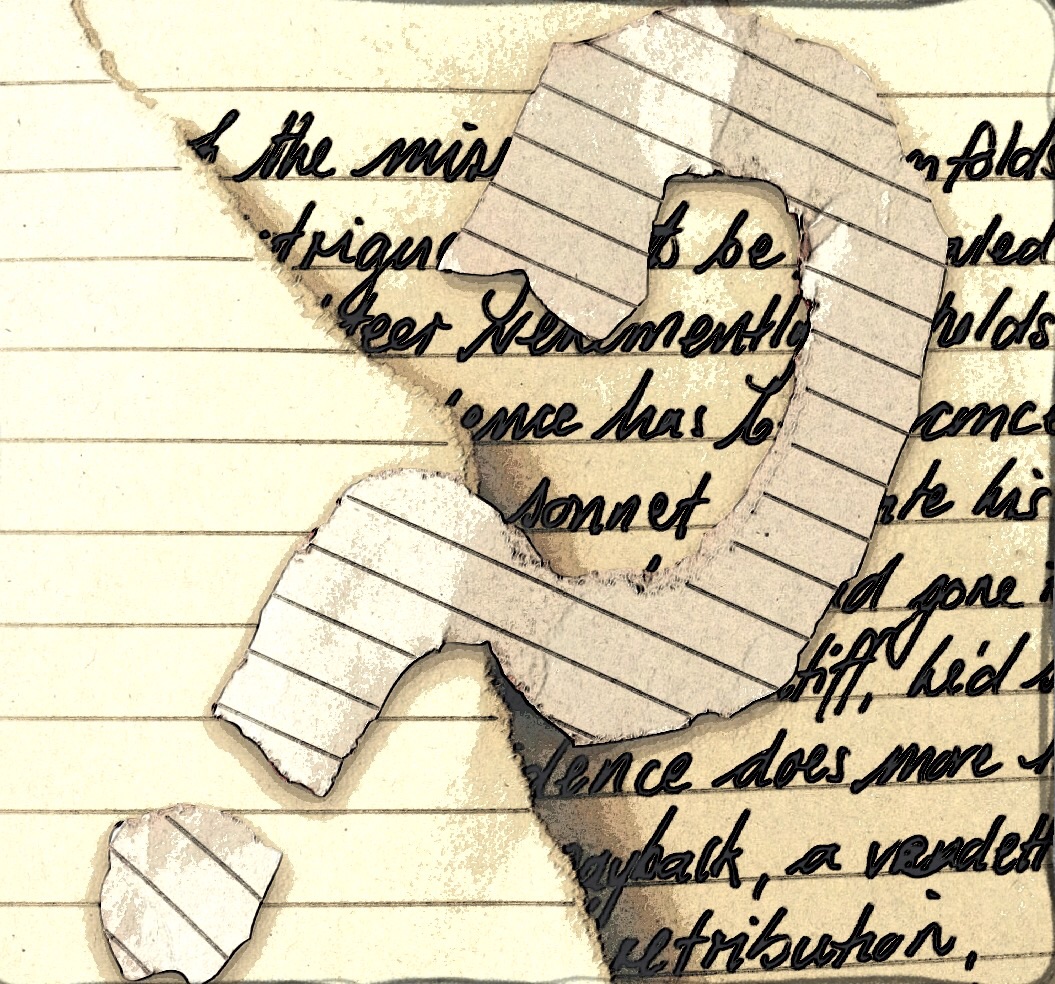
    To the reader: In November 2011, I’d got home from work after midnight. Left the car (work-chattels included) in the driveway. As chance would have it a cat-burglar took a shine to this opportunity and tried his luck. Through good fortune, he (I’ve assumed his gender) became the proud owner of my laptop, but obviously had no appreciation of poetry so left my notebook dishevelled on the back-seat. Thankful, I conducted an audit of my sonnets and so began the case of the missing sonnet … beggars belief!!

    To the poet: In the days of ditties, it didn’t matter much that one poem overlapped with others; the unfinished pile just grew like topsy. The occasional stand alone snippet stood its ground – mellowed – most have yellowed with age. Sonnets are different; they’re monogamous – jealous and demanding. While drafting a sonnet I never begin another. Occasionally I’ll jot down a note that has potential, but devotion to the moment is my discipline.


    beggars belief beggars belief
     

  • Rich with Joy

    Rich with Joy

    Raised on the red dust of the Western Plains,
    this unexpected child of farming stock
    brought with her the hope of September rains;
    the joy of one lamb to a larger flock.
    She weathered seasons of uncertainty,
    faced adversity with dignity and grace.
    She rode a swift horse into modernity.
    Brought new joy to another time and place.
    From new horizons she found much to see:
    a new world to paint, and new songs to sing;
    both she delivered with gusto and glee:
    as brings the flower the colour to Spring.
    . It is not wealth that makes us rich with joy.
    . Better love and grace be our life’s employ.

    © Tim Grace, 25 September 2011


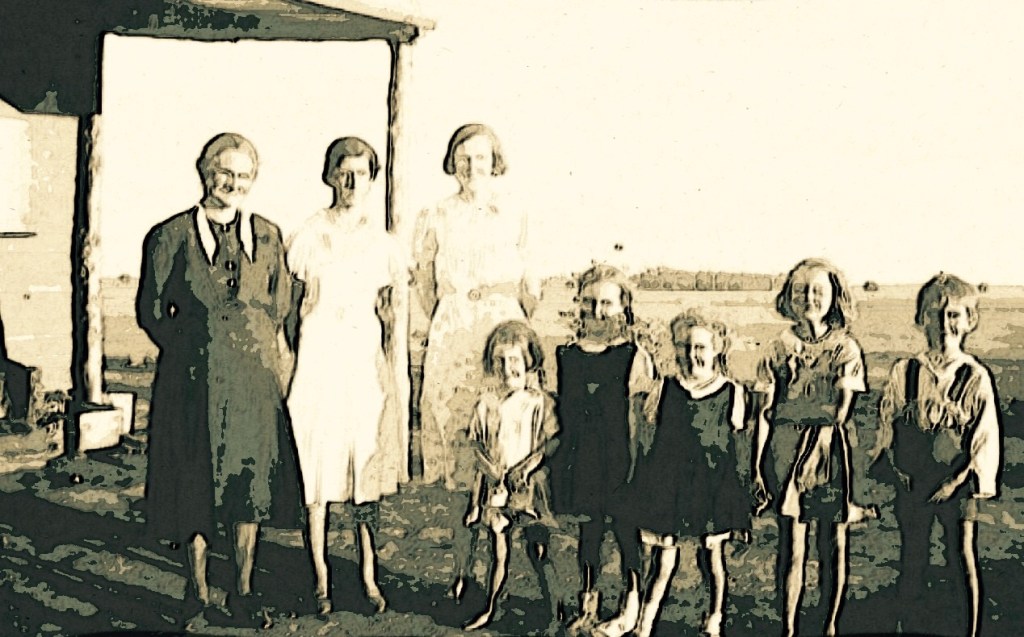
    To the reader: For my mother’s 80th Birthday I wrote this sonnet. Born in 1931, of farming stock she was a child of the depression and the product of subsistence. By war’s end, poorly schooled but well educated, she ventured beyond the strict fundamentals of country life and rode the affluent wave of post-war Australia. For many, not all, the Twentieth Century was lived in two contrasting halves: shadows lifted, chains unshackled, and opportunities arose. Decades on, having lived a full-life, she now looks back with a sense of wholeness; if not completeness.

    To the poet: For the most part we live a scripted existance. Life has a sequence that can be unpacked as history and understood through hindsight. As married to fourteen lines of a sonnet, history and hindsight make quite compatible partners. The trap, ever present, is sentimentality. This poem has an audience beyond my mother and so needs to be personally poignant but meaningful in a general sense. My mother’s name is Joy Grace – you don’t need to know that, but she’ll find herself in the final couplet – a referential trinket; a neat finale.


    rich with joy rich with joy
  • Cursed Pile of Dirt

    Cursed Pile of Dirt

    Oh! cursed pile of dirt, in crude repair,
    what reason dost thou have to be so cruel?
    Anchored firm with that cold and heavy stare,
    as would befit a cross and cranky mule.
    Has’t thou not some purpose of greater worth?
    Could thou not be a mound or grassy knoll?
    Could thou not be a monument on Earth?
    Has’t thou not some use, some virtue to extol?
    Give way to the dig of a shaping spade.
    Let go the stature of a mongrel beast.
    Let go the attitude as of now displayed.
    Be thus reduced; for purpose-sake increased.
    . Be not soiled or muddied with despair,
    . let thyself be moved as from here to there.

    © Tim Grace, 23 September 2011


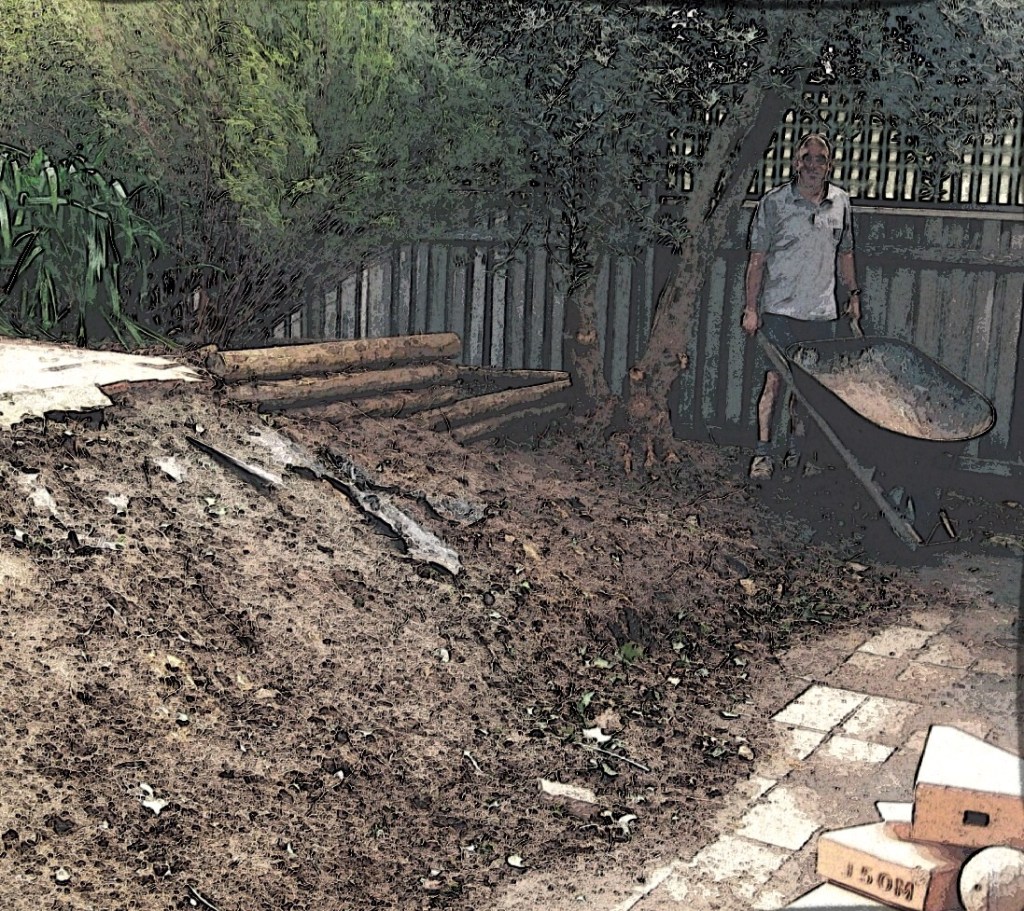
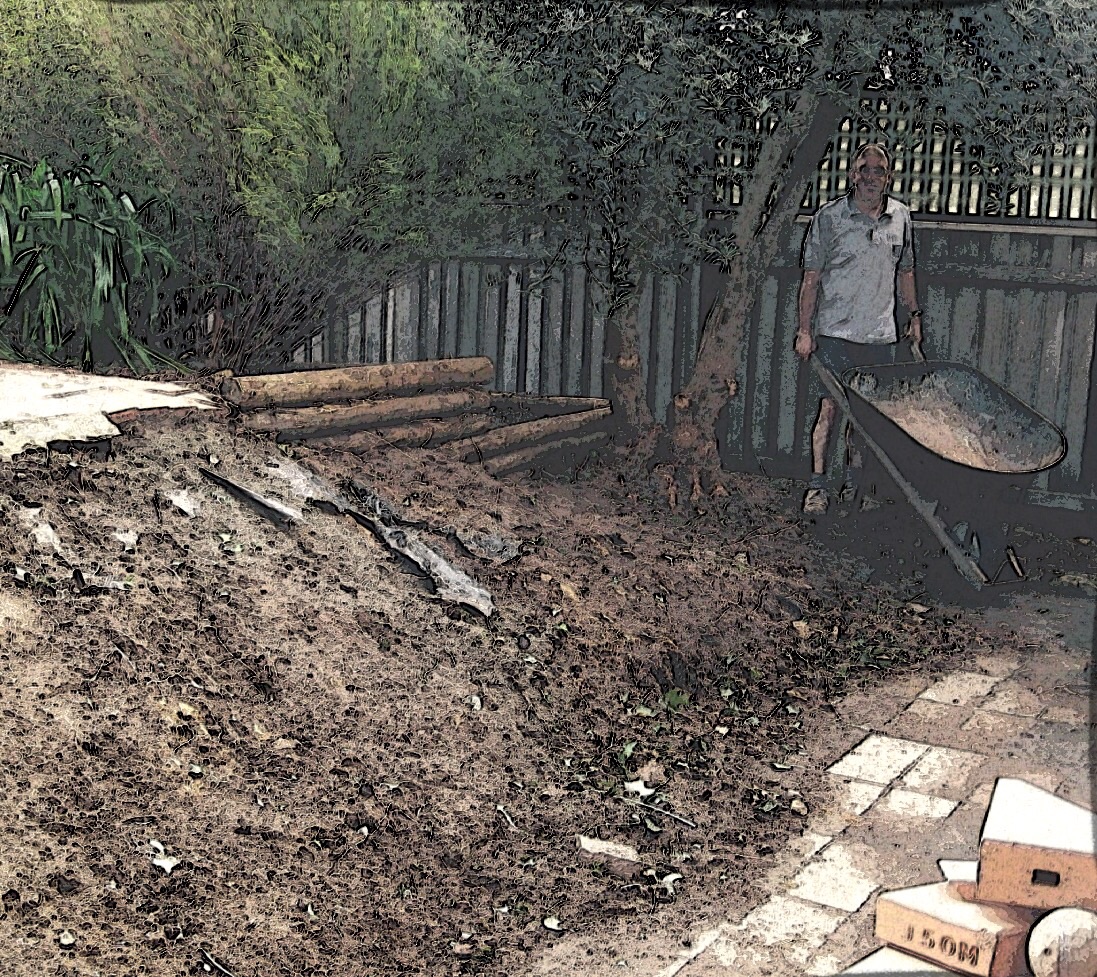
    To the reader: As a university student I earned a meagre income removing rubbish. I owned a small utility truck (known as a ‘ute’ in Australia). For seven-dollars a load I’d remove anything; mostly other peoples’ unwanted garden refuse. Occasionally a large pile of dirt would stare me down! With stoic fortitude I remember the words “Oh! cursed pile of dirt” thrusting deep into the core of my adversary. Slowly at first, with slight impact, the pile would respond seemingly none the worse for curse! But … as I was to learn … persistence beats resistance!

    To the poet: That “persistence beats resistance” is a truism; one that serves the poet well. The weight of stubborn words can take some shifting; some very heavy lifting. The original words to this sonnet were in the form of my own spiritual; in the face of adversity there is hope; the human spirit is well equipped to cope with hardship: “Oh! cursed pile of dirt, with thy cold and heavy stare, given time and shovel, thou shalt be moved from here to over there!”


    cursed pile of dirt cursed pile of dirt
  • Along Comes Art

    Along Comes Art

    With simple rules, as would science render,
    we form a universe from cosmic dust.
    Then heaven and earth take this agenda
    and for art-sake make news of love and lust.
    With building blocks in assembled order
    we unravel life as would genes combine.
    Then for art-sake, and a fancy border,
    we give great praise to all of our design.
    With rows of noughts to the power of ten
    nothingness is scaled to the Nth degree.
    Then along comes art, with its brush and pen,
    claims emptiness as space for allegory.
    . It’s facts reveal an amazing story,
    . but it’s fiction steals the blazing glory.

    © Tim Grace, 15 August 2011


    To the reader: The human brain has evolved to recognise natural rhythms; to enjoy the ratio of shapes and numbers; to orchestrate colours and augment sounds. As measured, facts and figures quantify our universe; ever expanding our bank of knowledge. Buried in this infinite detail is wonderment; the source of fantastic explanation; home of earthly spirits and heavenly gods. We are the story tellers, the picture painters; for art-sake, we are the messengers.

    To the poet: If not mistaken, this is the first Sonnet (107) that holds itself to fourteen lines; ten syllables to each. I claim no strict adherence to iambic pentameter. I appreciate the heel-toe (dumpty-dumpty) rhythm of lines in classic formation but reserve the right to wander into other syncopations. I borrow from Shakespeare’s licence; Sonnet 145 is a case in point. Each line of this sonnet is made of eight syllables. And if more ‘case’ is needed, explore Sonnet 126: a twelve lined poem in six sets of rhyming pairs.


    along comes art along comes art
  • Pleasantries

    Pleasantries

    The light touch of a poet’s pen,
    rests easy on the page;
    pleasant words that come again,
    that do not wilt with age.
    Familiar words, in daily use,
    that need no explanation;
    nothing cryptic, nor obtuse:
    the art of observation.
    Write the word as simply said,
    keep true to its expression;
    write the word so easily read,
    note its first impression.
    . Write simply what the eye saw,
    . all else but that ignore.

    © Tim Grace, 4 July 2011


    To the reader: The casual acquaintance of a pleasant friend leaves a light impression on the surface of a day. The interaction has no agenda and the motive is nothing more than patinated patter: a catch-up, a touch-base; a nice to see you moment. There’s a social art, an etiquette, to keeping a conversation chatty – your own connection with local events and activities is a good guide; a sense of life as it is. Currency is a useful link to liveliness; make good use of days just gone and those about to come.

    To the poet: There’ll be times when a scene has no cryptic depth of character; a surface without dimension. Not to say it isn’t an interesting reflection of reality. Still-life, in a visual sense, holds the moment as it is; preserves the present for its own sake. If there’s a technique to writing ‘still-life’ it’s avoid clutter and unnecessary elaboration. The truthful line applies as much to poetry as it does to visual design.


    pleasantries pleasantries
  • Five Notes

    Five Notes

    Five notes make a negro scale,
    On a keyboard they are black.
    Pitched to help the heart prevail;
    Played to bring the spirit back.
    They strike the chord of freedom,
    And invite the voice to sing.
    If you listen you can hear them:
    Lilting, wafting, calling:
    Calling to the lost, the grieving;
    Beckoning the broken, the oppressed,
    Singing something to believe in,
    Bringing anthem to a quest.
    . Sing to the notes of freedom; let them soar,
    . Sing so we can hear them; forever more

    © Tim Grace, 3 July 2011


    To the reader: With a surname such as mine ‘Amazing Grace’ has held a life-long interest. Occasionally, I’ll venture into an exploration of the song’s pedigree. The best of all explanations, in my opinion, is a 2012 sermon by Wintley Phipps. In this moving presentation Wintley explains the history of the Slave Scale and “shares how just about all negro spirituals are written on the black notes of the piano”. The writer of ‘Amazing Grace’ was John Newton (a slave trader) moved to give lyrical interpretation to his cargo’s plaintiff chorus.

    To the poet: When you write in the footsteps of inspired art you take a risk. The comparison will more than likely reduce your words to mere exercise. And so, it’s best you respond accordingly… ensure the exercise is well executed; make it interesting.


    five notes five notes