Tag: Time

  • Breakfast

    Breakfast

    Does breakfast make a universal theme?
    Is the smell of toast too sentimental?
    Is one man’s milk just another man’s cream?
    Is it all too light and continental?
    Does breakfast brew the day with full intense?
    What substance from its richness can be drawn?
    What crescendo, what marvel, what essence?
    What potential, what message does it spawn?
    Does breakfast have the fibre, the backbone,
    the spine, the fundamental fortitude
    to steady the course of a rolling stone;
    to sculpt the shape of this day’s attitude?
    . More so than any meal, let breakfast shine,
    . let it feed the spirit and brace the spine.

    © Tim Grace, 7 October 2011


    To the reader: Breakfast is an event as much as it is sustenance. For those who rush the day’s first meal they miss the ritual. The breakfast-room is an old-fashioned concept with enough merit to still exist in the hotel industry. Standards and price differ greatly but in general there are three options: tea & toast; continental; and the full banquet. The occasional ‘big breakfast’ might be warranted but for a poet’s purpose tea & toast is more than sufficient.

    To the poet: Editing poetry requires a thoughtful space, somewhere comfortable and reflective. Re-drafting ‘on the go’ runs the risk of demolishing the poem’s original essence. This sonnet (not a good example) required considerable re-working to pull it into shape. As part of a long sequence it will have to hold its place but it’s hardly delivering the morning-reader much nourishing sustenance; for that I apologise.


     

    breakfast 1
    breakfast 1


  • Beggars Belief

    Beggars Belief


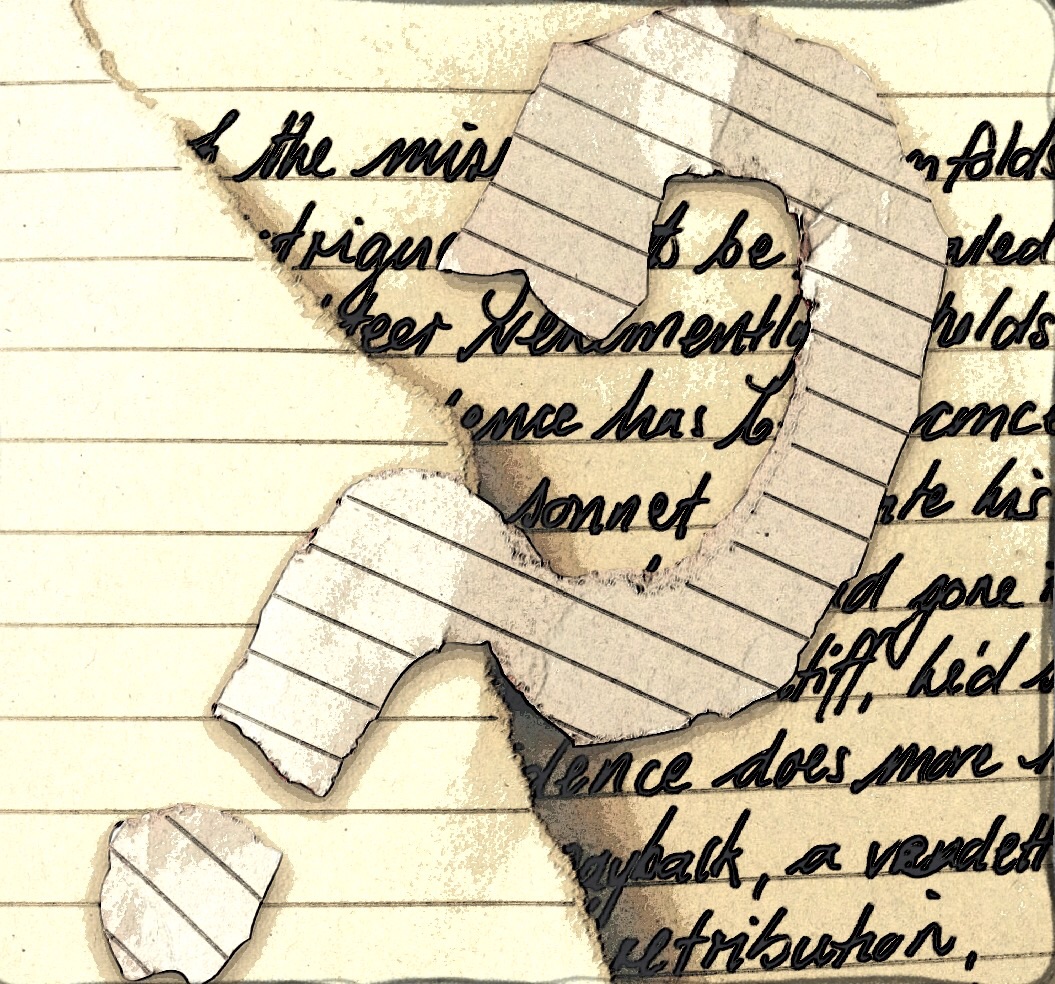
    The case of the missing sonnet unfolds,
    layers of intrigue, yet to be revealed.
    One: the sonneteer vehemently upholds,
    that crucial evidence has been concealed.
    Two: he claims the sonnet (to date his best)
    was finished and the draft had gone to print;
    and three: as aggrieved plaintiff, he’d suggest
    the weight of evidence does more than hint
    that the crime was payback, a vendetta,
    a deliberate and well executed
    act of retribution; every letter,
    every word, in every way disputed.
    . Why take possession of what causes grief?
    . Such a transgression, it beggars belief!

    © Tim Grace, 29 September 2011


    To the reader: In November 2011, I’d got home from work after midnight. Left the car (work-chattels included) in the driveway. As chance would have it a cat-burglar took a shine to this opportunity and tried his luck. Through good fortune, he (I’ve assumed his gender) became the proud owner of my laptop, but obviously had no appreciation of poetry so left my notebook dishevelled on the back-seat. Thankful, I conducted an audit of my sonnets and so began the case of the missing sonnet … beggars belief!!

    To the poet: In the days of ditties, it didn’t matter much that one poem overlapped with others; the unfinished pile just grew like topsy. The occasional stand alone snippet stood its ground – mellowed – most have yellowed with age. Sonnets are different; they’re monogamous – jealous and demanding. While drafting a sonnet I never begin another. Occasionally I’ll jot down a note that has potential, but devotion to the moment is my discipline.


    beggars belief beggars belief


  • Rich with Joy

    Rich with Joy

    Raised on the red dust of the Western Plains,
    this unexpected child of farming stock
    brought with her the hope of September rains;
    the joy of one lamb to a larger flock.
    She weathered seasons of uncertainty,
    faced adversity with dignity and grace.
    She rode a swift horse into modernity.
    Brought new joy to another time and place.
    From new horizons she found much to see:
    a new world to paint, and new songs to sing;
    both she delivered with gusto and glee:
    as brings the flower the colour to Spring.
    . It is not wealth that makes us rich with joy.
    . Better love and grace be our life’s employ.

    © Tim Grace, 25 September 2011


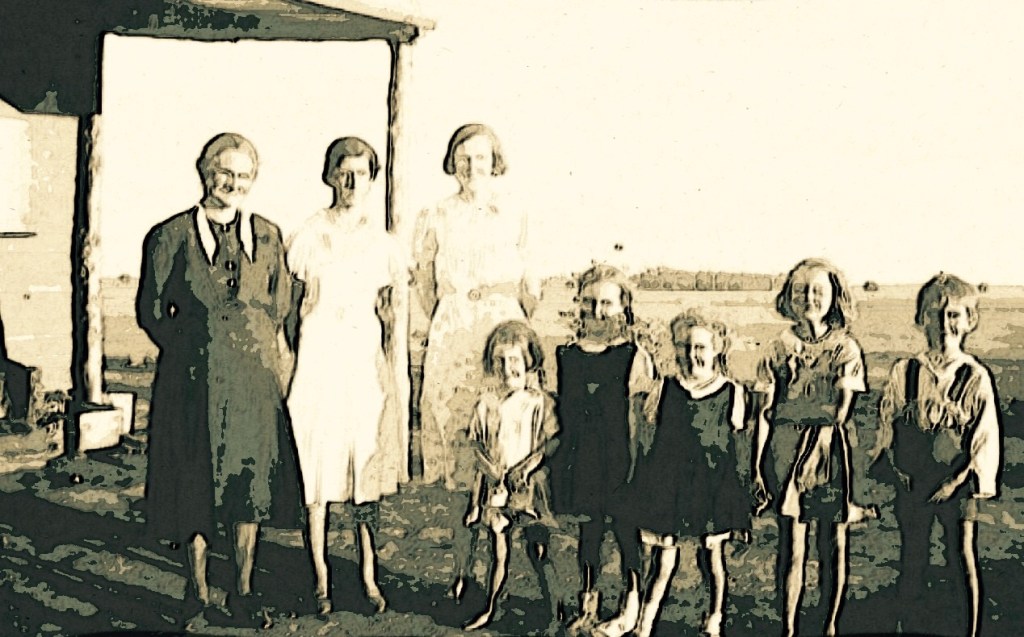
    To the reader: For my mother’s 80th Birthday I wrote this sonnet. Born in 1931, of farming stock she was a child of the depression and the product of subsistence. By war’s end, poorly schooled but well educated, she ventured beyond the strict fundamentals of country life and rode the affluent wave of post-war Australia. For many, not all, the Twentieth Century was lived in two contrasting halves: shadows lifted, chains unshackled, and opportunities arose. Decades on, having lived a full-life, she now looks back with a sense of wholeness; if not completeness.

    To the poet: For the most part we live a scripted existance. Life has a sequence that can be unpacked as history and understood through hindsight. As married to fourteen lines of a sonnet, history and hindsight make quite compatible partners. The trap, ever present, is sentimentality. This poem has an audience beyond my mother and so needs to be personally poignant but meaningful in a general sense. My mother’s name is Joy Grace – you don’t need to know that, but she’ll find herself in the final couplet – a referential trinket; a neat finale.


    rich with joy rich with joy
  • New Wisdom

    New Wisdom

    What new wisdom has last night’s slumber brought
    to this “good morning” as of now untapped?
    How might the sun rise on a new thought
    and give ‘novelty’ power to adapt?
    With new thought comes the bud of inspiration,
    the compact remedy, as yet unpacked.
    It’s the starting point of contemplation,
    it’s the new idea that yesterday lacked.
    New wisdom much like a fresh flower blooms:
    not from old stock, not from a stem detached.
    Wisdom is but one bloom that newly grooms
    itself to best show a solution hatched.
    . Today refreshed is last night’s cameo,
    . As bud becomes bloom, so this day will grow.

    © Tim Grace, 21 September 2011


    To the reader: The sun rises, a new day dawns, and if the night was good to you there’s a fresh awakening. Over night, your niggles have been processed; disencumbered from yesterday’s tangles. And so, with fresh clarity you take a novel approach to loosening that stubborn knot. The tired solution, over-worked and fruitless, has been rested… retired to make room for this day’s innovation.

    To the poet: In construction, some poems are satisfying others wrestle with their maker. Those that satisfy, like this one, have a physical arrangement that scaffolds the poem’s structural sense. By design, a satisfying poem will have physical strength; a visible appearance that matches its message. A poem with look and feel has inner and outer strength, rhymes feel relaxed and resoundingly echo their way throughout the text; form and function tied with an evident but invisible thread.


    image


  • Woken Mind

    Woken Mind

    How so, that sleep undoes a tangled knot,
    and through darkness invents a grand design?
    What has sleep that my woken mind has not?
    From where dawns its brilliance, its clever shine?
    I imagine, or do at least suspect
    (for nothing more than thought can be my proof)
    that there must be a time, a time unchecked,
    when uprises sleep to begin its spoof;
    through a short-list of yesterday’s wonders,
    unsolved, given up to further thinking;
    given up to logic’s bin of blunders,
    for night to make right in just a blinking.
    . How so that sleep outwits my woken mind?
    . It lets go the bits that by day do grind.

    © Tim Grace, 17 September 2011


    To the reader: Sleep, far from an unconscious passage through darkened hours, is an active agent of the night. In sleep-mode, we switch our attention to sifting and sorting through snippets of past experience. In the ‘dark room’ (from an endless supply of stock) we develop our post-production sequences into lucid and surreal dreams. Hours of sleep provide space for re-interpretation of time and place; unrestricted by the physical constraints of a woken mind.

    To the poet: In writing this sonnet I wanted to create a sense of one-being in two-minds; pondering a perplexity. The over-riding order is a sequence of questions tentatively answered without confidence or surety; deliberately vague and suggestive of possibility. Speaking to yourself through a third-party narrator is a dream-like experience – sleep uncouples and derails the midnight express; the train is off its tracks.


    woken mind woken mind


  • A Lover’s Loss

    A Lover’s Loss

    When the rose of last year’s love was not replaced,
    she whispered “I loved you” and shed a tear.
    She closed her eyes and through her memory traced
    his pattern; she imagined he was near.
    Filled heavy with acceptance, her tear swelled,
    wet her lashes and rolled upon her cheek.
    This tear was not wept, this tear quelled
    the weeping worry; no mourning did it seek.
    There was no need for other tears to flow.
    Tenderly, and for just a moment brief,
    she held this tear and then she let him go…
    gone to soul; to find comfort and relief.
    . A lover’s loss is not for time to keep,
    . It’s far better kept where the soul is deep.

    © Tim Grace, 11 September 2011


    To the reader: I remember watching a Twin Towers documentary, describing remnant lives, a decade after the attack. It was clear that many emotional towers had taken devastating hits and were still struggling to rebuild any semblance of structural strength. Gradual resolution of the inexplicable loss of a loved-one, an intimate partner, is a torrid journey of repair; never complete … when the weeping is done, enduring, endearing Love is forever expressed in a single tear.

    To the poet: … and there ends my deliberate set of love poems; some about Love, others for Love, and a few in Love. Shakespeare wrote of Love as both spirit and soul. As spirit, Love is an attractive energy that fuels our motivation to intimately bond. As soul, Love is a figmented expression our passionate desires. Blessed with Love (spirit and soul) we are granted the human condition; ever challenged to balance on the one-hand energy and on the other passion; the humours: dispositions, preferences, propensities, and temperaments.


    image