Tag: sonnets

  • Breakfast

    Breakfast

    Does breakfast make a universal theme?
    Is the smell of toast too sentimental?
    Is one man’s milk just another man’s cream?
    Is it all too light and continental?
    Does breakfast brew the day with full intense?
    What substance from its richness can be drawn?
    What crescendo, what marvel, what essence?
    What potential, what message does it spawn?
    Does breakfast have the fibre, the backbone,
    the spine, the fundamental fortitude
    to steady the course of a rolling stone;
    to sculpt the shape of this day’s attitude?
    . More so than any meal, let breakfast shine,
    . let it feed the spirit and brace the spine.

    © Tim Grace, 7 October 2011


    To the reader: Breakfast is an event as much as it is sustenance. For those who rush the day’s first meal they miss the ritual. The breakfast-room is an old-fashioned concept with enough merit to still exist in the hotel industry. Standards and price differ greatly but in general there are three options: tea & toast; continental; and the full banquet. The occasional ‘big breakfast’ might be warranted but for a poet’s purpose tea & toast is more than sufficient.

    To the poet: Editing poetry requires a thoughtful space, somewhere comfortable and reflective. Re-drafting ‘on the go’ runs the risk of demolishing the poem’s original essence. This sonnet (not a good example) required considerable re-working to pull it into shape. As part of a long sequence it will have to hold its place but it’s hardly delivering the morning-reader much nourishing sustenance; for that I apologise.



     

    breakfast 1
    breakfast 1


  • Clings Too Tightly

    Clings Too Tightly

    He who clings to conviction too tightly
    will through suffocation more likely squeeze
    the goodness from his cause and un-rightly
    render breathless the whistling breeze.
    The iron-clad grip is a fragile bond
    and a stifling form of forced adhesion
    that lacks the surety to best respond
    to changing needs of rhyme and reason.
    He who takes a stance too rigid, he has
    built us all a prison; a crippling cell.
    And so confined we may well find, alas,
    that this one place provides no space to dwell.
    . He who needs to grip tight is insecure.
    . He who does not trip light will not endure.

    © Tim Grace, 2 October 2011


    To the reader: The need to dominate apparently reflects how you perceive your environmental context. Those who mature in a social atmosphere of mistrust will often compensate by adopting controlling behaviours; survival strategies. Their default position is to gain control over threatening circumstances; loss of power is not an option. Once established, the personality trait will reinforce itself and over time reward its own suffocating strictures, leaving no room to move; no air to breathe; no space to think.

    To the poet: As rules go, sonnets have their share; some are useful and allow the poet to create content within the frame. I’ve enjoyed getting to know the simple mathematics of fourteen lines. Some purists may describe one combination but in fact there are infinite ways of slicing and dicing the form. Shakespeare’s sonnets often play with internal relationships that loop backwards and forwards from an original stem of thought; he had no single formula. In the end, it’s a matter of balancing the equation; measure for measure and dose for dose.


    clings too tightly
    clings too tightly


  • Beggars Belief

    Beggars Belief


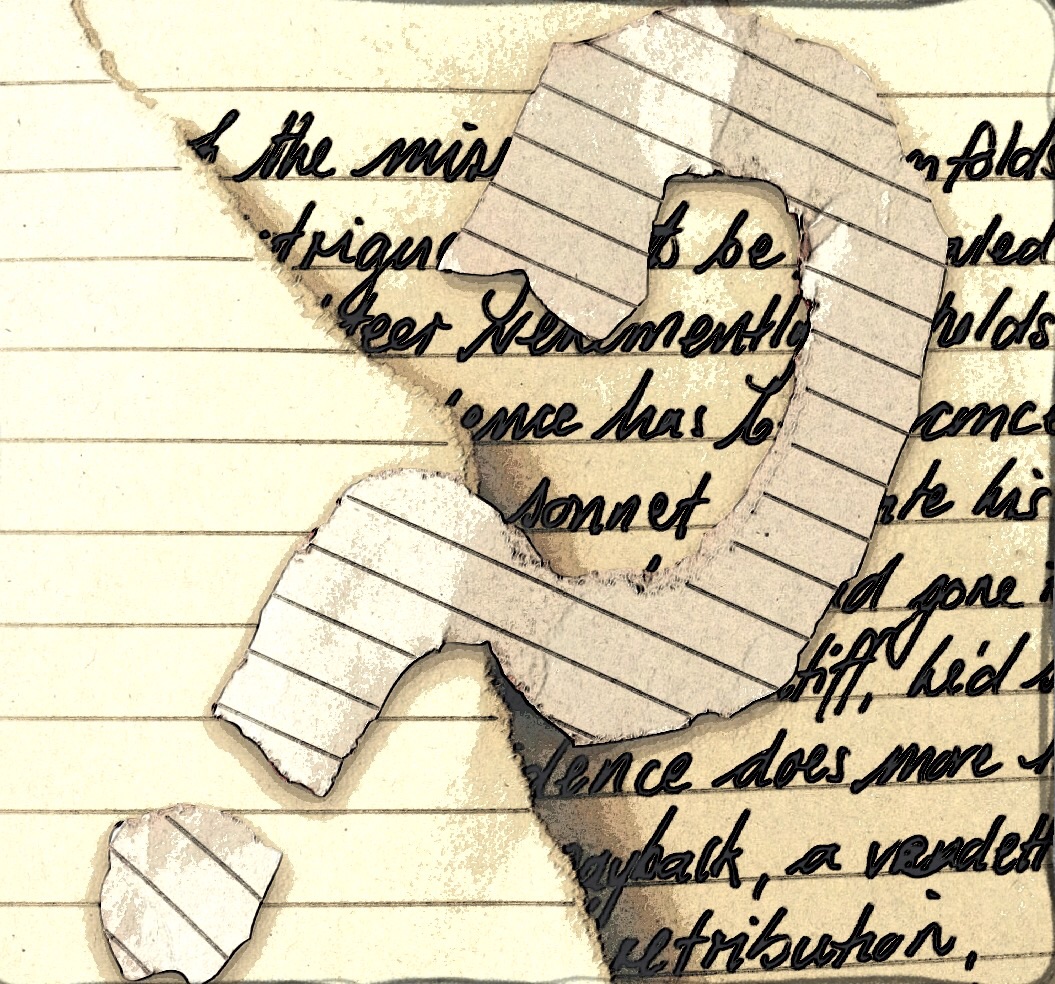
    The case of the missing sonnet unfolds,
    layers of intrigue, yet to be revealed.
    One: the sonneteer vehemently upholds,
    that crucial evidence has been concealed.
    Two: he claims the sonnet (to date his best)
    was finished and the draft had gone to print;
    and three: as aggrieved plaintiff, he’d suggest
    the weight of evidence does more than hint
    that the crime was payback, a vendetta,
    a deliberate and well executed
    act of retribution; every letter,
    every word, in every way disputed.
    . Why take possession of what causes grief?
    . Such a transgression, it beggars belief!

    © Tim Grace, 29 September 2011


    To the reader: In November 2011, I’d got home from work after midnight. Left the car (work-chattels included) in the driveway. As chance would have it a cat-burglar took a shine to this opportunity and tried his luck. Through good fortune, he (I’ve assumed his gender) became the proud owner of my laptop, but obviously had no appreciation of poetry so left my notebook dishevelled on the back-seat. Thankful, I conducted an audit of my sonnets and so began the case of the missing sonnet … beggars belief!!

    To the poet: In the days of ditties, it didn’t matter much that one poem overlapped with others; the unfinished pile just grew like topsy. The occasional stand alone snippet stood its ground – mellowed – most have yellowed with age. Sonnets are different; they’re monogamous – jealous and demanding. While drafting a sonnet I never begin another. Occasionally I’ll jot down a note that has potential, but devotion to the moment is my discipline.


    beggars belief beggars belief


  • Rich with Joy

    Rich with Joy

    Raised on the red dust of the Western Plains,
    this unexpected child of farming stock
    brought with her the hope of September rains;
    the joy of one lamb to a larger flock.
    She weathered seasons of uncertainty,
    faced adversity with dignity and grace.
    She rode a swift horse into modernity.
    Brought new joy to another time and place.
    From new horizons she found much to see:
    a new world to paint, and new songs to sing;
    both she delivered with gusto and glee:
    as brings the flower the colour to Spring.
    . It is not wealth that makes us rich with joy.
    . Better love and grace be our life’s employ.

    © Tim Grace, 25 September 2011


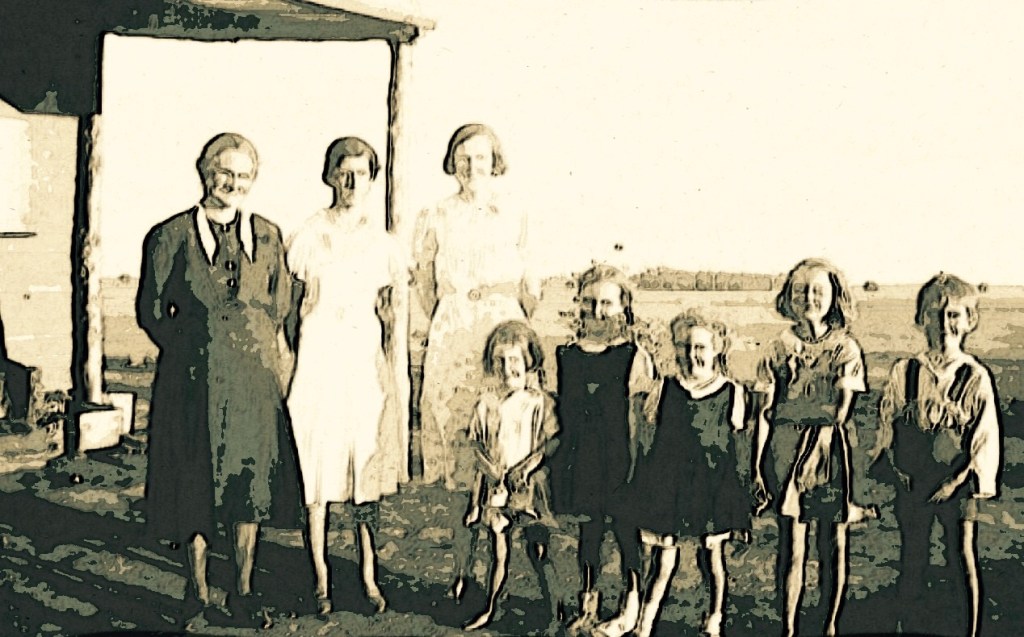
    To the reader: For my mother’s 80th Birthday I wrote this sonnet. Born in 1931, of farming stock she was a child of the depression and the product of subsistence. By war’s end, poorly schooled but well educated, she ventured beyond the strict fundamentals of country life and rode the affluent wave of post-war Australia. For many, not all, the Twentieth Century was lived in two contrasting halves: shadows lifted, chains unshackled, and opportunities arose. Decades on, having lived a full-life, she now looks back with a sense of wholeness; if not completeness.

    To the poet: For the most part we live a scripted existance. Life has a sequence that can be unpacked as history and understood through hindsight. As married to fourteen lines of a sonnet, history and hindsight make quite compatible partners. The trap, ever present, is sentimentality. This poem has an audience beyond my mother and so needs to be personally poignant but meaningful in a general sense. My mother’s name is Joy Grace – you don’t need to know that, but she’ll find herself in the final couplet – a referential trinket; a neat finale.


    rich with joy rich with joy
  • Cursed Pile of Dirt

    Cursed Pile of Dirt

    Oh! cursed pile of dirt, in crude repair,
    what reason dost thou have to be so cruel?
    Anchored firm with that cold and heavy stare,
    as would befit a cross and cranky mule.
    Has’t thou not some purpose of greater worth?
    Could thou not be a mound or grassy knoll?
    Could thou not be a monument on Earth?
    Has’t thou not some use, some virtue to extol?
    Give way to the dig of a shaping spade.
    Let go the stature of a mongrel beast.
    Let go the attitude as of now displayed.
    Be thus reduced; for purpose-sake increased.
    . Be not soiled or muddied with despair,
    . let thyself be moved as from here to there.

    © Tim Grace, 23 September 2011


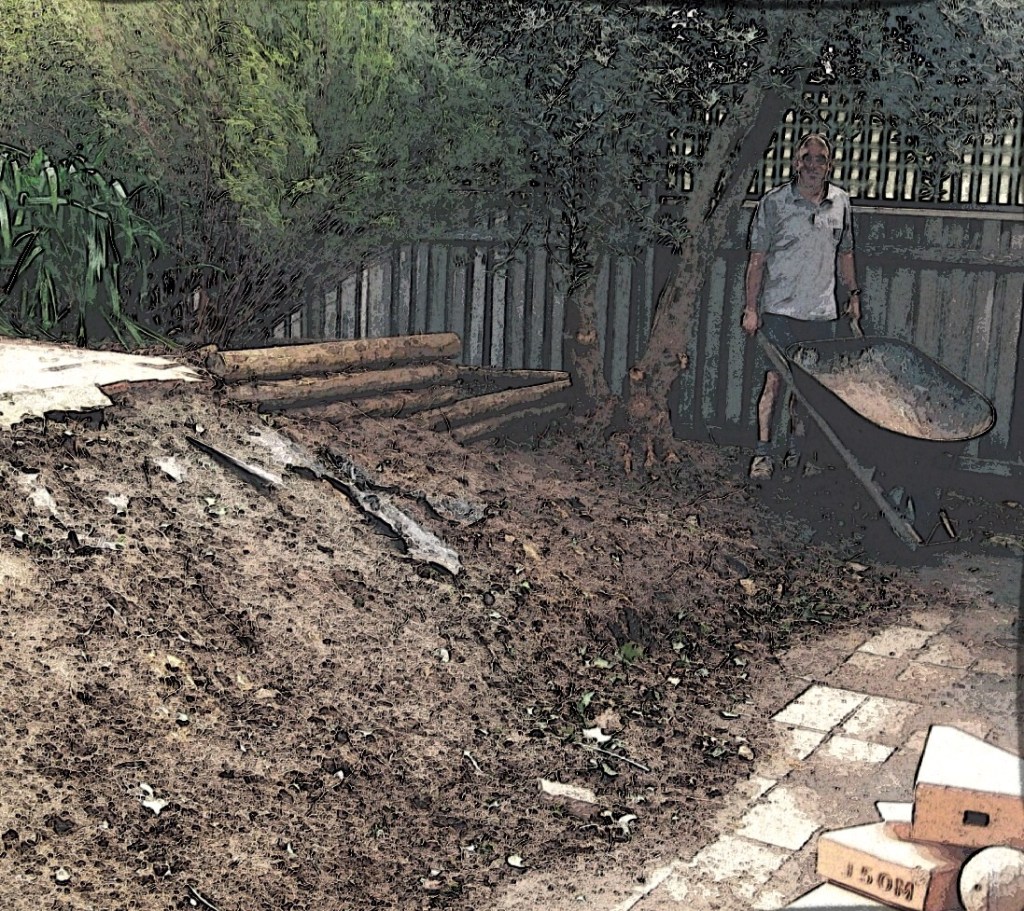
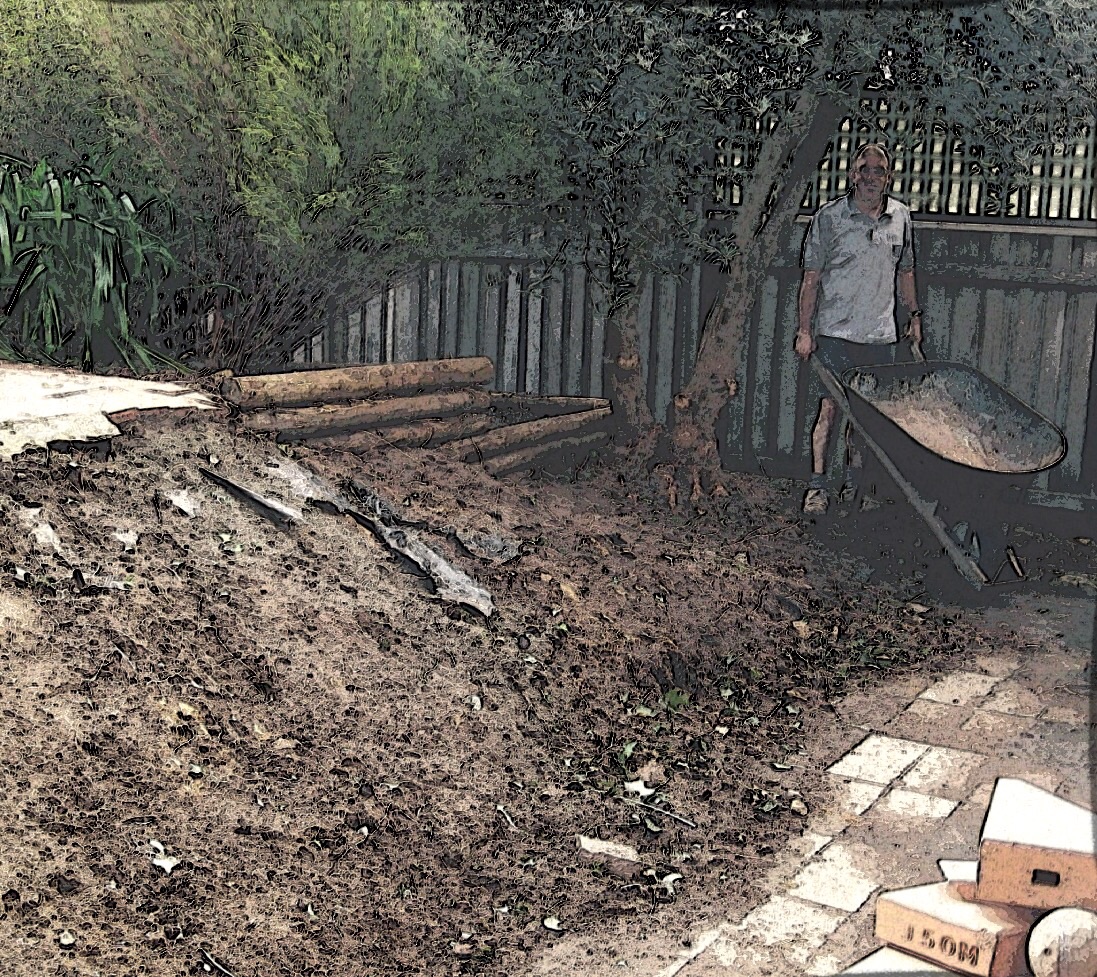
    To the reader: As a university student I earned a meagre income removing rubbish. I owned a small utility truck (known as a ‘ute’ in Australia). For seven-dollars a load I’d remove anything; mostly other peoples’ unwanted garden refuse. Occasionally a large pile of dirt would stare me down! With stoic fortitude I remember the words “Oh! cursed pile of dirt” thrusting deep into the core of my adversary. Slowly at first, with slight impact, the pile would respond seemingly none the worse for curse! But … as I was to learn … persistence beats resistance!

    To the poet: That “persistence beats resistance” is a truism; one that serves the poet well. The weight of stubborn words can take some shifting; some very heavy lifting. The original words to this sonnet were in the form of my own spiritual; in the face of adversity there is hope; the human spirit is well equipped to cope with hardship: “Oh! cursed pile of dirt, with thy cold and heavy stare, given time and shovel, thou shalt be moved from here to over there!”


    cursed pile of dirt cursed pile of dirt
  • New Wisdom

    New Wisdom

    What new wisdom has last night’s slumber brought
    to this “good morning” as of now untapped?
    How might the sun rise on a new thought
    and give ‘novelty’ power to adapt?
    With new thought comes the bud of inspiration,
    the compact remedy, as yet unpacked.
    It’s the starting point of contemplation,
    it’s the new idea that yesterday lacked.
    New wisdom much like a fresh flower blooms:
    not from old stock, not from a stem detached.
    Wisdom is but one bloom that newly grooms
    itself to best show a solution hatched.
    . Today refreshed is last night’s cameo,
    . As bud becomes bloom, so this day will grow.

    © Tim Grace, 21 September 2011


    To the reader: The sun rises, a new day dawns, and if the night was good to you there’s a fresh awakening. Over night, your niggles have been processed; disencumbered from yesterday’s tangles. And so, with fresh clarity you take a novel approach to loosening that stubborn knot. The tired solution, over-worked and fruitless, has been rested… retired to make room for this day’s innovation.

    To the poet: In construction, some poems are satisfying others wrestle with their maker. Those that satisfy, like this one, have a physical arrangement that scaffolds the poem’s structural sense. By design, a satisfying poem will have physical strength; a visible appearance that matches its message. A poem with look and feel has inner and outer strength, rhymes feel relaxed and resoundingly echo their way throughout the text; form and function tied with an evident but invisible thread.


    image