Tag: sonnets

  • Release The Brake

    Release The Brake

    You’d better contemplate your journey now.
    Talk as you would walk with a natural gait.
    Learn to wait, stand your ground, take a bow.
    Be patient, be present … anticipate.
    By all means stride out, by all means leap forth.
    But do take care, know when enough’s enough.
    This is the stuff of immeasurable worth;
    the fortitude you need when things get tough.
    You are where are, for good purpose; there
    not to stagnate, not to stop, you’re there to make
    the most of moments (rehearse and prepare)
    and then, when you’re ready, release the brake.
    . As a general rule, what’s far becomes near.
    . Life, as is our school, renders most things clear.

    © Tim Grace, 18 July 2012


    To the reader: Effectively managing the erratic pace of life takes wisdom. Going with the flow is one technique; perilous when that pace is frantic, stultifying when things grind to a halt. No, we can do better than that. Finding your own natural rhythm is the trick. Live life in a relaxed state of readiness… poised; as in ‘having a composed and self-assured manner.’

    To the poet: Adjusting a suit can be a simple matter… hems up or down. On the other hand the process can be laboured and intensive; costly and expensive. The same can be said of editing a sonnet. Like its predecessor, this sonnet fought tooth and nail not be adjusted. Every line took umbrage at the mere suggestion of change or alteration. In the end we were both exhausted.


    Release The Brake Release The Brake
    Picture Source:
    http://youtu.be/8sJz-iEd1PA
     

  • Under the Sonnet

    Under the Sonnet

    With its ten gangly legs, and five long feet,
    it hobbles the cobbles – a diddle-dee-dum:
    pedals the rhythm of a Roman street;
    travels to Britain – a fiddling strum;
    espouses rules but allows them broken;
    copes with rejection and hopes of the heart;
    in moments of need it’s quite outspoken;
    a smitten attachment to Cupid’s dart.
    Many a muse has become its focus:
    blushed at the poet’s devotional praise:
    In love sings the rose; in Spring sings the crocus.
    In time comes a couplet, as sentence or phrase.
    . Lovers of the word think more upon it,
    . through chapter and verse … none beats the sonnet.

    © Tim Grace, 11 July 2012


    To the reader: A routine day needs a dose of character; an element of surprise; a sprinkling of unexpected pleasure and discovery. Zeus, in union with Mnemosyne, fathered nine amusements. With breadth and reach his daughters (the Muses) tantalised his curiosities. As sources of inspiration, their “hearts are set upon song and their spirit free from care”. Through the Muses we discover the beauty of art, the wisdom of science and the splendour of life.

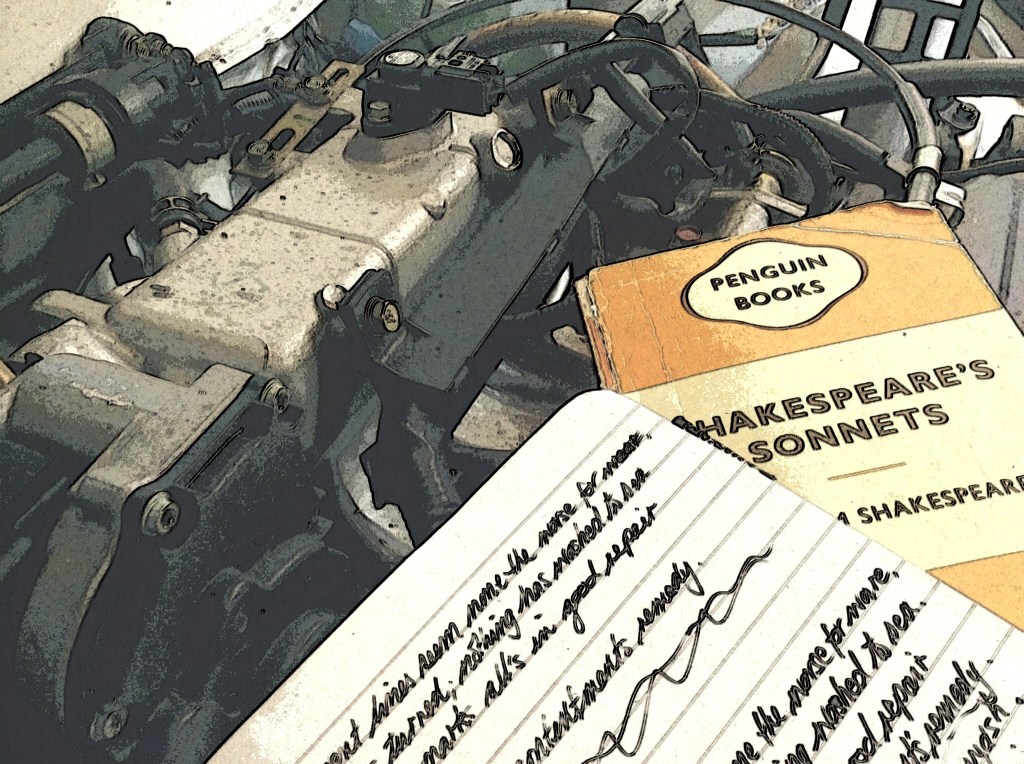
    To the poet: Once in a while a poet needs to take stock. Sonnets (under bonnets) need a service; a check of mechanical and electrical systems; to synchronise pistons and calibrate sparks. In the process, it doesn’t hurt to check that lubricants are clean and viscous; mediating flow and modifying friction. Fuel lines and coolants need attention to ensure isolated function. With tolerance, the system allows for wonderful variation… the sonneteer’s journey continues.


    Diddle-Dee-Dum Diddle-Dee-Dum


  • Notographs

    Notographs

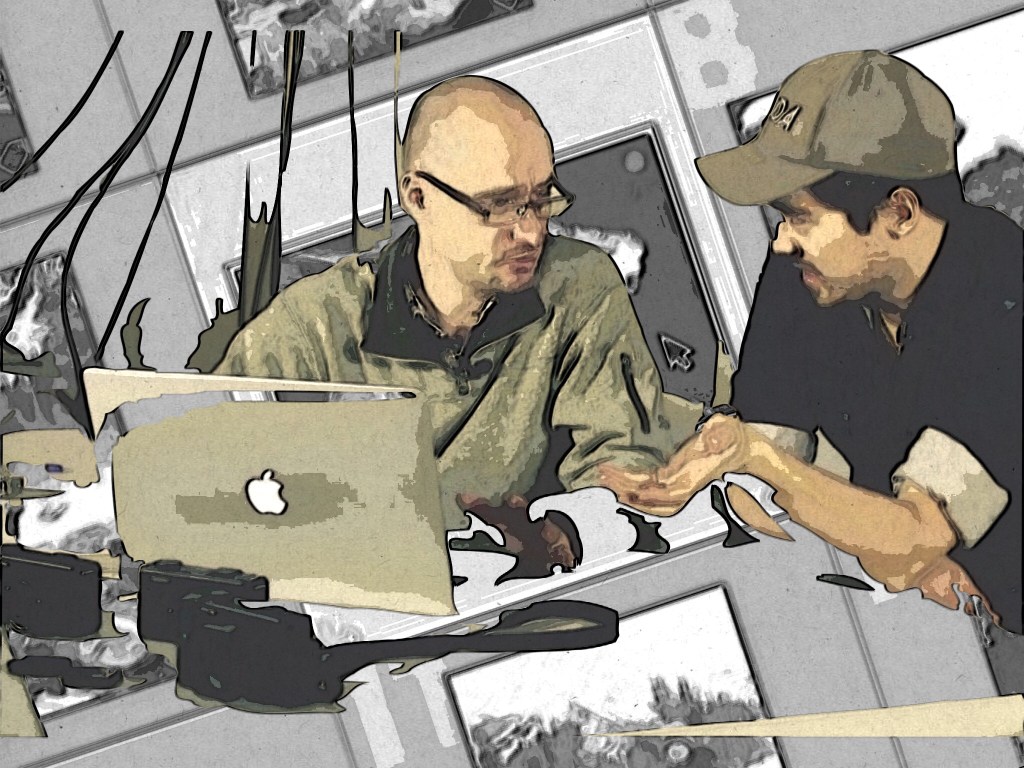
    In front of me sit two photographers,
    swapping thoughts on a gallery of shots;
    contemporary, digital philosophers
    sharing the joy of pixilated dots.
    They scroll through images and often pause
    to seek critique from a like-minded peer;
    they relive the moment, wonder its cause;
    they reflect upon a setting and think it queer
    that light through a shutter would strike a pose;
    shift attention to itself and so steal
    the focus of the frame – and so it goes,
    who knows the prism – as would light reveal
    . I watch from a distance – stealing quotes.
    . Adjust my frame of reference – taking notes.

    © Tim Grace, 8 July 2012


    To the reader: I sat alone, absorbing my surroundings; translating what I saw into comprehensible passages of ink… taking notographs. Behind me, two men shared a table and their photographic enthusiasm. Their expert mastery was evident, but so too was the thrill of light’s incidental intrusion. The mischievous play of light is hard to replicate in poetry. Can you over or under expose a word … is that the role of an adjective?

    To the poet: Snapshots capture incidental moments; it’s difficult to elevate interest above a casual glance. An environmental scan doesn’t always return a topic of literary note. Occasionally, the mundane is given gloss; just enough to raise an eyebrow or prick an ear. The jotted-poem, like the snapshot and the pencilled-sketch, has to reflect its momentary inspiration with readiness and brevity; stretch the point and you’ve lost the plot… easy does it.


    Notographs
    Notographs
    Picture Source:
    http://youtu.be/f3VjyHQiqdE


  • Friends – not lovers

    Friends – not lovers

    Friends, not lovers, protect us from ourselves.
    They can hold us steady, disentangle
    emotional strings, retrieve he who delves
    too deep; ungrip the hand that would strangle
    from life all good reason to continue
    the good fight (for a good cause warranted).
    Such is the good friend, with every sinew,
    a good connection, a well-cemented
    source of truth; a solid anchor of sorts,
    a fixed point of reference, not to be moved
    by whim or fancy (such as love contorts);
    so admired, esteemed, and much approved.
    . Such is the friend who through life endures,
    . promises nothing …. simply reassures.

    © Tim Grace, 23 June 2012


    To the reader: Love, besotted love, is emotionally vulnerable. Through devotion, tender love is unable to detach itself from heartfelt entanglements. The bond of friendship, however, has commitment without the surrender of proximity. Through distance a friend maintains objectivity; sometimes critical in the heat of emotional turmoil. The lover will tend to move towards the fire; the friend one-step back. A lover will sacrifice; a friend will rescue.

    To the poet: The continuity of rhythm and meter delivers flow; but, the principles of design apply to poetry … too much of a good thing detracts from character and diminishes interest. The deliberate disturbance of flow is part of a writer’s craft. Displacement is an effective ploy in attracting attention; but overplayed the strategy loses impact – predictability is the pitfall.


    Friends - not lovers
    Friends – not lovers
    Picture Source:
    http://youtu.be/SuUrG4Y29do
  • Like-For-Like

    Like-For-Like

    What of mimicry that honours the past?
    It’s somewhat amazing that like-for-like
    replacements have the talents to recast
    an event – so true, a match would strike!
    True, as in truth; so believably real.
    Real, as in genuine; a copy good.
    Good, as in that with the best to reveal.
    All things being equal it’s understood
    we appreciate a ‘genuine fake’
    as long as it’s ‘true, real, and good’ in shape.
    We value the effort that it must take
    to resemble, mimic, copy and ape.
    . True, real and good – the marks of excellence,
    . altogether bound – without pretence.

    © Tim Grace, 10 June 2012


    To the reader: Of love, Shakespeare unpacked its elements as fair, kind and true. Time and time again he returns to this theme. There’s a sense he’s not fully satisfied with previous attempts; and so, has another go at getting it right. Sometimes the approach is quite subtle, on other occasions he’s openly deliberate in assemblage. Sonnet 105, is a prime example; one in which poetry is out-played by structural mechanics… it’s as much a riddle as it is a rhyme.

    To the poet: Imitation is the sincerest form of flattery (according to Charles Colton). On that basis, I had a go at describing ‘excellence’ with its elements being true, real and good. The first task is to establish purpose and, then as Shakespeare did, sequentially assemble its elements into a plausible list of contributing factors. From purposeful to plausible is two-thirds finished; the final third requires polish… it’s as much a puzzle as it is a poem.


    like-for-like like-for-like
    Picture Source:
    http://cp91279.biography.com/1000509261001/1000509261001_2013980530001_William-Shakespeare-The-Life-of-the-Bard.jpg


  • Life Long Journey

    Life Long Journey

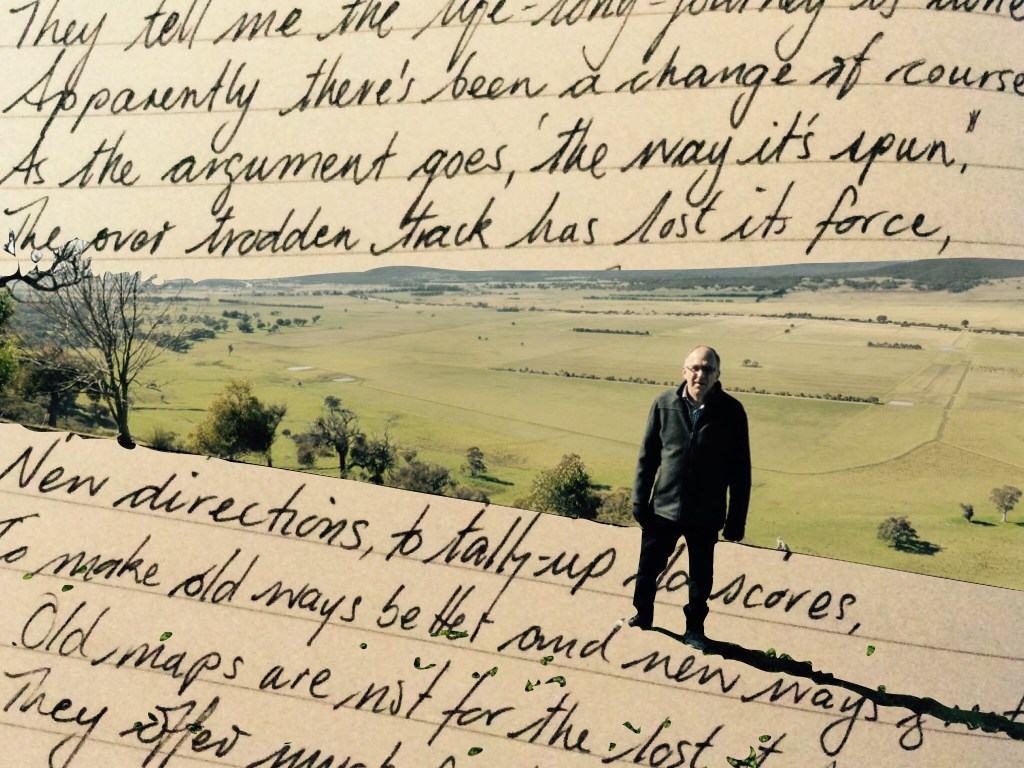
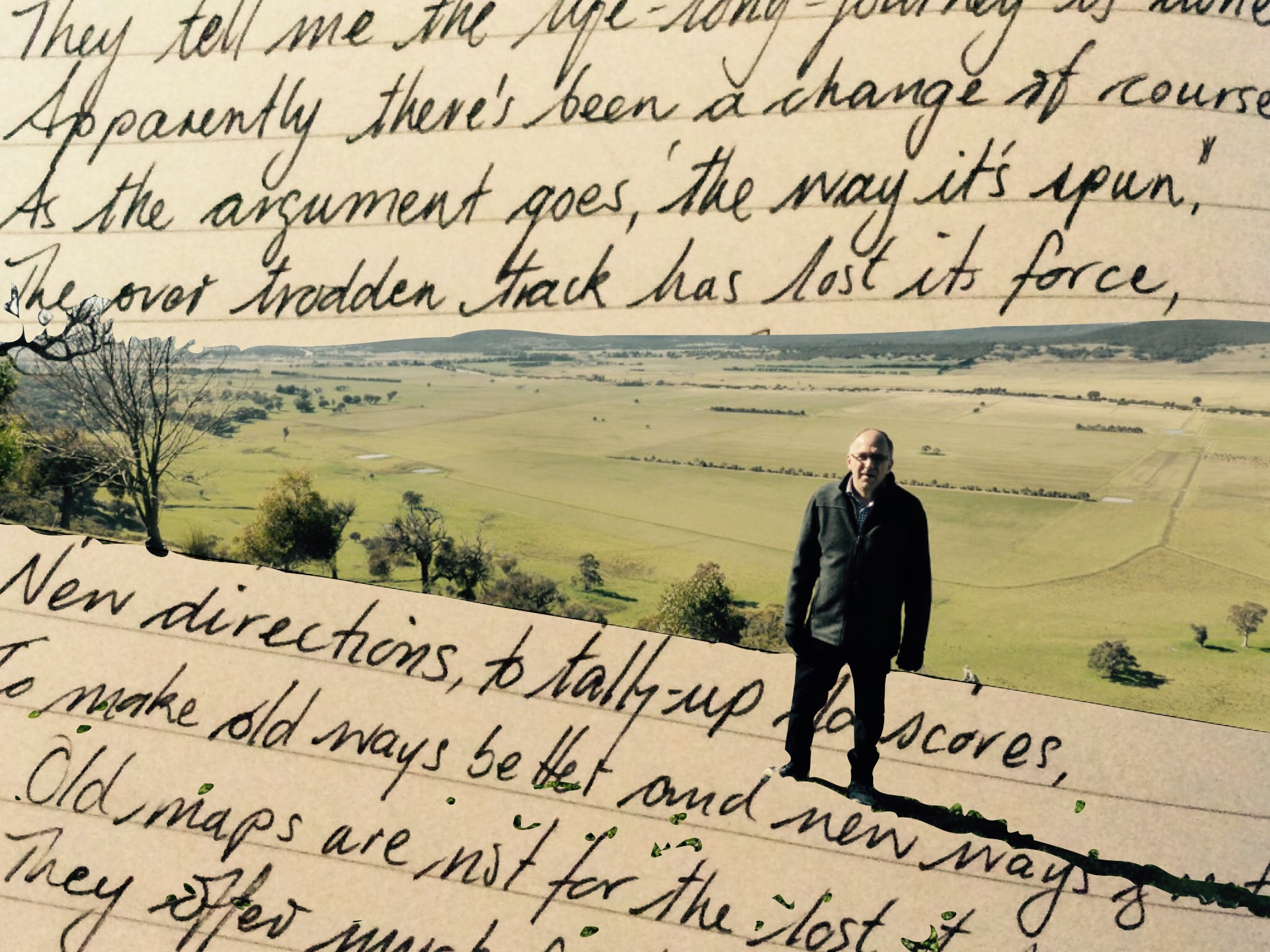
    They tell me the life-long journey is done.
    Apparently, there’s been a change of course.
    The argument goes “that old race is run…
    that over-trodden track has lost its force.”
    Seems to me, it’s the traveller’s gone astray.
    It’s not the map that has thrown its compass
    to the four winds; and so, must find its way.
    It’s the runner; stuck in a deep crevasse:
    he’s become the point of question, the cause
    to pause, to hesitate, to contemplate:
    ‘position and condition’ on foreign shores;
    he threw aside the guide and tested fate.
    . Old maps are not for the lost to squander,
    . they offer much for the lost to ponder.

    © Tim Grace, 3 June 2012


    To the reader: Throughout life we adapt to changing circumstances. Those who stop adapting are least likely to survive the ravages of time. Thus, the life-long journey is a continuous construction of self; one that represents our environmental relationships. The key to survival is adaptation. Our adaptive capacities (knowledge, skills and understandings) are transmitted through interaction with others. There is no end to this journey, forever mapped to a lust for learning.

    To the poet: As a counter-argument this sonnet doesn’t quite reach the status of polemic. It does however mount a good case for life-long learning as mapped to a solid premise. The poetical challenge was to intersperse some geographical terrain into the text; the geographical context. The final handwritten version (3 June 2012) of this poem struggled to find its way; a digital rescue (2 February 2015) was applied a year or two down the track.


    life long journey life long journey