Tag: sonnets

  • Four-legged Rort

    Four-legged Rort

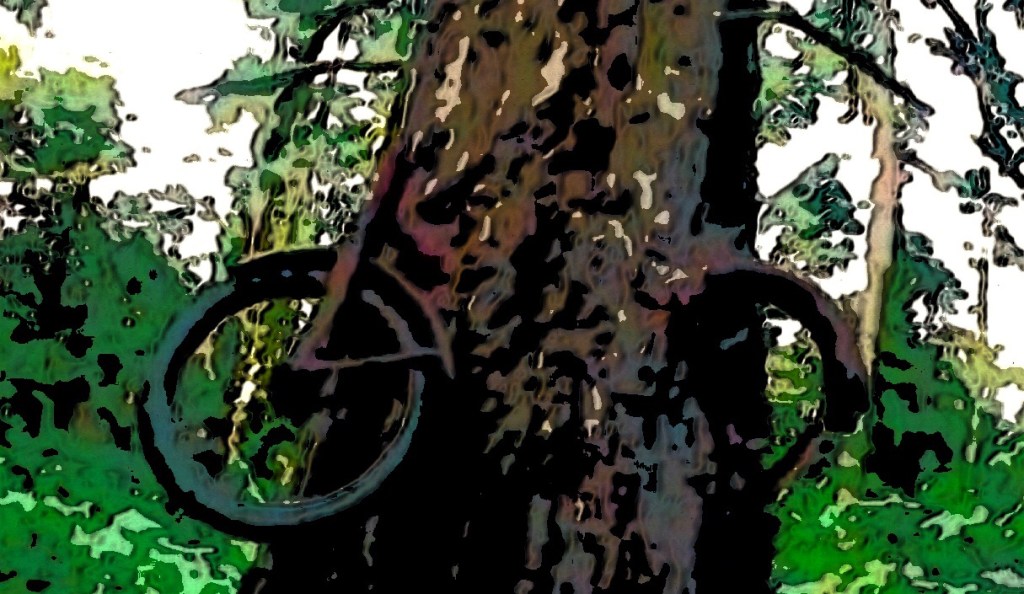
    To overcome the arrogance of thought
    I must learn to draw what’s seen not known,
    I must then, confront the four-legged rort
    that would have my tables with all legs shown.
    For as long as knowledge controls my hand
    I am nothing more than a drafting pawn.
    For as long as I am in thought’s command
    my work will be crowded and over-drawn.
    What my canvas captures is not complete:
    it’s my view, my angle, my perspective;
    it’s everything that needs to be, replete
    with meaning, mine eyes have been selective.
    . Beware the mindset, as would knowledge coax;
    . of full-display, ’tis but a clever hoax.

    © Tim Grace, 11 October 2012


    To the reader: The conundrum of competing perspectives tickles our intellect. This we accept. In representational terms, there are plainly differences between what we see and what we know. Unhelpfully though, Shakespeare further adds an emotional dimension to our interpretative struggles. He reminds us that regardless of what makes intellectual sense our ‘heart’ speaks its own mind and through this prism creates a kaleidoscope of emotional confusions.

    To the poet: “Is to know a hoax, a grand dilusion?” Certainty is no trusted companion; more like a fickle friend; an opportunist; an answer with no solution. The poet is forever tempted, for completeness sake, to achieve resolution; un-puzzle a proposition through clever wit. In poetry, and the visual arts, we learn to create a plausible perspective: true more than accurate, honest more than correct.


    Four-legged Rort Four-legged Rort
  • Variations

    Variations

    This from that‘ can be interpreted thrice;
    subtle ambiguity some might say.
    Otherwise expressed, a poet’s device;
    so that hairs might split, so that ends might fray.
    From this that‘ a simple alteration
    from the original text, an exchange
    of order, a sequenced variation:
    sleight of hand, write of passage, slightly strange,
    rightly plausible; curious, obtuse.
    That’s the poet’s ploy, that’s the poet’s choice.
    From that this‘ offers another excuse
    to alter meaning without change of voice.
    . From that this… from this that … or … this from that?
    . Noteworthy differences … or idle chat?

    © Tim Grace, 10 October 2012


    To the reader: Variations on a theme. Subtle change. One of many interpretations. The Sciences love to monitor variation; noting change with mathematical precision. In the Arts, it’s through music that variations abound. The music industry cleverly exploits the human ear’s acuity by releasing different versions of the same song, or orchestral piece, for our listening pleasure… spot the difference.

    To the poet: … another one of those puzzle poems. Word order is an important semantic tool. Sometimes it makes little difference to meaning; other times, a shift in placement can disorient the reader’s expectation. Used deliberately, a change of word order can be very effective in drawing attention to a point of difference.


    Variations Variations
  • Hastiness

    Hastiness

    Hastiness – the answer that’s come too soon:
    a gift-wrapped solution, an empty shell.
    It’s just another song without a tune;
    has momentum but nothing to impel.
    We are all too ready to jump and leap:
    jump to conclusions through hoops of faith.
    Too quick to give away what we should keep:
    ready to end; too impatient to wait.
    Hastiness – cuts loose, all that’s to follow:
    severs ties with solutions; tried and true.
    Too quick to grab at straws, thin and hollow.
    Too quick to surrender to all that’s new.
    . Hastiness – not an answer, just a fudge;
    . just an assumption, they’ll be quick to judge.

    © Tim Grace, 8 October 2012


    To the reader: Since the beginning of biblical days, through the wisdom of Solomon, we’ve been advised to avoid the lazy answer; Proverbs 21:5 states that:diligence leads to riches, as surely as haste leads to poverty”. And more confusingly we’re told to balance haste over speed (or is it the other way around?). All very well, but convenience is an attractive lure; the short-cut solution that satisfies impatience often appeals.

    To the reader: “How are we to judge without conclusion?” – The good poem reads as fresh and acute; of the moment, forever true. Hence, there shouldn’t be too many indicators of laboured inspiration. Conversely, signs of a rushed solution are markers of laziness. Somewhere, built into a poem, there needs to be both ‘point and purpose’… like ‘dollars and cents’ they are the currency of a ‘reading and writing’ exchange.


    image


  • Forged or Forced

    Forged or Forced

    It’s not that these are different: so unlike
    that resemblance must be forged or forced
    from two extremes. It’s not that hard to strike
    agreement; one that’s logically endorsed.
    The fear of difference is a sad disease,
    a limiting malady; one that’s stoked
    by judgement (prejudice) and jealousies:
    stoked by greed; too easily provoked;
    too easily given voice of reason;
    dressed as patriotic (us not them).
    As contrast sees many, difference sees one.
    It’s from a single cell that many stem.
    . Be not divided by difference, delight
    . in contrast, sing of all things bold and bright.

    © Tim Grace, 7 October 2012


    To the reader: When an image is drained of definition we can manipulate its balance to achieve a better effect. Toggling the tonal quality adjusts the play of light and colour. Too much light and the image is saturated with colour. Any over-compensation risks distortion. The trick is to graduate changes with care so that shadows, lines and temperature strike a natural pose.

    To the poet: In any act of distortion, there’s a point at which an adjustment disagrees with reality; the exaggerated affect stretches belief. Over-emphasis is the literary equivalence of photographic saturation. In concluding a sonnet there’s a risk of rising to a climactic couplet, a crescendo of pretentious agreement… “sing of all things bold and bright” may have met the tipping point?


    image

  • To this point…

    To this point…

    To this point, there’s a statement of intent:
    the sending of a message; the promise
    to commit; it’s this sets the precedent,
    this then becomes the line of sight, from this
    all else is judged upon delivery.
    Against what’s known, what’s been, new things are judged:
    held account; tested for transparency;
    valued for clarity … dismissed if smudged.
    The purity of truth is honesty:
    revered as the path to enlightenment;
    it’s the well-spring of possibility;
    a straight approach without impedement.
    . For those who are driven by conviction,
    . be not distracted by contradiction.

    © Tim Grace, 6 October 2012


    To the reader: Up to a point, most of us can hold opposing points of view without losing face or sleep. The internal debate over right and wrong, good and bad is instructive. Occasionally, gaps widen and curious differences become stark and polarised. Through choice, we abandon one idea for another and our personal conflict is resolved. Through good government, mature societies can do the same: we live with contradiction but not hipocracy.

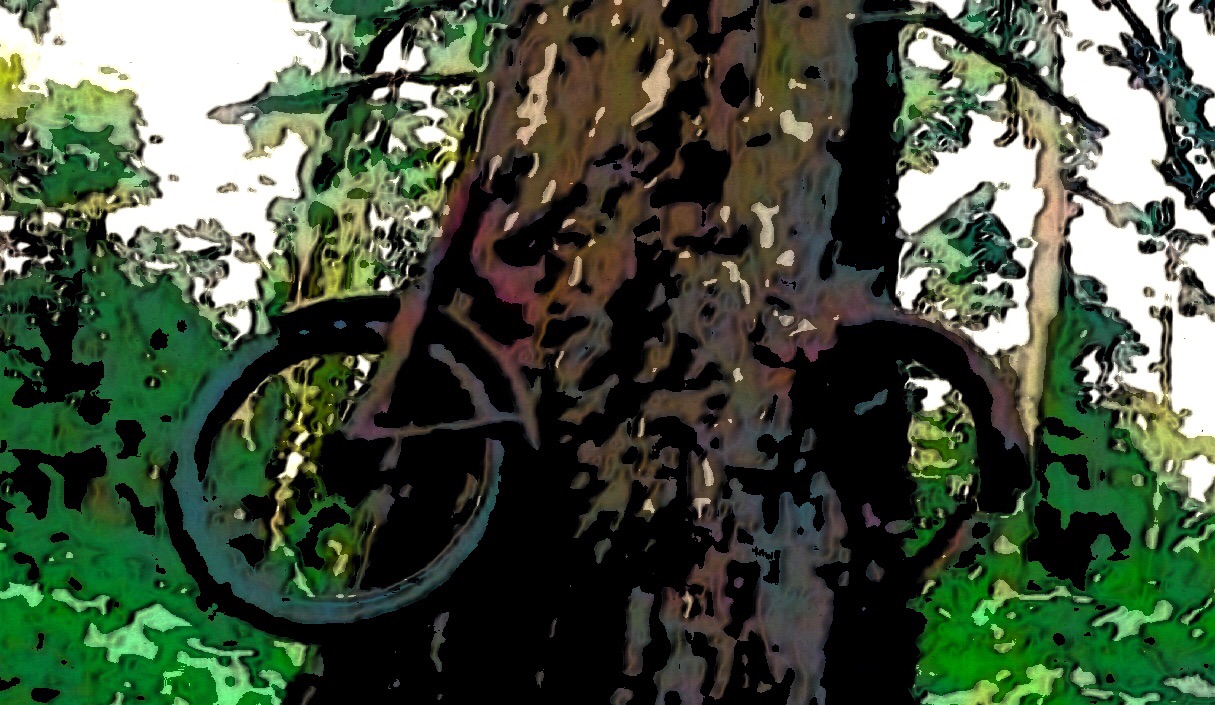
    To the poet: “Is the line concise on contradiction?” Unpacking, then reassembling a ten-syllable sequence created for poetic effect is a bit of a stretch; for reader and poet. On the way to a logical conclusion there are many distracting alternatives; rhyme being the most significant. As one rhyme demands another the margin of error widens and the meaningful target becomes less and less a possibility. You can feel it happening… but like bike and tree there’s a fatal attraction to disaster!


    To a point... To a point…
    Picture Source:
    http://youtu.be/06J1GLnvIss
  • Better so to listen…

    Better so to listen…

    . better so to listen, gentle of ear,
    . it’s their voice, not yours, that will make things clear.

    © Tim Grace, 5 October 2012


    To the reader: The soft-counselling of a friend provides a safe place for disappointment and sadness to speak its voice. In the resolution of loss or grief there are moments when wise-words are best left unspoken. In these moments, the broken-hearted and the grief-stricken seek nothing more than reassurance. Their healing process begins with the confirmation of a companion that cares enough to listen. In time, the spoken response will be appropriate… save that for later.

    To the poet: “Should they be blurred to favour tolerance?” Between writing and interpreting this line of thought, I think I’ve softened the tension between tolerance and suspended judgement. The need for restraint in criticism has been replaced with a more general statement on responsive listening. I’ve not really answered the question: “How much lee-way does intolerance deserve?”


    Offer Strength Offer Strength
    Picture Source:
    http://youtu.be/RvqSkStr94A