Tag: sonnet

  • Five Notes

    Five Notes

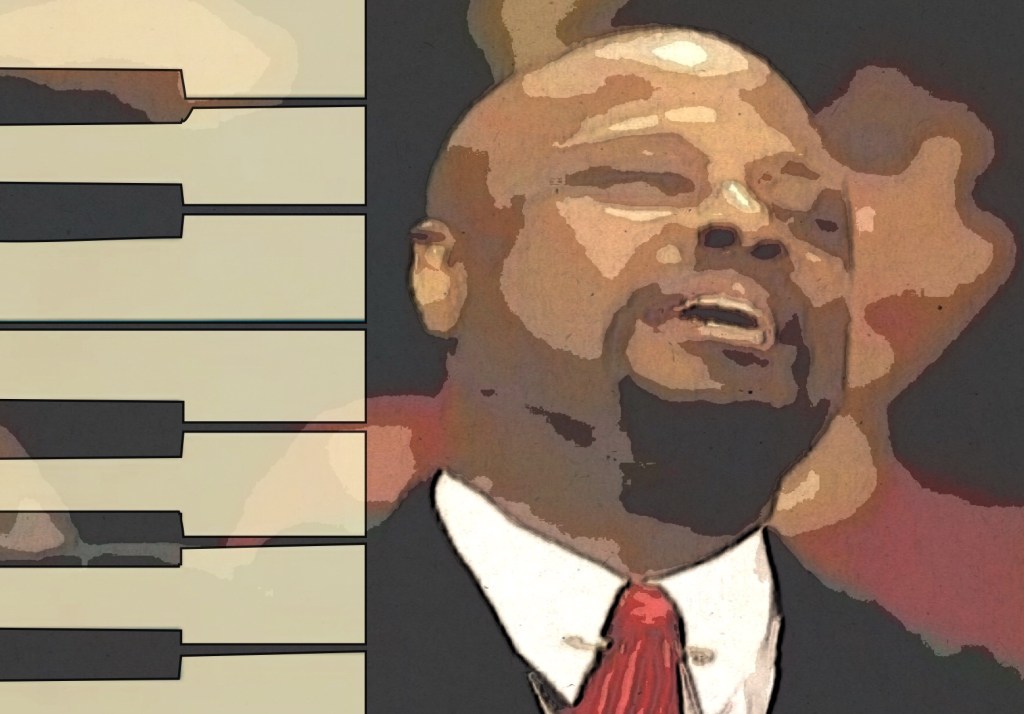
    Five notes make a negro scale,
    On a keyboard they are black.
    Pitched to help the heart prevail;
    Played to bring the spirit back.
    They strike the chord of freedom,
    And invite the voice to sing.
    If you listen you can hear them:
    Lilting, wafting, calling:
    Calling to the lost, the grieving;
    Beckoning the broken, the oppressed,
    Singing something to believe in,
    Bringing anthem to a quest.
    . Sing to the notes of freedom; let them soar,
    . Sing so we can hear them; forever more

    © Tim Grace, 3 July 2011


    To the reader: With a surname such as mine ‘Amazing Grace’ has held a life-long interest. Occasionally, I’ll venture into an exploration of the song’s pedigree. The best of all explanations, in my opinion, is a 2012 sermon by Wintley Phipps. In this moving presentation Wintley explains the history of the Slave Scale and “shares how just about all negro spirituals are written on the black notes of the piano”. The writer of ‘Amazing Grace’ was John Newton (a slave trader) moved to give lyrical interpretation to his cargo’s plaintiff chorus.

    To the poet: When you write in the footsteps of inspired art you take a risk. The comparison will more than likely reduce your words to mere exercise. And so, it’s best you respond accordingly… ensure the exercise is well executed; make it interesting.


    five notes five notes

     

  • No Place At All

    No Place At All

    Why didn’t you do something?
    When I needed you, were you there?
    Was I not the only thing,
    that of all things, you could not spare?
    Did it matter that I was gone?
    Did my absence cause concern?
    Did you call for me; and there upon,
    did you hope for my return?
    Where was I, when you thought of me?
    Was I front or back of mind?
    Did you think that I would ever be
    in a place that you could find?
    . Where was I? … scratched upon a wall,
    . I was here! … in no place at all.

    © Tim Grace, 26 June 2011


    To the reader: To be absent is not the same as missing; for missing is akin to lost. Absence creates an emptiness that can be explained but not always with understanding; never with satisfaction. Through absence we meet a measureless void. The comprehension of absence is poignant; with recognition comes a reminder of what was once more fulsome. Absence leaves a yearning; missing leaves a space.

    To the poet: Eight questions… not an answer to be found. That’s the point. That’s absence. The structure of a poem builds around its theme. A poignant theme will be overwhelmed by too much structure; it will lose it tentative unsurity. The strong statement of “I was here!” bares the heavier load of “Where was I?” … I wasn’t lost or missing; I wasn’t gone …I was absent …and did you care?


    no place at all no place at all


  • Possessed of Darkness

    Possessed of Darkness

    In darkness, lust has sight of just one eye;
    so, little more than nothing does he see.
    Possessed of darkness lust and love both vie
    for right to don the cloak of dignity.
    Lust (that nightingale) clad in midnight’s gown,
    silhouettes as naked, cavorts as stark;
    fashioned to force from love a prudish frown.
    Lust casts his sullied shadow at love’s lark;
    in response, love is dressed in dim-lit garb.
    Love seeks the soft refuge of a candle.
    Love in night’s attire is sensual; suave.
    Love is demure, shows no taste for scandal.
    . As night takes possession of darkened rooms,
    . love’s noble battle over lust resumes.

    © Tim Grace, 26 June 2011


    To the reader: Light and dark emotions are responsive to context; invited or avoided. Light emotions take pleasure from the fresh disclosure of a pure moment. On the other hand, dark emotions shun exposure to an open scene; they much prefer the secrecy of shadows. Somewhere in the soft subdued lighting of a comfortable space love and lust agree to cohabit; and in that ambiance, find sweet embrace.

    To the poet: As you read Shakespeare’s sonnets you’ll often come across two sonnets that sit side-by-side as pairs. Sometimes, they’ll tell two parts of the same story; other-times, they’ll repeat the same story from a different angle. The pairing is as much convenient as it is deliberate. As ‘Poem A’ develops ‘Poem B’ evolves as a counter-balance. The discarded lines become adversaries; too demanding to ignore.


    possessed of darkness possessed of darkness


  • Bright Source

    Bright Source

    By light of day he sees her twice;
    with truth and beauty she does shine.
    Together so, his two eyes splice
    what love does well combine.
    Truth with all its honours bound
    glows best when bathed in light.
    Beauty too, is likewise found
    where shines the sun most bright.
    Light reveals her sights unseen
    and brings to fore her vision;
    shines on spaces in between
    to uncover what is hidden.
    . The bright source of genuine affection:
    . illuminated love; delight in its projection.

    © Tim Grace, 16 June 2011


    To the reader: Delight; illuminated love… a revelation! Beauty and truth are tested through exposure and upon illumination become a vision. Truth without beauty casts a shadow of doubt. Beauty without truth shines dimly. Honesty has nothing to hide, seeks no dark retreat. As Dylan Thomas wrote: “Do not go gentle into that good night. Rage, rage against the dying of the light”.

    To the poet: Using the strictest of interpretations not a perfect sonnet. Yet, it works in many ways as a sonnet was meant. A compact, neat carriage of verse; internally strong with structure and substance. Truth and beauty, revealed in the first two lines, are separately expanded in the following six lines. The next four lines add a touch intrigue… is the poem erotic; surely not? And then, for summary’s sake, the final couplet draws together a lasting glimpse, a concluding essence that invites a second read.


    bright source bright source
  • Through Contemplation

    Through Contemplation

    It’s through contemplation that one sees
    behind the quick attraction,
    beyond the chic events that tease
    and taunt us to distraction.
    It’s the day-dream that delivers respite
    from the constant nag, the relentless pull
    of the trivial, the transient and trite;
    in this void there is no full;
    nor is there emptiness;
    nor is there substance (dried or set).
    There’s no position of fixed address,
    nothing to remember, nothing to forget.
    . It’s through contemplation that one reveals
    . the everything that sight conceals.

    © Tim Grace, 9 June 2011


    To the reader: Sight and light are complementary themes; together, they deliver vision in a physical sense. Seeing behind and beyond vision, delving into contemplation, is a metaphysical experience. Middle-grounded thought processes that deceptively avoid the optic nerve’s careful watch. It’s through contemplation, eyes off-guard, that the world is transfigured; broken from its matrix to form the poetry of mental images.

    To the poet: In poetry, the repetition of sounds adds emphasis and certainty of voice; provides an aural structure. In this poem alliteration, assonance and consonance are given free reign. Not too much. For too liberally applied, these devices become laboured and tiresome; having the opposite effect to that intended. Used wisely, these tools of the trade define the quality of writing. When used as ornamentation the poet slides a slippery slope.


    through contemplation through contemplation
  • With Such Precision

    With Such Precision

    You write with such precision.
    You bemoan your broken quill.
    You complain of love’s condition.
    You would have the world stand still.
    The more you force contentment,
    as would appear your goal,
    the more you’ll meet resentment:
    … you’re a prisoner on parole.
    Let go the restless musings
    that cripple future dreams,
    accept the harmless bruisings:
    … be at peace with how it seems.
    . Take the best of your convictions,
    . make the least of your restrictions.

    © Tim Grace, 5 June 2011


    To the reader: Shakespeare was a ‘grumpy old man’ when it came to his relationship with time; frustrated to say the least. Time, whether past, present or yet to come, caused him angst. He riled against its ravages, scoffed at its seasons, and bemoaned its brevity. He proposed solutions (the womb, the word, eternal love) and then realised their futility… “ruin hath taught me thus to ruminate, that Time will come and take my love away.” (sonnet 64)

    To the poet: Ellipsis… threepence for your thoughts; or was that just a penny. In the absence of any other form of punctuation the ellipsis often suffices. In an informal sense, the shortening of a sentence is a convenient starting point… maybe a soft ending. For a poet, supposedly a wordsmith, over use of the ellipsis might be considered lazy…


    with such precision
    with such precision