Tag: Poetry

  • Vague Forms

    Vague Forms

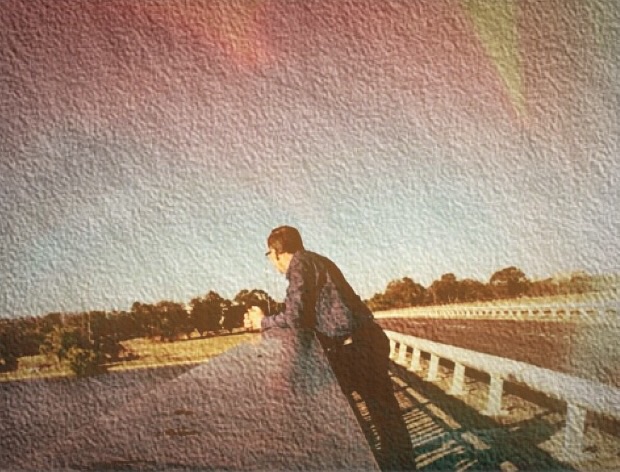
    Behind him lay a field of shattered dreams.
    Dead donkeys, lead balloons and weathered rope.
    Knotted narratives given strangled themes;
    given up as useless and beyond all hope.
    Below him things assembled then dispersed.
    Watercolours washed across his canvas.
    Things happened as things do when unrehearsed;
    and so, moved in accordance with their mass.
    Ahead of him there rose a future tense.
    Vague forms described the shape of things to come.
    Possibilities left an awkward sense.
    The opposable thoughts of a Roman thumb!
    . What to make of this life that comes and goes,
    . of this so fickle life that ebbs and flows?

    © Tim Grace, 19 October 2011


    To the reader: Half a life ago, I drove across the city to an evening of life-drawing classes. I remember the trip as a drive that took me to another time and place. In a few short hours, once a week, I met myself as I’d always imagined I should be; an artist. An amateur artist alive with creativity. The drive there was part of the pleasure. As I crossed a bridge, one evening, I noticed a poised figure – still as a captured photograph: lonely, he stood upon the bridge, to contemplate existence; he looked behind; he looked beneath; he looked into the distance.

    To the poet: I’ve lost all the drawings. The paper yellowed and the charcoal smudged. I remember the physical flow of lines, the sweep of curved forms – foreshortened to compensate for the distortion of perspectives. But most of all, I remember the pleasure of that poem. It hasn’t yellowed. It’s an ever-present reminder of my encounter with a temporal experience; personal but at the same time universal.


    vague forms vague forms
     

  • New Reality

    New Reality

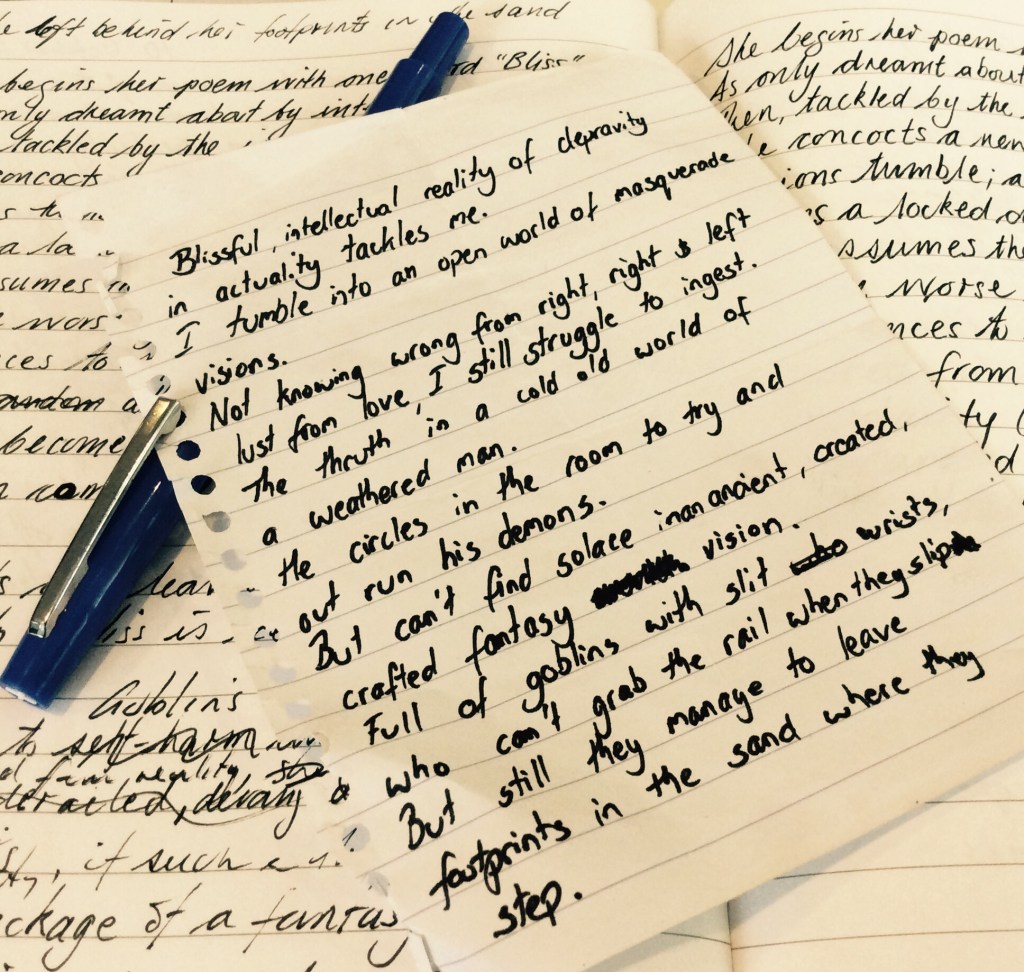
    She begins her poem with one word – bliss:
    as only dreamt about by intellect.
    Then, tackled by the irony of this
    she concocts a new reality; wrecked…
    visions tumble; a free-form masquerade
    opens a locked door, a struggle ensues.
    She assumes the soul of an old man, made
    all the worse by circling demons, obtuse
    references to goblins and slitting wrists,
    severed from reality, losing grip
    with certainty (if such a thing exists):
    the mangled wreck of a fantasy trip.
    . How so that psychedelic thoughts expand;
    . then shrink… vanish with footprints in the sand?

    © Tim Grace, 14 October 2011


    To the reader: Sitting in a fast-food cafe, I watched two girls struggling with the after effects of a drug-fuelled night before. The crude reality of a wasted night sprawled its way across the table in front of me. And then, with continuing stupefied indignity the girls oozed their way out the door to a waiting car. As the car drove out of view, my eyes returned to the now empty corral and there lay a small piece of note-paper; replete with the text of an experimental poet.

    To the poet: Her poem is in free-flow with an inventive array of emotive words tumbling through an hallucinated storyboard. Having become the keeper of this lost poem I decided it also needed rescuing – a sonnet make-over was underway. Poetic licence was taken where necessary but for the most part the plot and characters remain intact. For the moment, the original author is anonymous; I acknowledge her inglorious inspiration. Her poem is in good care – awaiting return upon request.


    image


  • Procrastination

    Procrastination

    I think I’ll go and make a cup of tea.
    Not because I need one; it’s more the case
    that it will fill this moment perfectly.
    More the point, that just now I need some space.
    I think I’ll go and strum my old guitar.
    Not that I’m rehearsing a performance,
    perfecting pieces in a repertoire;
    no, it’s more the case I need some distance.
    I think I’ll go and take a pleasant walk.
    A stroll around the garden would be nice.
    Not to tend to patches with spade or fork;
    no need … there are no weeds in paradise.
    . I think I’ll take a little time off task;
    . I’ll take a break and in distraction bask.

    © Tim Grace, 10 October 2011


    To the reader: Distraction; a half-deliberate measure, surely that’s procrastination. Allowing yourself to be waylaid, sidelined or set askew is probably not a text-book approach to best-practice delivery. But occasionally, a little time-out can serve your purpose well. The timing of a cup of tea, a musical interlude or a garden walk should be factored into a practical action plan; one that relieves the tedium and drudgery of work.

    To the poet: As a teacher I used to write children’s songs; three verses and a chorus. If the kids were lucky, they got a coda – the tail-end of a song. This sonnet reflects my old habits. Each of the three stanzas follows a predictable pattern; not that I’ve tried, but it’s probably quite easily converted to a rhythmic strum. Don’t be tempted, although the ‘sonnet’ translates from Italian into English as ‘little song’ that’s a trap too easily set; all too predictable.


    image

  • Breakfast

    Breakfast

    Does breakfast make a universal theme?
    Is the smell of toast too sentimental?
    Is one man’s milk just another man’s cream?
    Is it all too light and continental?
    Does breakfast brew the day with full intense?
    What substance from its richness can be drawn?
    What crescendo, what marvel, what essence?
    What potential, what message does it spawn?
    Does breakfast have the fibre, the backbone,
    the spine, the fundamental fortitude
    to steady the course of a rolling stone;
    to sculpt the shape of this day’s attitude?
    . More so than any meal, let breakfast shine,
    . let it feed the spirit and brace the spine.

    © Tim Grace, 7 October 2011


    To the reader: Breakfast is an event as much as it is sustenance. For those who rush the day’s first meal they miss the ritual. The breakfast-room is an old-fashioned concept with enough merit to still exist in the hotel industry. Standards and price differ greatly but in general there are three options: tea & toast; continental; and the full banquet. The occasional ‘big breakfast’ might be warranted but for a poet’s purpose tea & toast is more than sufficient.

    To the poet: Editing poetry requires a thoughtful space, somewhere comfortable and reflective. Re-drafting ‘on the go’ runs the risk of demolishing the poem’s original essence. This sonnet (not a good example) required considerable re-working to pull it into shape. As part of a long sequence it will have to hold its place but it’s hardly delivering the morning-reader much nourishing sustenance; for that I apologise.


    breakfast 1
    breakfast 1


  • Clings Too Tightly

    Clings Too Tightly

    He who clings to conviction too tightly
    will through suffocation more likely squeeze
    the goodness from his cause and un-rightly
    render breathless the whistling breeze.
    The iron-clad grip is a fragile bond
    and a stifling form of forced adhesion
    that lacks the surety to best respond
    to changing needs of rhyme and reason.
    He who takes a stance too rigid, he has
    built us all a prison; a crippling cell.
    And so confined we may well find, alas,
    that this one place provides no space to dwell.
    . He who needs to grip tight is insecure.
    . He who does not trip light will not endure.

    © Tim Grace, 2 October 2011


    To the reader: The need to dominate apparently reflects how you perceive your environmental context. Those who mature in a social atmosphere of mistrust will often compensate by adopting controlling behaviours; survival strategies. Their default position is to gain control over threatening circumstances; loss of power is not an option. Once established, the personality trait will reinforce itself and over time reward its own suffocating strictures, leaving no room to move; no air to breathe; no space to think.

    To the poet: As rules go, sonnets have their share; some are useful and allow the poet to create content within the frame. I’ve enjoyed getting to know the simple mathematics of fourteen lines. Some purists may describe one combination but in fact there are infinite ways of slicing and dicing the form. Shakespeare’s sonnets often play with internal relationships that loop backwards and forwards from an original stem of thought; he had no single formula. In the end, it’s a matter of balancing the equation; measure for measure and dose for dose.


    clings too tightly
    clings too tightly


  • Beggars Belief

    Beggars Belief


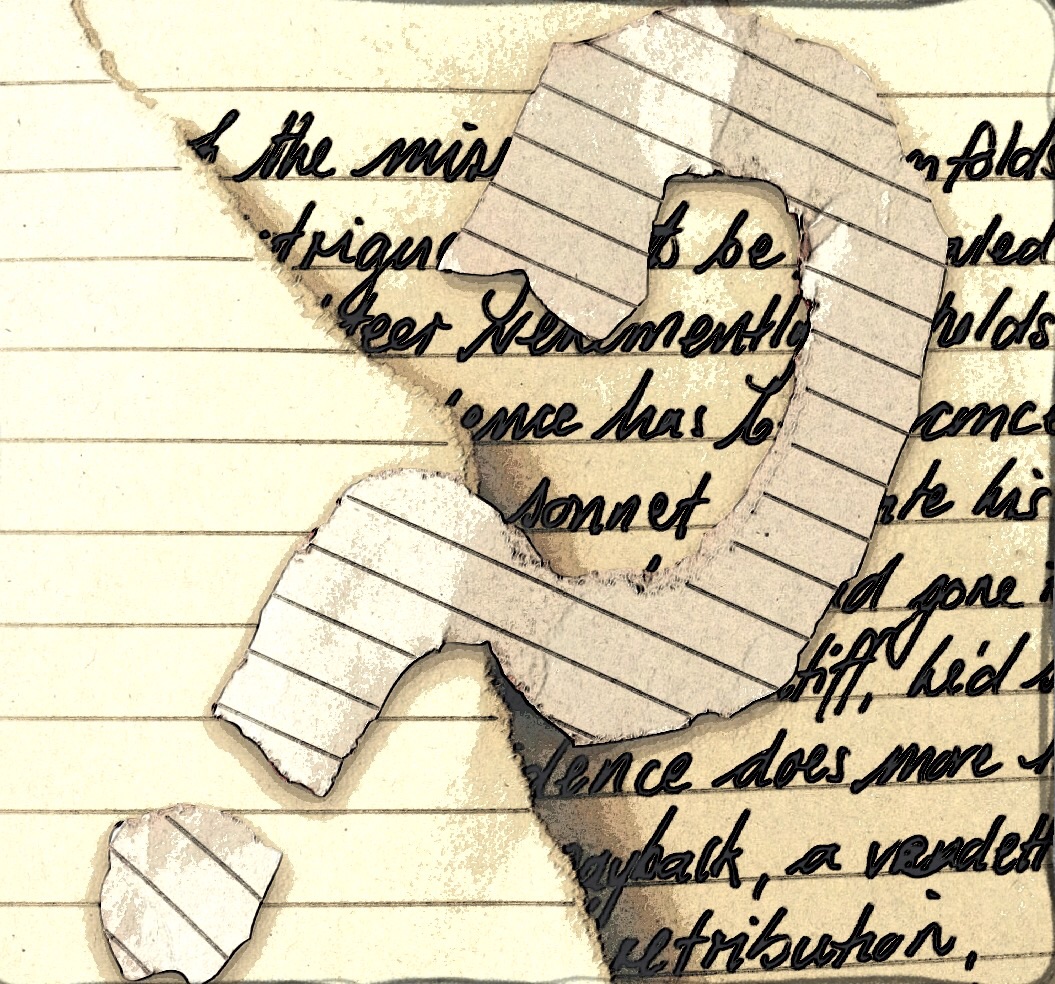
    The case of the missing sonnet unfolds,
    layers of intrigue, yet to be revealed.
    One: the sonneteer vehemently upholds,
    that crucial evidence has been concealed.
    Two: he claims the sonnet (to date his best)
    was finished and the draft had gone to print;
    and three: as aggrieved plaintiff, he’d suggest
    the weight of evidence does more than hint
    that the crime was payback, a vendetta,
    a deliberate and well executed
    act of retribution; every letter,
    every word, in every way disputed.
    . Why take possession of what causes grief?
    . Such a transgression, it beggars belief!

    © Tim Grace, 29 September 2011


    To the reader: In November 2011, I’d got home from work after midnight. Left the car (work-chattels included) in the driveway. As chance would have it a cat-burglar took a shine to this opportunity and tried his luck. Through good fortune, he (I’ve assumed his gender) became the proud owner of my laptop, but obviously had no appreciation of poetry so left my notebook dishevelled on the back-seat. Thankful, I conducted an audit of my sonnets and so began the case of the missing sonnet … beggars belief!!

    To the poet: In the days of ditties, it didn’t matter much that one poem overlapped with others; the unfinished pile just grew like topsy. The occasional stand alone snippet stood its ground – mellowed – most have yellowed with age. Sonnets are different; they’re monogamous – jealous and demanding. While drafting a sonnet I never begin another. Occasionally I’ll jot down a note that has potential, but devotion to the moment is my discipline.


    beggars belief beggars belief