Tag: Poetry

  • The Invisible Thread

    The Invisible Thread

    Spent last evening with invisible thread.
    Beneath a crocheted installation,
    a gossamer of words were spun and said.
    And so wove the night, an incantation
    of elevated thought, lifted to a lilt:
    hoisted on updrafts of spinnakered air.
    As carried by a cello, music spilt
    in generous play; danced without a care.
    Awash with mood, a manuscript of lines
    described the evening and caressed the night.
    Suspended hours – hung – as Art designs:
    poised in proportion for fanciful flight.
    . Spent last evening with invisible thread;
    . an entanglement of thoughts, it could be said.

    © Tim Grace, 1 May 2013


    To the reader: It was the gentle ambiance I remember. My home-town (Canberra) was celebrating its Centenary Year with all manner of auspicious events and occasions. One of which was the launch of a book: The Invisible Thread. An evening of ‘light’ entertainment: readings, interspersed with musical interludes. The invisible thread by nature has an unseen presence; nonetheless, it’s strong with connective pull by association.

    To the poet: In 2011, I wrote a sonnet (TG-S51) on the same theme. It’s interesting to compare the two. The first unravels the concept of ‘thread’ as an object; the second is much more metaphorical in tone. The second sonnet (TG-S220) plays with a thread’s connective symbolism. Both string together a short narrative. By way of footnote, a few edits (recently applied) gave this sonnet some extra tug.


    The Invisible Thread The Invisible Thread
    Picture Source:
    http://youtu.be/xXWbEWBmb3o
  • Unravelling Dimensions

    Unravelling Dimensions

    Sadly, the remains are but frailties:
    crumbling pillars and collapsing pylons;
    fragile columns; diminished faculties;
    cancerous concrete; corroded irons;
    frayed exposure; unravelling dimensions
    stripped of the scaffold that prevents collapse.
    Footings, as anchored to loose connections,
    probabilities reduced to perhaps.
    Platforms of understanding turned on edge:
    uncertainty – an awkward intrusion;
    short-term remedy – with no long-term pledge;
    a mortarless mix – dust and dillusion.
    . Crumbling columns collapse; ruins remain.
    . No rhyming couplet can loosen the strain.

    © Tim Grace, 26 April 2013


    To the reader: Dementia is a cruel affliction. The brain retires its function and loses its grip on day-to-day realities. Learnt routines are no longer spontaneous, simple sequences are interrupted and confusion increasingly describes the state of mind. As problems compound there’s a step-down effect; delusion and dismantling go hand-in-hand; finally, connections become tenuous and recognition becomes featureless.

    To the poet: My father is suffering the slow decline of dementia. In the beginning stages he would read my sonnets with editorial license, holding on to rules but glossing over nuance that could no longer catch his attention. Years on, the crafted string of words are meaningless. His highly analytical brain has lost its refined capacity to decode and decipher. And so, I write about him; the subject of my thoughts.


    Unravelling Dimensions
    Unravelling Dimensions
  • Ten Times Over

    Ten Times Over

    In pursuit of perfection’s guarantee
    we chase that which is better than the best.
    Nothing could not “ten times the better be”
    as steadied, then readied, for Time’s cruel test.
    All the world’s treasuries do not stand still;
    those with gold glint, with crystals shimmer.
    Those animated vaults of potential
    are the genesis of hopeful glimmer.
    Flushed with abundance, they lack not any
    of the comforts that come with fortune’s care.
    That which is ‘one’ finds itself with ‘many’
    and so on, ten times, produces an heir.
    . Ten times the merrier, ten times the wealth.
    . Ten times the better, through sickness and health.

    © Tim Grace, 20 April 2013


    To the reader: The idea of abundance sounds agrarian to an urban ear. As a man of his time, Shakespeare was an advocate of reap and harvest, stack and store; his reference was a time of uncertainty. Ten times the better be… seems his ideal solution to a number of problems. The simple model derives sufficient resources from a stash of plenty. It’s about making the most of what’s available, to ensure today’s waste or laziness is not tomorrow’s sorrowful regret.

    To the poet: In a few of Shakespeare’s sonnets he refers to ‘ten’ as a number of good use and satisfaction. Ten times the better be for all manner of circumstances; from procreation (WS-S6) to imagination (WS-S38) for happiness (WS-S37) and amusement. And so began my sonnet (TG-S217)) about over-reaching for the sake of abundance; ever the need for surplus … just in case.


    Ten Times Over
    Ten Times Over
    Picture Source:
    http://youtu.be/XWumLIZZaYc
  • Enough of Words

    Enough of Words

    Not all that I write is to be read, you see.
    Lift your eyes from this page. Enough of words.
    They talk of freedom; speak of liberty.
    They are tethered, tarred and feathered. As birds,
    these words are clipped; pressed into pagination.
    Nothing more than flightless words, all a-flap
    with instinct; pinions of agitation.
    Unwitting conscripts with wings under wrap;
    press-ganged, enlisted into servitude,
    perched on parchment and anchored to the page;
    gripped too tight, stripped of height and altitude,
    flattened, compressed of colour, dressed in beige.
    . Heavied with the weight of purpose words die,
    . They can not sing, they can not dance; nor fly.

    © Tim Grace, 14 April 2013


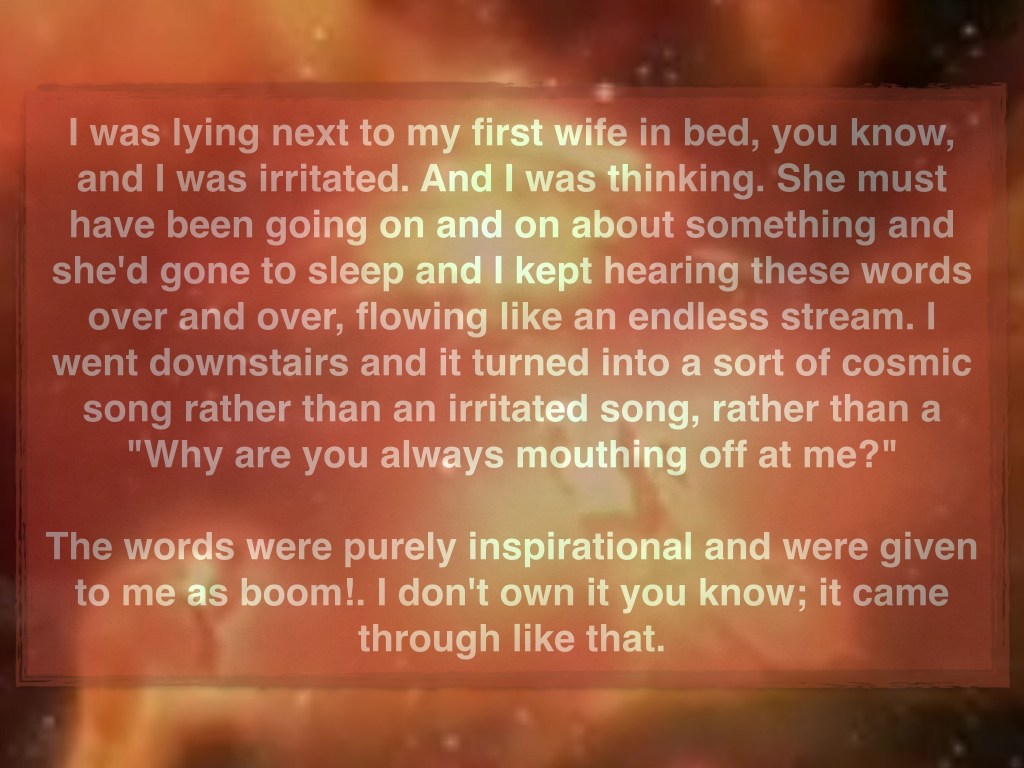
    To the reader: The beautiful lyrics of John Lennon’s ‘Across The Universe’ relate to transcendental expression. The lyrics’ relationship to meaning is through soaring imagery not literal comprehension. The song has been crafted to fly. As an aerodynamic masterpiece the internal arrangements are light with adherence to rules that overcome gravity with blissful ease.

    To the poet: John Lennon’s recollection of writing ‘Across The Universe’ is instructive in understanding the uplifting power of poetry. The song began as a grounded response to being caged; captured and contained. Through a meditative process, it seems the lyrics became cathartic; they transcended his pent-up anger and delivered instead a peaceful state of mind.  Until his next rant, at least…


    Enough of Words Enough of Words
    Picture Source:
    1.

    2. http://en.m.wikipedia.org/wiki/Across_the_Universe#Composition

  • Journey’s Warrant

    Journey’s Warrant

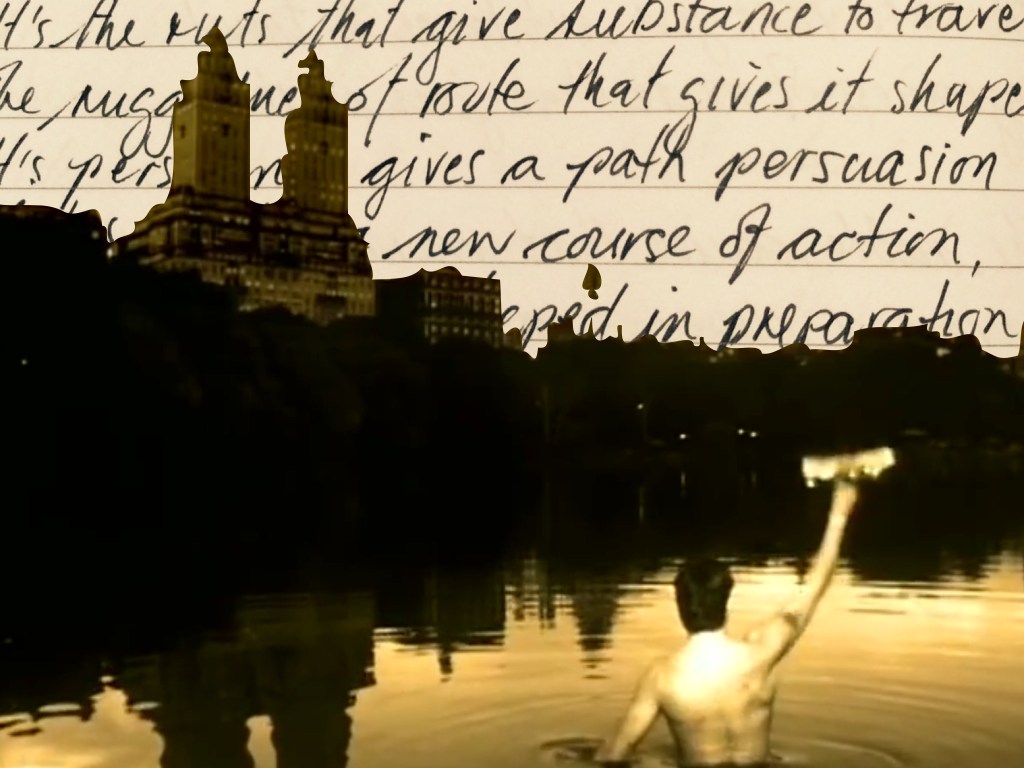
    It’s the noble cause that warrants journey;
    so traversed, deserves a destination.
    It’s not the distance, for its own sake, earns the
    merit – might just call that transportation.
    It’s the rough road, made of grit and gravel
    that carves its credentials in the landscape.
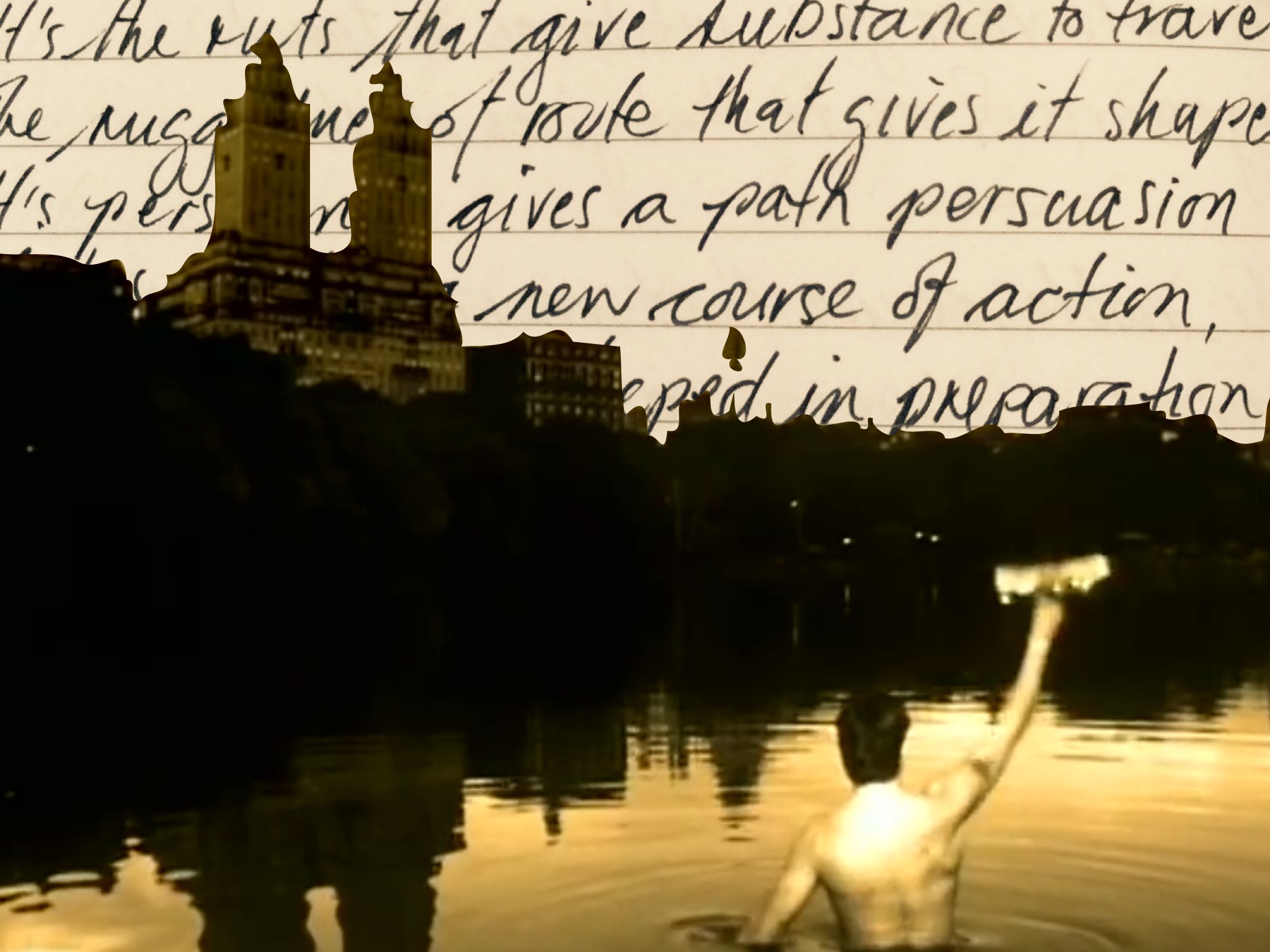
    It’s the ruts that give substance to travel;
    the ruggedness of route that gives it shape.
    It’s persistence gives a path persuasion,
    makes possible a new course of action.
    It’s that step, as steeped in preparation,
    that gives the next stride its satisfaction.
    . Distance, as travel, is all but pretend,
    . Substance, the measure of a journey’s end.

    © Tim Grace, 7 April 2013


    To the reader: The journey and its destination. The ‘long and winding road’ that through a series of encounters leads you back to yourself renewed… it’s this road you most fruitfully travel. It’s not the high-road, it’s not the low-road; no, it’s the middle road that offers guidance and a pathway to discovery. A worthy road must do more than transport it must transform.

    To the poet: According to the Buddha, it’s better to travel well than arrive. Likewise, the writing process must not treat the end as its purpose. The end does not come forward without a journey. As words seek expression they uncover meanings and reveal conclusions that are in the present formed of wonder; they deliver surprise. So, wonder and surprise are partners in the narrative of life.


    Journey's Warrant
    Journey’s Warrant
    Picture Source:
    http://youtu.be/khrx-zrG460
  • Artobiography

    Artobiography

    Artobiography – the self-exposed.
    Personal revelation on display:
    persuasions, curiosities disclosed;
    individual leanings that swing and sway.
    Privacy – an open exhibition.
    Voyeurs at large, a see-through medium,
    en masse titillation; imposition;
    pastiche motif; pretensions on parade.
    A synthetic construct, superficial,
    skin-deep patina, costume masquerade;
    disguised reality – artificial.
    . What of art that it adores expression,
    . and yet, so crudely ignores discretion?

    © Tim Grace, 31 March 2013


    To the reader: Exhibitionism or exhibitionist – an empty distinction. The expose of self as art. The narcissist, an introspective voyeur on public display. Made naked for self-amusement. Inside-outside. Flesh-coloured drapes on see-through windows. Shock therapist using auto-simulation as creative medium; seminal concept becomes revelation. Artobiography – a crude craft on revealing canvas.

    To the poet: Inspiration for this sonnet was a documentary on avant-garde art. The various vignettes portrayed a series of self-absorbed indulgences. Confusion over purpose was laid bear. A naked clambering for notoriety; easily achieved through public shock. Nothing more than a sideshow curiosity laying claim to creative space. As a writer, I can appeal to a reader’s instinct for novelty… the forbidden and perverse are easy grabs.


    Artobiography
    Artobiography
    Picture Source:
    http://youtu.be/27w3wR7ofl4