Tag: Place

  • Tangled Remnants

    Tangled Remnants

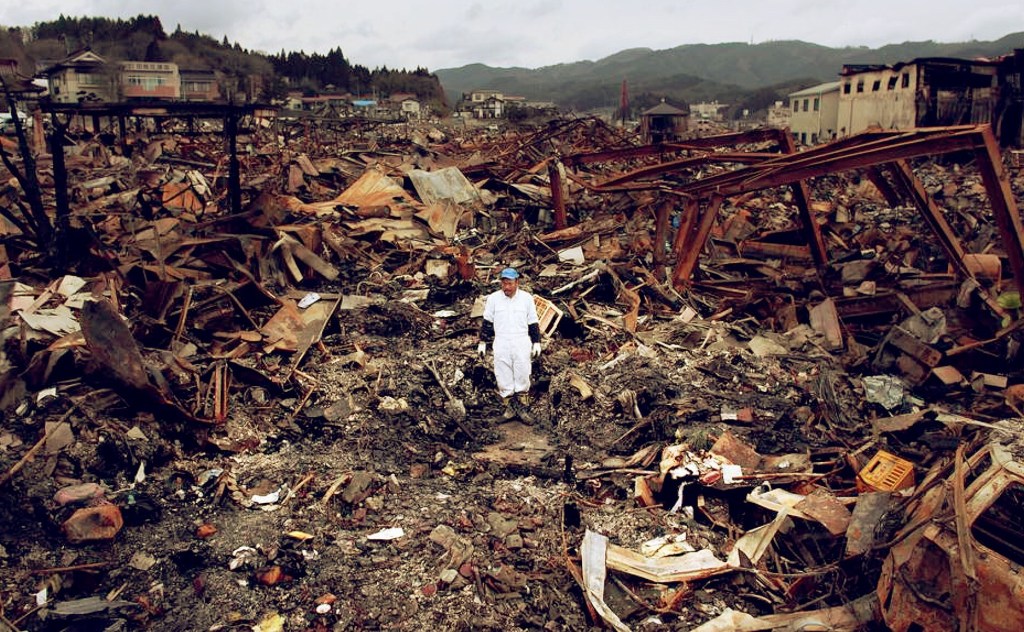
    Where once a solid form existed,
    There’s nothing left but shard,
    Tangled remnants, split and twisted,
    Tossed without regard.
    Earth ripped and roughly gashed,
    Features stripped and shattered,
    Levees broken, structures smashed,
    Strewn about and scattered,
    And in amongst this mangled mess,
    There stands a man forlorn,
    Too numb to feel distress,
    Too tired to weep or mourn,
    . At crisis points, when faith is shaken,
    . It’s then, when man feels most forsaken

    © Tim Grace, 18 March 2011


    To the reader: Natural disasters tally-up a cruel toll. Impacts are deep and far-reaching. Headlines describe upheaval, deluge and inundation. Apart from individual trauma, social rupture compounds the devastation into widespread despondency. Forlorn despair grips tight; testing humanity’s collective will and resilience. Fortitude offers repair… but that takes time to accept; first comes loss and grief.

    To the poet: Piecing together a poem from fractured snippets of human misery is a delicate process. The depth of emotional content delivers a glossary of hackneyed headlines. As poet, with vicarious voice, one can reference common parlance and translate trite commentary but not without the risk of superficial opportunism. Take care, disaster awaits the thoughtless.


    tangled remnants tangled remnants


  • She is the Ocean

    She is the Ocean

    How do we know the sea deeply,
    This vast accompaniment to shore?
    In truth … never so completely,
    By acquaintance; nothing more.
    In her shallows, at water’s edge,
    Where lapping waves decay,
    Her ripples sound a common pledge,
    Her splash has much to say.
    At deeper depths, in rougher seas,
    Where waves compound their force,
    Fathom not her vagaries,
    Nor delve her inner source.
    . She is the ocean, of seven seas construed,
    . To each apply the notion of independent mood.

    © Tim Grace, 16 February 2011


    To the reader: Surges of emotion modify our moods. In the shallows we enjoy the ripples that tickle us out of tedium. We take pleasure in the tease of a dying wave. But with a rising tide there comes a wash of new temperament. Playfulness retreats. An ankle deep sensation casts us into deeper thought. The seaward message is relentless with warning and alarm… take care.

    To the poet: Marshall McLuhan coined ‘the medium is the message’ to illustrate that content is transformed through the process of communication. The context of content influences interpretation. The written word is a poet’s content, the medium is speech. Through speech a poem is unpacked, given emphasis; made sharp, made blunt, given gloss or dulled.


    she is the ocean she is the ocean


  • Manufractured

    Manufractured

    The world in pieces,
    Colours combining,
    Clarity increases,
    With distance defining.
    The world segmented,
    Kaleidoscopic split
    Patterns augmented,
    With nibbling fit,
    The field of view,
    The focal range,
    The tonal hue,
    With angles change.
    .    Impressed and enraptured,
    .    The mosaic is manufractured.

    © Tim Grace, 12 February 2011


    To the reader: Cathedral ceilings find counterbalance in floors of magnificent mosaic. The segmental nature of a mosaic adapts itself to undulating and odd-shaped perimeters. Tile by tile in decoration. A surface treatment deliberately fractured; pre-empting the impact of traffic and age. A strong and versatile solution. Suited to subtlety …impressionistic, geometric, kaleidoscopic. Betters with age.

    To the poet: Small pieces of text. Small phrases, reliant on each other for meaning. As with a mosaic, this sonnet begins with the micro-meaning of individual words. As the aperture widens the macro-meaning reveals itself as a play of words; built around the concept of ‘manufracturing’… to build from broken pieces. Meaningless becomes meaningful; fixed.


    manufractured
    manufractured


  • Loosely Sketched

    Loosely Sketched

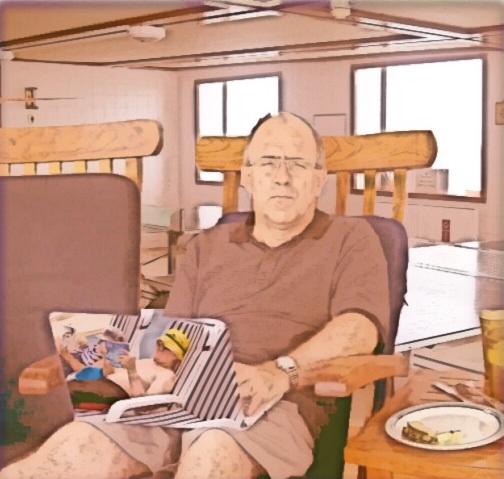
    An old man, reads old books,
    On a digital screen…
    While the poet looks,
    At the passing scene…
    Nice man turns to menace,
    Table tennis, with a Chinese grip…
    No crowd of words to pen this,
    Nor would one word equip…
    They walk the promenade, twice,
    They loop the pool, backwards…
    He thinks to himself, quite nice,
    But at best a set of hack words.
    .    Some scenes are easily sketched,
    .    Freely fetched, and loosely stretched.

    © Tim Grace, 10 February 2011


    To the reader: Apparently, functional networks extend to about 150 people. Beyond that, it’s difficult to maintain anything but a virtual relationship. And so, by far, most people we see are strangers. As often as not we are their observers. In a closed community, such as a cruise ship, the strangers become familiar but not known. These familiar strangers become predictable; their routines are normalised, and shared circumstance they are attached to backdrop sceneries.

    To the poet: I once tried writing a poem using the advertising text plastered to passing trucks on a highway. What resulted was a random accumulation of words… a traffic jam. As we watch life in passing it has its logical sequence; there is a sense of connection. Place and time give people and events their context. Take away that context and the subject loses its objective frame; might as well write about things.


    loosely sketched loosely sketched
  • Through Gilded Gums

    Through Gilded Gums

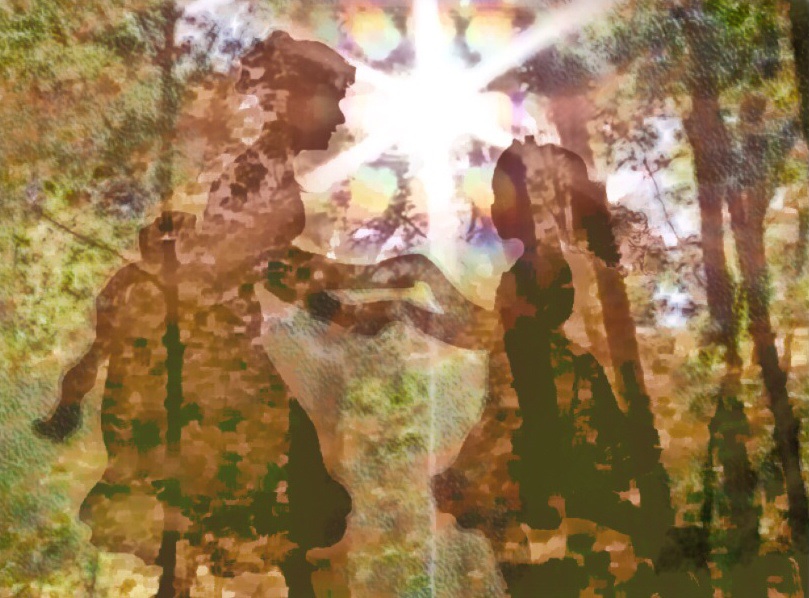
    Here she comes, a silhouette,
    She’ll dance ’til dusk is done,
    Through gilded gums, freshly wet,
    She’ll absorb the sinking sun.
    What nature here creates,
    She’ll draw upon that source,
    In looping figure-eights,
    She’ll trace the ribbon’s course.
    With feather-like finesse,
    She’ll ride the evening breeze,
    Light-footed as a princess,
    She’ll adorn this glade of trees.
    . Born to dance, she’s her mother’s child,
    . So it’s not by chance, she’s like-wise styled.

    © Tim Grace, 28 January 2011


    To the reader: Summer evenings. Warm shower wets the gums. Sun sets. Leaves turn to gold. Band plays an encore. Last note bids farewell. The day is done. The dance is done; for all but one. Free of business, a child calls her grandmother to skip. They do the last dance; as if it was their first. Two ribbons … one path home.

    To the poet: On the edge of sentimental; a soft fall from grace. There are some scenes that need a delicate treatment, they are of themselves romantic, and touched with love. What rescues the sentimental poet is technique. Not so besotted that all sense has been lost. Not so overwhelmed that control has been forsaken. I quite like the discipline of every second line beginning with ‘She’ll’ followed be a verb: dance, absorb, draw, trace, ride and adorn.


    through gilded gums through gilded gums


  • Invisible Thread

    Invisible Thread

    As attached to an invisible thread,
    We are bound to all humanity,
    Through this communion we are wed,
    To a common sense of sanity.
    When round about our strings combine,
    Care should be enlisted,
    For as with any rope or twine,
    Our threads are easily twisted.
    The unravelling reel, the looping lash,
    Beware the rope that’s rotted,
    The curling cord, the whirling sash,
    Are never far from knotted.
    . This string is neither noose nor tether,
    . It’s the thing that holds us all together.

    © Tim Grace, 14 January 2011


    To the reader: Our bond to others is invisible; thread-like. We imagine threads as social ‘ties’. Family ties are life-long; others are short-lived and useful for just a moment of interaction. Regardless of strength and character the invisible threads can tangle to a mighty mess. Attending to the health of our invisible threads is important. Frayed and worn-out threads lose their flexibility and stretch; become difficult to manage, and are far from dependable. In rope we trust.

    To the poet: The neatness of each four-lined verse helps to ‘tie’ this sonnet together; it’s well packaged, well bundled… well versed. In a later sonnet, the invisible thread is again used as the main reference-point. As an invisible subject, a thread has endless possibility for metaphorical word-play. Whether rope string or cord; it ravels, loops and twists obligingly around your topic of choice. Money for rope.


    invisible thread invisible thread