Tag: Place

  • Hyde Park (Sydney)

    Hyde Park (Sydney)

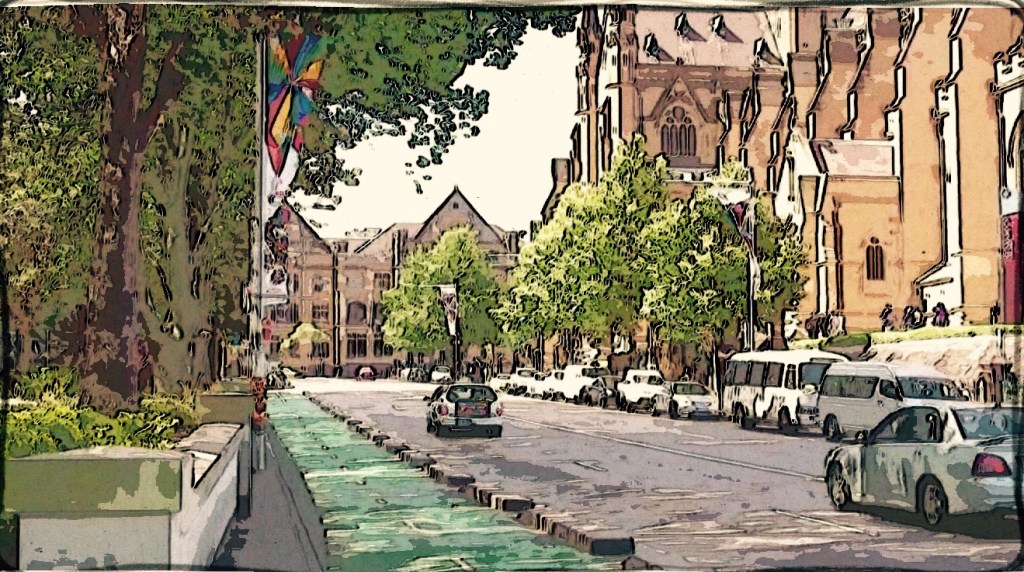
    Welcome to Hyde Park, home of the wombat,
    the fleet footed xylophone,
    the inverted umbrella and the feral cat.
    Where the ingenious mind casts in stone
    its love of country and the park bench.
    Where jet-lag creates chaos on the streets,
    and “Look Right” is meaningless in French.
    Where traffic lights play endless repeats
    of Jeckyl and Hyde – the amusement park
    open all hours, street theatre,
    spontaneously triggered by a spark;
    where strange ways just get weirder!
    . We all need somewhere to park ideas,
    . to ponder thoughts and tackle fears.

    © Tim Grace, 2 June 2011


    To the reader: Sydney’s Hyde Park is surrounded by buildings and squared by traffic; within these confines it provides the city with quintessential greenery. The incidental visitor has no attachment to its physical features and so explores the park with gormless wit. Broad sweeps of lawn intersect at a war memorial swallowed by a pool of remembrance. An assortment of locals define the park’s character as miscellaneous.

    To the poet: Without ridiculing Hyde Park, its history is an oddity, its placement a curiosity; and so, a nonsense poem pays it fitting tribute. The playful and suggestive references are obscure; hopefully not too self-indulgent. How far a poet can stretch a reader’s interest in nonsense is dependent on curiosity. The curiosity factor gives to nothing its substance… and there you have the value of a park.


    hyde park hyde park
  • Simple Creed

    Simple Creed

    Somewhere in the forest dense,
    With old-growth thickly sewn,
    There’s a single seed of commonsense,
    Long since over grown.
    It’s buried ‘mongst a bed of leaves,
    As laid through years of scatter,
    Beneath this heavy mass it heaves,
    Giving reason to its matter.
    It’s not the seed of discontent,
    That festers complication,
    It’s more the source of new intent,
    And the essence of creation.
    – What knowledge from a seed does breed?
    – Keep it simple – is its simple creed.

    © Tim Grace, 6 May 2011


    To the reader: Simple solutions are too often over-looked; dismissed as trite. The ‘tried and true’ remedy outlives its novelty; so shiny becomes dull and none-too attractive. Human nature thrives on surprise and quickly habituates to ‘sameness’; we look to see things differently. Unfortunately, simple routines, as efficient as they are, become mundane and tiresome. And so, in an attempt to add a little sparkle to our tasks we inadvertently make things difficult … too clever by half.

    To the poet: Revisiting a sonnet, years after it was first finished, is sometimes an exercise in restraint. There’s always the temptation to fiddle; nudge a couple of words; alter the length of a line; or swap one word for another. As a poem’s substance is mostly well-set, it’s then readability that gets the work-over. The rule of restraint relates to originality; don’t distance the sonnet too far from its time-bound source.


    simple creed
    simple creed


  • Simple Truth

    Simple Truth

    Sometimes a simple truth is sacrificed;
    abandoned; let go, as surplus to need.
    For utility’s sake it’s cut and spliced;
    modified; stripped of its seminal seed.
    Sometimes too, a simple truth is buried;
    covered by layers of expedience,
    overgrown, entombed in a myriad
    of rows; for folioed convenience.
    And sometimes simple truth is set aside.
    It’s rendered small enough to ridicule;
    belittled; nothingness personified;
    significance reduced to minuscule.
    . When by design – we’re too clever by half,
    . who is it … who is it, has the last laugh?

    © Tim Grace, (WS-Sonnet 66: line 11) 4 May 2011


    To the reader: Simple solutions are too often over-looked; dismissed as trite. The ‘tried and true’ remedy outlives its novelty; so, shiny becomes dull and none-too attractive. Human nature thrives on surprise and quickly habituates to ‘sameness’; we look to see things differently. Unfortunately, simple routines, as efficient as they are, become mundane and tiresome. And so, in an attempt to add a little sparkle to our tasks we inadvertently make things difficult … too clever by half.

    To the poet: Revisiting a sonnet, years after it was first finished, is sometimes an exercise in restraint. There’s always the temptation to fiddle; nudge a couple of words; alter the length of a line; or swap one word for another. As a poem’s substance is mostly well-set, it’s then readability that gets the work-over. The rule of restraint relates to originality; don’t distance the sonnet too far from its time-bound source.


    simple truth simple truth


  • Durability

    Durability

    Durable strength – be it strong and able;
    with resilient build, with spinal structure;
    be it rugged, be it tough and stable;
    forms a shape that’s hard to rupture.
    Dependable strength – with guts and grit;
    there when a crisis comes to crunch;
    there when needed; there in the midst of it;
    a powerhouse; a pool of potential punch!
    Disabled strength – crippled and lame;
    buckled and bent with nothing to harness;
    a spent force, nothing but a crying shame;
    a collapse of faith, be it more or less.
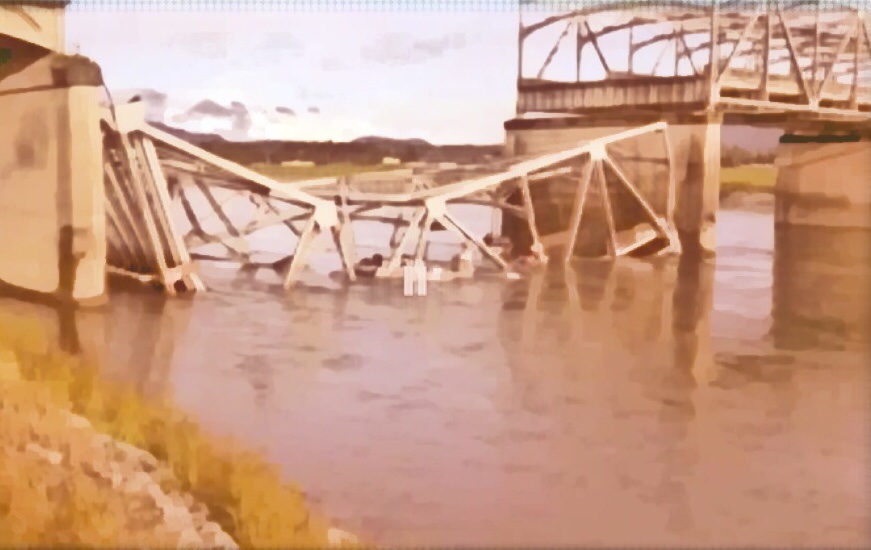
    . Strength – not given break or buffer,
    . under weight will cause us all to suffer.

    © Tim Grace, (WS-Sonnet 66: line 8) 25 April 2011


    To the reader: The concept of strength has been a long-held theme of mine … an early poem read: ‘My strength is such I can not yield, and therein lies my weakness; a gentle touch can pierce my shield and shatter my completeness’. In Shakespeare’s sonnets he often refers to strength in terms of resilience, with fatigue being its major draw of energies: “Tired of these, for restful death I cry … for these would I be gone.”

    To the poet: Durable, dependable and disabled strength. When giving a sonnet its structure there’s an endless pattern of combinations from which to choose; some patterns work better than others. Too obvious and the pattern becomes trite, too subtle and the effort is lost to all but the deepest of readers. In this sonnet, the visual and aural cue of strength’s dual dimensions leads the reader to your desired definition.


    durability durability


  • Luscious Lust

    Luscious Lust

    Once it grew with luscious lust
    As fresh as it was new
    But desiccated (turned to dust)
    Its verdant days are through.
    Once it stood in splendid state
    To shine as new-born sun
    And so it did but radiate
    Til’ all its strength was done.
    Nothing of its shape is left
    Was buried grain by grain
    As if unsculptured (now bereft)
    Its past is but a stain.
    . Give not what would cause despair,
    . Offer not the desert to a beggar’s prayer.

    © Tim Grace, (WS-Sonnet 66: line 2) 11 April 2011


    To the reader: Is hope a gift? … you’d hope so; false hope is a curse. Mostly, we manage hope, we contain its enthusiasm; restrain its expectation. Having hope is an optimistic trait, a forward-looking approach to life’s unravelling. Giving hope is an altogether different matter. Those who trade on the hopes and wishes of the bereft need be careful of motives; the more needy are prone to false enticements.

    To the poet: Punctuation of a poem is important. Shakespeare’s punctuation is creative, but most of all, consistently helpful. His full use of grammatical mechanics is as it should be: obvious yet subtle; deliberate and considered. Beyond a comma, Shakespeare (the masterful wordsmith) wields the heavier tools of trade with confident ease. Deliberately inserted, between semantics and syntax, grammar integrates its purpose and so a string of words is spoken; voiced with expression.


    luscious lust luscious lust


  • So Welcome

    So Welcome

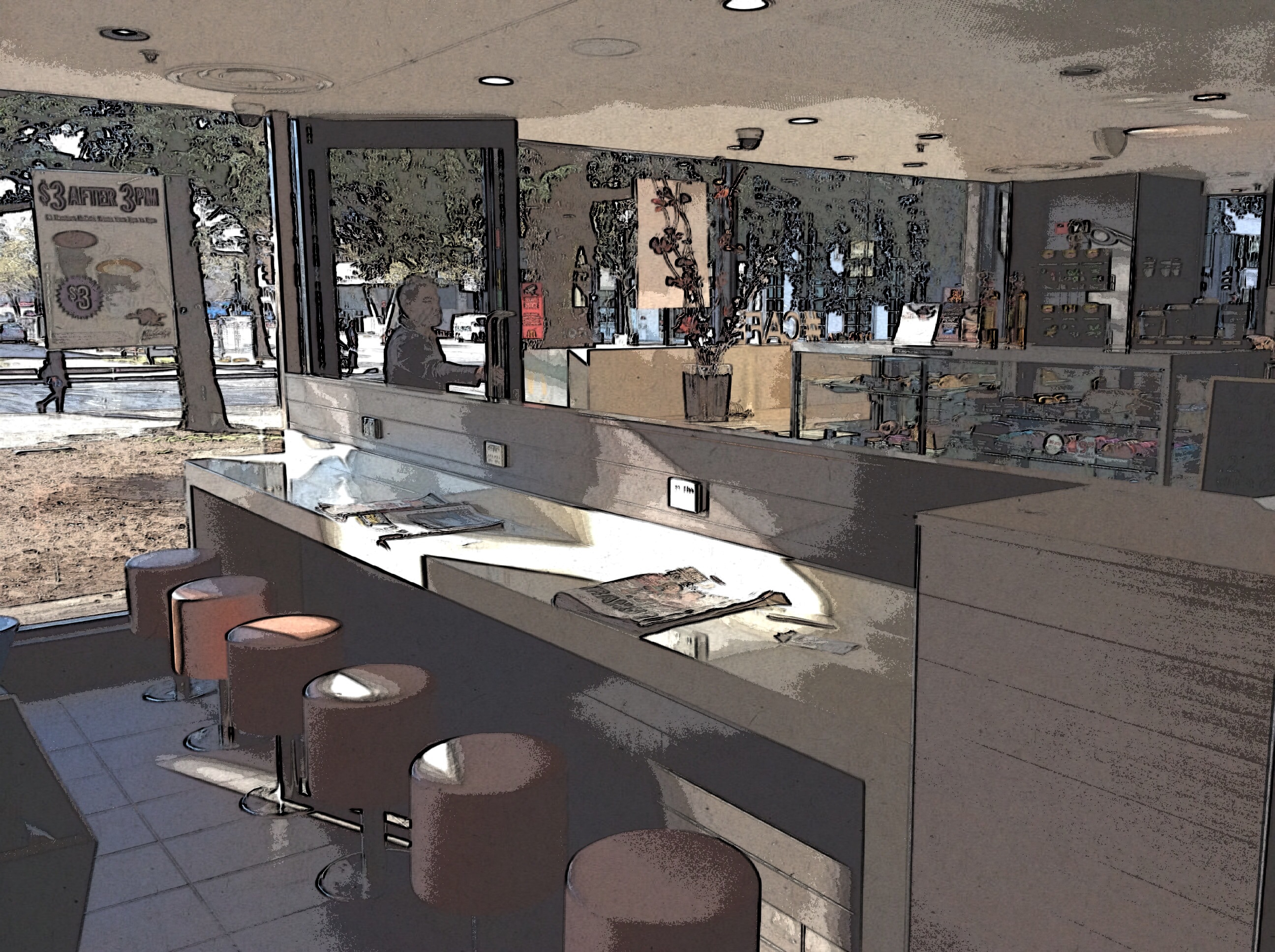
    From this seat, a small window
    frames the street; a door swings
    on its hinges. Who’s to know
    what its welcome brings?
    Here comes a backpack with a laptop
    looking for a what-not.
    Is it be-bop, is it hip-hop?
    … it’s a cool cat at a hot spot.
    Here comes a white shirt with dark glasses
    collared by a black tie.
    It’s the business look that passes,
    as a brief case of who am I?
    … Doors are trained in etiquette,
    … so welcome those they’ve not yet met.

    © Tim Grace, 8 April 2011


    To the reader: With the opening of a door comes the expectation of new arrival. Door swings, or slides, and for a moment frames a fresh character. The first impression is squared-off, measured-up; allotted to its fit. A nameless no-one becomes someone given presence. That someone’s arrival bears the mark of carriage; deportment. The doorway delivers another entrance.

    To the poet: In my poetry, the thematic presence of ‘this seat’ is recurring. It’s not always the same ‘this seat’ but as a place-holder it’s a common anchor point. Observing the world requires an authentic perspective; ‘this seat’ is its vantage point. Not all poems need a sense of location but occasionally it helps to give the reader a reference point; so the poet-observer is placed within the narrative – passively evident.


    so welcome so welcome