Tag: Place

  • Remnants

    Remnants

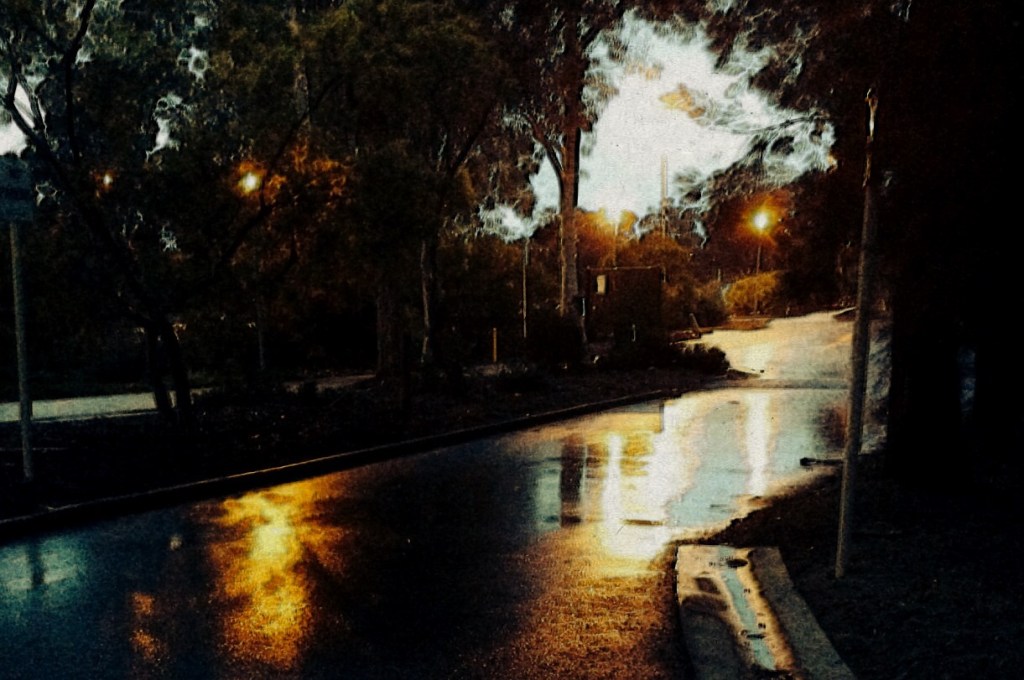
    Remnants of last night, in patches,
    Rendered heavy to the pitch of black.
    An eave, being overhung, catches
    A nook that dawn is yet to crack.
    Fragments in angular spaces,
    Brutal joints, unfinished and stark,
    Stubborn nocturnal traces,
    Carved into crevices, deep and dark.
    Segments, pieces of a mute mosaic,
    Drained of narrative; story-less,
    Burdened by a daily habit; hard to break,
    Draped in the dull garb of dreariness.
    . Through a broken dawn, comes a sunrise shattered.
    . Shadows born, then torn and scattered.

    © Tim Grace, 6 January 2011


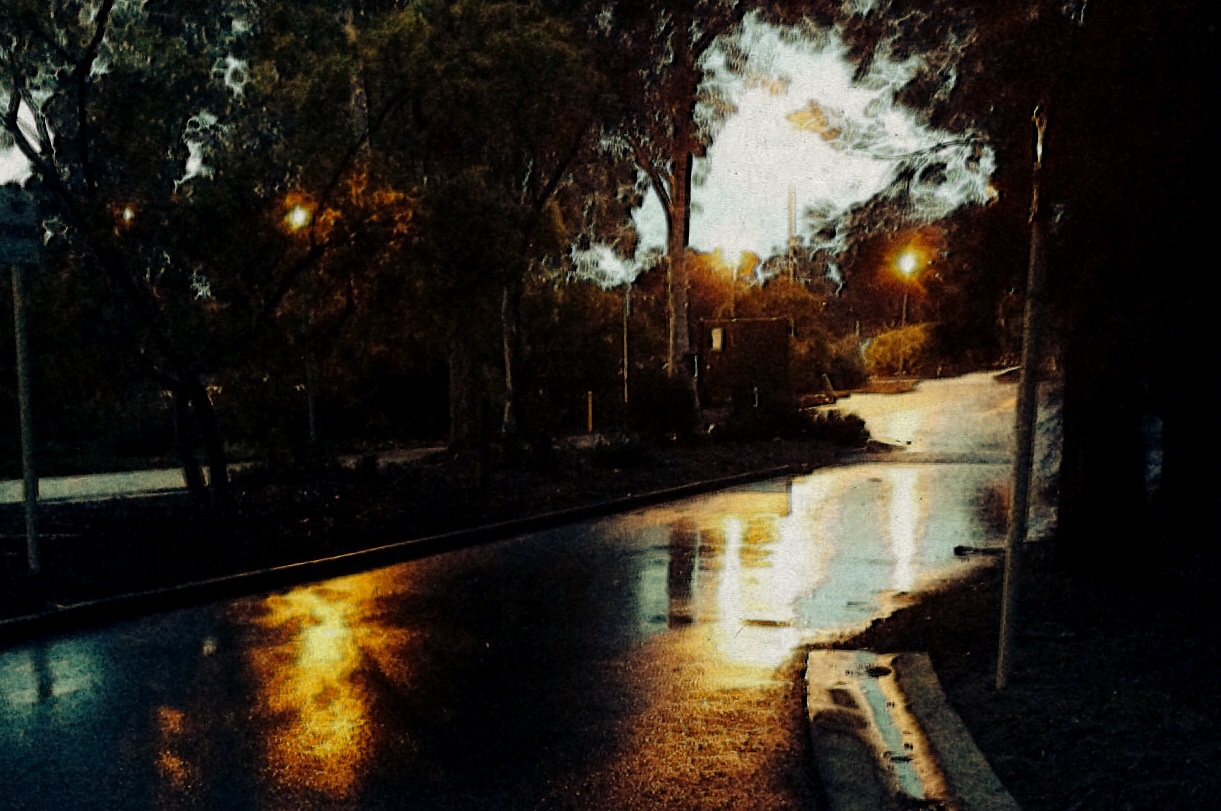
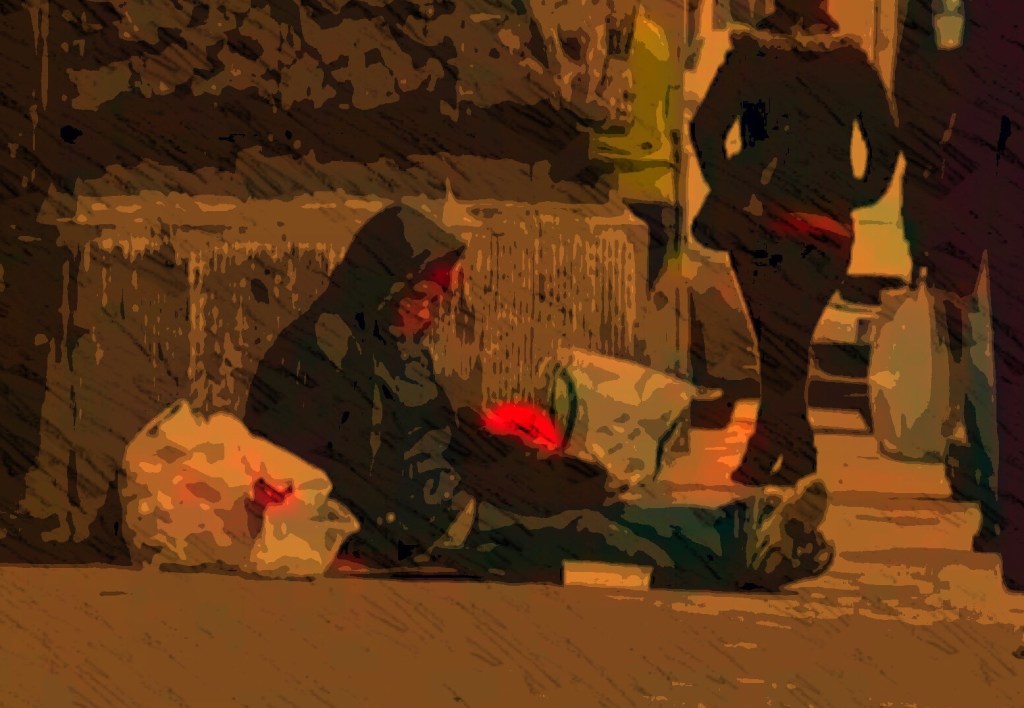
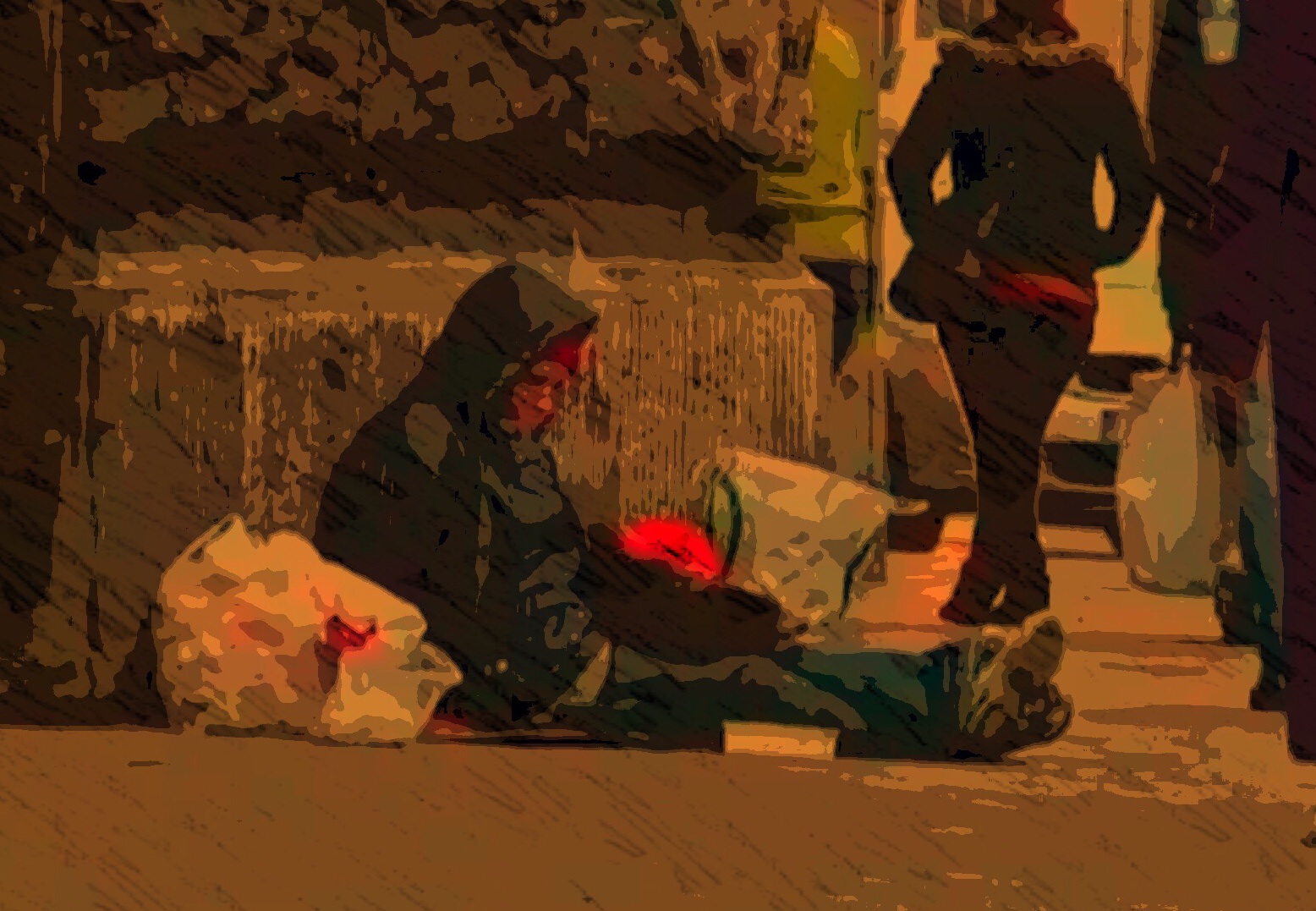
    To the reader: With dawn comes the realisation of what remains of last night; the shroud of darkness has been lifted. The homeless, cramped in corners and nestled in nooks, are slow to rise. Around them the city stirs into action. Sunlight nudges its way into cavities. And so breaks the day. The heaviness of night grips the vagrant who with reluctance shadows another day … awaiting a new night to fall.

    To the poet: This poem holds strong to its form of three distinct stanzas; blocked out as remnants, fragments, and segments of a shared theme. The continuous lines of verse ignore those breaks and seamlessly roll into a single thread of thought. It’s also a poem that plays confidently with the literary features of alliteration, assonance and consonance. While inspired by a short visual moment, I remember this poem took considerable working; days.


    remnants remnants
     

  • Becomes Today

    Becomes Today

    What by night would seem adept,
    And then, by day become a blur?
    Last night’s shadows, over slept,
    Reluctantly they stir.
    What by night would well appear,
    And by day be all but hidden?
    The candlestick, the chandelier,
    Of use the two are ridden.
    What by night is wide awake,
    And then by day retires?
    The possum by a moonlit lake,
    With sun its scene expires.
    . The moon by sun is chased away,
    . And so last night becomes today.

    © Tim Grace, 3 January 2011


    To the reader: We live in a riddle; a reasonable muddle. A right answer is often so lame with correctness it needs a little adjustment. Some creative correction is what makes good things better; and better things great. From bland to grand takes an obscure course. At arrival, having passed through the riddle, a good answer is adorned with the crazy sparkle of unexpected discovery… aha!

    To the poet: The familiar form of the riddle, with its question/answer format, frames this sonnet. The phrase “What by night?” established the seek and find enquiry. Two problems followed. Firstly, contrivance. The thought of ‘what happened over-night while I was sleeping?’ is easily outstretched; laboured to a tedious length. Secondly, miscellany. There’s little achievement in reaching into a grab-bag of ideas. Lucky-dips may write lists but not poems. What rescued this sonnet is its final couplet… an answer worthy of the question.


    becomes today becomes today


  • Bank of Clouds

    Bank of Clouds

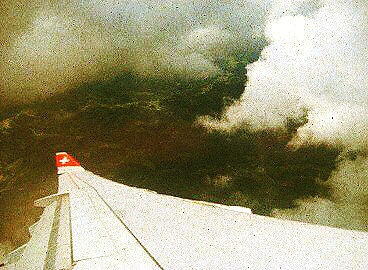
    Below me, a bank of clouds,
    A deceptively solid mass,
    As with mobs, and moving crowds
    It has no guide or compass.
    As if driven by its changing shape,
    It drifts beyond itself,
    As one amorphous cloudscape,
    on its way to somewhere else.
    With dissolving definition,
    It balloons in to a form,
    With potential recognition,
    As an agitated storm
    . What’s coming? … a dull day … humourless,
    . What’s gathering? … cumulous.

    © Tim Grace, 13 November 2010


    To the reader: As terrestrial beings, humans are not often treated to a topside view of clouds. But the occasional flight provides an elevated view of these gaseous textured masterpieces of shape and form. As a natural consequence of rising damp, clouds are in constant manufacture; evolving, transforming, swelling and collapsing … wisping away to nothing, condensing into something.

    To the poet: The achievement in this sonnet comes from its ‘amorphous’ shape and form. The poem’s ‘text’ure is wordy and a little verbose. References to airborne masses float across the lines. Black and white statements are smudged forming grey illusions that drift into one and other with uncertain consequence; if not a clash then to juxtapose.


    bank of clouds bank of clouds


  • Statues

    Statues

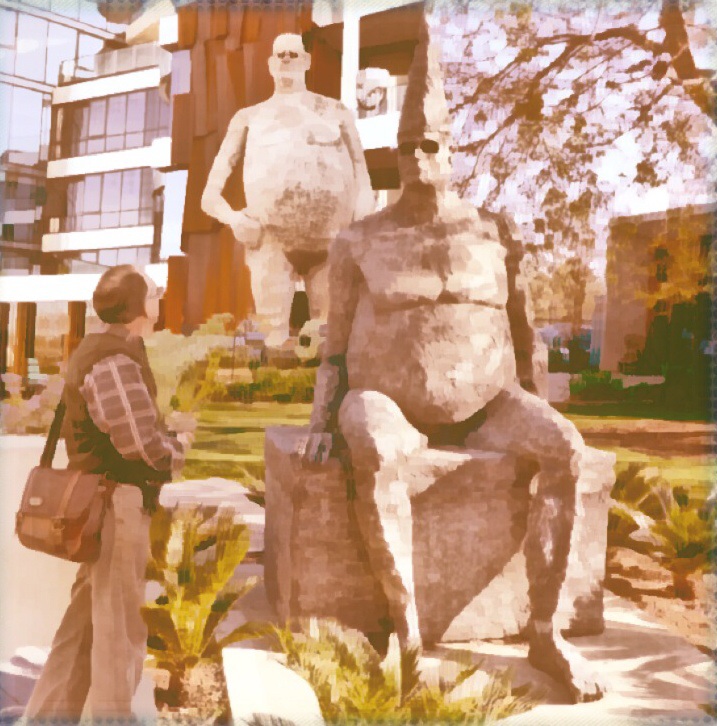
    Two trees, two statues, and me,
    For a moment we shared the same space,
    Each of us, in a garden gallery,
    Poised, for art sake, in the same place.
    I entered this garden with a foreigner’s eye,
    I was in this garden, but not part of it,
    I took to this garden a sense of I
    And with this eye, I’d never see the heart of it.
    I turned to leave, but as I did,
    As a statue does, I froze,
    It was then that I became the garden, so amid,
    And among, at once… I saw what was.
    .   A sculptured garden submits to control
    .   Yet, a sculpture garden has heart and soul.

    © Tim Grace, 3 November 2010


    To the reader: An outdoor art space – a garden gallery. A recent creation without the presence of rustic age. Bronze statues are anchored to the lawn, too carefully placed in position; posed not poised. The landscaping is suburban, the lawns manicured and the shrubs neatly trimmed. Without context the statues, like me, are foreigners to this garden. We search for meaning and find it in our common sense of separation. We too are one.

    To the poet: In this sonnet there’s a growing sense of self in place, and a conscious positioning of ‘I’ as myself. The poem begins with a lock-step description of separate entities; emphasising awkward placement. The middle segment identifies myself as a poignant feature of the gallery. With static placement, I become another statue, and from that vantage point can bring heart and soul to its overall composition.


    statues
    statues


  • This Table

    This Table

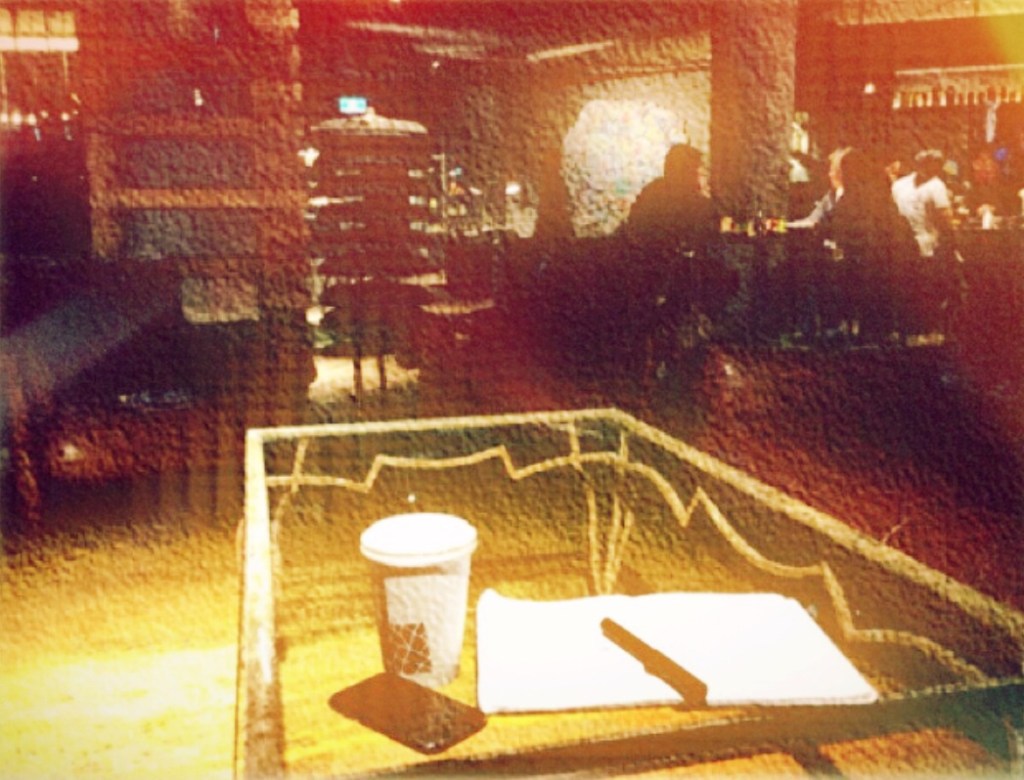
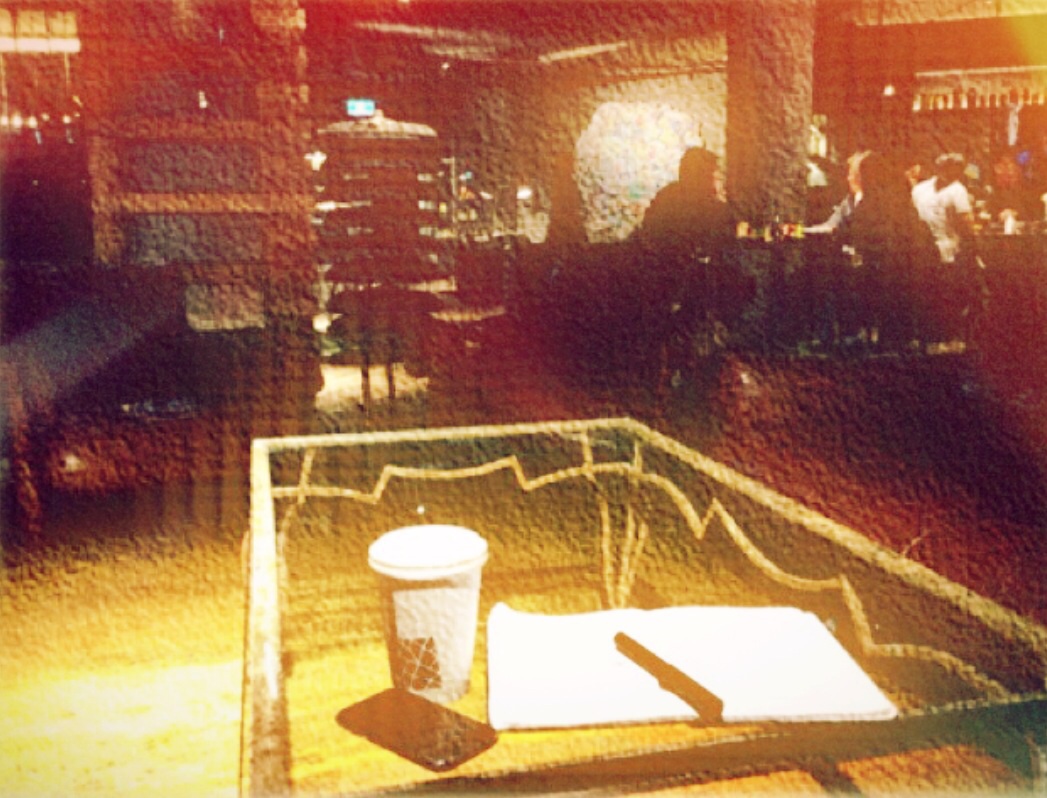
    This table is my point of view,
    Provides a horizontal plane,
    It’s the visual avenue,
    To the peculiar and mundane.
    It’s from where I watch the lives we live,
    Assemble then disperse
    It’s the single-point perspective
    That stimulates my verse
    It’s the in between scene
    Of a mental map
    Where my elbows lean
    and my fingers tap.
    . It’s where clutter finds coordination,
    . And ideas meet their destination.

    © Tim Grace, 17 October 2010


    To the reader: In literal terms a cafe represents an unpretentious coffee house. In practical terms it provides time-out; joins the break between two activities; starts and ends a day; brings together two minds; and as often as not relieves the bladder… and all this for the price of a coffee. The cafe offers a public/private interlude, perfect for introspection and contemplation; people watching.

    To the poet: The passing trade in a cafe forms a poet’s banquet. From the menu comes a feast of subjects including the urbane, the mundane and the insane. Occasionally, the setting not the people deserve attention and that’s how the over-looked table became the subject of this sonnet. A poet’s table is central to the writing process as it defines the angle of observation and locates the presence of mind; it positions the poet.


    this table this table


  • Parallel Dimension

    Parallel Dimension

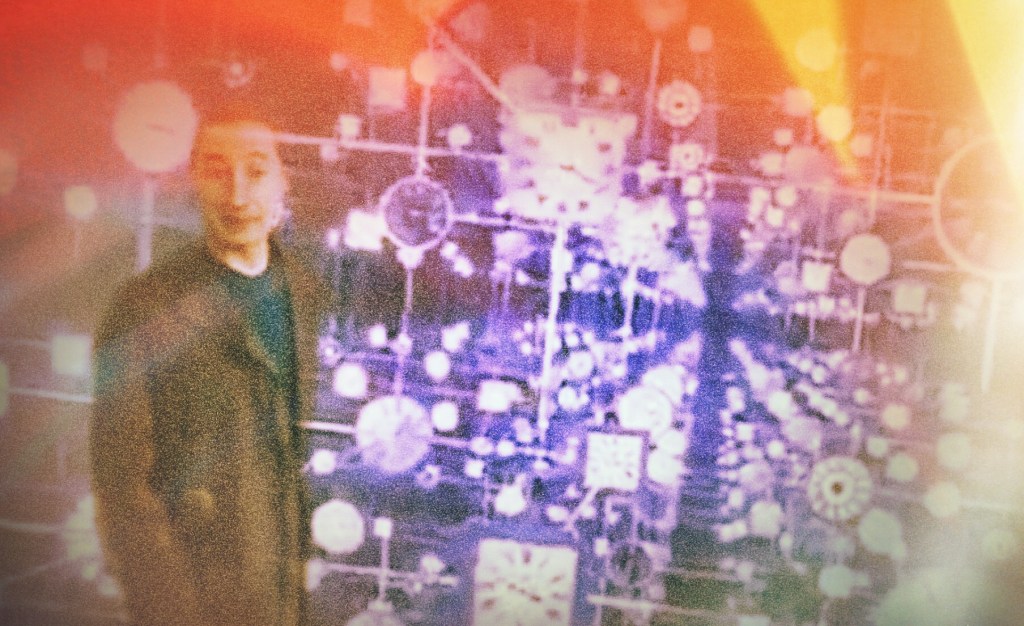
    At the same time being and becoming,
    Letting go of now,
    It’s the whistle while you’re humming,
    With the puzzlement of how.
    To be the parent of tomorrow,
    And the child of today,
    With the sentiment of sorrow,
    That promises to stay.
    To be oneself and find contentment,
    But to know it won’t endure,
    To struggle with resentment,
    You’re safe but not secure.
    . In a parallel dimension do we still exist?
    . Do archived remnants of ourselves persist?

    © Tim Grace, 10 October 2010


    To the reader: The multi-layered dimensions of life are not neatly stacked into rows nor columns. In a physical sense most of what we did yesterday is irretrievably gone. Likewise, tomorrow’s organization is as much fantasy as it is fact. And so today becomes the main arena, the fleeting zone of action and influence. By necessity then, much of what is done is overlapped with conflicting pressures and contrasting roles; all at once occurring.

    To the poet: The subject of this sonnet is the conundrum. The persistent puzzle of being and becoming all at once. The challenge of writing a convincing argument about puzzlement is to end it still in wonder; and so the last two lines are questions. In this sonnet the rhyming structure (ABAB) could be split into two halves (AABB) and almost keep its sense of narrative.


    parallel dimension
    parallel dimension