Tag: People

  • Borrowed Word

    Borrowed Word

    It’s not always me that speaks,
    I’m often just a borrowed word,
    My conversation carries streaks;
    Echoes of the overheard.
    I’m the translated remnant
    Of someone else’s script,
    A turn of phrase, a fragment,
    Through abbreviation clipped.
    I’m a short handed message,
    From a seven second grab,
    A truncated passage,
    Today’s cut, tomorrow’s scab.
    . Today’s headline … badly dismembered,
    . Tomorrow’s deadline … barely remembered.

    © Tim Grace, 23 October 2010


    To the reader: We hear and read so much of other voices; spin, hype and noise. We probably don’t tune in to much of it but some of it grabs our attention and for a short while resonates through daily chatter. What grabs is the easily digested snippet, or factoid, that’s neatly packed with interest and primed for repeatability. On the back of efficiency catch-phrases and headlines prove themselves robust and sturdy messengers of regurgitated script.

    To the poet: In keeping with the message, the structure of this sonnet is compressed into neat segments. Each bit begins with “I’m” as in: … a borrowed word, …a translated remnant, …a short-handed message; a snippet. The coining of snappy phrases, easily re-used, is emphasised in the final couplet which borrows heavily from its own form and structure; wastes nothing new and does it with less.


    borrowed words borrowed words


  • Commodified

    Commodified

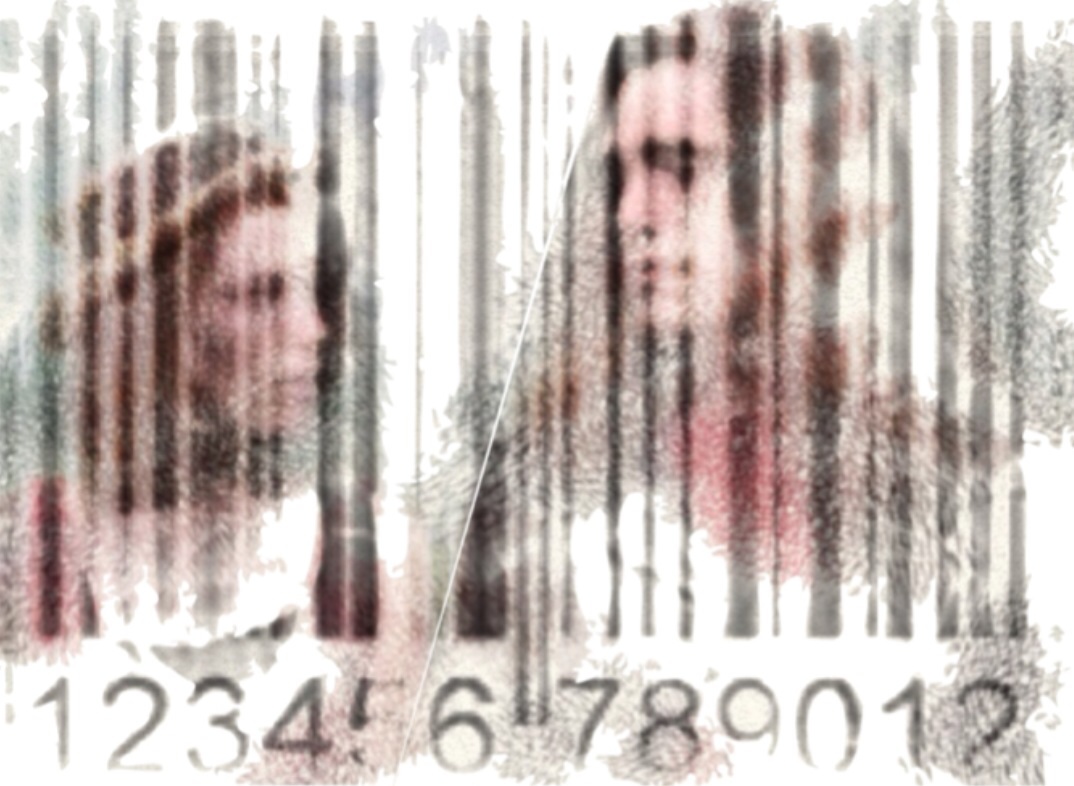
    You have been commodified,
    Digitized of sorts,
    Cleverly identified,
    As a string of ones and naughts.
    You have been commercialized,
    Packaged up as stock,
    Uniformly standardized,
    So your pieces interlock.
    You have been configured,
    Codified and mapped,
    Carefully considered,
    As potential to adapt.
    . You are the generation, named without a name,
    . Be you X or Y, we have made you all the same!

    © Tim Grace, 27 September 2010


    To the reader: The younger generations, we have crafted them as different; for that has served our purpose. From early childhood they have been primed for the marketplace and now they pay the price; they have been commodified. The nameless generations of X and Y have been so individualized that they are powerless to act in concert as a collective independent agent. They resort to social media for voice but that itself is a construction of those who would strip them of identity.

    To the poet: The globalized economy has impacted on how we express the human condition. Life has become digitized, commercialized, and standardized; commodified, identified, and codified. As we describe ourselves we are likely to live. The use of ‘you’ as a distinctive label helps in the creation of distance and separation. From the narrator’s perspective the deal has been done; the package has been sold.


    commodified commodified


  • Saw Myself

    Saw Myself

    Walked by a window, saw myself in that,
    Indiana Jones takes a morning stroll,
    Arranged to meet my wife, I have her hat,
    So there’s time to fill; the poets on patrol.
    Over the bridge there’s a flower show,
    The annual collision of colours has started,
    Met a friend on the way, said “hullo”
    Introduced him to my wife’s hat, then we parted.
    Flowers versus people, seems like even odds,
    Sister says to Alex “stop running”
    Totally bemused he stops…
    She starts … that’s cunning!
    . Indiana Jones and the blooming mess,
    . What for … it’s anybody’s guess!

    © Tim Grace, 13 August 2010


    To the reader: Impressions by nature have a lasting effect. The look of myself reflected in a shopfront window was what caught my eye; there at my side was Indiana Jones. Together, as described by the shape of our shared hat, we were on our way to a flower show to solve a blooming mess. For the intrepid visitor, a flower show offers much in the way of spontaneous visual content; none better than the antics of siblings at play … a colorful display indeed!

    To the poet: This poem is sketched out of three moments that quickly unravelled into a sequence of novel events. With twenty minutes to spare, I sat at a picnic table sandwiched between two families and began to write. The hat, the friend, the missing person, the children in dispute all assembled into this playful poem. True to the notion of a sketch, a poem like this has to be of the moment; I had to freeze and divorce myself from the action to capture its spontaneity.


    saw myself saw myself


  • At the Same Time

    At the Same Time

    At the same time being and becoming,
    Letting go of now,
    It’s the whistle while you’re humming,
    With the puzzlement of how.
    To be the parent of tomorrow,
    And the child of today,
    With the sentiment of sorrow,
    That promises to stay.
    To be oneself and find contentment,
    But to know it won’t endure,
    To struggle with resentment,
    To be safe but not secure.
    . In a parallel dimension do we still exist?
    . Do archived remnants of ourselves persist?

    © Tim Grace, 10 October 2010


    To the reader: Being in the now is a temporary state of presence. A non-permanent proposition that fleetingly describes all that is at a single point of time. Now is nothing more than a bridge that spans all things separated by the passage of two moments. Confusion of now as a permanent state renders the past obsolete, and casts the future as a thief; through now we nurse resentment.

    To the poet: The philosophical sonnet is a good time filler. Pick a topic and ponder. In this poem thoughts, almost statements, about past, present and future unfold in couplets. The poem concludes obtusely at a final couplet containing two questions. Writing a pointless poem finds its justification in playfulness; as a creative piece of text it has an interesting shape and form; the rhymes are enjoyable and the theme is universal.


    at the same time at the same time
  • Not a Temple

    Not a Temple

    In the midst of all humanity
    At the centre of our core
    Where commonsense and sanity
    Bring reason to the fore.
    There’s a comfortable liaison
    An inner peace of mind
    Free from all invasion
    From tanglement and bind
    Here we find tranquility
    A balancing of thoughts
    The essence of stability
    A sanctuary of sorts
    . Somewhere transcendental – a perfect line
    . Not a temple, neither monument nor shrine.

    © Tim Grace, 6 August 2010


    To the reader: Finding tranquility in the midst of chaos is no easy task but it’s a key to surviving the rat race. To some extent spiritual establishments provide a solid but artificial solution. They offer a sanctum of silence from which to escape into isolation until the self is sufficiently restored. The more mobile and accessible solution is to draw upon inner resources that overcome the confusion of chaos through quiet reflection. For me, restoration is achieved through meditative moments with a coffee or pen in hand.

    To the poet: To highlight the difference between a transcendental state and a spiritual place this sonnet plays with positional phrases; the first three lines begin with in, at, and where. The second four lines, themselves in a mid-point, enter the inner sanctum of the self at peace. The last of the four line stanzas is descriptive of an essence given a substantive location … albeit transcendental.


    not a temple not a temple
  • Brides of March

    Brides of March

    Along with all the brides of March
    It’s here her vows were made.
    Underneath the wedding arch
    Umbrellaed in the shade.
    He walked beside her gown of lace
    It shimmered in the sun.
    Fair of face, and full of grace,
    Her single thread was spun.
    From he to he, she gave her heart
    In spirit and in kind,
    He met her eyes in whole and part
    From here the two entwined.
    . ‘Love is all you need’ to keep the fire aglow,
    . ‘All you need is love’ is all you need to know.

    © Tim Grace, 25 March 2010


    To the reader: In the temperate zone of the southern hemisphere March is a beautiful month. It’s free from the extremes of Summer and ripe with the fruits of harvest. All told, an ideal month for marriage. Blue skies and the final blush of Summer create an ideal setting. The moderate nature of this time of year extends to its generous retreat from the forefront of celebrations. As a beautiful backdrop it allows the bridal party to shine … and together they glow.

    To the poet: The personalization of a sonnet limits its reach and compromises the poet’s observer status. She, the bride and daughter, transfers her commitment from him to he beneath a wedding arch in March; and love will see them through. Throughout the poem I have made references that those who experienced the wedding first-hand will recognize; but like the “in joke” these shouldn’t limit the sonnet’s more universal understanding.


    Brides of March Brides of March