Tag: Events

  • At the Same Time

    At the Same Time

    At the same time being and becoming,
    Letting go of now,
    It’s the whistle while you’re humming,
    With the puzzlement of how.
    To be the parent of tomorrow,
    And the child of today,
    With the sentiment of sorrow,
    That promises to stay.
    To be oneself and find contentment,
    But to know it won’t endure,
    To struggle with resentment,
    To be safe but not secure.
    . In a parallel dimension do we still exist?
    . Do archived remnants of ourselves persist?

    © Tim Grace, 10 October 2010


    To the reader: Being in the now is a temporary state of presence. A non-permanent proposition that fleetingly describes all that is at a single point of time. Now is nothing more than a bridge that spans all things separated by the passage of two moments. Confusion of now as a permanent state renders the past obsolete, and casts the future as a thief; through now we nurse resentment.

    To the poet: The philosophical sonnet is a good time filler. Pick a topic and ponder. In this poem thoughts, almost statements, about past, present and future unfold in couplets. The poem concludes obtusely at a final couplet containing two questions. Writing a pointless poem finds its justification in playfulness; as a creative piece of text it has an interesting shape and form; the rhymes are enjoyable and the theme is universal.


    at the same time at the same time
  • Tread Lightly

    Tread Lightly

    The cobra takes position
    Defensive in its stance
    Considers its condition
    With survival in its glance.
    The guard upon his sentry
    In demeanor is alike
    He monitors the entry
    And readies for a strike
    Take notice of his figure
    Tread lightly on his patch
    Do nothing that might trigger
    The ignition of his match
    . Beware the enemy in wait, the spontaneous debate,
    . Take care the masking of a trait … too late, too late.

    © Tim Grace, 13 August 2010


    To the reader: Around the world our dignitaries are guarded by ceremonial sentries. The guards are garbed in symbolism and perversely create a deliberate and distracting point of interest. The aloof but alert nature of a guard is what creates public curiosity and draws our attention away from the protected investment. Every gesture of guardianship is nuanced with reference to a larger more potent force lying in wait … ready and prepared to strike if called upon to do so.

    To the poet: Short lines and simple statements in three sets of four. The first four describe a cobra coiled with the tension of a tightly wound spring. The middle four describe the counterpart; the guard in wait, the sentry at attention, the guard on guard. The final four holds together the allegory with ambiguous use of ‘his’ as either cobra or guard. The lines in the last couplet are long and stretch the use of rhyme a little too far.


    tread lightly tread lightly
  • The Card

    The Card

    The card said “get well soon”
    It granted “wisdom and future wealth”
    The card wished “the best of fortune”
    Along with “happiness and health”.
    The card wished “the best of travels”
    “Bon voyage and safe return”
    The card is deep with wishing wells
    For those who are drawn to yearn.
    The card laments both grief and loss
    With kindly words of solace,
    The card provides a temporary gloss
    A wish if not a promise.
    . The card is wise with thoughtful adage,
    . Delivers hope in place of ravage.

    © Tim Grace, 3 April 2010


    To the reader: The card is an expression of considered thought delivered as an accompaniment. When the moment has gone and all remains is a chance to reflect it’s then the card finds its purpose. More than a note, a card requires careful selection and then more so personalization. In drafting the card’s message, the art is to maintain a genuine voice in the construction of a unique and/or memorable truth.

    To the poet: The card as a singular object with multiple functions is the focus of this sonnet. Each couplet begins with ‘The card…’ and then picks up on a range of cliched phrases that have populated cards on mantel shelves throughout time. In writing about ‘the’ card rather than ‘a’ card allows this sonnet to generalize the simple principle as expressed in the final couplet.


    the card the card
  • Brides of March

    Brides of March

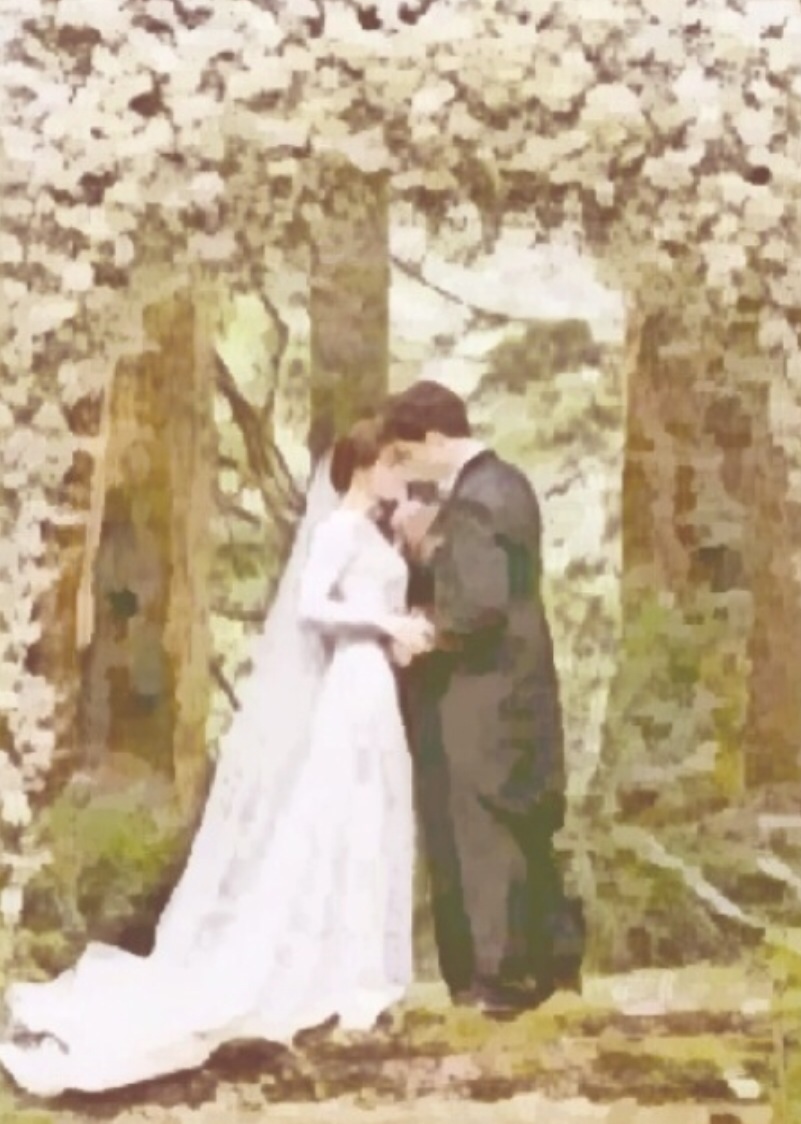
    Along with all the brides of March
    It’s here her vows were made.
    Underneath the wedding arch
    Umbrellaed in the shade.
    He walked beside her gown of lace
    It shimmered in the sun.
    Fair of face, and full of grace,
    Her single thread was spun.
    From he to he, she gave her heart
    In spirit and in kind,
    He met her eyes in whole and part
    From here the two entwined.
    . ‘Love is all you need’ to keep the fire aglow,
    . ‘All you need is love’ is all you need to know.

    © Tim Grace, 25 March 2010


    To the reader: In the temperate zone of the southern hemisphere March is a beautiful month. It’s free from the extremes of Summer and ripe with the fruits of harvest. All told, an ideal month for marriage. Blue skies and the final blush of Summer create an ideal setting. The moderate nature of this time of year extends to its generous retreat from the forefront of celebrations. As a beautiful backdrop it allows the bridal party to shine … and together they glow.

    To the poet: The personalization of a sonnet limits its reach and compromises the poet’s observer status. She, the bride and daughter, transfers her commitment from him to he beneath a wedding arch in March; and love will see them through. Throughout the poem I have made references that those who experienced the wedding first-hand will recognize; but like the “in joke” these shouldn’t limit the sonnet’s more universal understanding.


    Brides of March Brides of March


  • In The End

    In The End

    In the end we meet finality
    Where there is no more to come,
    It represents totality
    The comprehensive sum.
    In summ’ry there’s an ending
    To a captured set of thoughts,
    There’s a possible extending
    Depending on reports.
    To conclude requires judgement
    Giving closure to a theme,
    Brings meaning to a segment,
    That may unrelated seem.
    . In a climax there’s achievement, a moment of reward,
    . A peak of high endeavour, a point of much applaud.

    © Tim Grace, 27 February 2010


    To the reader: In the vast scheme of things our minuscule stop-start segmentation of time must seem a little trite and unnecessary. Periodic pauses, earth hours, pit-stops, forty-winks and memorable moments form a staccato of stuttering events. The End and it’s relationship with finality is not fixed; all endings are not terminal. We use endings to pause the run of play, to catch our breath, before resuming with new vigor and direction.

    To the poet: Shakespeare was endlessly concerned with overcoming the injustice of time and reconciling this with a life short lived. His first three groups of sonnets consider options for achieving perpetuity; not eternal life, but eternal meaning is his desired destiny. Putting ‘The End’ in context is a poet’s lot; why am I doing this? In ‘The End’ is there any defense against the futility of a battle with Time?