Tag: Events

  • Durability

    Durability

    Durable strength – be it strong and able;
    with resilient build, with spinal structure;
    be it rugged, be it tough and stable;
    forms a shape that’s hard to rupture.
    Dependable strength – with guts and grit;
    there when a crisis comes to crunch;
    there when needed; there in the midst of it;
    a powerhouse; a pool of potential punch!
    Disabled strength – crippled and lame;
    buckled and bent with nothing to harness;
    a spent force, nothing but a crying shame;
    a collapse of faith, be it more or less.
    . Strength – not given break or buffer,
    . under weight will cause us all to suffer.

    © Tim Grace, (WS-Sonnet 66: line 8) 25 April 2011


    To the reader: The concept of strength has been a long-held theme of mine … an early poem read: ‘My strength is such I can not yield, and therein lies my weakness; a gentle touch can pierce my shield and shatter my completeness’. In Shakespeare’s sonnets he often refers to strength in terms of resilience, with fatigue being its major draw of energies: “Tired of these, for restful death I cry … for these would I be gone.”

    To the poet: Durable, dependable and disabled strength. When giving a sonnet its structure there’s an endless pattern of combinations from which to choose; some patterns work better than others. Too obvious and the pattern becomes trite, too subtle and the effort is lost to all but the deepest of readers. In this sonnet, the visual and aural cue of strength’s dual dimensions leads the reader to your desired definition.


    durability durability


  • Correct and True

    Correct and True

    Half right; is correct in fact.
    It’s free from error’s damage.
    It’s twice been checked and so exact.
    It’s the best that we can manage.
    Half right is true and so ideal.
    It’s there in a lover’s kiss.
    It’s passionate and full of zeal.
    It’s perfect as it is.
    Right is then a two-faced coin,
    as would carry yang and ying.
    Principles that we can join
    to make a good and proper thing.
    . Good reason often comes to plight,
    . for rarely does it prove twice right.

    © Tim Grace, (WS-Sonnet 66: line 7) 21 April 2011


    To the reader: To be completely right a solution must be both correct and true. Correctness requires abidance with the facts. To be true requires loyalty despite false attraction. Half-right solutions are not, therefore, wrong; they’re just not completely right. According to circumstance, the half-right solution (being correct or true but not both) is all that’s needed. In love be true, otherwise correct.

    To the poet: Semantics and pedantry are to be handled with care. Splitting meaning for no good purpose can be perceived as mischievous; spoiling for a fight. Exploring the difference between two words (correct and true) in light of a common theme (rightness) was hopefully revealing; more so than troublesome. The choice of one word over another is a qualitative decision.


    good reason good reason


  • Need to Regulate

    Need to Regulate

    If profit is our only cause,
    Then limit not the market.
    Let them starve on foreign shores
    For it guarantees our target.
    If speed is used to measure skill,
    Then limit not velocity,
    Just beware that this might kill,
    Our common sense of quality.
    If it’s pedestals that make us fall,
    From grace to deep depravity,
    Then maybe we should ban them all,
    To force the hand of gravity.
    . Stupid thoughts will incubate,
    . Hence the need to regulate.

    © Tim Grace, 17 April 2011


    To the reader: We can wrap stupidity in garlands of bright remark. The preposterous thought is easily disguised as plausible. The laws of logic can be mimicked, befuddled into submission. The accepted truth is often more convenient than it is tested. There is no shortage of dumbness on display. Mostly, as benign, it does no harm; but on occasions the fatuous need reminding of their folly.

    To the poet: The art of evaluation is based upon determining the veracity of if/then relationships. This sonnet’s backbone, being about logic, is structured to parody an if/then sequence of thought. There’s a pattern to each four-line stanza. The first pair of lines establish the if/then relationship; and the last two provide a perverse conclusion. Take it as you will; but look before you leap to a conclusion.

    need to regulate need to regulate


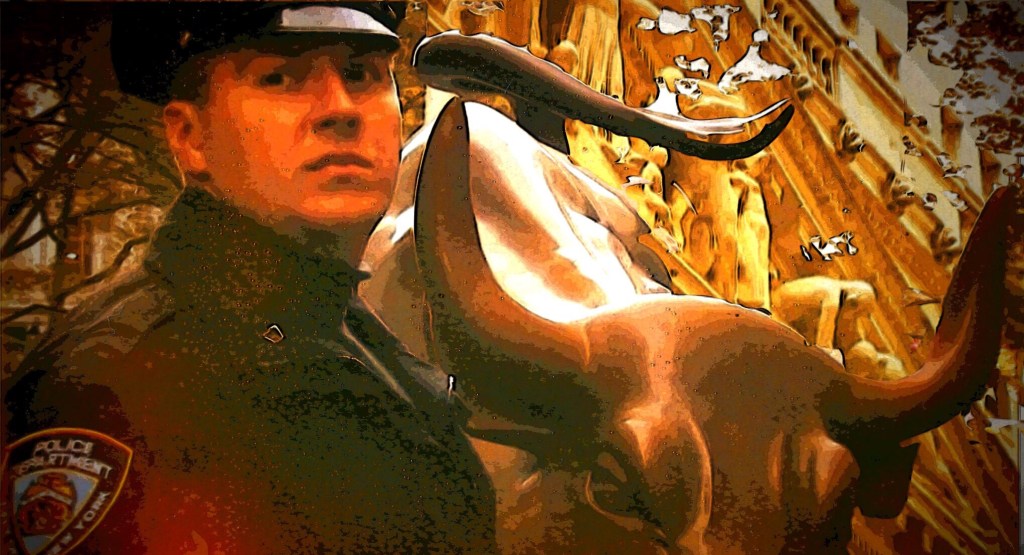
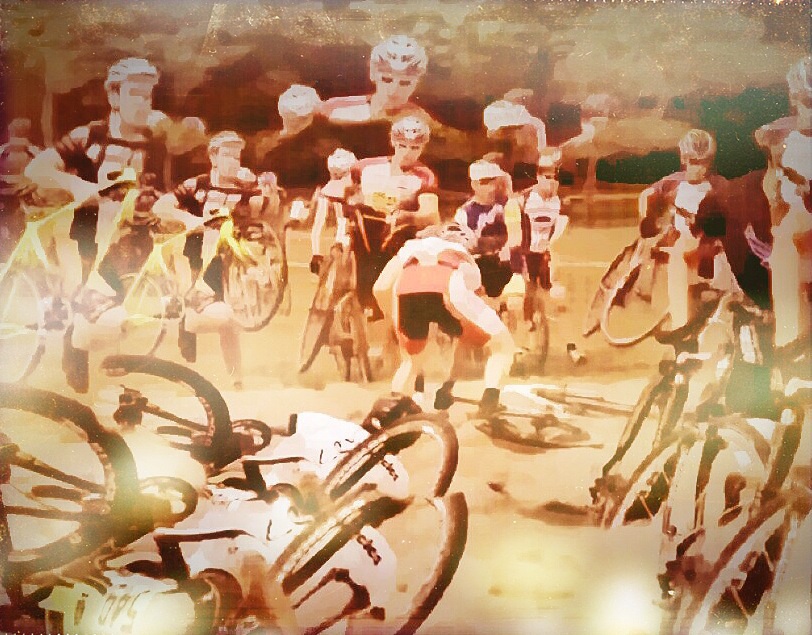
  • Closer Steps Disaster

    Closer Steps Disaster

    As golden as our gait might seem,
    We cannot run much faster,
    The more we pace at rates extreme,
    The closer steps disaster.
    As brightly as our stars might shine,
    Be they cast upon a silver screen,
    Or raised as part of night’s design,
    Both in time become routine.
    As noble as we paint our cause,
    With posture and good poise,
    If the canvas is but full of flaws,
    Then thus itself destroys.
    . As often as not, our pledged convictions,
    . Meet the knot of contradictions.

    © Tim Grace, 19 April 2011


    To the reader: The source of a disaster becomes more obvious at the point of no return; at the precipice!. That inevitable conclusion, that certainty, delivers that unavoidable consequence; that calamity. That ‘that’ was always going to have that ending. For that ending was designed into that beginning. That be so. That be that.

    To the poet: When is a poem not a riddle? I often write surrounded by people doing crosswords; riddling out a cryptic solution. The obtuse poem and the cryptic riddle have much in common… word play. Together in time, apart in place, we silently sip our coffee untangling semantic clues. For the poet, unlike his company, he poses and answers his own riddles.


    closer steps disaster closer steps disaster


  • On Pause

    On Pause

    This is the pause that he employs,
    When his stance is resolute,
    This is his silent use of noise,
    That speaks volumes when on mute.
    This is not an empty moment,
    Just waiting to be filled,
    It’s intelligent, it’s eloquent,
    It’s be spoken by the skilled,
    This is thought upon a precipice,
    It’s surgical; a cut that leaves no scar,
    Consider this his emphasis,
    His suspended coup de grace.
    . To a break in flow, we’ll pay attention,
    . It helps to grow our comprehension.

    © Tim Grace, 2 April 2011


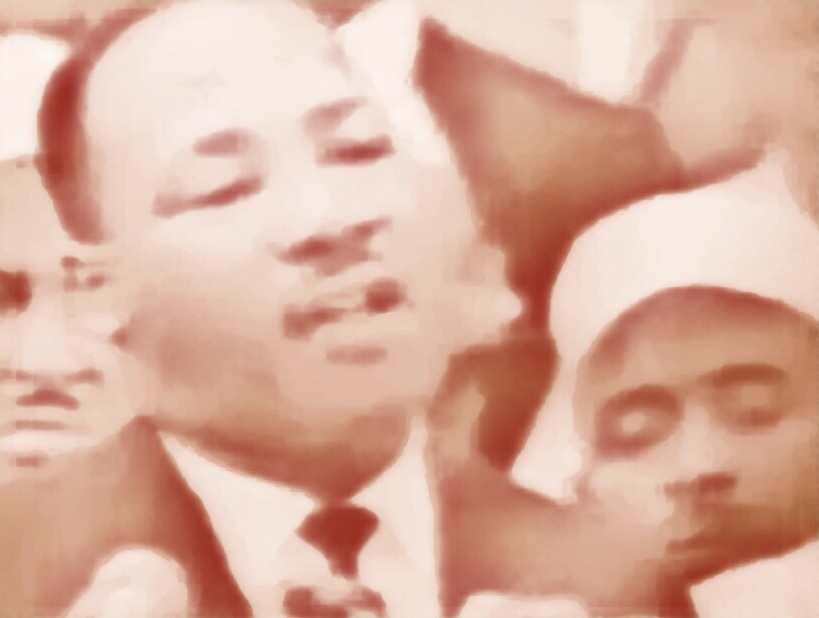
    To the reader: The rhythm of speech is particular to each of us. We modulate our voice to draw attention to words that enhance the meaning of our message. In “I have a dream…” the vocal technique of Martin Luther-King is slow and deliberate; audible and easily absorbed. But there comes a time … a time in his speech when more … so much more is needed. The king-hit is sermon. Trained as a Baptist minister Luther-King turns lectern into pulpit with masterful ease and maximum impact.

    To the poet: Rhythm and repetition given an occasional pause for emphasis; that’s it, the message has its pigeon. Short in form, the sonnet is ripe for delivering a sharp punch. Impact is important. The pause, as a literary device, pulls the punch, gears up momentum and off-puts the listener. Make the rhythm predictable but defy expectation with a pause … a misplaced pause, an awkward pause, a pregnant pause … a pause nonetheless.


    on pause on pause


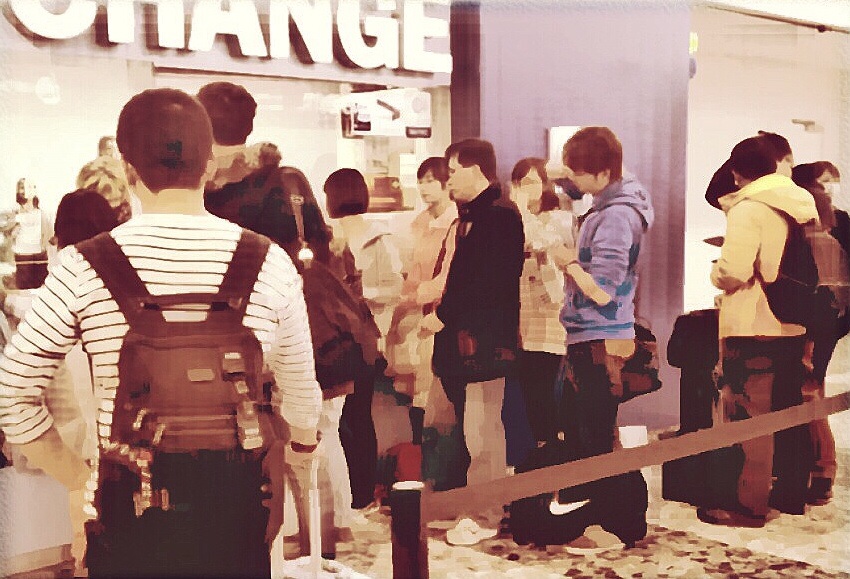
  • On Queues

    On Queues

    Select a line and there remain,
    Don’t jump to gain position,
    Be careful not to show disdain,
    Or complain of its condition.
    For those in front, and those behind,
    Allow them space to move.
    As much as you might feel inclined,
    There’s little here to prove.
    Be alert but do not pry,
    You’re part of this progression,
    To any grumble don’t reply,
    A smile’s the best expression.
    . When people mass, and muddles brew,
    . It must be time, to form a queue.

    © Tim Grace, 24 March 2011


    To the reader: Queues. Rule bound but culturally specific. Some loose and self-organising others tightly scripted. By design the best of queues follow the dictum of form follows function. The unspoken measure of a good queue is its marriage of context and purpose. To happily surrender to a queue there must be benefits. The value of time spent in a queue is a relative notion… may have something to do with mass and energy?

    To the poet: As an advisory, this poem describes a problem and offers a solution. The familiar context of a queue doesn’t need too much in the way of description to deliver a believable subject. And so, with light-hearted conviction the poet has convinced himself, at least, of the virtues of queues. In a poetic sense there’s merit in a line that can flex and has space to shuffle.


    on queues on queues