Tag: english

  • Unravelling Dimensions

    Unravelling Dimensions

    Sadly, the remains are but frailties:
    crumbling pillars and collapsing pylons;
    fragile columns; diminished faculties;
    cancerous concrete; corroded irons;
    frayed exposure; unravelling dimensions
    stripped of the scaffold that prevents collapse.
    Footings, as anchored to loose connections,
    probabilities reduced to perhaps.
    Platforms of understanding turned on edge:
    uncertainty – an awkward intrusion;
    short-term remedy – with no long-term pledge;
    a mortarless mix – dust and dillusion.
    . Crumbling columns collapse; ruins remain.
    . No rhyming couplet can loosen the strain.

    © Tim Grace, 26 April 2013


    To the reader: Dementia is a cruel affliction. The brain retires its function and loses its grip on day-to-day realities. Learnt routines are no longer spontaneous, simple sequences are interrupted and confusion increasingly describes the state of mind. As problems compound there’s a step-down effect; delusion and dismantling go hand-in-hand; finally, connections become tenuous and recognition becomes featureless.

    To the poet: My father is suffering the slow decline of dementia. In the beginning stages he would read my sonnets with editorial license, holding on to rules but glossing over nuance that could no longer catch his attention. Years on, the crafted string of words are meaningless. His highly analytical brain has lost its refined capacity to decode and decipher. And so, I write about him; the subject of my thoughts.


    Unravelling Dimensions
    Unravelling Dimensions
  • Ten Times Over

    Ten Times Over

    In pursuit of perfection’s guarantee
    we chase that which is better than the best.
    Nothing could not “ten times the better be”
    as steadied, then readied, for Time’s cruel test.
    All the world’s treasuries do not stand still;
    those with gold glint, with crystals shimmer.
    Those animated vaults of potential
    are the genesis of hopeful glimmer.
    Flushed with abundance, they lack not any
    of the comforts that come with fortune’s care.
    That which is ‘one’ finds itself with ‘many’
    and so on, ten times, produces an heir.
    . Ten times the merrier, ten times the wealth.
    . Ten times the better, through sickness and health.

    © Tim Grace, 20 April 2013


    To the reader: The idea of abundance sounds agrarian to an urban ear. As a man of his time, Shakespeare was an advocate of reap and harvest, stack and store; his reference was a time of uncertainty. Ten times the better be… seems his ideal solution to a number of problems. The simple model derives sufficient resources from a stash of plenty. It’s about making the most of what’s available, to ensure today’s waste or laziness is not tomorrow’s sorrowful regret.

    To the poet: In a few of Shakespeare’s sonnets he refers to ‘ten’ as a number of good use and satisfaction. Ten times the better be for all manner of circumstances; from procreation (WS-S6) to imagination (WS-S38) for happiness (WS-S37) and amusement. And so began my sonnet (TG-S217)) about over-reaching for the sake of abundance; ever the need for surplus … just in case.


    Ten Times Over
    Ten Times Over
    Picture Source:
    http://youtu.be/XWumLIZZaYc
  • Journey’s Warrant

    Journey’s Warrant

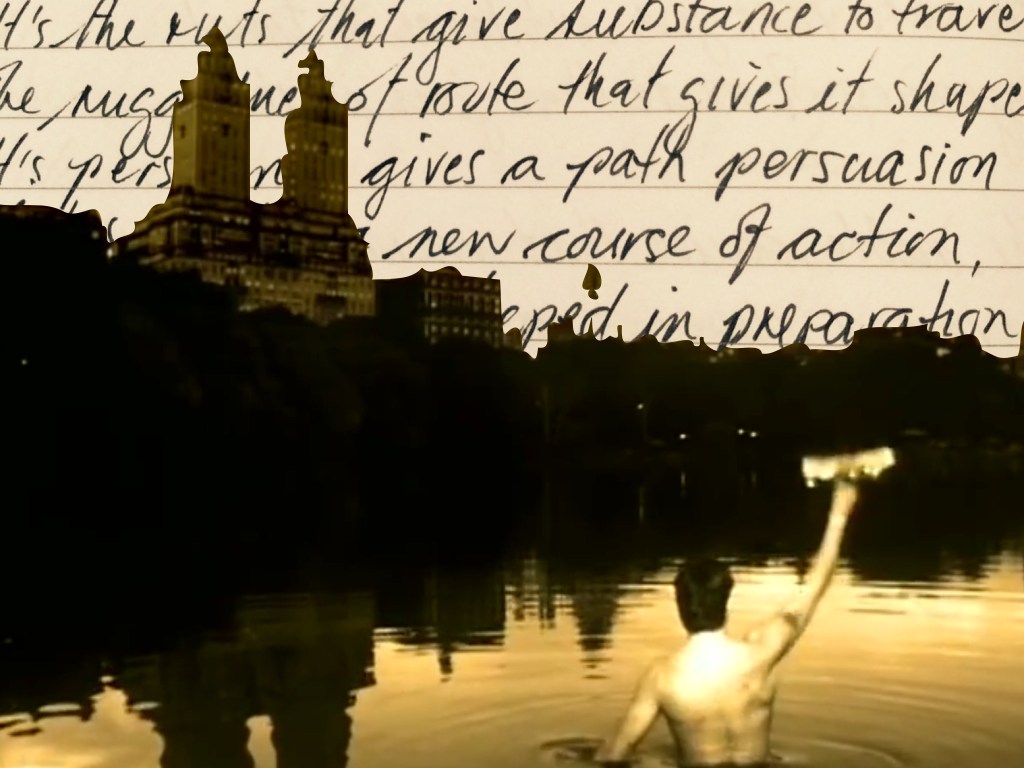
    It’s the noble cause that warrants journey;
    so traversed, deserves a destination.
    It’s not the distance, for its own sake, earns the
    merit – might just call that transportation.
    It’s the rough road, made of grit and gravel
    that carves its credentials in the landscape.
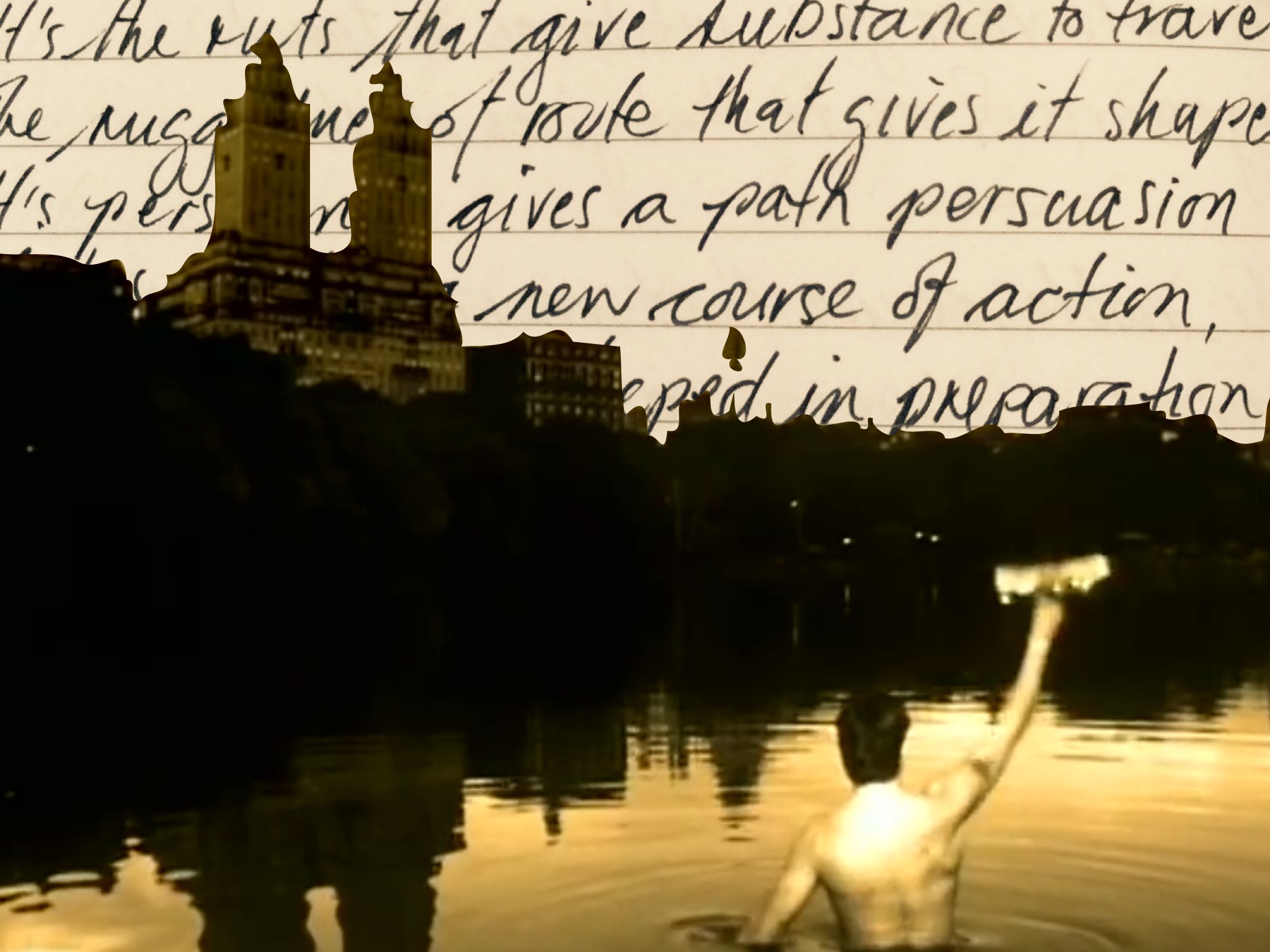
    It’s the ruts that give substance to travel;
    the ruggedness of route that gives it shape.
    It’s persistence gives a path persuasion,
    makes possible a new course of action.
    It’s that step, as steeped in preparation,
    that gives the next stride its satisfaction.
    . Distance, as travel, is all but pretend,
    . Substance, the measure of a journey’s end.

    © Tim Grace, 7 April 2013


    To the reader: The journey and its destination. The ‘long and winding road’ that through a series of encounters leads you back to yourself renewed… it’s this road you most fruitfully travel. It’s not the high-road, it’s not the low-road; no, it’s the middle road that offers guidance and a pathway to discovery. A worthy road must do more than transport it must transform.

    To the poet: According to the Buddha, it’s better to travel well than arrive. Likewise, the writing process must not treat the end as its purpose. The end does not come forward without a journey. As words seek expression they uncover meanings and reveal conclusions that are in the present formed of wonder; they deliver surprise. So, wonder and surprise are partners in the narrative of life.


    Journey's Warrant
    Journey’s Warrant
    Picture Source:
    http://youtu.be/khrx-zrG460
  • Artobiography

    Artobiography

    Artobiography – the self-exposed.
    Personal revelation on display:
    persuasions, curiosities disclosed;
    individual leanings that swing and sway.
    Privacy – an open exhibition.
    Voyeurs at large, a see-through medium,
    en masse titillation; imposition;
    pastiche motif; pretensions on parade.
    A synthetic construct, superficial,
    skin-deep patina, costume masquerade;
    disguised reality – artificial.
    . What of art that it adores expression,
    . and yet, so crudely ignores discretion?

    © Tim Grace, 31 March 2013


    To the reader: Exhibitionism or exhibitionist – an empty distinction. The expose of self as art. The narcissist, an introspective voyeur on public display. Made naked for self-amusement. Inside-outside. Flesh-coloured drapes on see-through windows. Shock therapist using auto-simulation as creative medium; seminal concept becomes revelation. Artobiography – a crude craft on revealing canvas.

    To the poet: Inspiration for this sonnet was a documentary on avant-garde art. The various vignettes portrayed a series of self-absorbed indulgences. Confusion over purpose was laid bear. A naked clambering for notoriety; easily achieved through public shock. Nothing more than a sideshow curiosity laying claim to creative space. As a writer, I can appeal to a reader’s instinct for novelty… the forbidden and perverse are easy grabs.


    Artobiography
    Artobiography
    Picture Source:
    http://youtu.be/27w3wR7ofl4
  • Open Book

    Open Book

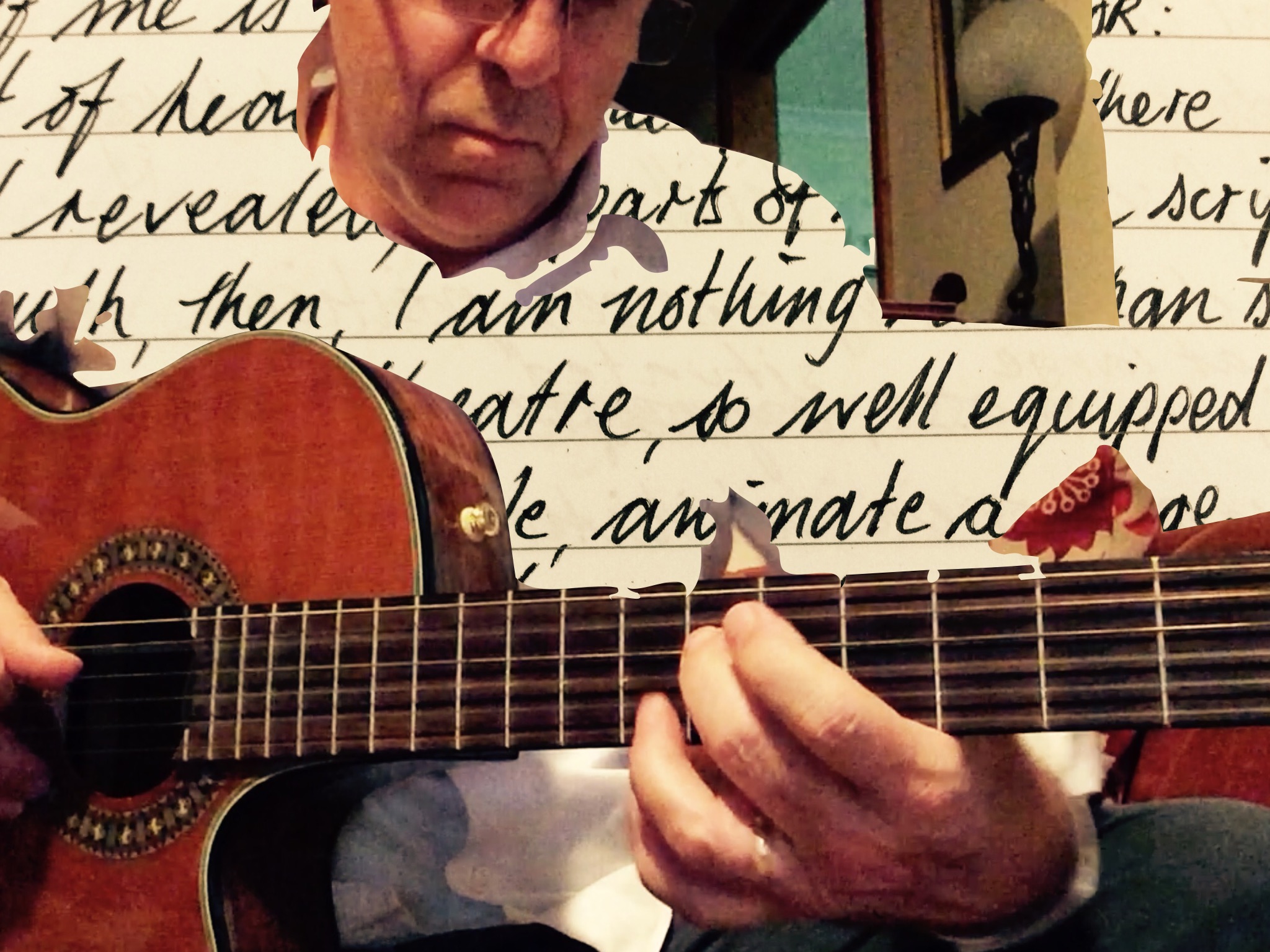
    It’s clear to you, I am an open book;
    an easy read with all my plot laid bear.
    All of me is gesture, betrayed by look:
    a tilt of head, a glance of eye, and there
    am I revealed… all parts of me are script.
    In truth, then, I am nothing more than stage;
    all of me is theatre, so well equipped
    to assume a role, animate a page
    with action, to be read by likes of thee.
    So well trained in delivery of lines
    I believe myself impromptu; falsely,
    to be playwright of my own designs.
    . Every thought is preceded by an act.
    . It’s from gesture that meaning we extract.

    © Tim Grace, 23 March 2013


    To the reader: At the sub-conscious level, we have social receptors that monitor the quality of our relationships. Our senses collect an array of information; this quantum undergoes neural processing before translation into an appropriate response. Our brains filter out what’s unnecessary and appropriate what remains as useful to the circumstance. That filtering process isn’t invisible. There are many cues that provide evidence of subtle subterfuge… to the astute, we are an open book.

    To the poet: The success of this sonnet relies on how well it portrays an impromptu script. The poem’s plot sits (more rightly flits) between two layers of consciousness. The reader (you) is encouraged to scrutinise the writer (me) for signs of ingenuous intention. I am betrayed by give-away gestures that make me nothing more than a scripted actor; a fake, from an open-book masquerade.

    Open Book Open Book

  • Victory Entombed

    Victory Entombed

    Once again, death rejoices a new grave,
    a soiled-over body, a buried soul;
    welcomes The Dead (Le Mort) to Hades’ cave;
    adds a fresh bag of bones to its countless toll.
    The spoils of victory entombed, encased
    in a casket of clay, in wet mud drenched,
    dispirited, disposed of, laid to waste,
    laid to rest in pieces; so long entrenched.
    ‘So Long’ farewelled, given back; dust to dust…
    But listen, through the dirge, the Angels sing.
    ‘Hark’ the Angels sing (as so the Angels must)
    “Where, Oh Death, is your victory, your sting?”
    . Through nothingness Death must surrender all,
    . beyond nothingness – Eternity’s call.

    © Tim Grace, 22 March 2013


    To the reader: He was 94 at death. An Uncle. An only son. An alcoholic… a troubled soul… a widower with children… a mechanic… a reformed alcoholic… a preacher; a man who found redemption. At life’s end, a man who had travelled a long and arduous journey of self-discovery. An adored father… a revered brother… a soul at rest; freed of Death’s sting, for “I am the resurrection and the life. Whoever believes in me, though he die, yet shall he live, and everyone who lives and believes in me shall never die” (John 11: 25-26).

    To the poet: This sonnet is a layered interpretation of one man’s passage through, and beyond, the doors of death towards eternal peace. To begin with, words rattle with visual references, “but listen” (at line 10) calls upon a new register of interpretation: “Hark the Angels sing”. The dismissal of Death as an ending in itself (1 Corinthians 15:55) takes the sting out of life’s terminal destination. At Death we join the countless dead and become at last united with one collective spirit… so the story goes.


    Victory Entombed
    Victory Entombed
    Picture Source: http://youtu.be/EOga0vsuC6Q