Blog

  • Thees and Thous

    Thees and Thous

    He too can speak in thees and thous,
    As he vents his anger’s rage,
    The English language thus allows,
    For the poet to engage.
    In a tirade of words contorted,
    He canst tarry in literal combat.
    Upon his words assorted,
    He doth stake his claim to that!
    Thine, at this point, mightst be confused
    As to the merit of this prattle.
    Simply put the poet has refused,
    To take his smallest guns to battle.
    He taketh to the challenge a cavalry of terms
    Exhumed from antiquity …. and riddled with worms!

    © Tim Grace, February 2010


    To the reader: In many respects this sonnet is a nonsense verse built upon an exploration of subjunctive word play. At some point in development the boundaries of prattle and battle met; and from here the poem gained its underlying theme. The enraged sonneteer has at disposal a cavalry of terms well designed for the expression of righteous indignation; albeit pretentious. The pompous victory speech is just a verb away from mockery.

    To the poet: Use of the subjunctive verb, as archaic as it might be, is an essential poetic tool. When managed well, the subjunctive phrase enables a bending of grammatical rules in favor of poetic licence. Shakespeare, the sonneteer, employed the subjunctive twist to help him better conform to, and play with, the five-footed stressed rules of iambic pentameters. Inventing quasi (somewhat plausible) subjunctive verbs and phrases is a skill well learnt but judiciously applied.


    Thees and Thous Thees and Thous
  • In The End

    In The End

    In the end we meet finality
    Where there is no more to come,
    It represents totality
    The comprehensive sum.
    In summ’ry there’s an ending
    To a captured set of thoughts,
    There’s a possible extending
    Depending on reports.
    To conclude requires judgement
    Giving closure to a theme,
    Brings meaning to a segment,
    That may unrelated seem.
    . In a climax there’s achievement, a moment of reward,
    . A peak of high endeavour, a point of much applaud.

    © Tim Grace, 27 February 2010


    To the reader: In the vast scheme of things our minuscule stop-start segmentation of time must seem a little trite and unnecessary. Periodic pauses, earth hours, pit-stops, forty-winks and memorable moments form a staccato of stuttering events. The End and it’s relationship with finality is not fixed; all endings are not terminal. We use endings to pause the run of play, to catch our breath, before resuming with new vigor and direction.

    To the poet: Shakespeare was endlessly concerned with overcoming the injustice of time and reconciling this with a life short lived. His first three groups of sonnets consider options for achieving perpetuity; not eternal life, but eternal meaning is his desired destiny. Putting ‘The End’ in context is a poet’s lot; why am I doing this? In ‘The End’ is there any defense against the futility of a battle with Time?

  • Opposing Views

    Opposing Views

    When opposing views are in dispute
    on the basis of belief.
    When lines of thought are resolute
    and take no light relief.
    Who’s to grow the compromise,
    on a patch of common ground?
    Who’s to build an enterprise,
    so both be honour bound;
    to set aside their differences,
    and work to common cause,
    emphasise the linkages
    that life itself explores?
    . In the earthly world, the natural world, opposites attract,
    . But when it comes to make believe, the same is not a fact.

    © Tim Grace, 21 February 2010


    To the reader: The hardest part about living a belief is that reality often confronts the assumptions of those who believe. Acceptance of dual realities requires the insertion of an uncertainty clause into any belief system. This insertion doesn’t necessarily come easy or sit comfortably with believers who have invested heavily in the creation of a particular world view. If compromise and adaptation are the keys to survival, what’s the attraction of an inflexible belief?


    To the poet: The simple symmetry of the first two couplets makes an easy entry into this sonnet. The next eight lines ponder the traits of who might offer a solution to the fragility of belief. The use of ‘who’ suggests a singular being; a wise sage. Regardless of the entity’s wisdom, the final couplet contrasts the difference between a natural and synthetic solution. The lines in the last couplet are long (fourteen syllables each) but they have a rhythmical emphasis that rounds off the sonnet with a neat conclusion.

  • Still She Sits

    Still She Sits

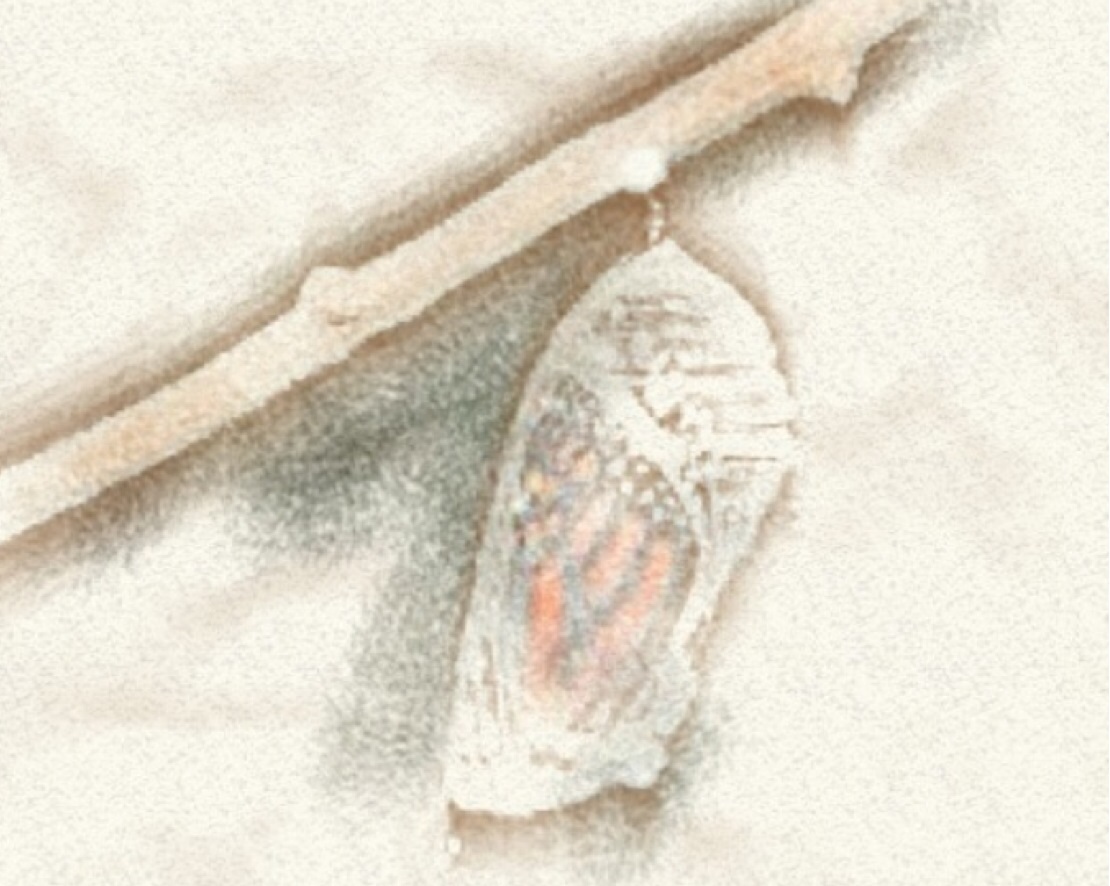
    And still she sits in waiting,
    Deep within her shell.
    No point in contemplating,
    As to when she might expel.
    She’s not driven by a calendar,
    Nor woken by the sun.
    She’s not a starlit wanderer
    On her monthly run.
    No bolt of electricity
    Will generate her storm.
    Naked with simplicity
    It’s so she finds her form.
    . She’s the fickle child of a wondrous thought,
    . She’s a child, a brain child, that won’t be caught.

    © Tim Grace, April 2010


    To the reader: There are so many aspects to life that just can’t be chased down or forced into submission. We gain nothing from bullying a butterfly. Simple pleasures are attracted to those who appreciate and nurture the quality of relationships. It’s through patience, not cajoling, that pleasures are expressed … good things come to those who wait.

    To the poet: The rhythmic structure of this sonnet is more lyric than poetic. The line lengths are variable and do little to help the reader establish a comfortable meter. Nonetheless, it does move along in three blocks of four-lined stanzas. Each block of thought reads like a statement; but true to the theme of the poem, the statement fails to capture the essence of this illusive female form.


    Crisilis crisilis
  • Saturated Image

    Saturated Image

    Liquid reflection

    A saturated image floats lightly
    As a surface level scene.
    An occasional glimmer shines brightly
    To accentuate the sheen.
    From fluid thoughts and wet connections
    Comes a deeper contemplation.
    A pool of thoughts, recollections
    born of liquid incubation.
    Still waters give reason to reflect
    but shallow is its lasting.
    One slip, one drip, and gone is its effect
    No image is it casting.
    .    The clarity of thought can be swallowed by a ripple
    .    Drowned in the disturbance created by a tipple.

    © Tim Grace, February 2010


    To the reader: Watching the dynamics of ripples in action is fascinating. The way ripples bounce off each other and merge into new concentric patterns is poetry in motion. But the impact of a ripple on a liquid surface breaks the mirror-like qualities. As ripples expand across a surface they blur clarity and replace a perfect image with a disturbed and distorted impression of the form at source.

    To the poet: In this sonnet we look through the image to contemplate a deeper thought; there is something below the surface worthy of attention. In delving deeper, the poem introduces the impact of a ripple. One drip and the unity of an image is disturbed. Over time I learnt to separate the writing of the final couplet from the body of the work; often with a night’s sleep. Creating some space in time allows me to step back and observe then summarize the work from a useful distance.


  • Fourteen lines…

    Fourteen lines…

    Fourteen lines of rhyming verse
    No need for clever tricks.
    Obey the rules or face a curse
    No remedy can fix!
    For those who can not do as told
    There is no path to glory.
    In sets of four the tale unfolds
    And so becomes a story.
    Be not tempted into broad display
    Do not detail every instance.
    Resist the line that leads astray
    It’s the curse of least resistance.
    .    Let the story tell itself, no metaphor need mix,
    .    A story is a story, not like a pile of bricks.

    © Tim Grace, 4 February 2010


    To the reader: As the traveller and poet learn, new ideas are built upon loose impressions that over time mature into tighter understandings. In the early stages of construction an idea is best left unconstrained and deserves the liberty to indulge in vagueness; to question and wonder without the confinement of certainty.

    To the poet: The best comparisons happen naturally and need no forcing. Telling a reader that one thing is like another strips a poem of its own power to conjure a playful twist of thought. Vagueness in a literary sense can establish an intriguing ambiguity; it is suggestive and creatively loose – enticing.


    IMG_0513