Blog

  • As of now

    As of now

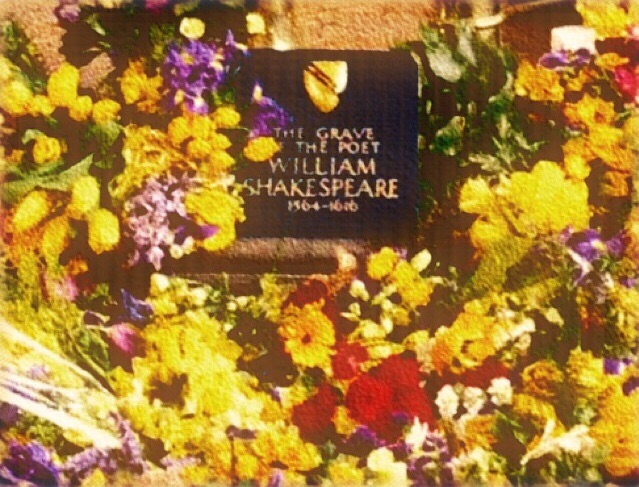
    Love, as of now, attached to living flesh;
    at end, all but fixed to an epitaph.
    Love, as of now, tender, ever fresh;
    at end, has refuge in a photograph.
    What then, says this, of love’s enduring state:
    love, so exposed, will weather and degrade?
    What then, says this, of love’s most fragile state:
    love, so exposed, will but wither and fade?
    Surely love, at end, has a greater role:
    love can not be fixed to paper or stone?
    Surely love, at end, is spirit and soul:
    love can not be to the elements thrown?
    . Love, as of now, leaves a gape in thinking.
    . Love’s fulfilment needs no earthly linking.

    © Tim Grace, 25 August 2011


    To the reader: Love in all its forms is an emotional transaction; an exchange of spiritual relationships. Being such, we all-too-clever humans have built ‘love’s transaction’ into a thriving economy. At every opportunity we translate love into a material possession that can be mined for treasures, bartered for business, and stolen for stealth. At death, we are then confronted with love’s material redundancy; paper fades and stone erodes… love endures.

    To the poet: Half way through Shakespeare’s sonnets, it’s clear the writer’s having issues with fatigue. Love’s pen is flaccid. Whether, at this stage, he knew he was half-way through the collection is unknown; nonetheless, he was doubting the sharpness of his quill. It’s in this section of the Sonnets that the narrator is most exposed to his various demons: he confronts his virility and concedes his wilting wit; unable to write of fresh love in his once so youthful voice.

    as of now as of now


  • Afterwards

    Afterwards

    Afterwards, when there’s nothing of him left
    but a bag of bones in compounded clay,
    he asks that we not mourn, or moan bereft,
    as if scripted tight to a tragic play.
    We are not to revisit memories
    that through dredging would have our grief resumed.
    We are not to resurrect miseries,
    not to raise from earth all his bones exhumed.
    Let his body go, let it rot in peace;
    it wasn’t love got buried in this soil.
    Love shall not perish, decay or decrease;
    be content that all things but love will spoil.
    . Love can not be buried six foot under;
    . likewise, decomposed or split asunder.

    © Tim Grace, 23 August 2011


    To the reader: Everlasting love; enduring love; love forever more. The possibility of remembrance beyond now. Appreciation as a welcome after thought that heartens the spirit of forgotten souls. Love, an essence so delicate in life, so enduring beyond the grave. In loving memory, we release the body of its burden and for eternity seek ever-lasting peace and resolution.

    To the poet: There is a passage of Shakespeare’s sonnets (about 64 to 78) devoted to the potential of endless love. Afterwards – beyond images and artefacts; beyond graveyards and compounded clay ‘my spirit is thine, the better part of me’ (Sonnet 74). After words – ‘remember not the hand that writ it’ (Sonnet 71) for I am gone in all but spirit and soul. In his instructions to the living he implores release: let me go, let me pass… let me free.


    afterwards
    afterwards
  • Number Nine

    Number Nine

    He chose to break apart the number nine.
    Nothing orderly, as in sets of three.
    This was a real split with a broken line.
    The rebellious shout of a man set free.
    No more through blind faith would he choose to use
    the standard voice of an ancient rhyme.
    Gone were the muses, the nine Belles of Zeus.
    As from this point, his bells would clang not chime.
    Why view the world through someone else’s lens?
    His kaleidoscope shattered all of that!
    Better live at sixes and sevens
    than to die in a dead man’s habitat!
    . The number nine makes a neat solution,
    . but more divine was his revolution.

    © Tim Grace, 17 August 2011


    To the reader: What does it take to break with convention; I presume, it takes a good dose of passionate conviction? I presume, those who innovate have befriended risk and become comfortable in the presence of awkward acceptance. Yesterday, The Beatles’ White Album had another Birthday; an annual reminder of popular music’s helter-skelter pinnacle. The double album borrows from a vast array of musical genres including the stunning ambient crescendo of Number Nine… it’s all about revolution!

    To the poet: The Greek’s invented nine muses to travail the mysteries of their universe; at Sonnet 38, Shakespeare construed a tenth: “ten times more in worth than those old nine which rhymers invocate”. As the master of discontent, using non-conventional means, he creates a disruptive energy; invites the presence of new possibility. Sadly, like most revolutions built upon youthful enthusiasm the verve is soon lost. By Sonnet 76, Shakespeare laments his barren verse and ponders a side-ways glance at new-found methods … and to compounds strange; a noted weed!


    number nine number nine


  • Along Comes Art

    Along Comes Art

    With simple rules, as would science render,
    we form a universe from cosmic dust.
    Then heaven and earth take this agenda
    and for art-sake make news of love and lust.
    With building blocks in assembled order
    we unravel life as would genes combine.
    Then for art-sake, and a fancy border,
    we give great praise to all of our design.
    With rows of noughts to the power of ten
    nothingness is scaled to the Nth degree.
    Then along comes art, with its brush and pen,
    claims emptiness as space for allegory.
    . It’s facts reveal an amazing story,
    . but it’s fiction steals the blazing glory.

    © Tim Grace, 15 August 2011


    To the reader: The human brain has evolved to recognise natural rhythms; to enjoy the ratio of shapes and numbers; to orchestrate colours and augment sounds. As measured, facts and figures quantify our universe; ever expanding our bank of knowledge. Buried in this infinite detail is wonderment; the source of fantastic explanation; home of earthly spirits and heavenly gods. We are the story tellers, the picture painters; for art-sake, we are the messengers.

    To the poet: If not mistaken, this is the first Sonnet (107) that holds itself to fourteen lines; ten syllables to each. I claim no strict adherence to iambic pentameter. I appreciate the heel-toe (dumpty-dumpty) rhythm of lines in classic formation but reserve the right to wander into other syncopations. I borrow from Shakespeare’s licence; Sonnet 145 is a case in point. Each line of this sonnet is made of eight syllables. And if more ‘case’ is needed, explore Sonnet 126: a twelve lined poem in six sets of rhyming pairs.


    along comes art along comes art
  • Act of Compare

    Act of Compare

    Love writ more lovely than a summer’s day,
    less ruffled, less blemished, less deeply scarred,
    less the sullied victim of Time’s decay;
    alas, the figment of a love-bit bard.
    Dreamed far more perfect than is Nature’s deal,
    more radiant than any daisy’s blush,
    more precious than a gift from Fortune’s wheel;
    beyond the beauty of a painter’s brush.
    Love so beguiling, takes grip of each breath…
    Love so intriguing, bemuses his heart…
    Love so enduring, makes nonsense of death…
    Love so endearing, it tears him apart…
    . Contentment makes most of love’s sweet affair,
    . nothing is gained by the act of compare.

    © Tim Grace, 27 August 2011


    To the reader: We learn to measure through comparison and through this determine our tastes and preferences. We discriminate good from bad on the basis of quality; an intangible sense of excellence. That incomparable ‘youthful beauty’ might outlive the ravages of time, through ‘eternal lines’ is a romantic notion; an admirable claim: ‘Yet do thy worst, old Time; despite thy wrong, my love shall in my verse ever live young.’

    To the poet: Alas… the torment of describing Love’s beauteous youthful perfection, with skill enough to defeat the tyranny of Time is nothing less than torturous. Between Sonnet 18 and Sonnet 65, Shakespeare pens every word in beauty’s defence until distracted (sleepless and exhausted) he declares in Sonnet 66 his defeat: ‘Tired of all these, for restful, death I cry (from these would I be gone) … save that to die, I leave my love alone.


    act of compare act of compare


  • Staked His Claim

    Staked His Claim

    Boldly… staked his claim to a poet’s brag.
    He gave his word… promised Love’s salvation.
    And so, with upward lift and downward drag
    came the wait; the weight of expectation.
    Brazenly… gave rhyme to a poet’s shout.
    Penned in red-ink… “Love the ever-lasting”
    Gave perpetuity no timeless doubt.
    Raised the standard (banner, flag and masting).
    But, alas… with hope there came no finish.
    no conclusion… no evidence of claim.
    Nothing of his promise could distinguish
    anything of note… Time he did not tame.
    . So awkward is the stumble in retreat,
    . much better to be humble in defeat.

    © Tim Grace, 29 July 2011


    To the reader: In the engine room of life expectation is a key driver, a dramatic tool that motivates and energises. It’s also the mechanism that can let loose catastrophe. Expectation mixed with high-octane confidence pushes the needle in the gauge ever closer to the danger zone. As one needle tips to red, others likewise respond; the system is stretched; margins of error diminish; and finally, all tolerance is gone… the gasket blows!

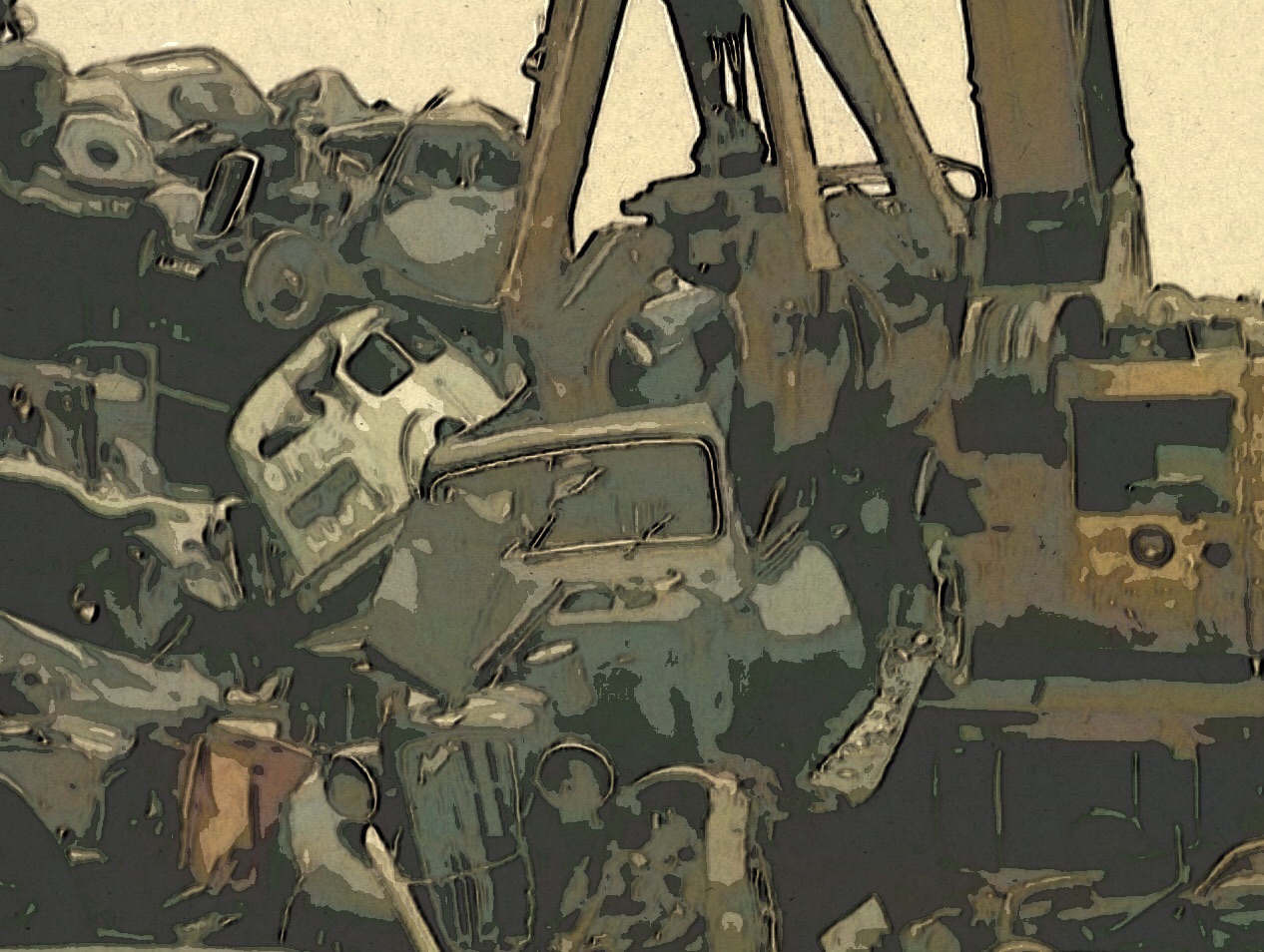
    To the poet: The inevitable unrealised… junk yards. Rusting remnants … failed pursuits. Testaments and epitaphs … comparisons. A full collection of poems laid bare … his best and worst; side-by-side. The full journey with all its trammelling is what makes a full-reading of Shakespeare’s sonnets a rewarding exercise. The intrepid determination and commitment to his cause … for love sake; forsaken love.


    staked his claim staked his claim