Category: Love

  • A Lover’s Loss

    A Lover’s Loss

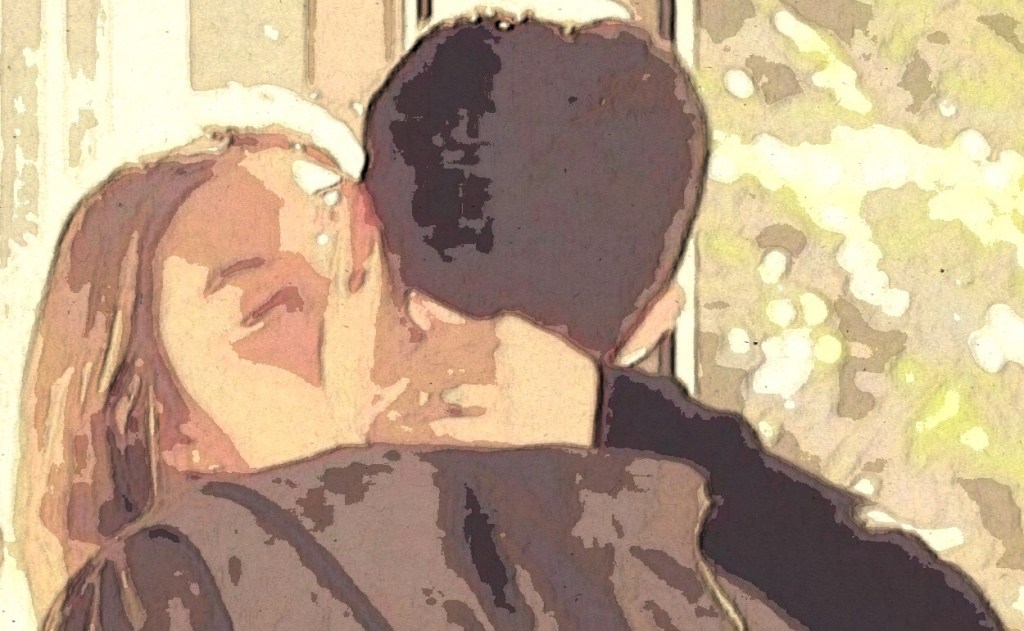
    When the rose of last year’s love was not replaced,
    she whispered “I loved you” and shed a tear.
    She closed her eyes and through her memory traced
    his pattern; she imagined he was near.
    Filled heavy with acceptance, her tear swelled,
    wet her lashes and rolled upon her cheek.
    This tear was not wept, this tear quelled
    the weeping worry; no mourning did it seek.
    There was no need for other tears to flow.
    Tenderly, and for just a moment brief,
    she held this tear and then she let him go…
    gone to soul; to find comfort and relief.
    . A lover’s loss is not for time to keep,
    . It’s far better kept where the soul is deep.

    © Tim Grace, 11 September 2011


    To the reader: I remember watching a Twin Towers documentary, describing remnant lives, a decade after the attack. It was clear that many emotional towers had taken devastating hits and were still struggling to rebuild any semblance of structural strength. Gradual resolution of the inexplicable loss of a loved-one, an intimate partner, is a torrid journey of repair; never complete … when the weeping is done, enduring, endearing Love is forever expressed in a single tear.

    To the poet: … and there ends my deliberate set of love poems; some about Love, others for Love, and a few in Love. Shakespeare wrote of Love as both spirit and soul. As spirit, Love is an attractive energy that fuels our motivation to intimately bond. As soul, Love is a figmented expression our passionate desires. Blessed with Love (spirit and soul) we are granted the human condition; ever challenged to balance on the one-hand energy and on the other passion; the humours: dispositions, preferences, propensities, and temperaments.

     

    image

  • This Love

    This Love

    Born of soul, love’s likeness is that of child,
    often wilful and prone to stubborn shows
    that well-mask the features of meek and mild;
    hidden until love more mature grows.
    Young love, self-obsessed with grand potential
    will boast itself as something shiny new;
    too conceited to be referential.
    This love is far from fair and kind and true,
    with distant distain love rejects its source,
    delights in the harvest of foreign shores
    that uncharted, provide no homeward course
    to the sheltered ports that our soul adores.
    . Soul is a measure of depth not distance;
    . but, young love is slow to learn the difference.

    © Tim Grace, 7 September 2011


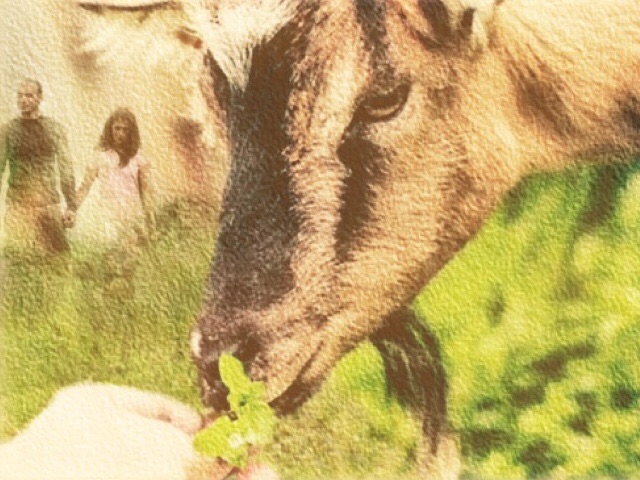
    To the reader: When we personify young love we often grant it a spirited soul. Using an old agrarian metaphor young love has goat-like qualities: haughty, self-obsessed and petulant. We’ve acquainted ourselves to this interpretation through centuries of artistic representation. Born in Spring, young love assumes the character of air, the presence of Jupiter, the viscosity of blood, the physicality of heart; along side a sanguine mood… all very attractive!

    To the poet: … and furthermore: young love, not to be confused with adolescence, has a long glossary of attributes; well known to poets of the past. In a literary sense, fresh love is recognisable as having a moist and pink complexion; along with a thirst for wine and merriment. This youthful spirit is gentle, meek and mostly benign; fairly-spoken and slow to anger. It’s this fresh spirit that Shakespeare so desperately sought for his own rejuvenation: “As from my soul which in thy breast doth lie: That is my home of love”


    this love this love


  • Partner of Peace

    Partner of Peace

    Love, so challenged, no inner conflict wins.
    As a partner of peace love wages war
    on itself. Off-set, love’s giddy-heart spins;
    and so forsaken, loses sight of sure.
    In conflict with its own best interest
    love brokers treaties never to be sealed;
    love enters into contracts that at best
    record the battles fought upon a field
    of unbound, unfound, unwound agreements
    that soon form a quarry of love’s dispute.
    The rumoured whispers, the lost endearments
    stripped of meaning and purposeful pursuit.
    . When tit meets tat, love declares a battle.
    . What gains love from this quarrelsome prattle?

    © Tim Grace, 3 September 2011


    To the reader: As a partner of peace, in the orchestration of harmonic waves, love is prone to self-doubt. To resolve its off-key insecurities, love seeks reassurance; constantly calibrating its pitch and frequency. Love is prone to high peaks of ecstasy and low pits of depression; vacillating between major and minor keys. Harmony requires an oscillating not vacillating partnership; good vibrations that intermingle as one resounding chord.

    To the poet: Love is the greatest of all abstract nouns. An intangible force that has had poets spellbound since first the word was uttered; stuttered in association with its tangible sensations. As a rhyming partner, Love has outlived its obvious relationships. The dove, that bird of peace, has long since flown its roost; likewise the velvet glove has outworn its soft semantic touch.


    partner of peace partner of peace


  • Love’s Condition

    Love’s Condition

    Innocent-love is cursed with lack of sight;
    and so, through blind-faith puts good-sense aside.
    Long suffering-love imagines what might
    have been; thus, emptiness is justified.
    Blinded-love will abandon dignity,
    it will forsake its need for nourishment;
    and so deluded-love craves eternity.
    Despite no promise, nor encouragement,
    this kind-love, this gullible-emotion,
    submits wholly to offers of affection;
    and so, is diminished through devotion
    to a cause that offers no protection:
    . Love’s condition: in disarray, in parts;
    . no position to counsel broken hearts.

    © Tim Grace, 31 August 2011


    To the reader: How often do we see common-sense overwhelmed by a good-cause? Humans, by nature, are emotionally driven. Our first reaction is to feel then respond with an after-thought. Strong emotions can render our thoughts powerless; defenceless and in disarray. Love, of all emotions, has the power to blind-side a rational mind. Love at first-sight … was the last thing she saw.

    To the poet: This sonnet, with all its clunky phrasing, is gasping for breath. In an act of resuscitation it’s been given a second-life numerous times; and still it rattles. Punctuated with stops and starts; hyphenated with dots and dashes; ventilated with intensive care. High-dependency on specialist-care is not a good sign for lasting success; this love-sick sonnet limps between treatments.


    love's condition love’s condition


  • Attractions

    Attractions

    Love is prone to the pull of attractions;
    beguiled by sight and a theatre of thoughts;
    enamoured by touch and aroused reactions;
    exposed to the pleasure of seductive sports.
    Too easily flattered by beauty’s praise
    love shines meekly through an innocent veil.
    And through naive nuance sweet love displays
    how subtle twist becomes a sordid tale.
    Too eager to feel the stroke of success
    love craves the press of an amorous hand;
    the nonchalant nudge, the carefree caress
    that stokes an embered fire; fuelled and fanned.
    . Love unprotected is in poor defence…
    . too easily subjected to false pretence.

    © Tim Grace, 29 August 2011


    To the reader: Love like gravity is an attractive force. And there begins a very short lesson on what physics calls the fundamental forces; four in total, with a fifth being pondered. Gravity is one of two universal forces that can be perceived in our daily interactions with the environment. The fundamental interaction of objects takes place on a dynamic field. As one object interacts with the field others respond to its changing influences; drawn to its impression.

    To the poet: The gullibility of love as a weak agent is an irresistible theme; an attraction too hard for most poets to resist. We watch and then describe love’s vulnerability in terms that reflect one emotional influence over another. The lure of love draws heavily on a willing soul; and there seems little a poet can do to detach himself from the strong tug of pen to page.


    attraction attraction