Category: literature

  • Brittle Surface

    Brittle Surface

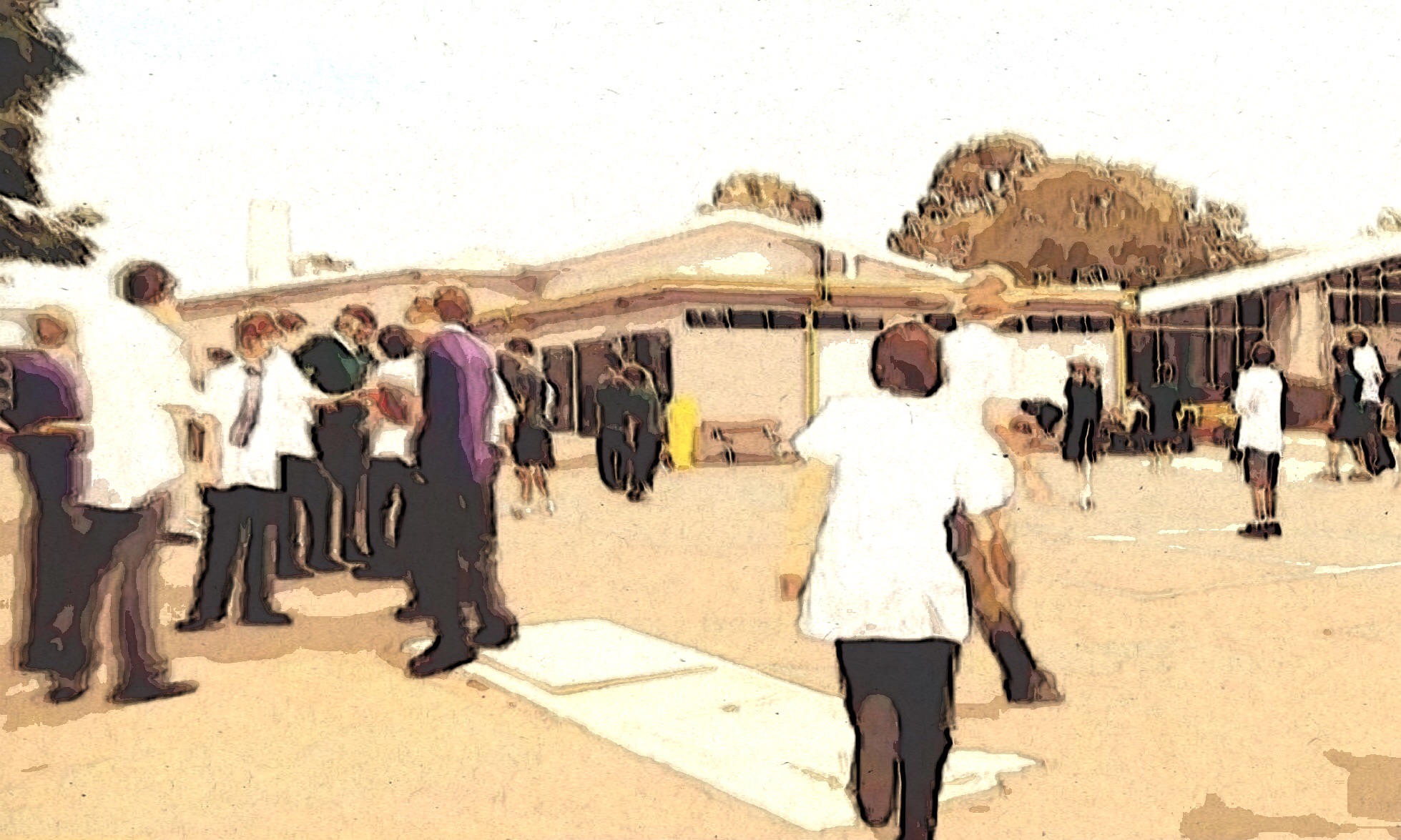
    Then there’s the other playground, hidden
    from the cast of eyes, from the field of view.
    Given shape of whispers, a forbidden
    terrain that no survey could map as true.
    Due regard, a somewhat wise precaution.
    As with a grain of truth in rumour’s mill,
    this place has no scale of good proportion.
    All things can be ground to a common swill:
    ’til there’s nothing left of confidence,
    just the remnants of dignity, respect,
    and honour; nothing but shallow pretence,
    a bastion of moral poverty … wrecked.
    . Play, ground away, under spiteful attack,
    . Brittle is its surface; ready to crack

    © Tim Grace, 22 August 2012


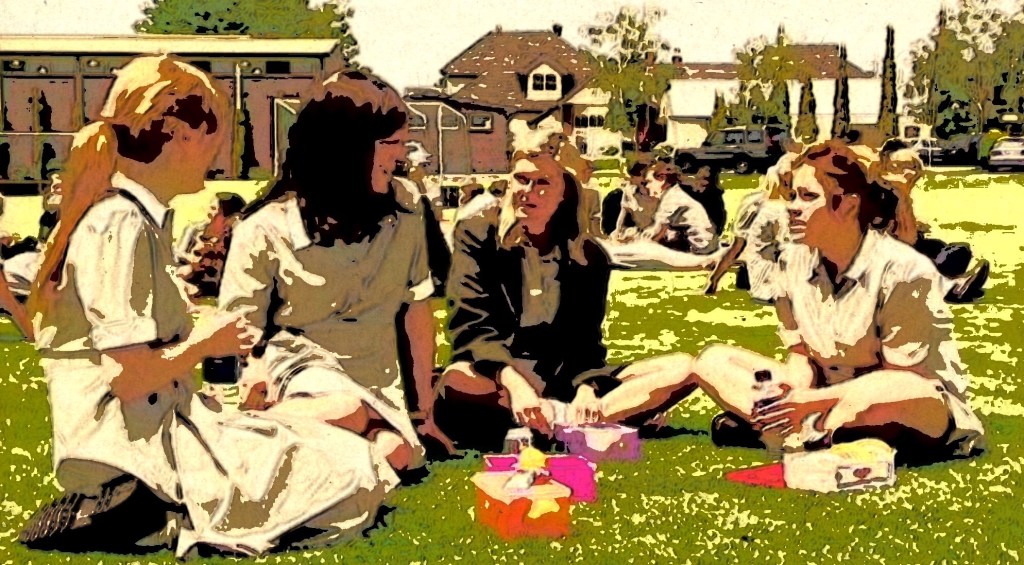
    To the reader: As a school principal, I watched with horror the spiteful subterranean attack of girls on each others’ friendships. Damage to dignity inflicts a cruel wound; one that festers long after its initiation. The attacks were often highly orchestrated and finely targeted at a hapless victim. The remedy was to some extent exposure but humiliation of the perpetrator was fuel to the fire. Reconciliation was the broker’s joy!

    To the poet: This sonnet was constructed to highlight the fragility of a playground. Designed with a sharp tongue in mind. An outpouring of emotion, prone to pretence and posturing. A string of words nuanced with nastiness. If you’re listening carefully there’s a reference to self-pity; an obfuscation, that distracts attention from cause and effect. The mere suggestion of ill-will is an affront worthy of indignation. Words just words… I don’t think so.


    Brittle Surface Brittle Surface
    Picture Source:
    http://youtu.be/YYfxfudoE_k


  • Bedlam’s Gift

    Bedlam’s Gift

    Do you remember the playground, that place
    of inherited rules, rough and tumbled
    into kingdoms with short reign: King, Ace;
    no certainty of claim – empires crumbled?
    Humbled victors became losers. The once
    proud owner of a patch relegated;
    made to start again. A bottom-up dunce
    stripped of position, mocked and berated;
    slated; given no slack; given what comes;
    given the licence to begin again;
    to re-climb; to reclaim status. That’s bedlam’s
    gift, that’s the playground I remember then…
    . No need to keep the playground free of dust.
    . The prissy playground is a breach of trust.

    © Tim Grace, 18 August 2012


    To the reader: The school yard is a swirling patchwork of colours and shapes. The blacktop accommodates the hoops and high bouncing balls; white slashes of squared concrete cater to the criss-cross of tennis balls; and the green-grassed fields squarely frame the arc of foot propelled projectiles. All of this in the context of highly competitive play; skin in the game delivers respect and reputation. In my memory, it was sometimes fun, sometimes fair… very rarely perfect.

    To the poet: A jumble of words. A connected tangle of playful poetics. This sonnet works in three fields that overplay the shape of simple four-line stanzas. Each stanza ends with a rhyme that begins the next; text creating an extra ripple of repetition. Then there’s the enjambement that carelessly bounces over boundaries; a breach of rules; edgy, annoying but fair play.


    Bedlam's Gift Bedlam’s Gift
    Picture Source:
    http://youtu.be/ul3cmqXz5vU


  • Unknown Space

    Unknown Space

    There’s a lot of unknown space inside my head.
    Grey matter takes account of what I know;
    the rest is mere potential, adjusted,
    ready to absorb my interests, to grow
    in possibility, outstretch belief.
    The nothingness inside my head withholds
    information, sometimes allows a brief
    glimpse at what might be. Just flimsy scaffolds
    that bear no weight; hazy inklings at best.
    Suggestions that do nothing more than hint
    at provisional thoughts, points of interest;
    obscurity with nothing as a splint.
    . Is certainty the child of a loose joint?
    . What becomes of nothing is a moot point.

    © Tim Grace, 11 August 2012


    To the reader: The ‘vast voluminous void’ of unknown space inside my head replicates the expanding universe; endlessly capable of absorbing dark matter. Conversion of this mysterious matter into grey matter (useful knowledge) is no easy task; before I know it I’m confused. In the face of quantum leaps I rely on established models of understanding to span the gaps. With insufficient trajectory I fall short of opposite banks and plummet none the wiser.

    To the poet: In the tradition of paired sonnets, this poem partners the previous. Both reference the potential of empty space as a matter of intrigue. In the first of two, the topic was dark matter; in the second, grey matter came into focus. The emptiness of space as a metaphor for nothingness is the gateway into a look at the relationship between confusion and curiosity.


    Unknown Space Unknown Space


  • Queen of Science

    Queen of Science

    She speaks of dark matter, she seeks its clue.
    She maps the empty, voluminous void
    that fills the heavens with galactic glue;
    such keeps the Queen of Science full employed.
    Visible space (her realm) she understands.
    The pull of planets and the death of stars;
    the gaseous clusters that time expands;
    with curiosity she’s there on Mars.
    But what of the vast unknown, the unseen,
    the invisible, lightless, hidden mass?
    What sense does she make of the in between?
    As yet, it would seem, not that much, alas!
    . Chaos reigns above the Queen’s universe,
    . order favours the black night … quite perverse!

    © Tim Grace, 10 August 2012


    To the reader: The Queen of Science is mathematics. Her realm, comprised of all things great and small, is understood through the logic of numbers. As with the best of monarchs, she is most interested in relationships; how things bond and bridge. The Queen’s interests follow the path of human curiosity: deep seas and shallow shores; heaven and earth; the living and the dead. She’s a woman of substance and structure; as real as she is abstract; as infinite as she is nothing.

    To the poet: I remember flying, from here to there, with a popular science magazine as company. Page after page of ‘new science’ flipped before my eyes; with each flip came an array of impressive numbers; usually well-beyond my comprehension. Obviously impressed, I used my simple understanding to pay homage to the Queen of Science. The sonnet has a simple structure with the last stanza acting as counterpoint … but … there is much to learn.


    Queen of Science Queen of Science
    Picture Source:
    http://youtu.be/A9S9gwhS6Yk


  • Sad Indictment

    Sad Indictment

    Pall of darkness on road to Damascus;
    It’s a sad indictment of light’s reform.
    The mood is tense and turning fractious;
    What says the message in this rising storm?
    They do not hear its thunder. Are they deaf
    to its rumbling; to its tremulous pound?
    They are so broken of spirit, no clef
    can orchestrate meaning, make sense of sound.
    How loud must the message be amplified
    before these soldiers are stopped in their tracks?
    What lightning, what thunder must coincide
    in their hearts and minds? … meanwhile Kingdom cracks.
    . All roads lead to somewhere, they are the course
    . of discovery; fortune and remorse.

    © Tim Grace, 29 July 2012


    To the reader: Two years on… and the crisis intensifies; a sad indictment of geo-political posturing. As tallied, the numbers describing death and displacement are staggering. Associated stories are horrendous; and yet, the map of suffering and destruction consumes itself with ravenous ferocity. Nothing to do with justice. Misguided conviction plays out another confrontation; another catastrophe; another war crime – such a pity.

    To the poet: Man of darkness on the road to Damascus. A conversion story, where Saul takes on a simple journey that leads to a complex tale of self-discovery. Paul (Saul’s alter ego) emerges from the flash-point a transformed individual. In Aristotle’s theatrical framework (Poetics) Saul’s crisis is the turning-point; the reversal, from which Paul seeks resolution. The equivalence of one man’s story…


    Sad Indictment Sad Indictment
    Picture Source:
    http://www.bbc.com/news/world-middle-east-22798391


  • Release The Brake

    Release The Brake

    You’d better contemplate your journey now.
    Talk as you would walk with a natural gait.
    Learn to wait, stand your ground, take a bow.
    Be patient, be present … anticipate.
    By all means stride out, by all means leap forth.
    But do take care, know when enough’s enough.
    This is the stuff of immeasurable worth;
    the fortitude you need when things get tough.
    You are where are, for good purpose; there
    not to stagnate, not to stop, you’re there to make
    the most of moments (rehearse and prepare)
    and then, when you’re ready, release the brake.
    . As a general rule, what’s far becomes near.
    . Life, as is our school, renders most things clear.

    © Tim Grace, 18 July 2012


    To the reader: Effectively managing the erratic pace of life takes wisdom. Going with the flow is one technique; perilous when that pace is frantic, stultifying when things grind to a halt. No, we can do better than that. Finding your own natural rhythm is the trick. Live life in a relaxed state of readiness… poised; as in ‘having a composed and self-assured manner.’

    To the poet: Adjusting a suit can be a simple matter… hems up or down. On the other hand the process can be laboured and intensive; costly and expensive. The same can be said of editing a sonnet. Like its predecessor, this sonnet fought tooth and nail not be adjusted. Every line took umbrage at the mere suggestion of change or alteration. In the end we were both exhausted.


    Release The Brake Release The Brake
    Picture Source:
    http://youtu.be/8sJz-iEd1PA