Category: education

  • Those Who Frown

    Those Who Frown

    What to make of those with humourless wit,
    of those who frown, those who grumble and growl;
    of those who bemoan joy; awkwardly sit
    upon a light-hearted jest with a scowl?
    What to make of those who by nature rile
    against the frivolous; heavily mark
    the wistful as trite and in sombre style
    dismiss the chortle as an errant lark?
    What to make of those with dark demeanour,
    those who do nothing but darken the sky,
    casting shadows on polished patina;
    those who take a dim view of all they spy?
    . These are they who chain good-fun to a cage,
    . and for laughter’s sake, will a smirk engage.

    © Tim Grace, 17 March 2013


    To the reader: Some adults unlearn everything they once knew about fun and laughter; they become morose and sullen. No doubt they have good-reason for such stern reproach of light-hearted follies. Chronic absence of a smile response robs these grumpy souls of the happiness surge delivered by endorphins and triggered by something as simple as a genuine smile. The health benefits of smiling are impressive; so too the social impact of this friendly gesture.

    To the poet: We can take the pursuit of happiness too seriously; drain it of fun and become disheartened. Writing a sonnet can suffer the same chain of events. In its original form this sonnet had an unintelligible middle stanza that was lost in its own search for meaning. The ‘editorial rescue’ ripped out the guts and inserted a verse. The final structure of three verses and a chorus brings me no great joy!


    Those Who Frown Those Who Frown
    Picture Source:
    http://undergroundhealthreporter.com/duchenne-smile-benefits/#axzz3YvMx8Okk
  • Chambers of Bone

    Chambers of Bone

    The dinosaur. Well and truly buried.
    A sedimentary relic. Petrified.
    Given to the past; a long time slurried,
    muddied-over, laid to rest, fossilised.
    Entombed worrier. Stabilised in stone.
    Imprisoned posture; contorted, compressed,
    a calcified temple, chambers of bone.
    A cathedral where hides the dragon’s nest.
    The lair, from where darkness is cemented
    to shadows; re-dressed in fear and loathing.
    Where naked bones are re-fleshed. Tormented
    skeletons. Cupboards of ghoulish clothing.
    . From the dust of bones the dragons rise,
    . to be the carriers of cruel demise.

    © Tim Grace, 11 March 2013


    To the reader: The dinosaurs’ demise was dramatic but to some extent not as final as their stone graves suggest. In miniature, birds (as feathered remnants) and reptiles (as scaled mimics) echo the intriguing traits of their prehistoric ancestors. And without too much stretch of logic it’s easy to see how with a flight of fantasy we’ve invented the mythical dragon. Skeletons and rattling bones can send a shiver up the spine.

    To the poet: This sonnet begins with short sharp statements of finality: the dinosaur is dead. And being so, the dinosaur has become a larger than life assemblage of intrigue and fascination. From ‘calcified temples and chambers of bone’ the dinosaur has given birth to the dragon; a cantankerous creature renowned for having a quick and revengeful temper. Some things are best left buried.


    Chambers of Bone
    Chambers of Bone
    Pictures Sources:
    1- http://youtu.be/chmDjcxEcAQ
    2- http://youtu.be/wvESMH93PU8
  • All But Lost

    All But Lost

    Lost objects: misplaced, dropped, or stolen;
    buried; put down through absence of mind
    Lost bravado: diminished, unswollen;
    deflated; rigid support now declined.
    Lost causes: with the best of intentions;
    unfulfilled; promises stalled and delayed.
    Lost rewards: accrue treasured dimensions;
    benefits foregone; with bonus unpaid.
    Lost directions: said purpose gone amiss;
    somewhere becomes nowhere; set poles apart.
    Lost investments: without jackpot or bliss;
    shrewd can be clever; with losses that smart.
    . Lost meanings: in the hand of ancient scribes,
    . Lost cities: gone meandering with tribes.

    © Tim Grace, 3 February 2013


    To the reader: Lost is a location none of us set out to find. Technically, I suppose it’s as much a place as any other. Lost is where the misplaced gather. Lost is a nebulous noun that, through vowel-association, finds its place in the good company of: last, lest, list and lust. It’s origins are from Old English tongues, where it evolved from words associated with perish; as in gone missing.

    To the poet: Being a pedant is not a poetic prerequisite; however, having a creative interest in words is a desirable attribute. Pulling apart, rebuilding and associating the word ‘lost’ sparked my sustained interest. Whether the pursuit and discovery was worthwhile I’m not sure. All things considered, I clarified in my own mind the difference between a lost object and a lost cause.


    All But Lost
    All But Lost
    Picture Source:
    http://youtu.be/_8jzqKNDkgM
  • Partial Interests

    Partial Interests

    To all things my interest cannot attend.
    I am responsive to movement, colours
    and the scent of life; all things so contend
    for my attention; distinct of others.
    One thing for the moment will steal my gaze.
    I take note of that which sways and swishes.
    That which has rhythm to my interest plays,
    so becomes the pick of many wishes.
    I’m partial to soft tones that glow; that blush
    the dull canvas with a rose-coloured tint.
    I’m partial to that which is full and lush;
    that which brings love to life with perfumed hint.
    . I cannot attend to all things in sight;
    . instead, I seek what gives my eyes delight.

    © Tim Grace, 24 January 2013


    To the reader: Programmed to attend to life’s rhythm; we literally seek and appreciate animation. Some movements have particular powers of attraction. The effortless ‘sway and swish’ of a wiggling-walk makes alluring theatre. The long-stride of confidence without pretence or contrivance draws attention. The nonchalant amble of a carefree character entertains our imagination. Powers of observation energise our interest; sharpen our focus.

    To the poet: Infatuation lacks restraint. To ogle is obsessive. Admiration construes a connection. Polite interest requires distance, it respects the dignity of a shared space; eye-contact is confirmed not consumated. From a poet’s vantage point there’s a code of practice that applies to people watching. As subjects of interest ‘the observed’ will tolerate a casual glance; not so an intrusive gaze.


    Eyes' Delight

  • Trigger Point

    Trigger Point

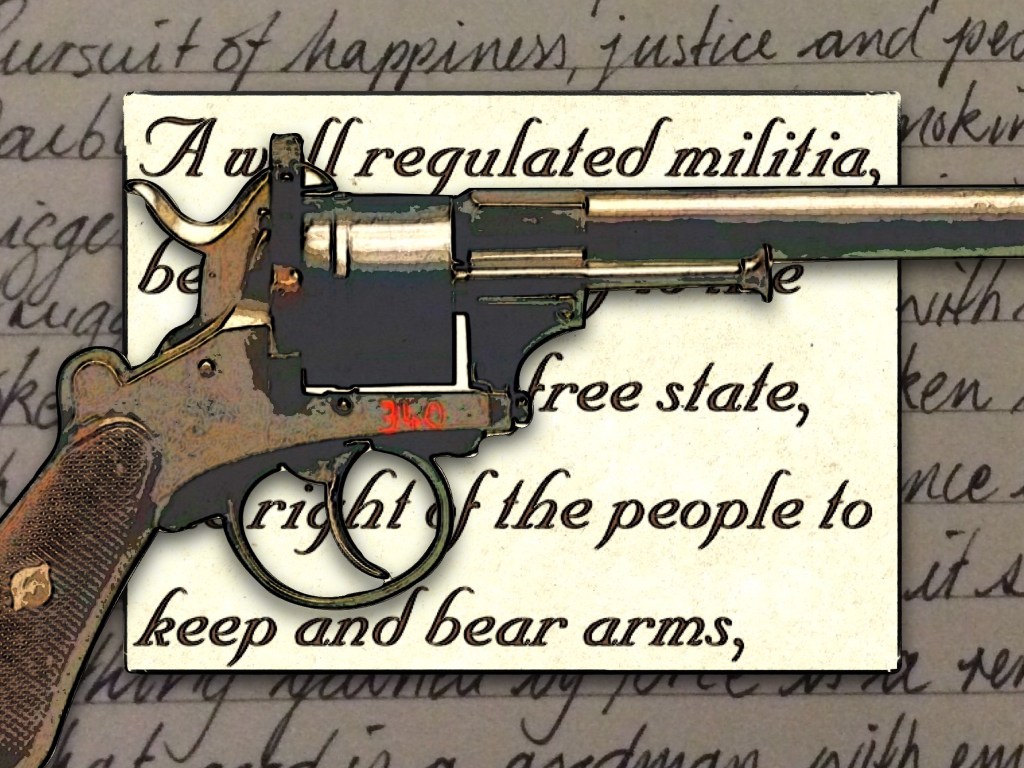
    It’s claimed ‘the gun is innocent’ … guiltless;
    absolved of all responsibility.
    A much maligned artefact, mere witness
    to bloodshed … has no culpability.
    Left then to wonder, left in state of stun.
    ‘Pursuit of happiness … justice and peace’
    Doubt’s made a target of the smoking gun.
    Trigger-point stand-off with hair-pin release.
    Struggling to make sense, tense with disbelief.
    Broken logic, broken hearts, broken dreams,
    shattered confidence; consequence is grief.
    To bear arms, not as simple as it seems.
    . Nothing gained by force is a remedy.
    . What worth is a good man with enmity?

    © Tim Grace, 26 December 2012


    To the reader: What relationship would prosper on the promulgation of fear and suspicion? Not one that values the pursuit of happiness. By nature, the trigger-happy fool is impulsive and irresponsible; prone to late apology; an after-thought. The perceived need to self-protect describes an individualistic ideology where social order is mistrusted; it’s the breeding ground for gun-toting rhetoric and double-barrelled nonsense.

    To the poet: With this sonnet my aim was broad. I took a scatter-gun approach to the target. A rat-a-tat list of ideas that sprayed shrapnel far and wide. On the rambling range, I used a metaphoric weapon that had no respect for its victim. Collateral damage was an unfortunate consequence, tolerated as expected impact. The late volta (the swivel at line 12) took final aim… in case the point was missed.


    Trigger Point Trigger Point
    Picture Source:
    http://youtu.be/Zzxwr4tdohw
  • a Priestley sum

    a Priestley sum

    What we know of air is a Priestley sum;
    makes an experimental masterpiece.
    Through simple observation so we come
    to learn from nature; wonders shall not cease:
    that air might be exhausted then restored;
    made stale and then repaired; broken then fixed.
    Such are the problems science has explored,
    mulled over, pondered on, and stood betwixt.
    How so that the planet breathes, breath for breath,
    exchanging one gas for another’s use?
    How so that nature freshens the smell of death,
    converts putrid soup into perfumed juice?
    . Through unity all things are so divined.
    . Make nothing separate as should be combined.

    © Tim Grace, 25 November 2012


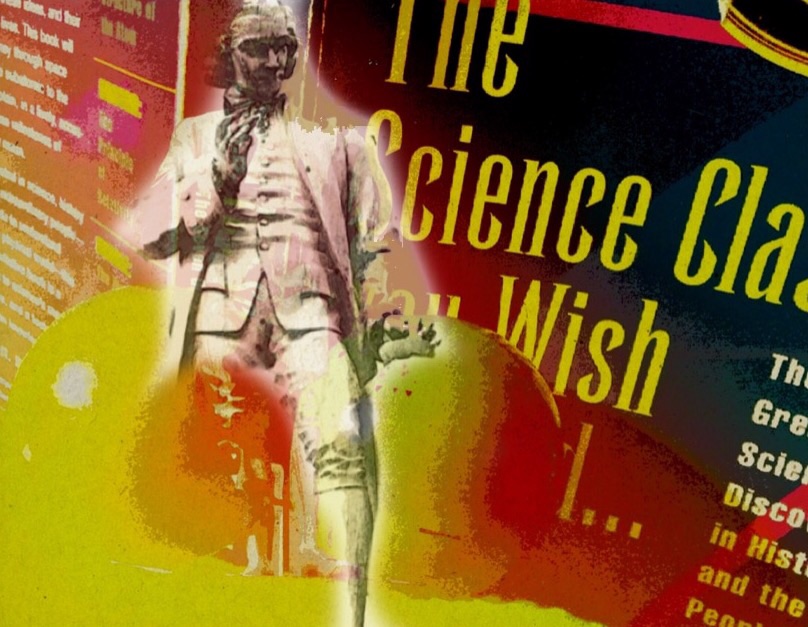
    To the reader: Throughout life, Joseph Priestly (1733-1804) travelled an awkward, and often uncomfortable, path of self-discovery. A precocious child who absorbed knowledge with sponge-like thirst. A dissenting adult who, through deep faith, sought to unify humanity’s purposeful existence. A revered polymath constricted by dogma and intolerance; a disgruntled citizen. In sum, a brave soul who introduced the world to the deity of science and rational belief.

    To the poet: Joseph Priestly was a great writer; a highly respected grammarian, alas it seems not a poet. My exposure to his masterful prosaic-skill was through his writing on the investigation of air; this kid knew how to write-up an experiment. The narrative style is intoxicating; refined and rugged… phlogisticated. The scientific brain exposed for his peers to pursue; and for all else to admire. Surely another canditate for membership of ‘The Science Class You Wish You Had…


    a Priestley sum
    a Priestley sum
    Picture Source 1:
    http://commons.m.wikimedia.org/wiki/File:Chamberlain_Square_Statue_Priestley.jpg
    Picture Source 2: http://www.amazon.com/Science-Class-You-Wish-Had/dp/0399523138/ref=sr_1_1?ie=UTF8&s=books&qid=1260482695&sr=1-1