Tag: Time

  • And as for me…

    And as for me…

    Pelicans drift with the current; sunrise
    scatters its golden flecks across the bay.
    Geese in formation navigate the skies;
    and as for me … I contemplate the day.
    Charter-boats tug on moorings; a grey cloud
    muscles out all hope of sunny weather;
    meanwhile, two men with coffees think aloud;
    morning thoughts let loose of last night’s tether;
    and as for me … I watch gulls squabbling
    over real-estate, scavenging the scraps
    of a left over meal; a man hobbling
    his way to somewhere … happiness perhaps?
    . And as for me … I sit invisible;
    . pondering what is and isn’t isable.

    © Tim Grace, 27 May 2012


    To the reader: Morning contemplation is a rare commodity; a pleasure I’ve learned to appreciate over recent years. My solitary writing routine is just one of many day-break habits. For the socially dependent, they gather to reignite humanity’s embered coals. For the physically addicted, they re-cycle themselves with a daily grind (of coffee). The likes of me … we just watch … for there’s much to see in a new day dawning.

    To the poet: … at my happiest watching words script themselves into poetry before my eyes. Some poems appear as animated scenery; translucent layers of activity, drifting planes of intermingled celluloid. The editing room converts the sketch into scribbles; sometimes with a cross-fade, sometimes with a dissolve. As a morning observation, it’s best the poem reflects rising disposition… dawning realism.


    And as for me...
    And as for me…
    Picture Source:
    http://youtu.be/rtTBq9J3fcg


  • A Fallen Thought

    A Fallen Thought

    I have swept the path of last Summer’s leaves;
    it’s late April, so prepare the parade.
    Salute the fallen; sombre Autumn heaves
    a sigh; recalls the cover of green shade.
    Now, on my shoulder rests a golden leaf.
    What am I to do? Brush it to the ground?
    How do I interpret this small motif:
    as commemorative fall; from tree unbound?
    Between my shoulder and the ground there’s space,
    just enough space, to think about good cause.
    There’s time, just enough time, to put in place
    a thought… a moment for reflective pause.
    . In fluttering leaves there’s a story told,
    . it’s a narrative, that turns green to gold.

    © Tim Grace, 23 April 2012


    To the reader: In temperate Australia, the autumnal month of April is adorned with commemorative symbolism. The imagery includes bravery and mateship woven into wreathes of green and gold. As the leaves of Summer flutter softly to the ground, there’s a sombre passage of reflection; space and time to remember the fallen before winter turns the foliage to mush. Those who fought for peace, now rest in peace… lest we forget.

    To the poet: A nice sonnet that turns a small personal incident into something more socially significant; and that’s the point of poetry. Through the obvious we discover truth; between gaps we discover opportunity; from now we interpret the moment – but only if we take notice. As poets, we need to observe what is and isn’t happening; for between these occurrences speaks possibility… through the poet’s eye we imagine the universe.


    A Fallen Thought
    A Fallen Thought
    Picture Sources:
    1. http://youtu.be/E56YcMbnCO4
    2. http://youtu.be/eY3ASysJfCQ


  • Free Will

    Free Will

    He came, he went, left me none the wiser.
    More or less, it seems, this was his intent.
    I am, through him, left the improviser.
    It’s mine: mine to wonder, mine to invent,
    mine to discover; with free-will to dream.
    I am, myself, an independent soul.
    And so it was. He left me here to redeem
    from his departure – that gift – a morsel
    of truth so simple, so perfect, so brief;
    and yet so difficult to comprehend.
    I am free to doubt and state disbelief:
    to question his way to my journey’s end.
    . This then is the gift of my father’s breath,
    . I need no longer fear the time of death.

    © Tim Grace, 8 April 2012
    (Revised: 20 August 2023)


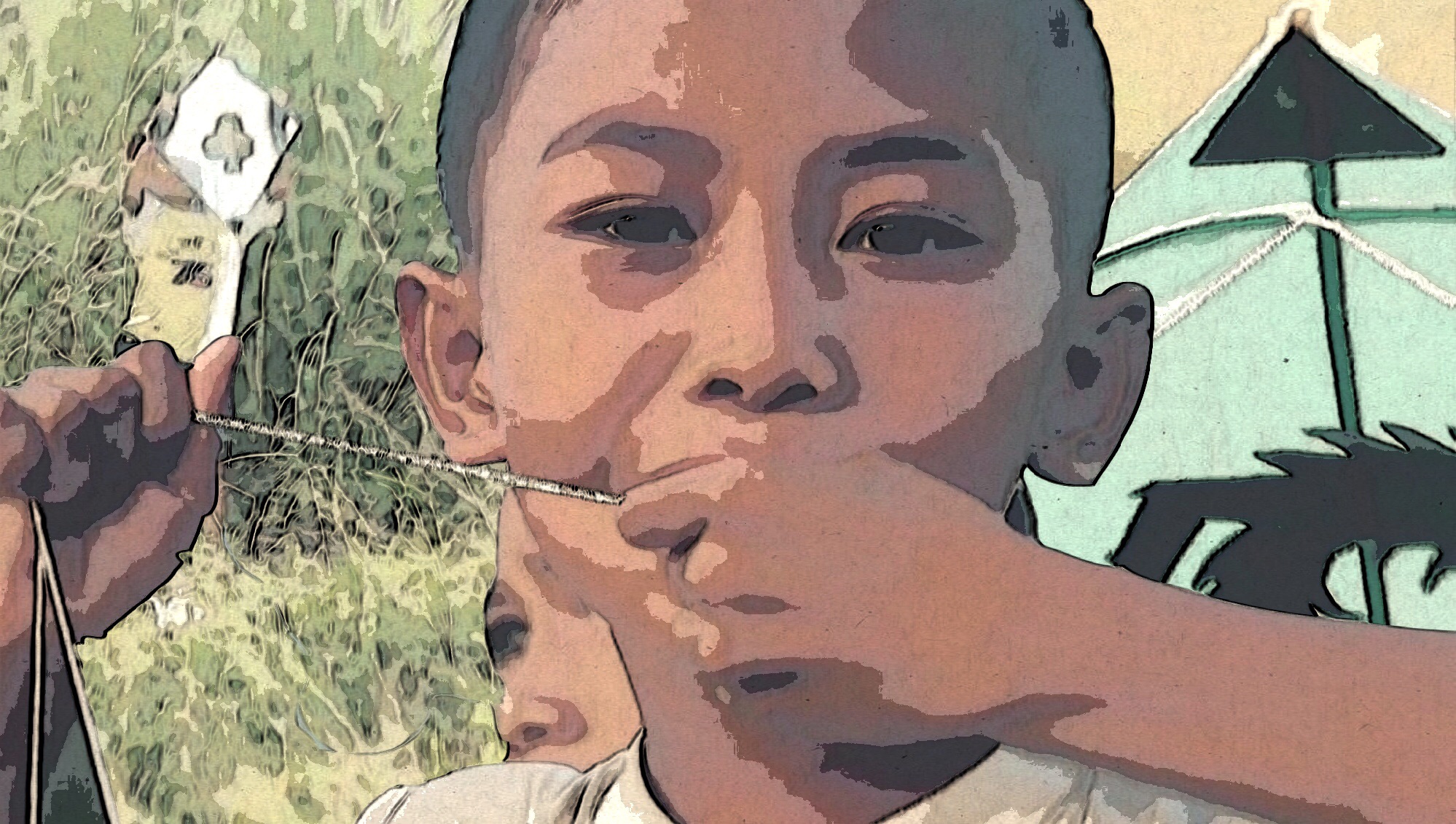
    To the reader: The perfect gift is free-will. What a clever deception. It’s like a kite; useless without string. Hand a child a beautiful kite and after days of frustration he or she will soon ask for the attachment. Upon receiving the greatest gift of all we are burdened with responsibility; we are chained to free-will’s insatiable curiosity; indebted to its reciprocal loop of expectation. The moral burden of free-will is unforgiving; ultimately, I must account for my transgressions … for the choice was mine.

    To the poet: A bundle of tangled thoughts about parenting and the delegation of authority through moral expectation. Religious overtones abound… capitalise the ‘H’ in ‘he’ and you have a sermon; without, it’s a son’s contemplation of his father’s developmental influences: distantly demanding, vaguely judgemental and omnipotently present… your choice; but have you thought about the consequences and can you afford the cost? They are yours alone to bear.


    free will Free Will
    Picture Source:
    http://youtu.be/jOXyvo2ID_o


  • Strides Into Steps

    Strides Into Steps

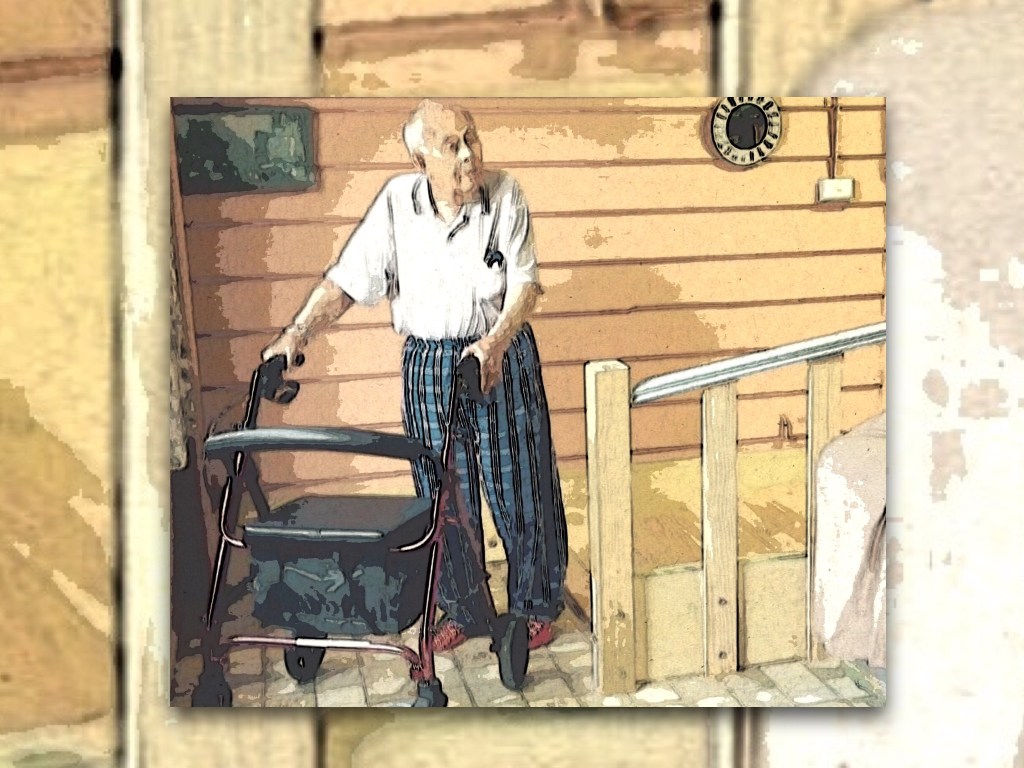
    Once upon a time I presume he danced,
    for there was rhythm in his shuffling gait.
    I suppose there was a time when he chanced
    to skip the pavement, to jump the fence, skate
    upon thin ice; I presume this was so.
    I suppose that once upon a time he
    could run like the wind and swivel on snow.
    May be once, this was how he used to be?
    How he used to be, before age took hold
    and shortened his strides into steps; weathered
    then withered his reach; proceeded to fold
    him into segments… with all parts severed.
    . In this man there are vestiges of truth.
    . Hidden in his shuffle is this man’s youth.

    © Tim Grace, 1 April 2012


    To the reader: The shuffle of elderly folk is rooted in the tentative first steps of childhood. Without momentum the ageing-frame hasn’t the balance to sustain a full-stride between steps; it’s lost the confidence to fall forward. In our prime the ability to walk is translated into the rhythm of life; through dance we skip; through sport we skate; as through time we scurry. Without stretch, and  pace to match, we compensate … we walk with two feet not one, we shuffle.

    To the poet: The strong structure of this sonnet descends into an awkward shuffle. It begins with stride and then falters. Beyond the first stanza, short-repeats struggle to complete a full line. Temporary anchors are scattered throughout. Stop-start phrases need backward attention. Through heavy compensation the sonnet’s rhythm is lost. In poetry, physical structure is as much a tool as any other literary technique; a poem is built as much as it is written.


    steps into strides steps into strides


  • Space to Crawl

    Space to Crawl

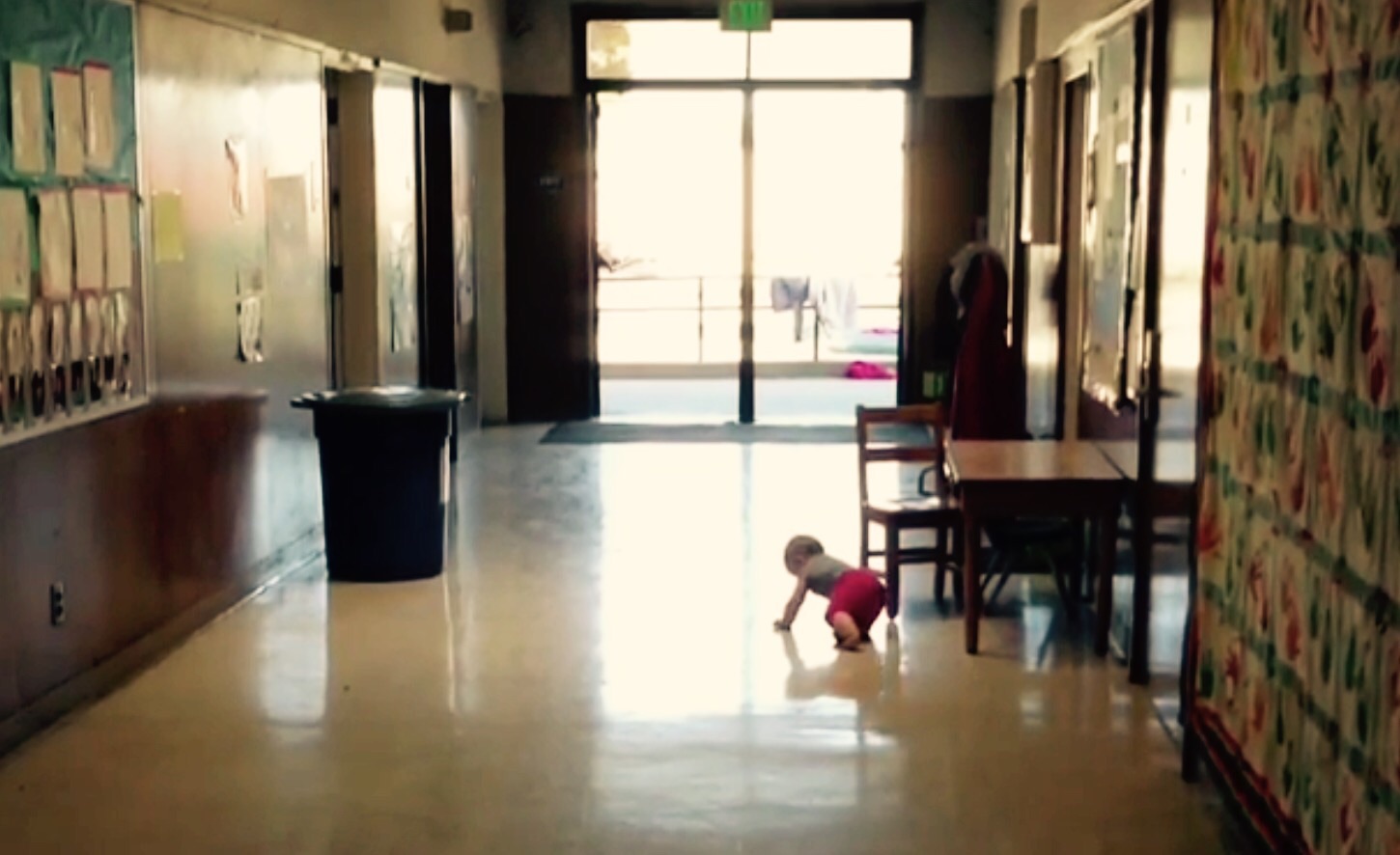
    Yesterday, I watched a boy crawling
    commando-style across a carpet-rug.
    Giggling and chortling, rising and falling,
    pushing and pulling with a hauling tug.
    In jungle-greens he scampered, head down low.
    He moved in spits and spurts. He paused a while.
    He reset direction, then off he’d go.
    With syncopated skim and cherub’s smile;
    through a forest of legs, he spied a light:
    a destination worthy of pursuit.
    But, when almost there, with his goal in sight,
    down came the arms of love: “Aren’t you cute!”
    . His mission is to walk, stand proud and tall;
    . give the boy some freedom, some space to crawl.

    © Tim Grace, 31 January 2012


    To the reader: The school-day is all but done. Here comes a troop of toddlers and their yet-to-walk entourage in pushers and prams. They are the freedom fighters, come to release their brothers and sisters from the tyranny of school. One in particular catches my eye; he’s a rug-rat, escaped surveillance and making good ground … but like so many before him, his noble pursuit is thwarted; he is lifted to higher ground by the doting arms of mum… another man down, or up as the case may be.

    To the poet: A photograph might have captured the scene more faithfully; but not the story. The story is in the poem which is a figment of my imagination. No-one else, on the day, had any idea of my interpretation. In a fleeting moment I captured a metaphor… two thoughts combined; and so began my sonnet. Metaphors, like butterflies, are at their best in flight; pressed to the page they may lose their colour.


    Space to Crawl Space to Crawl
    Picture Source:
    http://youtu.be/XGbfqM0ToM8


  • Beyond Finished

    Beyond Finished

    To say that all is finished, all is spent,
    means nothing in the greater scheme of things.
    For in that scheme there is but one intent:
    “waste nothing” – as from compost new life springs.
    What of that old house that the ground recalls?
    What of that empire in its fallen state?
    What of that fashion that today appals?
    What of good reason wasted in debate?
    All of these might be finished, done with use,
    stripped of cause, drained of substance; as conceived
    they might be buried dead or dangling loose;
    but as time shall choose – they shall be retrieved.
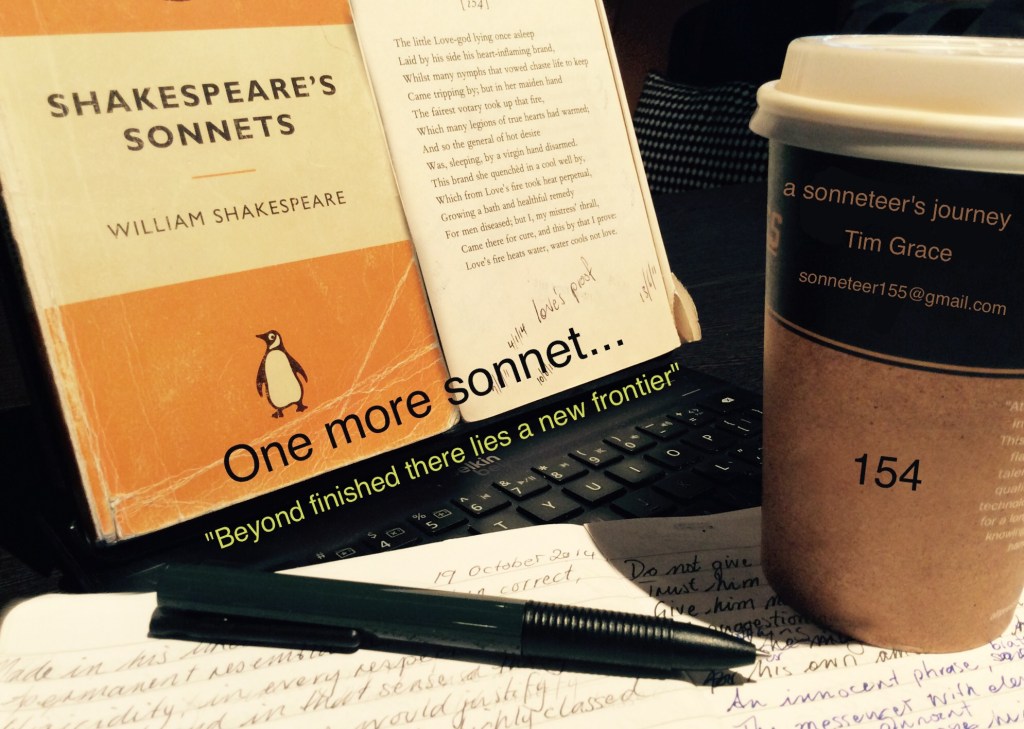
    . Beyond finished there lies a new frontier,
    . furnished in the garb of a golden year.

    © Tim Grace, 14 March 2012


    To the reader: Mistakenly, finished can be considered a terminal point of arrival. A statement of completion that declares an ending. In reality, nothing ends its course; nothing is divorced from what’s to come. Next, is the consequence of an expanding universe; until Time contracts there shall always be a new beginning… a next time to come. And so, in conclusion, consider this sum … there’ll always be “one more sonnet” to come.

    To the poet: Almost done. I know what it’s like to write 154 sonnets; one more and I’ve achieved my goal; one more sonnet and I’m finished? The challenge was self-imposed and given a few rules the disciplined process was fairly painless. The two-year rule was gruelling but necessary. The minimal use of “like” as a tool for metaphor kept me anchored to a direct narrative. The sonnet is an endlessly adaptable form both generous and forgiving. The sonnet (and my readers) suffered some mutilation along the way but with considerable credit stayed the course.


    beyond finished
    beyond finished