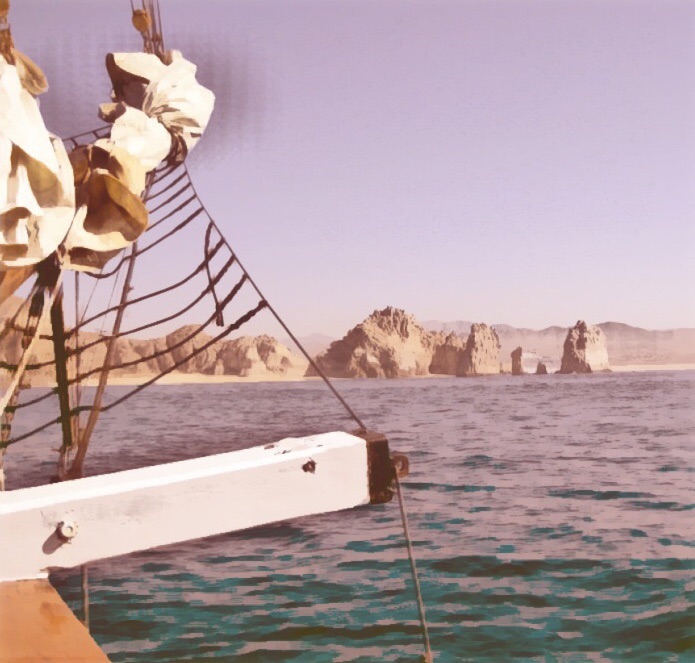
This painter’s point of reference is a frame.
That being so, the view portrays a scene:
a pictured scene, that forms a likeness; same
or similar images sit between
vertical and horizontal axes.
Colour-saturated canvas with scrapes
of land and sea, clouds and sky in patches;
an ornamental arrangement of shapes
drawn together; intermingled, condensed,
poised in proportion. Constrained it would seem,
fixedly, to the one common bound: fenced,
measured and matched to a spatial theme.
. When frames of reference are viewed selective,
. they’re often squared to a skewed perspective.
© Tim Grace, 6 July 2011
To the reader: Frames of reference hold the contents of a picture in place and establish the dynamics of a visual arrangement; as perceived. Whether a visual artist can claim to have captured what is beyond their canvas or lens is an interesting point. Is deliberate omission part of the viewing experience? To paint or photograph a scene without its protagonist, without its feature, gives the viewer the ‘power of suggestion’ to answer what’s missing. Frames are not borders.
To the poet: Constraints are at the centre of this poetic piece. Its theme argues a contrivance; that being: any captured picture is a selectively squared-off visual arrangement. A poem, on the other hand, is boundless in its suggestive use of imagery. In making reference to a poetic landscape I have relied upon the reader’s visual interpretation of “scrapes of land and sea” … to be conjured at will.
 skewed perspective
 One More Sonnet