Tag: sonnets

  • Woken Mind

    Woken Mind

    How so, that sleep undoes a tangled knot,
    and through darkness invents a grand design?
    What has sleep that my woken mind has not?
    From where dawns its brilliance, its clever shine?
    I imagine, or do at least suspect
    (for nothing more than thought can be my proof)
    that there must be a time, a time unchecked,
    when uprises sleep to begin its spoof;
    through a short-list of yesterday’s wonders,
    unsolved, given up to further thinking;
    given up to logic’s bin of blunders,
    for night to make right in just a blinking.
    . How so that sleep outwits my woken mind?
    . It lets go the bits that by day do grind.

    © Tim Grace, 17 September 2011


    To the reader: Sleep, far from an unconscious passage through darkened hours, is an active agent of the night. In sleep-mode, we switch our attention to sifting and sorting through snippets of past experience. In the ‘dark room’ (from an endless supply of stock) we develop our post-production sequences into lucid and surreal dreams. Hours of sleep provide space for re-interpretation of time and place; unrestricted by the physical constraints of a woken mind.

    To the poet: In writing this sonnet I wanted to create a sense of one-being in two-minds; pondering a perplexity. The over-riding order is a sequence of questions tentatively answered without confidence or surety; deliberately vague and suggestive of possibility. Speaking to yourself through a third-party narrator is a dream-like experience – sleep uncouples and derails the midnight express; the train is off its tracks.


    woken mind woken mind


  • Interminable Itch

    Interminable Itch

    I understand this niggling annoyance.
    The interminable itch that gives twitch
    to every grumpiness; groan and grievance.
    The useless bits of nonsense that won’t switch
    to off; won’t give reason to time-of-day;
    bits that go on and on ad nauseam;
    the incessant barking and raucous affray
    that underwrites this state of tedium.
    I understand, but can not comprehend
    what benefit from this a fool derives.
    Why promote stupidity, why defend
    a cause that surely craziness contrives?
    . Is there not some rule or code of practice
    . that might blunt the prick of thorn and cactus?

    © Tim Grace, 14 September 2011


    To the reader: An artefact of age is wisdom. Unfortunately, the suffering of fools is a patient art that gets no easier with age… and there lies the rub! That the grumpy old man becomes himself a fool is a cruel irony. As time progresses, our time on Earth compresses; and so, quite rightly, we become less tolerant of wastrels and their stupid contrivances. For a short while, after the heat of Summer has subdued, we reap with abundance Autumn’s harvest. In these years, before the permafrost of Winter sets us still, we protect our investments from ill-witted fools that cause us angst.

    To the poet: Spelling… all very clever, but don’t get me going. A check through my draft of this sonnet reveals my unique take on letter arrangements. First issue was interminable; far too many non-specific syllables. Then we came to ‘adnausium’ – obviously needed some Latin attention before arriving at ‘derives’ which in my draft possessed a second ‘r’ (don’t ask me why). Raucous began life without the unnecessary ‘o’ – as in caucus. “For those who can spell, it’s all very well…”


    intermibale itch interminable itch


  • This Love

    This Love

    Born of soul, love’s likeness is that of child,
    often wilful and prone to stubborn shows
    that well-mask the features of meek and mild;
    hidden until love more mature grows.
    Young love, self-obsessed with grand potential
    will boast itself as something shiny new;
    too conceited to be referential.
    This love is far from fair and kind and true,
    with distant distain love rejects its source,
    delights in the harvest of foreign shores
    that uncharted, provide no homeward course
    to the sheltered ports that our soul adores.
    . Soul is a measure of depth not distance;
    . but, young love is slow to learn the difference.

    © Tim Grace, 7 September 2011


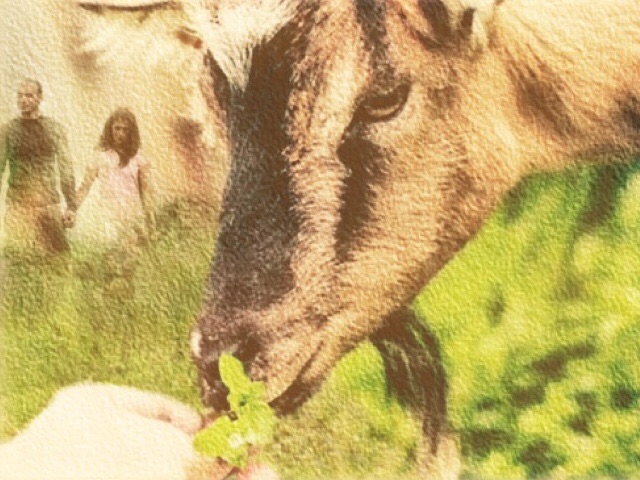
    To the reader: When we personify young love we often grant it a spirited soul. Using an old agrarian metaphor young love has goat-like qualities: haughty, self-obsessed and petulant. We’ve acquainted ourselves to this interpretation through centuries of artistic representation. Born in Spring, young love assumes the character of air, the presence of Jupiter, the viscosity of blood, the physicality of heart; along side a sanguine mood… all very attractive!

    To the poet: … and furthermore: young love, not to be confused with adolescence, has a long glossary of attributes; well known to poets of the past. In a literary sense, fresh love is recognisable as having a moist and pink complexion; along with a thirst for wine and merriment. This youthful spirit is gentle, meek and mostly benign; fairly-spoken and slow to anger. It’s this fresh spirit that Shakespeare so desperately sought for his own rejuvenation: “As from my soul which in thy breast doth lie: That is my home of love”


    this love this love


  • Partner of Peace

    Partner of Peace

    Love, so challenged, no inner conflict wins.
    As a partner of peace love wages war
    on itself. Off-set, love’s giddy-heart spins;
    and so forsaken, loses sight of sure.
    In conflict with its own best interest
    love brokers treaties never to be sealed;
    love enters into contracts that at best
    record the battles fought upon a field
    of unbound, unfound, unwound agreements
    that soon form a quarry of love’s dispute.
    The rumoured whispers, the lost endearments
    stripped of meaning and purposeful pursuit.
    . When tit meets tat, love declares a battle.
    . What gains love from this quarrelsome prattle?

    © Tim Grace, 3 September 2011


    To the reader: As a partner of peace, in the orchestration of harmonic waves, love is prone to self-doubt. To resolve its off-key insecurities, love seeks reassurance; constantly calibrating its pitch and frequency. Love is prone to high peaks of ecstasy and low pits of depression; vacillating between major and minor keys. Harmony requires an oscillating not vacillating partnership; good vibrations that intermingle as one resounding chord.

    To the poet: Love is the greatest of all abstract nouns. An intangible force that has had poets spellbound since first the word was uttered; stuttered in association with its tangible sensations. As a rhyming partner, Love has outlived its obvious relationships. The dove, that bird of peace, has long since flown its roost; likewise the velvet glove has outworn its soft semantic touch.


    partner of peace partner of peace


  • Afterwards

    Afterwards

    Afterwards, when there’s nothing of him left
    but a bag of bones in compounded clay,
    he asks that we not mourn, or moan bereft,
    as if scripted tight to a tragic play.
    We are not to revisit memories
    that through dredging would have our grief resumed.
    We are not to resurrect miseries,
    not to raise from earth all his bones exhumed.
    Let his body go, let it rot in peace;
    it wasn’t love got buried in this soil.
    Love shall not perish, decay or decrease;
    be content that all things but love will spoil.
    . Love can not be buried six foot under;
    . likewise, decomposed or split asunder.

    © Tim Grace, 23 August 2011


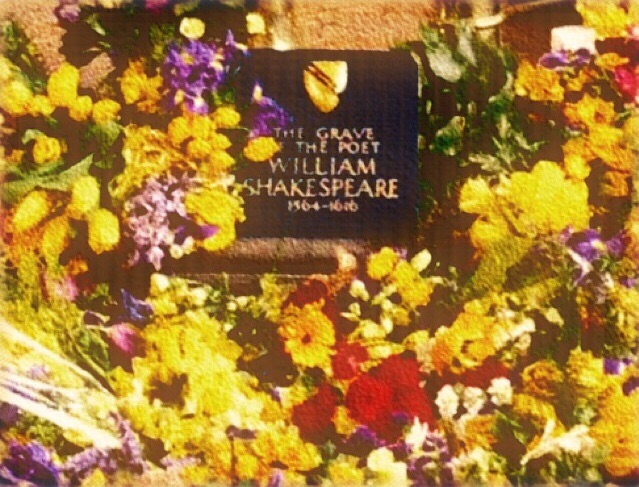
    To the reader: Everlasting love; enduring love; love forever more. The possibility of remembrance beyond now. Appreciation as a welcome after thought that heartens the spirit of forgotten souls. Love, an essence so delicate in life, so enduring beyond the grave. In loving memory, we release the body of its burden and for eternity seek ever-lasting peace and resolution.

    To the poet: There is a passage of Shakespeare’s sonnets (about 64 to 78) devoted to the potential of endless love. Afterwards – beyond images and artefacts; beyond graveyards and compounded clay ‘my spirit is thine, the better part of me’ (Sonnet 74). After words – ‘remember not the hand that writ it’ (Sonnet 71) for I am gone in all but spirit and soul. In his instructions to the living he implores release: let me go, let me pass… let me free.


    afterwards
    afterwards
  • Number Nine

    Number Nine

    He chose to break apart the number nine.
    Nothing orderly, as in sets of three.
    This was a real split with a broken line.
    The rebellious shout of a man set free.
    No more through blind faith would he choose to use
    the standard voice of an ancient rhyme.
    Gone were the muses, the nine Belles of Zeus.
    As from this point, his bells would clang not chime.
    Why view the world through someone else’s lens?
    His kaleidoscope shattered all of that!
    Better live at sixes and sevens
    than to die in a dead man’s habitat!
    . The number nine makes a neat solution,
    . but more divine was his revolution.

    © Tim Grace, 17 August 2011


    To the reader: What does it take to break with convention; I presume, it takes a good dose of passionate conviction? I presume, those who innovate have befriended risk and become comfortable in the presence of awkward acceptance. Yesterday, The Beatles’ White Album had another Birthday; an annual reminder of popular music’s helter-skelter pinnacle. The double album borrows from a vast array of musical genres including the stunning ambient crescendo of Number Nine… it’s all about revolution!

    To the poet: The Greek’s invented nine muses to travail the mysteries of their universe; at Sonnet 38, Shakespeare construed a tenth: “ten times more in worth than those old nine which rhymers invocate”. As the master of discontent, using non-conventional means, he creates a disruptive energy; invites the presence of new possibility. Sadly, like most revolutions built upon youthful enthusiasm the verve is soon lost. By Sonnet 76, Shakespeare laments his barren verse and ponders a side-ways glance at new-found methods … and to compounds strange; a noted weed!


    number nine number nine