Tag: sonnets

  • Peace Extols

    Peace Extols

    Most days come and go, not so with this one.
    This one lingers somewhat longer than most.
    This one reminds us of the good we’ve done.
    Of this ‘one day’ we neither brag nor boast.
    There’s a sombreness about this ‘one day’.
    It’s the ‘one day’ of all days when we pause
    to acknowledge the fallen and to pray
    that in their memory we recognise the cause
    that gave them their reason to sacrifice,
    so selflessly, their gold and silver themes;
    and then to give, regardless of the price,
    a new set of hopes, a new set of dreams.
    . Let this ‘one day’ bring comfort to their souls,
    . for they have earned the rest that peace extols.

    © Tim Grace, 11 November 2011


    To the reader: Sombre and respectful, as they are, collective commemorations are reassuring; an inter-generational confirmation of commitment to each others’ national interests. Often sprinkled through the calendar that ‘one day’ is loaded with patriotic symbolism. That ‘one day’ bares the burden of testimony. We are reminded of heroic deeds of self-sacrifice and strength of character; drawn to action in the face of unimaginable fear. Those that died on our behalf … we will remember them; they died in war, they rest in peace.

    To the poet: The current of a flowing river is to some extent just a mathematical calculation. Given no reason to do otherwise, a river that follows its direction without resistance or impedance will behave predictably; without much character. This sonnet begins like that… four steady sentences to begin with. But then, the river of words begin to flow. The next eight lines blend to form a single ribbon of sense – punctuated to give it an uneasy rippling; an agitation that finds stoic resolution; at end, the reassurance of peace.



    peace extols peace extols


  • As Viewed

    As Viewed

    We fall off horses, and topple off bikes.
    We scrape our knees, and lose a bit of skin.
    We shelter under trees when lightning strikes.
    We take our chances, we grizzle and grin.
    What of this squabble, this roughly cut edge?
    What of this soufflé that refuses to rise?
    What of this contract, of this broken pledge?
    What of this promise that fortune denies?
    We’d all like more of what we now possess:
    more bricks and mortar, more silver and gold.
    We’d all like more of those things that impress:
    more wisdom, patience and truth to behold.
    . As viewed in perspective things get wised-up,
    . As viewed in proportion things get sized-up.

    © Tim Grace, 21 November 2011


    To the reader: Proportion and perspective … what are the differences; what are the similarities? Is it that things regardless of perspective will always remain in proportion; or have I just made that up? Alone, are the two prone to corruption and distortion; is one the other’s verification; defence against absurdity? Is there such a thing as a complimentary counterpoint? And is that what it means to keep things in perspective and maintain a sense of proportion; sized-up and wised-up… eminent plausibility.

    To the poet: This poem is about difference but perversely line by line its structure looks similar and sounds repetitive. The continuous stream of alternating content runs the risk of overwhelming the reader with trivial content. The first four lines declare a common experience – is that perspective?. The next four lines ask what to make of all this… is that proportion? And then what remains is a matter of opinion…


    as viewed as viewed


  • I have a bike…

    I have a bike…

    I have a bike, but I rarely ride it…
    I can always find a reason not to…
    Always something else to do beside it…
    Lame contrivances that claim “I’ve got to…”
    Weak-kneed excuses that can’t be weighed-up;
    that validate avoidance; that hold back
    progress. Mere substitutes; made up
    distractions with amplified fold-back;
    with magnified pitch too loud to ignore…
    too easily attached to a should-do
    set of options that add ‘neither/nor’
    to a definitive list of could-do.
    . We put good ideas in concrete casements,
    . that’s why we keep bikes in locked-up basements.

    © Tim Grace, 19 November 2011


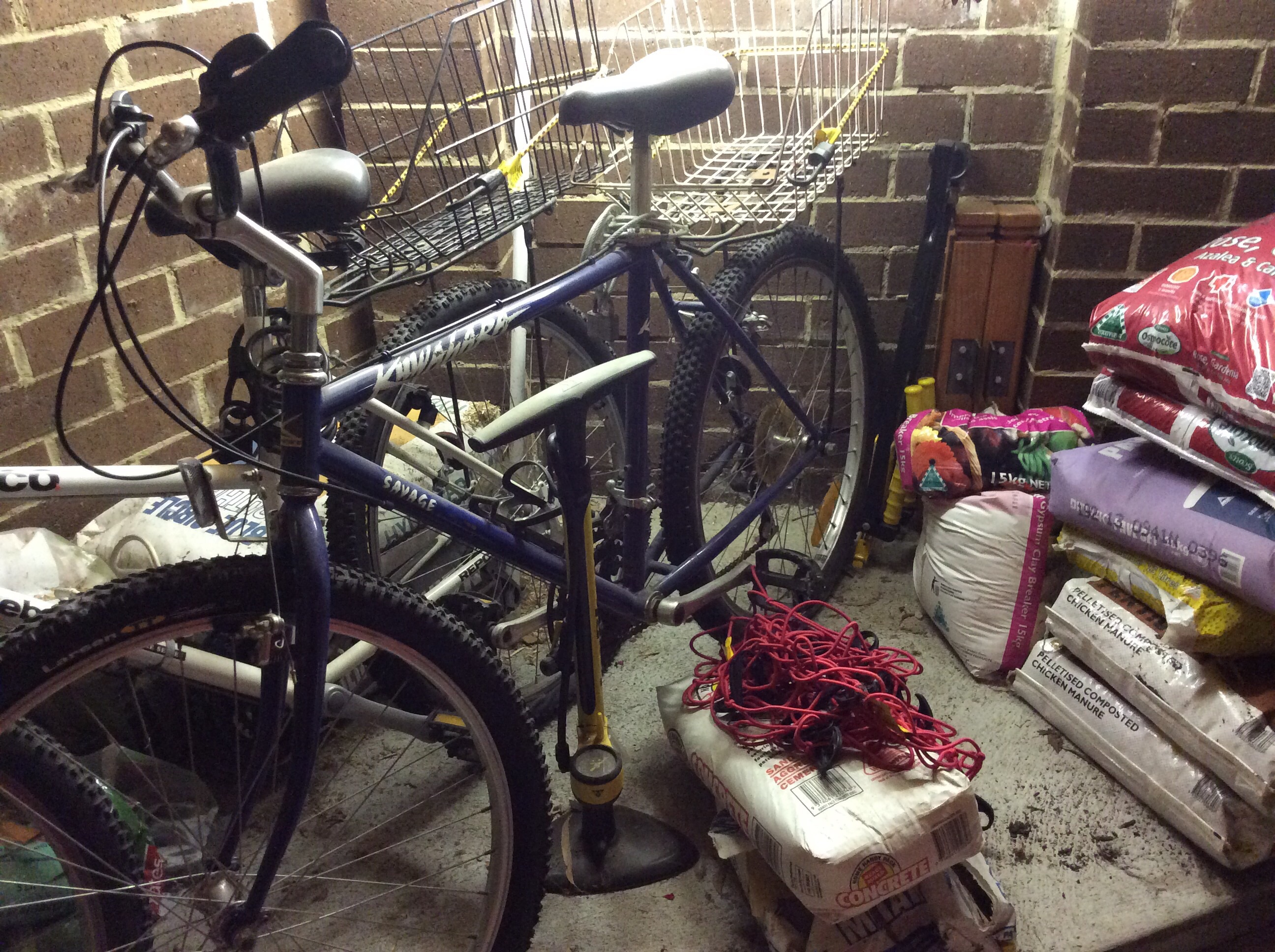
    To the reader: How many flat-tyred bikes are there languishing in basements? Mine is one of them. It was quite a nice mountain-bike when I bought it; a comfortable ride. With annual rapidity, the ageing bike gets a hopeful make-over. And with that yearly pilgrimage comes a wander through the local bike-shop. As the distance between purchase and repair widens the futility of my efforts becomes more pronounced. Not all is lost… I do own a very high-tech bicycle pump!

    To the poet: This sonnet is more experimental than it is successful. The double-barrelled rhymes tug at the narrative; dragging it ever closer to puzzle over poem. It doesn’t hurt to occasionally contrive a rule in the name of literary exercise. The pull of pattern over purpose is a challenge worth accepting. With the end-game tightly managed there came the need for greater emphasis on the logical flow of the meta-text.


    i have a bike
    i have a bike


  • Dim-lit Dust

    Dim-lit Dust

    I’ve been here before, many times in fact,
    I recognise those featureless walls,
    and I remember how those shelves got stacked,
    I recall the dog-eared papers, the sprawls
    of endless thinking, abandoned, let loose
    to yellow by the window; left to fade
    away to nothing; given no more use.
    I remember the decor, overlaid
    with a continuous print of anguish
    and despair, I recall the dim-lit dust
    lounging on the sofa, left to languish;
    lazy sediments form a fragile crust.
    . The blunted pencil and the knife’s dull edge,
    . are sharp reminders of a broken pledge.

    © Tim Grace, 14 November 2011


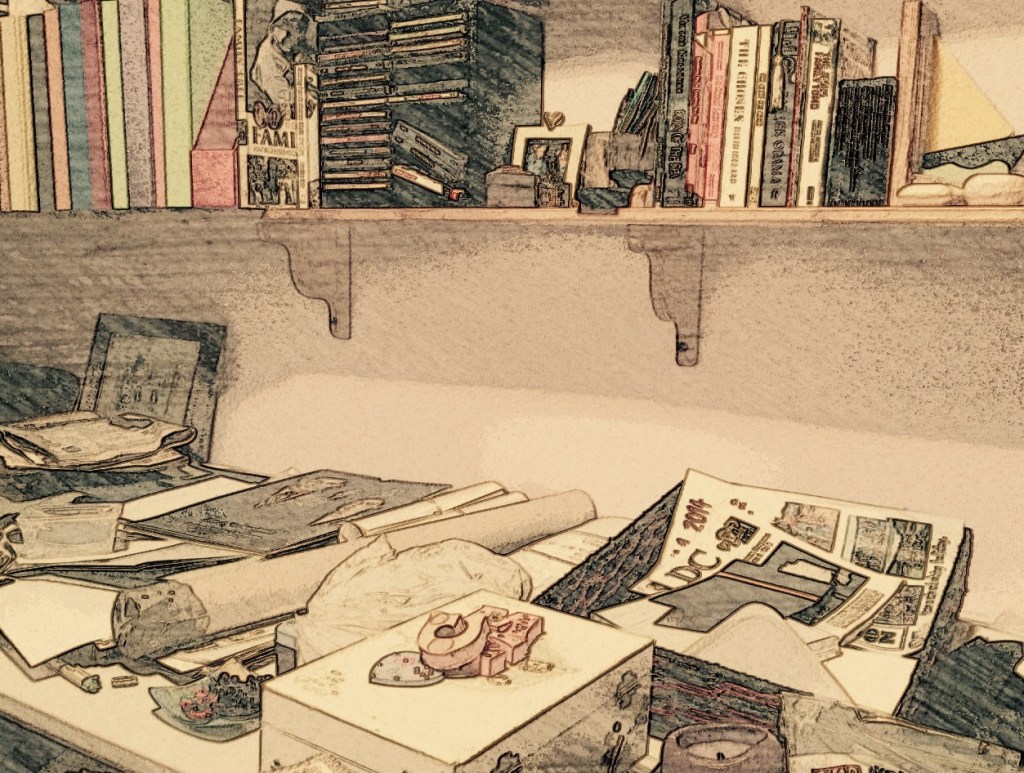
    To the reader: In a deceased house, the study quickly assumes the patina of abandonment. Without the daily shift of attention piles of paper lose their meaning and wilt under the weight of uselessness. The desk diary, the calendar, and the unwound clock fall behind on duties; with ill-found loyalty they grip tightly to the glory days. Curtains, once daily drawn, become fixed; gone is the regular pattern of a fresh start. It’s dull replacement is dust; sediments of dull dust.

    To the poet: Without descriptive poetry characters have no backdrop; nowhere to convincingly dwell upon the page. It’s interesting that this sonnet has no human inhabitant, it’s about the absence of identity; but it’s all about an inherited character. Familiar features of the stagnating room are traced by the narrator’s reflective gaze. There is movement, but it’s designed not to be intrusive; motionless movement if there’s such a thing. Let the dust settle.


    dim-lit dust dim-lit dust


  • This Monster

    This Monster

    This monster, this orphan, of Frankensteins,
    he’s taken up residence at my place.
    He’s reconfigured networks and crossed lines;
    broken the system that delivers bass.
    Of his exploits I keep an inventory:
    it includes the toaster, the frying pan,
    the x-box, the iron, the old TV,
    the electric drill and the ceiling fan.
    For the most part he lurks in the shadows,
    turning knobs and flicking the two-way switch.
    Lately, he’s run the pump dry, and who knows
    what’s next – a major blow, a minor glitch!?
    . Might be easier to live in a cave.
    . Think of the tension and money I’d save.

    © Tim Grace, 10 November 2011


    To the reader: Sometimes the frustration of technology dampens all enthusiasm for progress. I’ve always had a bent for tinkering with household gadgets that have achieved their point of built-in obsolescence. Why I haven’t learnt the futility of this pursuit I really don’t know… optimism; that’s too easy. Obligation has something to do with it. My household status rises and falls with the current reliability of switches and circuits.

    To the poet: Around this time, in 2011, with my reputation in shatters I collected together a long list of non-functional household conveniences. Mary Shelley’s portrayal of technology’s fragile relationship with humanity expresses the marriage of wondrous expectation with forlorn disappointment. In this context, poetry can be a useful therapy. With the writing of this sonnet I purged the curse… out went hopeless misery; its replacement: a simple but satisfying final couplet.


    this monster
    this monster


  • Days in Succession

    Days in Succession

    Already this month’s days are racing by.
    Their natural habit is to rally.
    They are the gatherers that occupy
    tomorrow’s list; their business is to tally.
    Ever restless with ill-content, afraid
    of stoppage, fearful of its consequence.
    They are the marching troop in sevens made.
    They are the breeding ground of incidents.
    Days in succession and weeks in review;
    a bundle of rolling commitments, dates
    in waiting: schedules, rosters, time in lieu;
    such is the tune that chaos orchestrates.
    . Tomorrow comes as once did yesterday.
    . To run this race: ‘respondez s’il vous plait’

    © Tim Grace, 6 November 2011


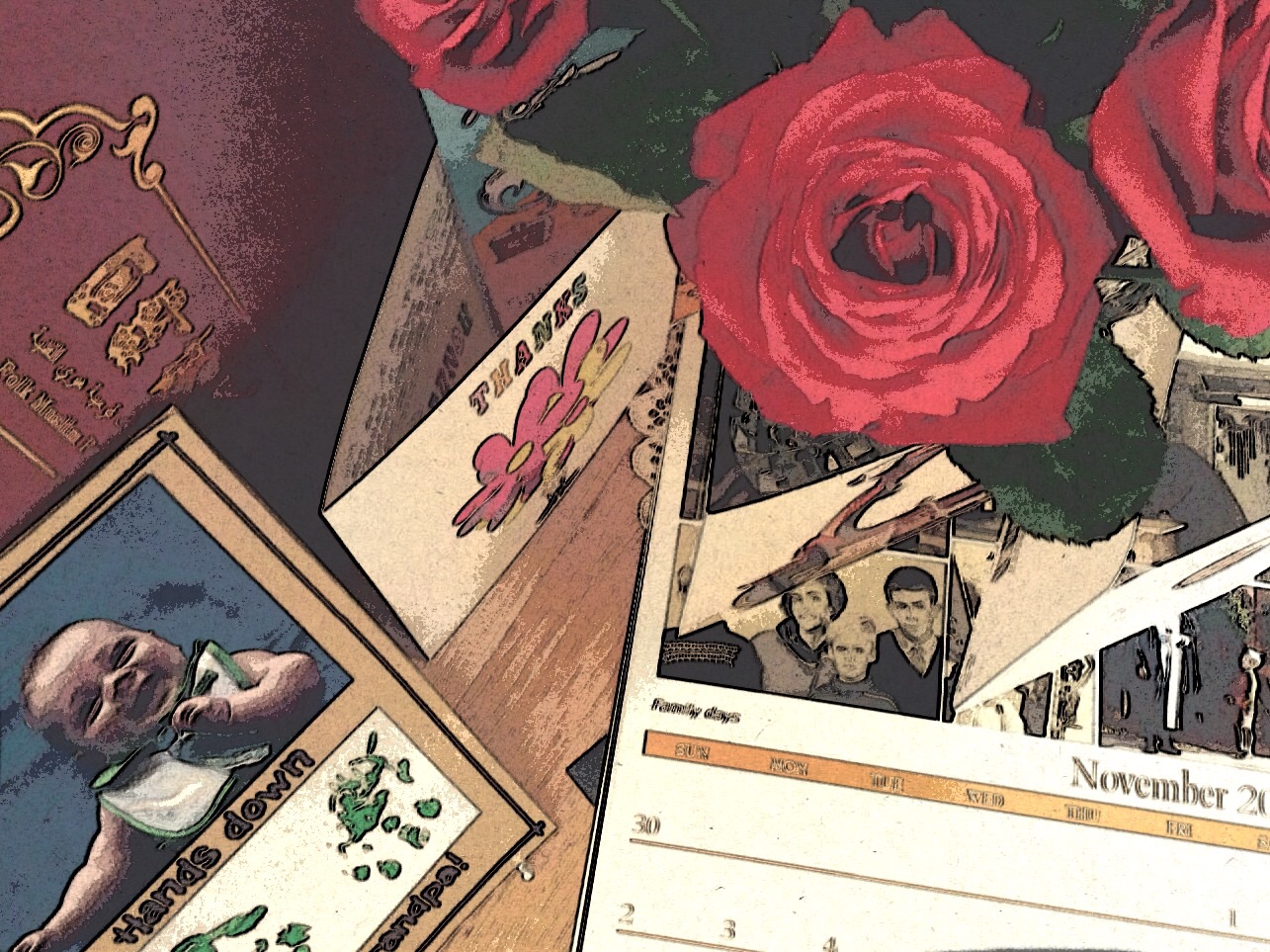
    To the reader: It might have taken science a millennia to realise time is relative; common sense could have shortened the period of inquiry by some centuries. Nonetheless, we now have some concordance: our perception of time changes according to circumstance; speed and compression do us no favours. The stretchability of time reaches snapping point as the calendar draws to its annual climax.

    To the poet: I have no idea how to speak French or any language other than English. A smattering of high school German has remnant effect but effectively I’m monolingual. Any use of non-English terms and expressions is just a reflection of how my language borrows snippets for nothing more than effect. No doubt the various phrases creep into our day-to-day chatter through the media; phrases become fashionable (trendy) and then lose their currency. I seem to eat in Italian and regulate my time in French.


    days in succession
    days in succession