Tag: sonnet

  • All Things Perfect

    All Things Perfect

    Of all things perfect, none so more
    than he who casts his eyes to mine.
    In him, I see myself and so adore
    the common make of our design.
    All things from nothing yet compiled.
    An angel formed of pluck and sprite.
    He on me, has so been styled;
    and so, gives rise to my delight.
    I am touched that he would see me
    as same; and to my loving eyes attach.
    As if forever is but a certainty,
    and never more our hearts unlatch.
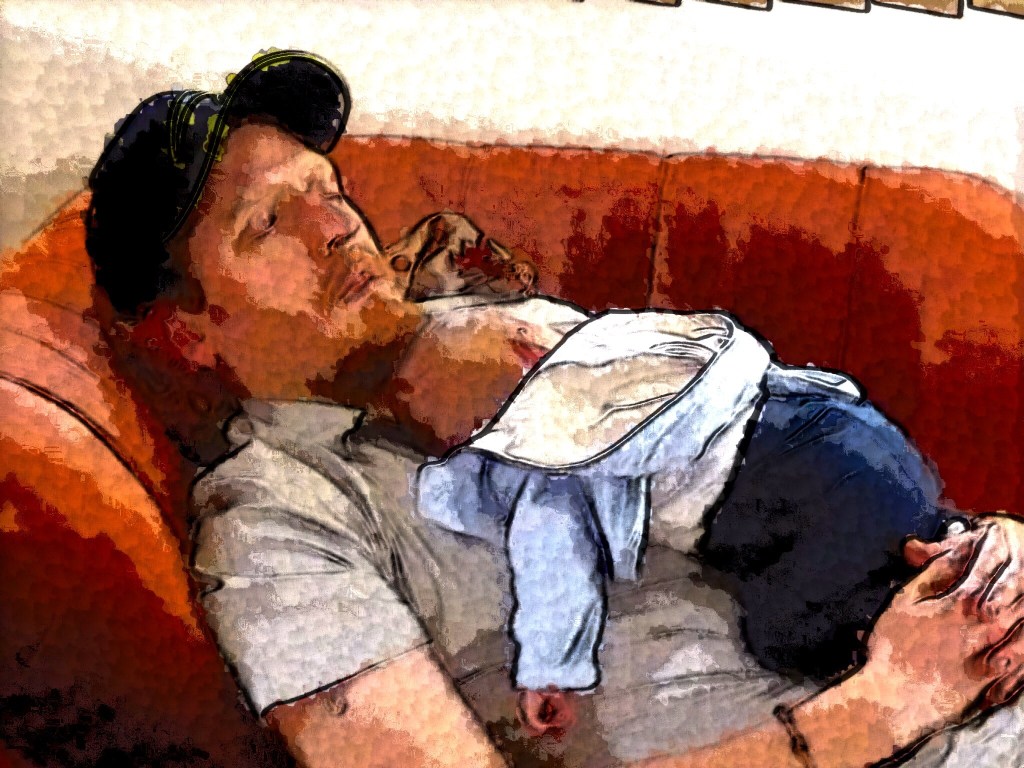
    .    To what does this doting verse engender?
    .    ‘Tis a father’s love most mild and tender.

    © Tim Grace, 24 July 2011


    To the reader: As I do yearn for Spring, so I also long for the return of my youthful prime. I remember myself, not as the looking-glass portrays me now: aged with the deep furrows of time’s decay; etched upon my brow. No, my perception of ‘self’ lives in the recall of an untrammelled field; full of potential, far from the ravaging harvest of sickle and scythe; that leaves me exhausted in a decrepit state of waste.

    To the poet: Dear Youth … love me tender… treat me with kindness and fair respect. In Shakespeare’s relatively short life he wrote of life with passion; an earthy, seasonal gift that so soon decomposes; loses its golden lustre. His season of fond recall was Spring, represented by the spirit of Youth and its zest for life. Life’s love found its perfect expression in the face of Youth… beauty’s image was His to bear: bounteous, brash, bold and abundant with promise.

     

    all things perfect


  • Ever more

    Ever more

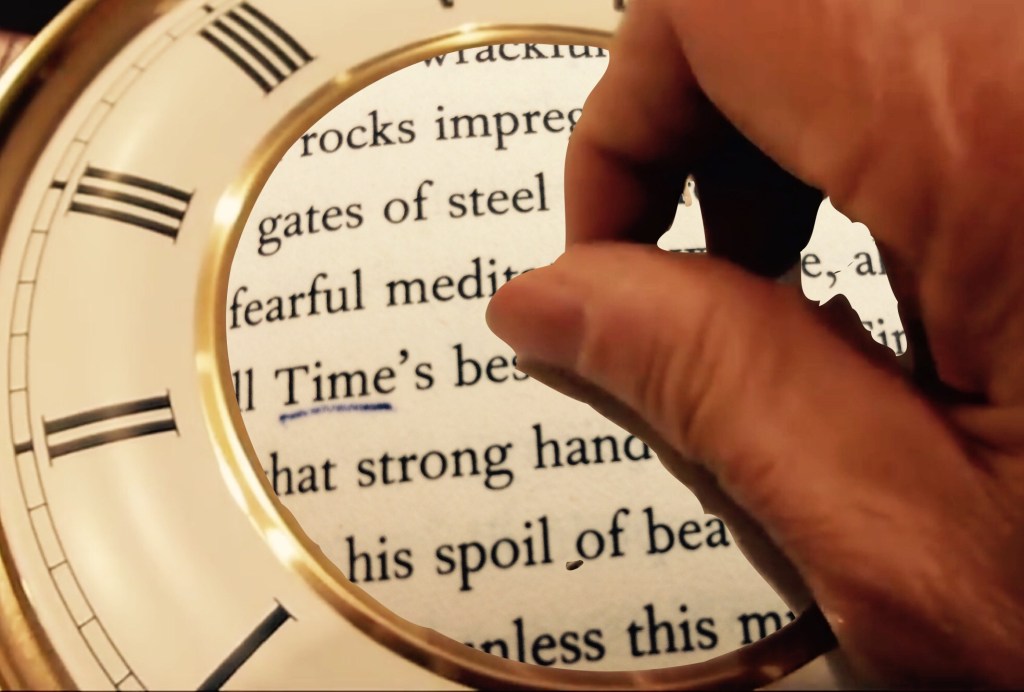
    “Evermore will time stand still,
    for ‘now’ has been extended.
    Through turn of phrase and stroke of quill,
    this moment is suspended.”
    And thus, he wrote of Time’s defeat,
    as conquered through his verse:
    “No more will youth through age retreat,
    as if struck by mortal curse.”
    He inscripted youth, at beauty’s prime,
    to best achieve his quip.
    Empowered-up, to temper time,
    he released its savage grip.
    . That form, given rhyme and verse: so beautiful.
    . That image, as of now: immutable.

    © Tim Grace, 21 July 2011


    To the reader: In reality, there is no such things as a pause in time; we can pause an activity but alas not time. Distorting our sense of time to suit our purposes is a useful skill. Being able to find a meditative moment amid a rush of urgency rejuvenates the soul. Of all the ‘arts’ it’s music that best allows us to adjust our sense of time; with musical accompaniment we recalibrate our tempo. Sometimes, in partnership with music, a lyric will further emphasise a restive refrain.

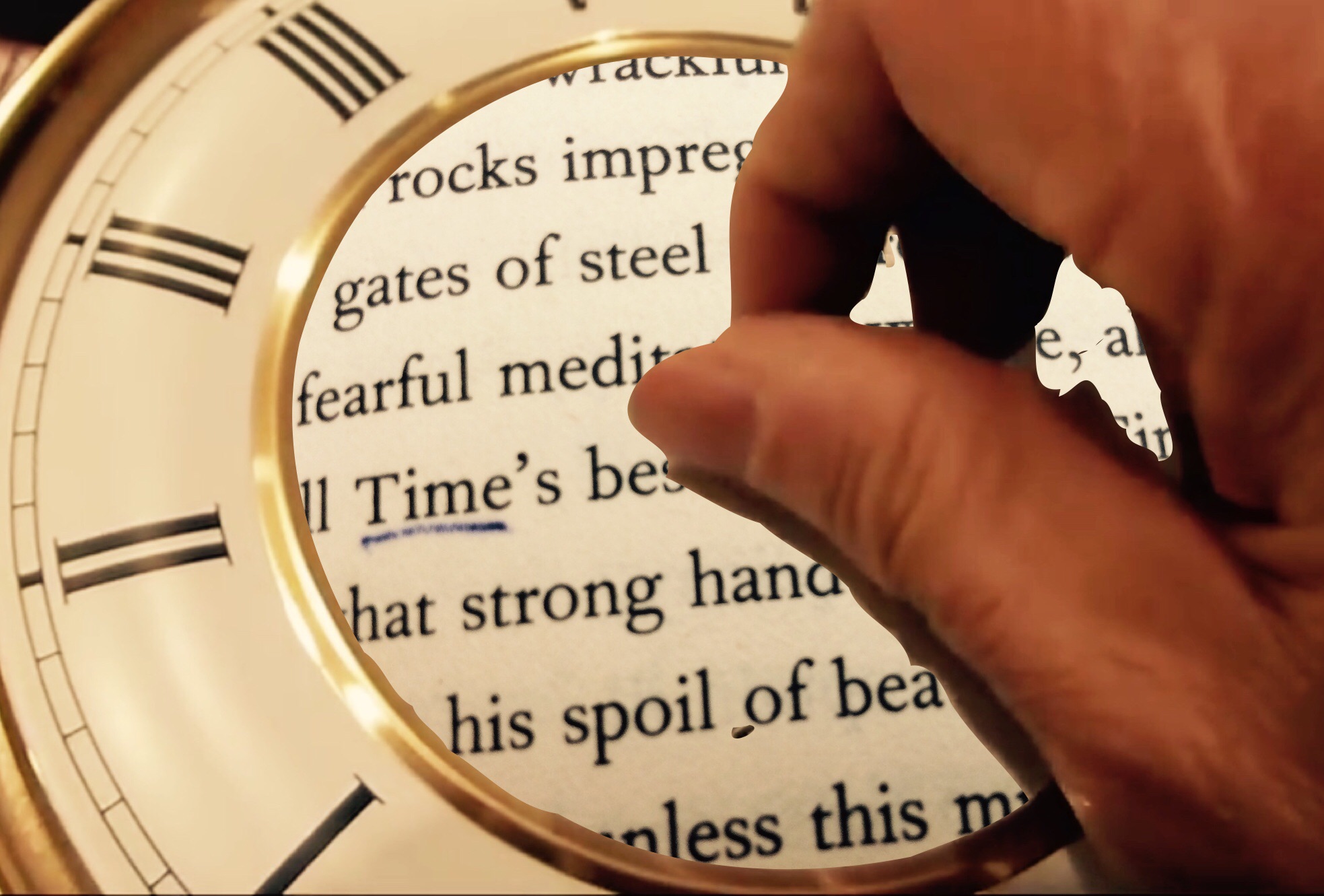
    To the poet: We can oversell our poetic powers. We can become besotted by our cleverness: wordage becomes verbiage; impact is dulled. In what becomes a brilliantly exhaustive passage of sonnets, Shakespeare openly struggles to outwit Time’s corrosive effect on the perfect patina of life; as expressed through Spring’s expression of youth. With every power, vested to a poet, Shakespeare mounts his case only to realise the futility of cause … “o, how shall summer’s honey breath hold out, against the wrackful siege of battering days… Time decays (Sonnets 64 & 65).


    evermore evermore


  • So Be Twins

    So Be Twins

    Time and nature so be twins;
    in course, they groove the one same rut.
    As one turns the other spins;
    so stems a common strut.
    Nature is but time expressed;
    the two can not be parted.
    Once in seasons we invest
    then sewn the end’s been started.
    All things, from nature bred,
    succumb to time’s rotation.
    Youthful beauty so is shed
    through weathered maturation.
    . It is with pen he inks a perfect line;
    . outwits the jinx of self-design.

    © Tim Grace, 17 July 2011


    To the reader: Nature and time are inseparable not interchangeable. Nature is the producer: ever ready to compromise; endlessly adapting as circumstances change. Time is the consumer: demanding and impatient; in one hand a scythe the other a sickle. Seen together (as in reap the harvest) there appears a partnership but this is not based on negotiation; nothing more than convenience. Without a perpetual contract nature has learnt not to resist time. Through accommodation nature extends and also yields its fleeting crop.

    To the poet: In sonnets 17 and 18, Shakespeare changes tack regarding the power of procreation. If youthful beauty stubbornly resists its duty to duplicate by means of perpetual parenting then alternative methods must be found. To a poet it seems obvious that words perfectly written can capture youth and outwit Time. With new zeal, Shakespeare takes it upon himself to write a poem that leaves the beauty of youth beyond compare; beyond Time’s destruction.


    so be twins so be twins
  • Golden Harvest

    Golden Harvest

    In none too subtle terms he stated
    the consequence of wasted harvest.
    He pitied those who contemplated
    taking to the grave a treasure chest
    of spring-time sweets and summer jewels.
    He reminded those, who chose to self-invest,
    that unstoked love consumes; more so than fuels.
    In wisdom, nature’s rules suggest
    beauty thrives on life repeated;
    and so, laments the spinster’s nest
    and he who loves himself conceited.
    . Time strips beauty of its youthful zest,
    . the womb, not the tomb, does future best.

    © Tim Grace, 10 July 2011


    To the reader: In an agricultural age, full of uncertainty, populate or perish must have been an accepted adage; giving guidance to family planning. In his first handful of sonnets, Shakespeare’s advice to a youthful sire is to go forth and spread his seeds in beauty’s empty fields. The agricultural advice promotes a robust tillage of vacant plots; making the most of spring-time’s lustful days for “thou art thy mother’s glass, and she in thee, calls back the lovely April of her prime”.

    To the poet: Just as one word does not make a sentence nor does one reading of one sonnet suffice to meet Shakespeare’s purpose. The various sets of sonnets were written over a short enough period to have overlapping features that connect them as siblings to a family. One word will evolve its use (niggard); and phrases will roll one into another, as with: golden time (3), on a golden pilgrimage (7) to his gold complexion dimmed(18).


    golden harvest
    golden harvest
  • New to View

    New to View

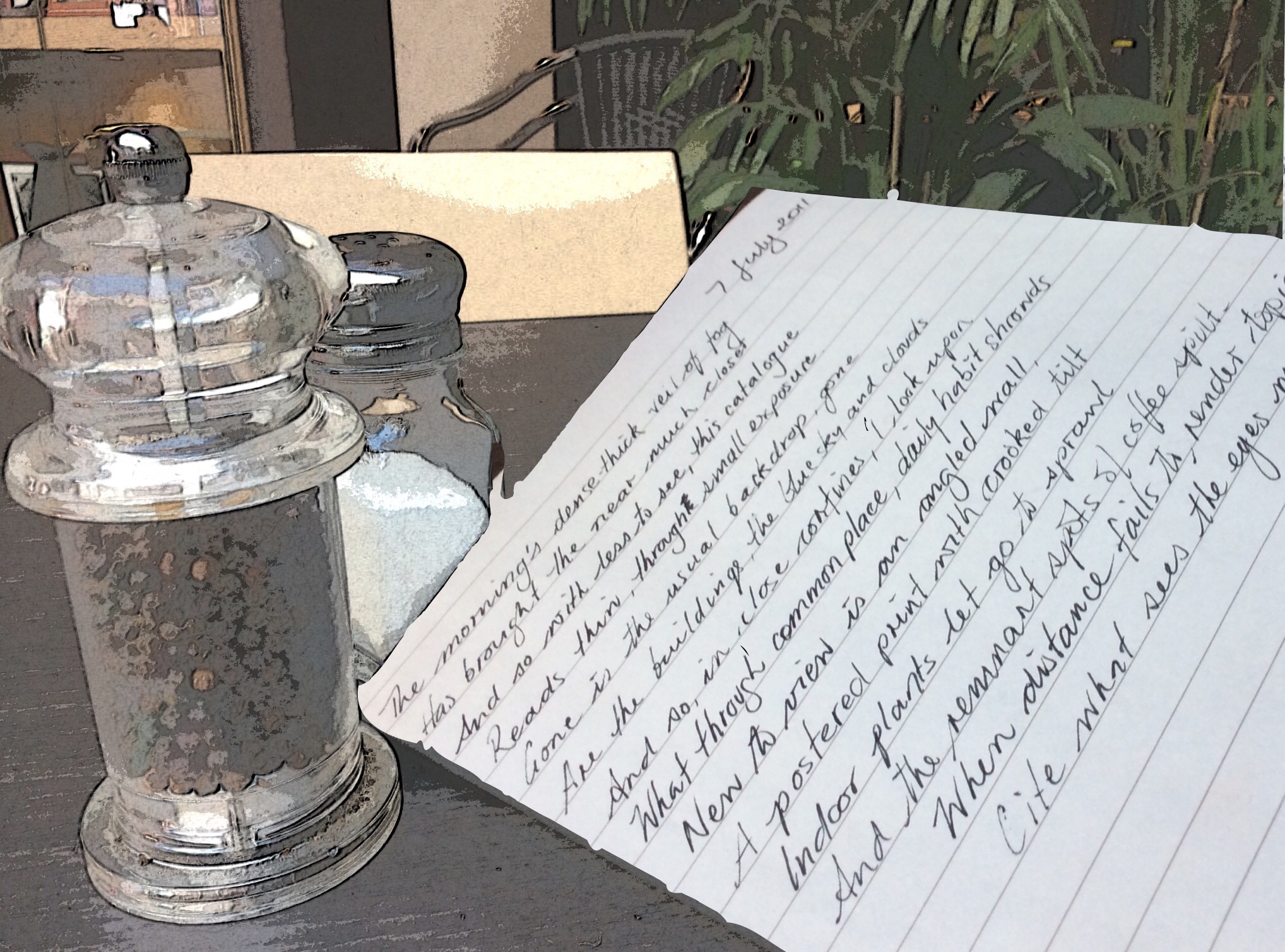
    The morning’s dense, thick, veil of fog
    has brought the near much closer;
    and so, with less to see, this catalogue
    reads thin, through small exposure.
    Gone is the usual backdrop, gone
    are the buildings, the blue sky and clouds;
    and so, in close confines, I look upon
    What through common place, daily habit shrouds.
    New to view is an angled wall,
    a postered print with crooked tilt,
    indoor plants let go to sprawl,
    and the remnant spots of coffee spilt.
    . When distance fails to render topic,
    . cite what sees the eyes myopic.

    © Tim Grace, 7 July 2011


    To the reader: I live in a city renowned for its clear blue skies; an envious average across all four seasons. Occasionally, the wide-blue-yonder closes in and our vista shrinks behind a grey shroud of fog. Those who talk of depression describe the sensation in similar terms. Grey replaces the colourful features of pleasant surroundings. Distance is detached from time and place; here and now demand attention; proportion is distorted.

    To the poet: I remember driving carefully through the fog; mentally mapping my way through a course of visual memories. No doubt, I assumed my usual position at the back of a cafe. And from there, I realised my familiar palette of colours was absent; distant approximations gone. Everything, routinely overlooked (as too close to see) had been brought to the fore. I met the short-sighted poet.


    new to view new to view


  • Pleasantries

    Pleasantries

    The light touch of a poet’s pen,
    rests easy on the page;
    pleasant words that come again,
    that do not wilt with age.
    Familiar words, in daily use,
    that need no explanation;
    nothing cryptic, nor obtuse:
    the art of observation.
    Write the word as simply said,
    keep true to its expression;
    write the word so easily read,
    note its first impression.
    . Write simply what the eye saw,
    . all else but that ignore.

    © Tim Grace, 4 July 2011


    To the reader: The casual acquaintance of a pleasant friend leaves a light impression on the surface of a day. The interaction has no agenda and the motive is nothing more than patinated patter: a catch-up, a touch-base; a nice to see you moment. There’s a social art, an etiquette, to keeping a conversation chatty – your own connection with local events and activities is a good guide; a sense of life as it is. Currency is a useful link to liveliness; make good use of days just gone and those about to come.

    To the poet: There’ll be times when a scene has no cryptic depth of character; a surface without dimension. Not to say it isn’t an interesting reflection of reality. Still-life, in a visual sense, holds the moment as it is; preserves the present for its own sake. If there’s a technique to writing ‘still-life’ it’s avoid clutter and unnecessary elaboration. The truthful line applies as much to poetry as it does to visual design.


    pleasantries pleasantries