Tag: shakespeare

  • New to View

    New to View

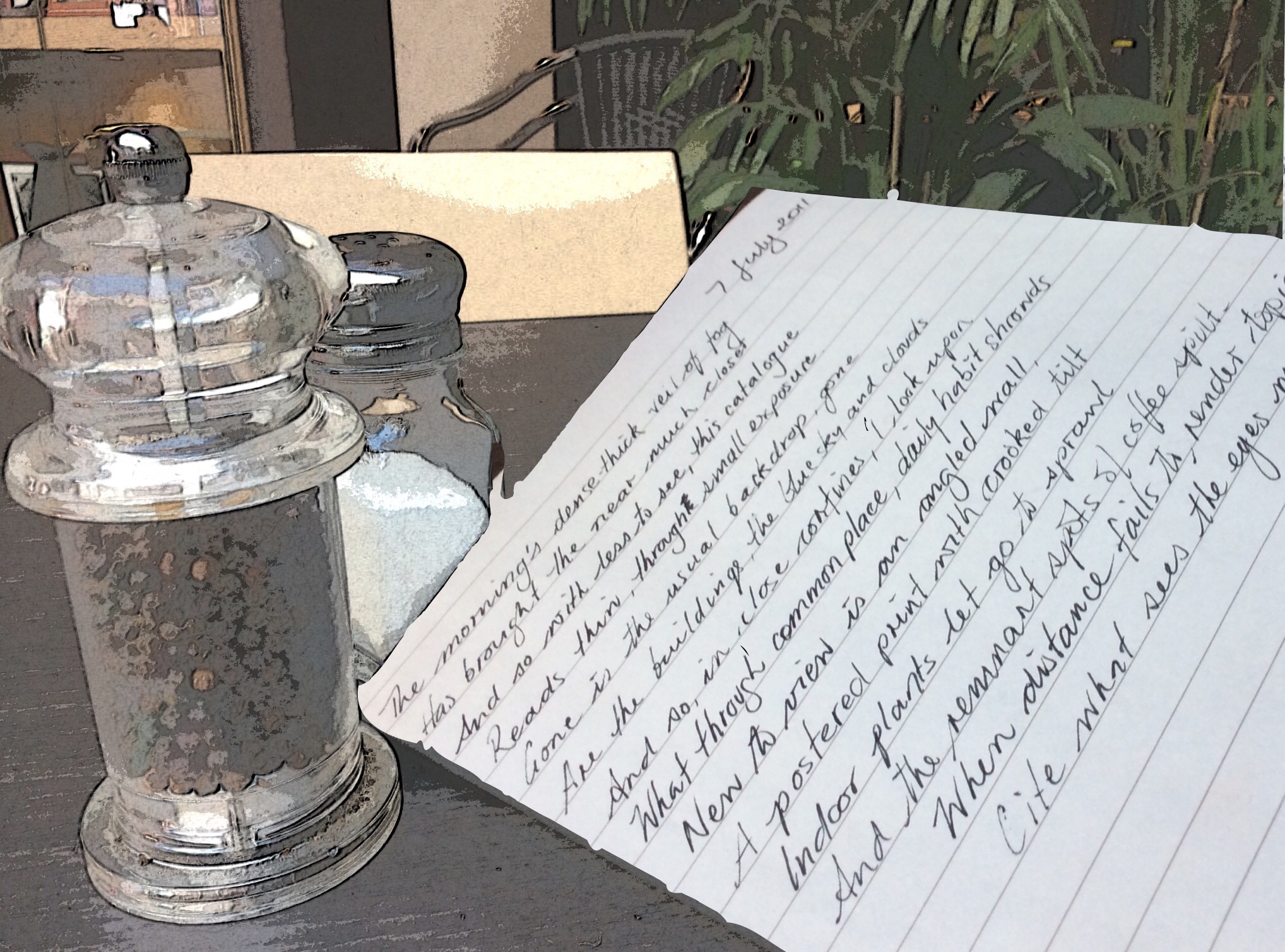
    The morning’s dense, thick, veil of fog
    has brought the near much closer;
    and so, with less to see, this catalogue
    reads thin, through small exposure.
    Gone is the usual backdrop, gone
    are the buildings, the blue sky and clouds;
    and so, in close confines, I look upon
    What through common place, daily habit shrouds.
    New to view is an angled wall,
    a postered print with crooked tilt,
    indoor plants let go to sprawl,
    and the remnant spots of coffee spilt.
    . When distance fails to render topic,
    . cite what sees the eyes myopic.

    © Tim Grace, 7 July 2011


    To the reader: I live in a city renowned for its clear blue skies; an envious average across all four seasons. Occasionally, the wide-blue-yonder closes in and our vista shrinks behind a grey shroud of fog. Those who talk of depression describe the sensation in similar terms. Grey replaces the colourful features of pleasant surroundings. Distance is detached from time and place; here and now demand attention; proportion is distorted.

    To the poet: I remember driving carefully through the fog; mentally mapping my way through a course of visual memories. No doubt, I assumed my usual position at the back of a cafe. And from there, I realised my familiar palette of colours was absent; distant approximations gone. Everything, routinely overlooked (as too close to see) had been brought to the fore. I met the short-sighted poet.


    new to view new to view

     

  • Pleasantries

    Pleasantries

    The light touch of a poet’s pen,
    rests easy on the page;
    pleasant words that come again,
    that do not wilt with age.
    Familiar words, in daily use,
    that need no explanation;
    nothing cryptic, nor obtuse:
    the art of observation.
    Write the word as simply said,
    keep true to its expression;
    write the word so easily read,
    note its first impression.
    . Write simply what the eye saw,
    . all else but that ignore.

    © Tim Grace, 4 July 2011


    To the reader: The casual acquaintance of a pleasant friend leaves a light impression on the surface of a day. The interaction has no agenda and the motive is nothing more than patinated patter: a catch-up, a touch-base; a nice to see you moment. There’s a social art, an etiquette, to keeping a conversation chatty – your own connection with local events and activities is a good guide; a sense of life as it is. Currency is a useful link to liveliness; make good use of days just gone and those about to come.

    To the poet: There’ll be times when a scene has no cryptic depth of character; a surface without dimension. Not to say it isn’t an interesting reflection of reality. Still-life, in a visual sense, holds the moment as it is; preserves the present for its own sake. If there’s a technique to writing ‘still-life’ it’s avoid clutter and unnecessary elaboration. The truthful line applies as much to poetry as it does to visual design.


    pleasantries pleasantries
  • Five Notes

    Five Notes

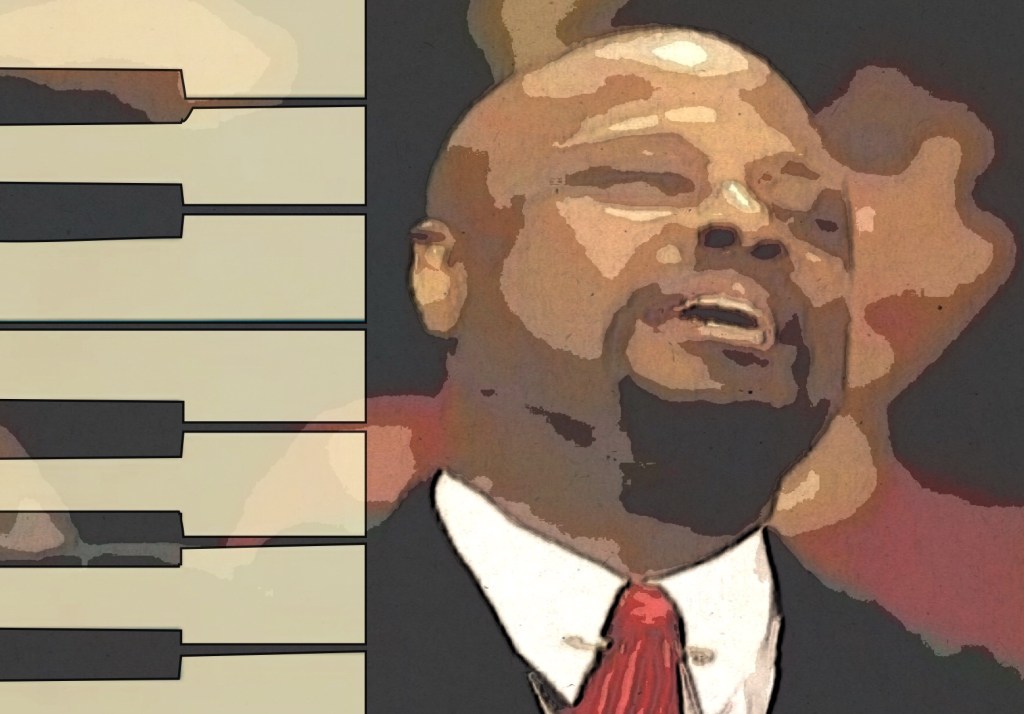
    Five notes make a negro scale,
    On a keyboard they are black.
    Pitched to help the heart prevail;
    Played to bring the spirit back.
    They strike the chord of freedom,
    And invite the voice to sing.
    If you listen you can hear them:
    Lilting, wafting, calling:
    Calling to the lost, the grieving;
    Beckoning the broken, the oppressed,
    Singing something to believe in,
    Bringing anthem to a quest.
    . Sing to the notes of freedom; let them soar,
    . Sing so we can hear them; forever more

    © Tim Grace, 3 July 2011


    To the reader: With a surname such as mine ‘Amazing Grace’ has held a life-long interest. Occasionally, I’ll venture into an exploration of the song’s pedigree. The best of all explanations, in my opinion, is a 2012 sermon by Wintley Phipps. In this moving presentation Wintley explains the history of the Slave Scale and “shares how just about all negro spirituals are written on the black notes of the piano”. The writer of ‘Amazing Grace’ was John Newton (a slave trader) moved to give lyrical interpretation to his cargo’s plaintiff chorus.

    To the poet: When you write in the footsteps of inspired art you take a risk. The comparison will more than likely reduce your words to mere exercise. And so, it’s best you respond accordingly… ensure the exercise is well executed; make it interesting.


    five notes five notes