Tag: Place

  • Cursed Pile of Dirt

    Cursed Pile of Dirt

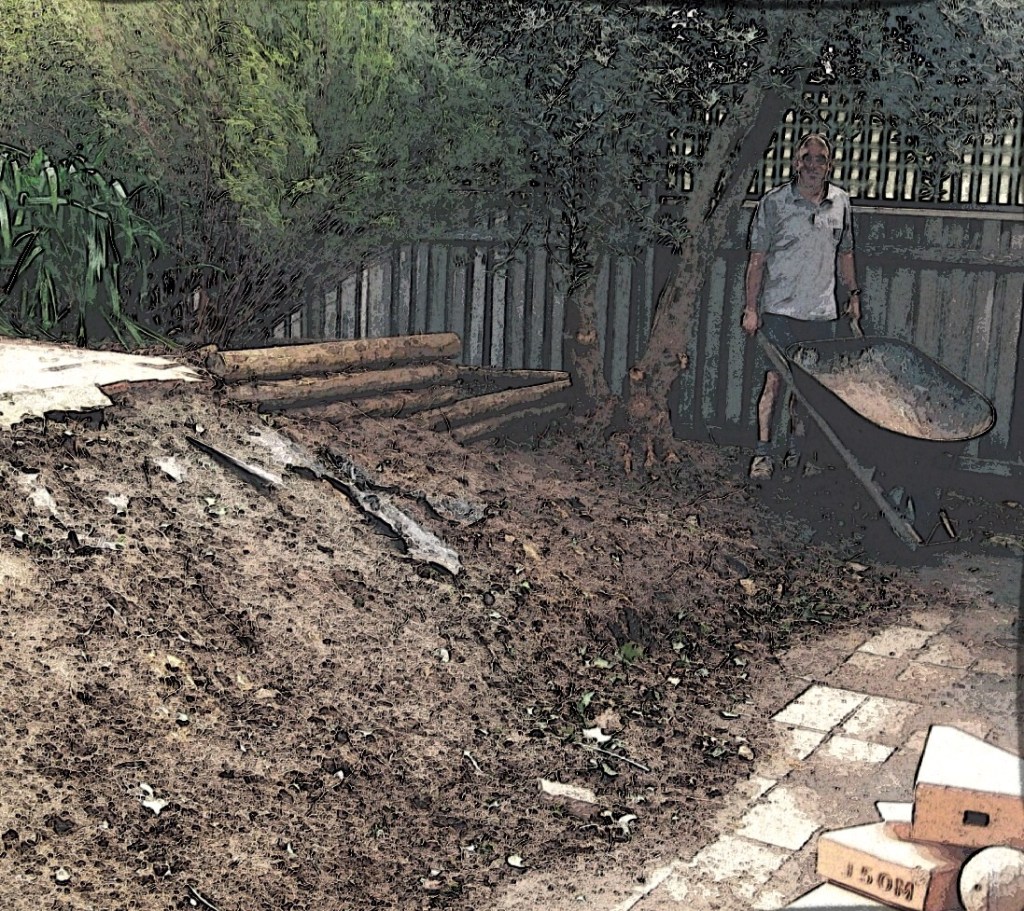
    Oh! cursed pile of dirt, in crude repair,
    what reason dost thou have to be so cruel?
    Anchored firm with that cold and heavy stare,
    as would befit a cross and cranky mule.
    Has’t thou not some purpose of greater worth?
    Could thou not be a mound or grassy knoll?
    Could thou not be a monument on Earth?
    Has’t thou not some use, some virtue to extol?
    Give way to the dig of a shaping spade.
    Let go the stature of a mongrel beast.
    Let go the attitude as of now displayed.
    Be thus reduced; for purpose-sake increased.
    . Be not soiled or muddied with despair,
    . let thyself be moved as from here to there.

    © Tim Grace, 23 September 2011


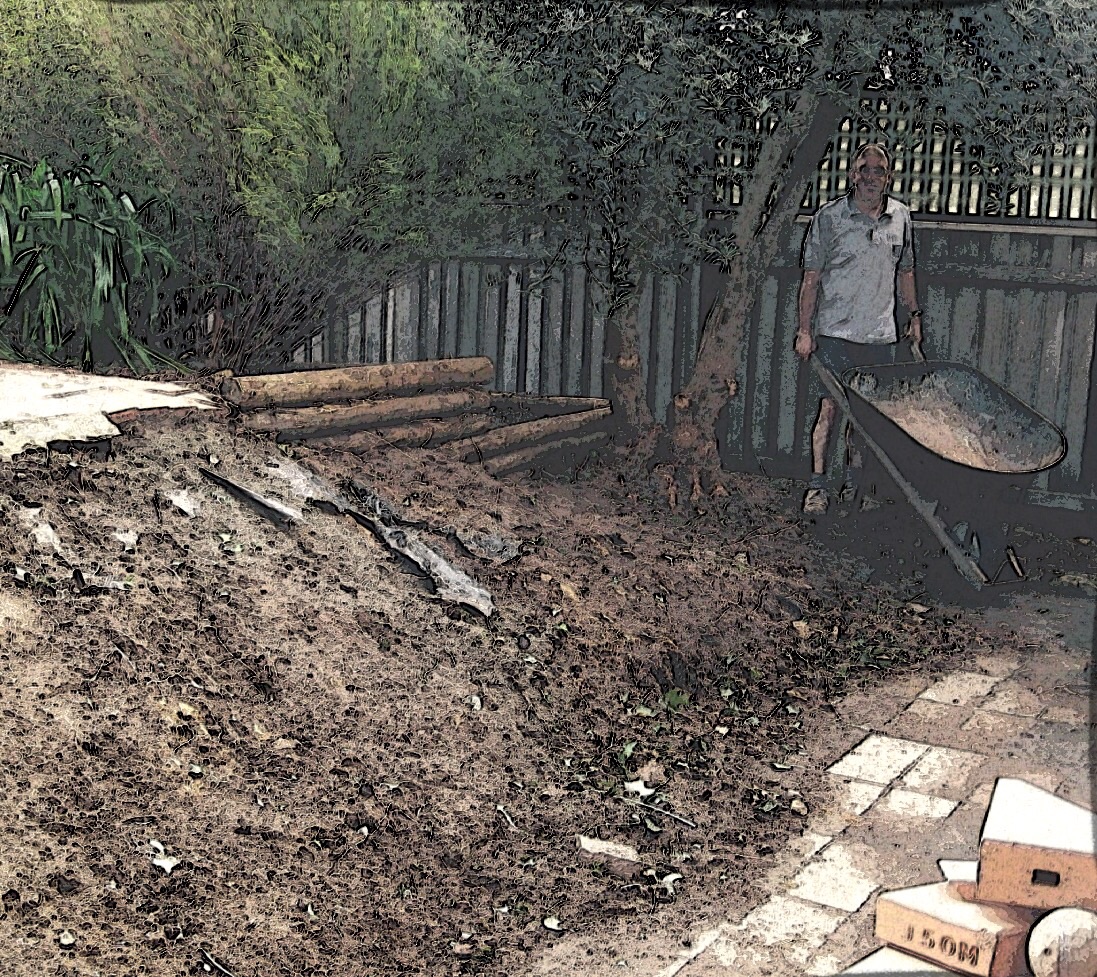
    To the reader: As a university student I earned a meagre income removing rubbish. I owned a small utility truck (known as a ‘ute’ in Australia). For seven-dollars a load I’d remove anything; mostly other peoples’ unwanted garden refuse. Occasionally a large pile of dirt would stare me down! With stoic fortitude I remember the words “Oh! cursed pile of dirt” thrusting deep into the core of my adversary. Slowly at first, with slight impact, the pile would respond seemingly none the worse for curse! But … as I was to learn … persistence beats resistance!

    To the poet: That “persistence beats resistance” is a truism; one that serves the poet well. The weight of stubborn words can take some shifting; some very heavy lifting. The original words to this sonnet were in the form of my own spiritual; in the face of adversity there is hope; the human spirit is well equipped to cope with hardship: “Oh! cursed pile of dirt, with thy cold and heavy stare, given time and shovel, thou shalt be moved from here to over there!”


    cursed pile of dirt cursed pile of dirt
  • So Be Twins

    So Be Twins

    Time and nature so be twins;
    in course, they groove the one same rut.
    As one turns the other spins;
    so stems a common strut.
    Nature is but time expressed;
    the two can not be parted.
    Once in seasons we invest
    then sewn the end’s been started.
    All things, from nature bred,
    succumb to time’s rotation.
    Youthful beauty so is shed
    through weathered maturation.
    . It is with pen he inks a perfect line;
    . outwits the jinx of self-design.

    © Tim Grace, 17 July 2011


    To the reader: Nature and time are inseparable not interchangeable. Nature is the producer: ever ready to compromise; endlessly adapting as circumstances change. Time is the consumer: demanding and impatient; in one hand a scythe the other a sickle. Seen together (as in reap the harvest) there appears a partnership but this is not based on negotiation; nothing more than convenience. Without a perpetual contract nature has learnt not to resist time. Through accommodation nature extends and also yields its fleeting crop.

    To the poet: In sonnets 17 and 18, Shakespeare changes tack regarding the power of procreation. If youthful beauty stubbornly resists its duty to duplicate by means of perpetual parenting then alternative methods must be found. To a poet it seems obvious that words perfectly written can capture youth and outwit Time. With new zeal, Shakespeare takes it upon himself to write a poem that leaves the beauty of youth beyond compare; beyond Time’s destruction.


    so be twins so be twins
  • New to View

    New to View

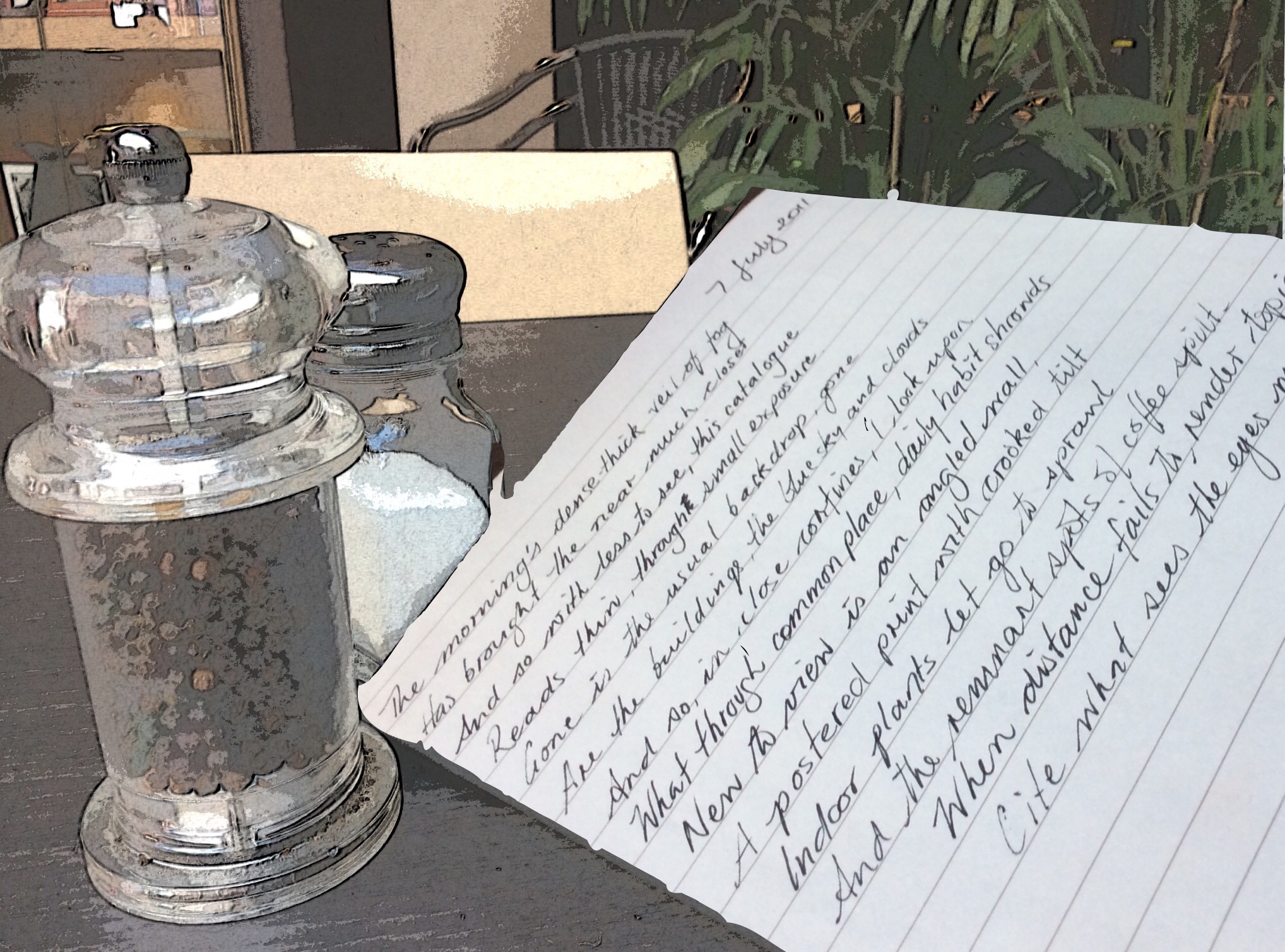
    The morning’s dense, thick, veil of fog
    has brought the near much closer;
    and so, with less to see, this catalogue
    reads thin, through small exposure.
    Gone is the usual backdrop, gone
    are the buildings, the blue sky and clouds;
    and so, in close confines, I look upon
    What through common place, daily habit shrouds.
    New to view is an angled wall,
    a postered print with crooked tilt,
    indoor plants let go to sprawl,
    and the remnant spots of coffee spilt.
    . When distance fails to render topic,
    . cite what sees the eyes myopic.

    © Tim Grace, 7 July 2011


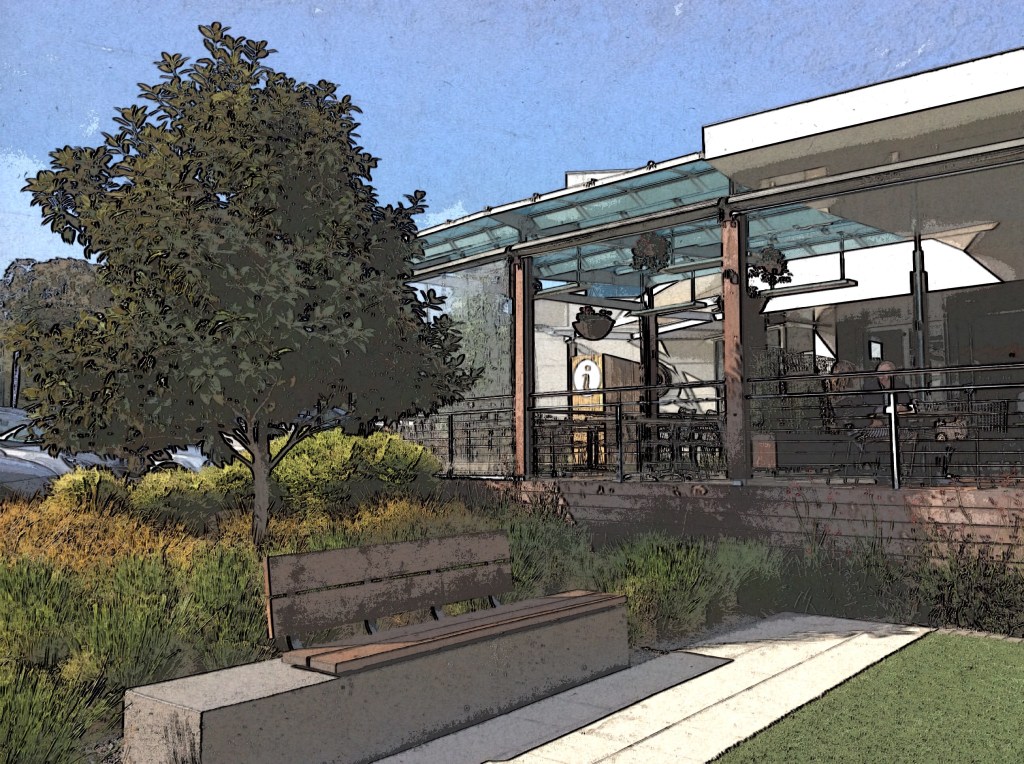
    To the reader: I live in a city renowned for its clear blue skies; an envious average across all four seasons. Occasionally, the wide-blue-yonder closes in and our vista shrinks behind a grey shroud of fog. Those who talk of depression describe the sensation in similar terms. Grey replaces the colourful features of pleasant surroundings. Distance is detached from time and place; here and now demand attention; proportion is distorted.

    To the poet: I remember driving carefully through the fog; mentally mapping my way through a course of visual memories. No doubt, I assumed my usual position at the back of a cafe. And from there, I realised my familiar palette of colours was absent; distant approximations gone. Everything, routinely overlooked (as too close to see) had been brought to the fore. I met the short-sighted poet.


    new to view new to view


  • Pleasantries

    Pleasantries

    The light touch of a poet’s pen,
    rests easy on the page;
    pleasant words that come again,
    that do not wilt with age.
    Familiar words, in daily use,
    that need no explanation;
    nothing cryptic, nor obtuse:
    the art of observation.
    Write the word as simply said,
    keep true to its expression;
    write the word so easily read,
    note its first impression.
    . Write simply what the eye saw,
    . all else but that ignore.

    © Tim Grace, 4 July 2011


    To the reader: The casual acquaintance of a pleasant friend leaves a light impression on the surface of a day. The interaction has no agenda and the motive is nothing more than patinated patter: a catch-up, a touch-base; a nice to see you moment. There’s a social art, an etiquette, to keeping a conversation chatty – your own connection with local events and activities is a good guide; a sense of life as it is. Currency is a useful link to liveliness; make good use of days just gone and those about to come.

    To the poet: There’ll be times when a scene has no cryptic depth of character; a surface without dimension. Not to say it isn’t an interesting reflection of reality. Still-life, in a visual sense, holds the moment as it is; preserves the present for its own sake. If there’s a technique to writing ‘still-life’ it’s avoid clutter and unnecessary elaboration. The truthful line applies as much to poetry as it does to visual design.


    pleasantries pleasantries
  • Possessed of Darkness

    Possessed of Darkness

    In darkness, lust has sight of just one eye;
    so, little more than nothing does he see.
    Possessed of darkness lust and love both vie
    for right to don the cloak of dignity.
    Lust (that nightingale) clad in midnight’s gown,
    silhouettes as naked, cavorts as stark;
    fashioned to force from love a prudish frown.
    Lust casts his sullied shadow at love’s lark;
    in response, love is dressed in dim-lit garb.
    Love seeks the soft refuge of a candle.
    Love in night’s attire is sensual; suave.
    Love is demure, shows no taste for scandal.
    . As night takes possession of darkened rooms,
    . love’s noble battle over lust resumes.

    © Tim Grace, 26 June 2011


    To the reader: Light and dark emotions are responsive to context; invited or avoided. Light emotions take pleasure from the fresh disclosure of a pure moment. On the other hand, dark emotions shun exposure to an open scene; they much prefer the secrecy of shadows. Somewhere in the soft subdued lighting of a comfortable space love and lust agree to cohabit; and in that ambiance, find sweet embrace.

    To the poet: As you read Shakespeare’s sonnets you’ll often come across two sonnets that sit side-by-side as pairs. Sometimes, they’ll tell two parts of the same story; other-times, they’ll repeat the same story from a different angle. The pairing is as much convenient as it is deliberate. As ‘Poem A’ develops ‘Poem B’ evolves as a counter-balance. The discarded lines become adversaries; too demanding to ignore.


    possessed of darkness possessed of darkness


  • Skewed Perspective

    Skewed Perspective

    This painter’s point of reference is a frame.
    That being so, the view portrays a scene:
    a pictured scene, that forms a likeness; same
    or similar images sit between
    vertical and horizontal axes.
    Colour-saturated canvas with scrapes
    of land and sea, clouds and sky in patches;
    an ornamental arrangement of shapes
    drawn together; intermingled, condensed,
    poised in proportion. Constrained it would seem,
    fixedly, to the one common bound: fenced,
    measured and matched to a spatial theme.
    . When frames of reference are viewed selective,
    . they’re often squared to a skewed perspective.

    © Tim Grace, 6 July 2011


    To the reader: Frames of reference hold the contents of a picture in place and establish the dynamics of a visual arrangement; as perceived. Whether a visual artist can claim to have captured what is beyond their canvas or lens is an interesting point. Is deliberate omission part of the viewing experience? To paint or photograph a scene without its protagonist, without its feature, gives the viewer the ‘power of suggestion’ to answer what’s missing. Frames are not borders.

    To the poet: Constraints are at the centre of this poetic piece. Its theme argues a contrivance; that being: any captured picture is a selectively squared-off visual arrangement. A poem, on the other hand, is boundless in its suggestive use of imagery. In making reference to a poetic landscape I have relied upon the reader’s visual interpretation of “scrapes of land and sea” … to be conjured at will.


    skewed perspective skewed perspective