Tag: Photography

  • Fears Not Dust

    Fears Not Dust

    Degas fears not dust, but the hand of man.
    His art is that of motion not of bronze.
    His shuttered frame’s neither still nor frozen.
    From moment to moment his art responds.
    He seeks the illusion of transfered weight;
    forward leaning movements lunging at space.
    He seeks expression through a fluid state;
    liquid locomotion spilled into place.
    See the bathing women, the jockeyed horse,
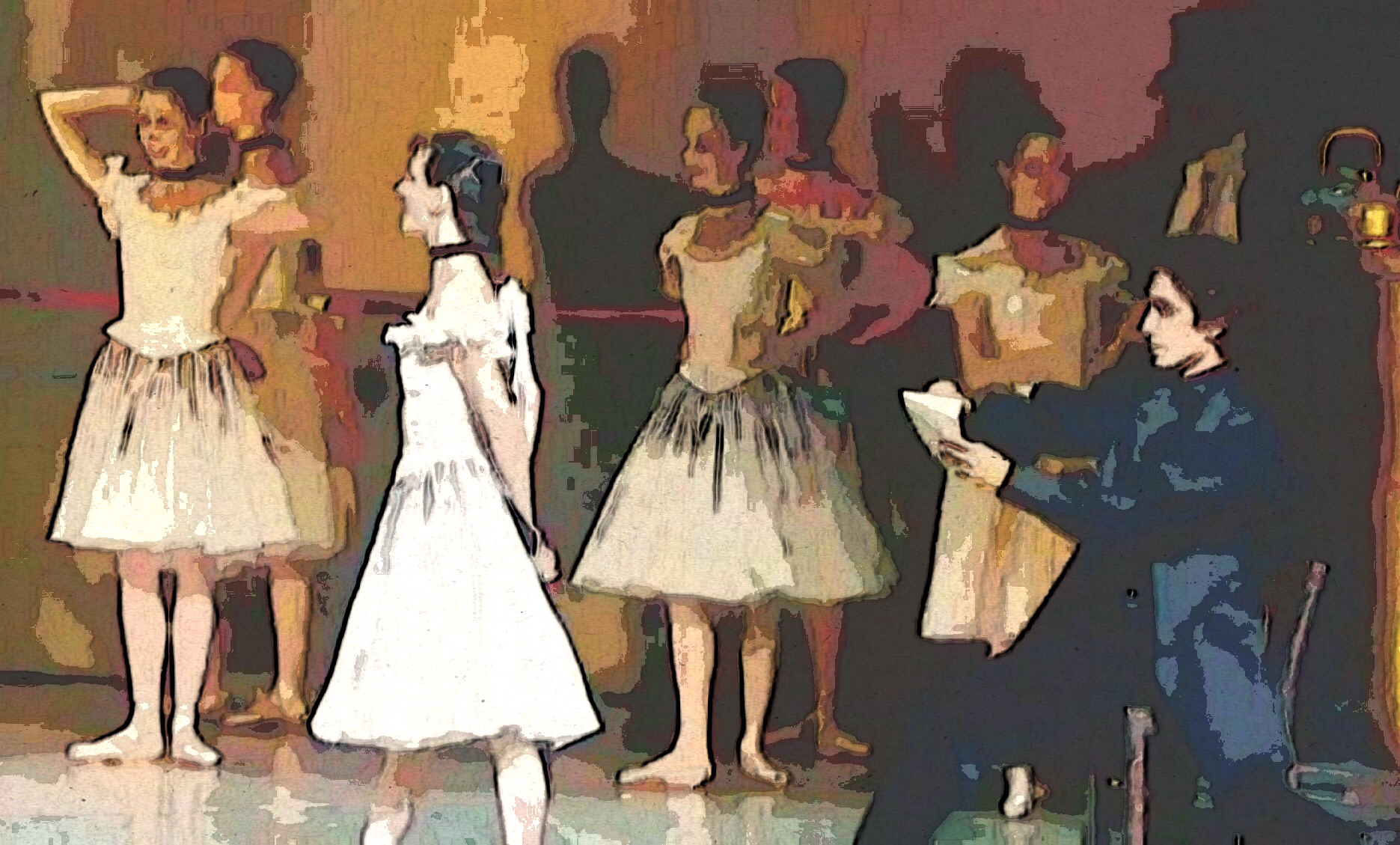
    the ballerinas giving curtain call,
    the girls with flowers, and himself of course;
    none paint a picture showing life at stall.
    . The subtle suggestion of swing and sway,
    . Creates the impression of dance at play.

    © Tim Grace, 4 November 2012


    To the reader: “What’s more static than a statued dancer?” Degas was challenged by the limitations of ‘snapshot’ art. The idea of capturing a static scene brought him little interest. His more intriguing challenge came through art that suggested something beyond the instant of creation. Through pose and posture, Degas gave his subjects impetus; his scenes momentum. Therein lies the power of degas … in every moment there’s fresh potential.

    To the poet: Like moths to light, experts love controvacy:”Degas, one suspects, was turning in his grave. Before his death in 1917, he repeatedly expressed concern that charlatans might highjack his legacy by casting his sculptures in bronze and selling them to collectors, and is said to have told his fellow painter Georges Rouault, ‘What I fear most is not dust but the hand of man.’” And that article in Bloomberg Business (by William D Cohan) triggered my poetic interest.

    Fears Not Dust Fears Not Dust
    Picture Source:
    http://www.medici.tv/mobile/la-petite-danseuse-de-degas-patrice-bart-world-premiere-opera-garnier
  • A Natural Stamp

    A Natural Stamp

    The strength of argument is undermined
    when a salient point is overstressed.
    For combative sake, such is underlined;
    brought to fore, emboldened and overdressed.
    At front of mind keep things staid and subtle.
    Let the main point grow from a single source.
    Hold back on highlights, their shine can scuttle
    gentle persuasion (a more useful force).
    Let the shape of things assume a pattern.
    By design, logic itself will unfold
    its grand plan; and in good time, unflatten
    that which by rights should have its credits told.
    . Let the emphasis be a natural stamp.
    . Let the logic of truth light its own lamp.

    © Tim Grace, 18 October 2012


    To the reader: Fashion often begins as a bold statement that gains mainstream approval. Singularity becomes popularity. The norming effect absorbs distinction. Peaks of interest wane; become mundane… we simply lose interest in the fad. Used sparingly, boldness is an effective attention grabber; useful in assembling interest, drawing a crowd and gaining focus. Overused, it’s a crude and ugly device.

    To the poet: “Are all things to be boldly underlined?” Impacts can pack a punch and leave a lasting impression; as in a bruising affair. Then again, there’s a lot to be said for the subtle approach that through imperceptible gradations alters a line of thought or a chain of events. In poetry, novel nuance is equal to brazen boldness; our good-readers are alert to ambiguity; they’ll stop without a red-light flashing.


    A Natural Stamp A Natural Stamp
    Picture Source?
    http://youtu.be/tI7fktKY6OU
  • Forged or Forced

    Forged or Forced

    It’s not that these are different: so unlike
    that resemblance must be forged or forced
    from two extremes. It’s not that hard to strike
    agreement; one that’s logically endorsed.
    The fear of difference is a sad disease,
    a limiting malady; one that’s stoked
    by judgement (prejudice) and jealousies:
    stoked by greed; too easily provoked;
    too easily given voice of reason;
    dressed as patriotic (us not them).
    As contrast sees many, difference sees one.
    It’s from a single cell that many stem.
    . Be not divided by difference, delight
    . in contrast, sing of all things bold and bright.

    © Tim Grace, 7 October 2012


    To the reader: When an image is drained of definition we can manipulate its balance to achieve a better effect. Toggling the tonal quality adjusts the play of light and colour. Too much light and the image is saturated with colour. Any over-compensation risks distortion. The trick is to graduate changes with care so that shadows, lines and temperature strike a natural pose.

    To the poet: In any act of distortion, there’s a point at which an adjustment disagrees with reality; the exaggerated affect stretches belief. Over-emphasis is the literary equivalence of photographic saturation. In concluding a sonnet there’s a risk of rising to a climactic couplet, a crescendo of pretentious agreement… “sing of all things bold and bright” may have met the tipping point?


    image

  • Distinction

    Distinction

    By way of dust and ashes we are linked
    to common threads: strung to a string of time;
    individually knotted, distinct
    in our difference. Be it lemon or lime,
    we are spliced to a single stock; rooted
    in the same soil; given source to nourish;
    encouraged to grow as would be suited
    to meet our own needs; and thereby, flourish
    into form, complete with name and feature:
    detailed with nuance, character and style,
    labelled as ‘self’ from a common creature.
    . Thus, we are universally designed,
    . and yet, so individually defined.

    © Tim Grace, 4 October 2012


    To the reader: As crowds assemble, individual features are swallowed by a depth of field that intuitively responds to changes of light and aperture. As eyes adjust to new interests, peripheral surroundings are rendered as a common blur. It takes just the slightest shift of focus to re-engage with diffused details; to bring them to the fore as new impressions; key-frames that describe “my” experience of a common event.

    To the poet: “What about the drawing of distinctions?” A long thread of thoughts; heavily punctuated with sign-posts and guide-rails separating one thing from another. At various turning points the poem poses two similar characteristics and through nuance attributes to them a difference of sorts: dust and ashes, lemon or lime, name and feature, character and style. Not that similar, not that different, separated then by distinction.


    Distinction Distinction
    Picture Source:
    http://youtu.be/6ynXva3oD9I


  • Water’s Edge

    Water’s Edge

    A sunlit jetty, jutting out to sea;
    a wall of rocks resist the lapping tide;
    the Water’s Edge cafe is serving tea;
    two tethered yachts are dancing side-by-side.
    Waves absorb the jetty, drink to the bar;
    it’s an all-day breakfast, a seafood quiche;
    jelly-fish, tangled nets and caviar;
    loose jib on the Cactus Wren breaks its leash;
    a docile doberman lounges at large,
    waitress brings him water in a blue dish;
    father and son wave to a passing barge;
    a day without limits… just as you’d wish.
    . Today’s consumption will be time well spent,
    . awash with moments, as were sort of meant.

    © Tim Grace, 15 September 2012


    To the reader: To the sound of gently lapping water I wander the coastal promenade; find an outdoor table; it’s perched at the end of a short jetty. With the morning sun’s warmth on my back I open my eyes to the scenery at large. At water’s edge, a cafe has delivered the first of many all-day breakfasts. Behind me two yachts acknowledge as passing wave. Eyes shift, a waitress is delivering a blue bowl of water to a black dog. Scene closes with a father and his young son greeting the black dog with a ‘good morning’ pat-and-chat.

    To the poet: Light extends a poet’s vision into the realms of colour and movement. The crisp light of dawn is by nature poetic. With fresh aspect it exposes familiar forms to new interpretation. Dawn’s crisp exposure, fleeting as it is, delivers a lasting impression. Beyond an hour or so of rising its particular beauty is diffused to a general sense of mundane utility. The day is best seized by the touch of dawn.


    Water's Edge
    Water’s Edge
  • Notographs

    Notographs

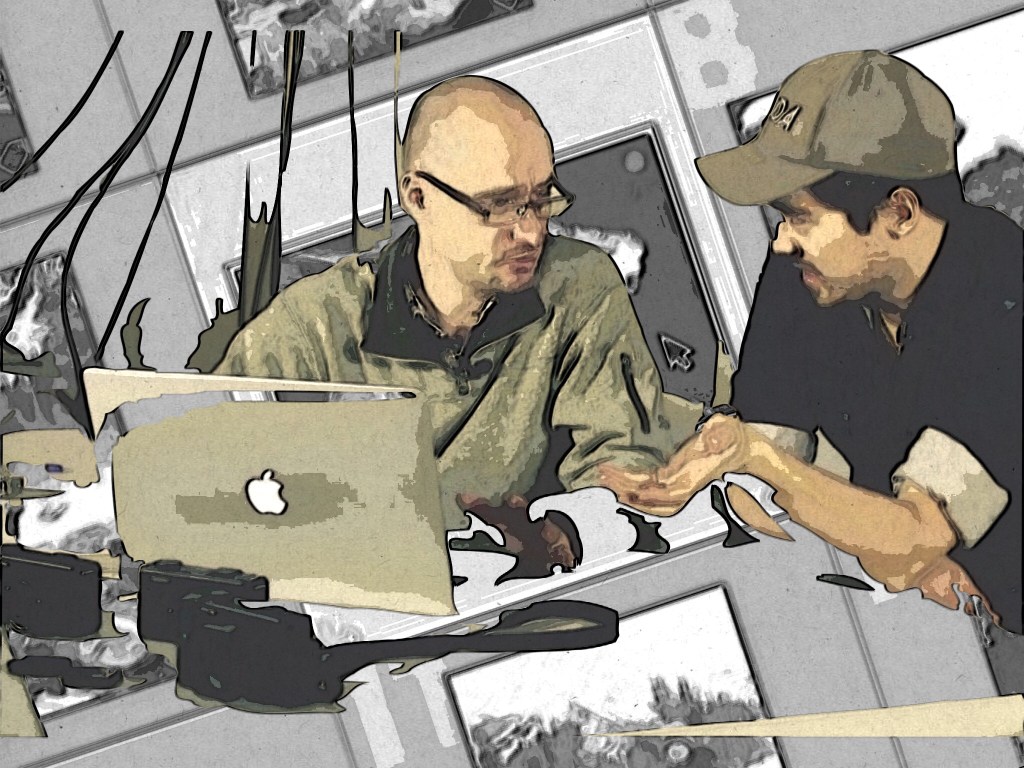
    In front of me sit two photographers,
    swapping thoughts on a gallery of shots;
    contemporary, digital philosophers
    sharing the joy of pixilated dots.
    They scroll through images and often pause
    to seek critique from a like-minded peer;
    they relive the moment, wonder its cause;
    they reflect upon a setting and think it queer
    that light through a shutter would strike a pose;
    shift attention to itself and so steal
    the focus of the frame – and so it goes,
    who knows the prism – as would light reveal
    . I watch from a distance – stealing quotes.
    . Adjust my frame of reference – taking notes.

    © Tim Grace, 8 July 2012


    To the reader: I sat alone, absorbing my surroundings; translating what I saw into comprehensible passages of ink… taking notographs. Behind me, two men shared a table and their photographic enthusiasm. Their expert mastery was evident, but so too was the thrill of light’s incidental intrusion. The mischievous play of light is hard to replicate in poetry. Can you over or under expose a word … is that the role of an adjective?

    To the poet: Snapshots capture incidental moments; it’s difficult to elevate interest above a casual glance. An environmental scan doesn’t always return a topic of literary note. Occasionally, the mundane is given gloss; just enough to raise an eyebrow or prick an ear. The jotted-poem, like the snapshot and the pencilled-sketch, has to reflect its momentary inspiration with readiness and brevity; stretch the point and you’ve lost the plot… easy does it.


    Notographs
    Notographs
    Picture Source:
    http://youtu.be/f3VjyHQiqdE