Tag: People

  • Distinction

    Distinction

    By way of dust and ashes we are linked
    to common threads: strung to a string of time;
    individually knotted, distinct
    in our difference. Be it lemon or lime,
    we are spliced to a single stock; rooted
    in the same soil; given source to nourish;
    encouraged to grow as would be suited
    to meet our own needs; and thereby, flourish
    into form, complete with name and feature:
    detailed with nuance, character and style,
    labelled as ‘self’ from a common creature.
    . Thus, we are universally designed,
    . and yet, so individually defined.

    © Tim Grace, 4 October 2012


    To the reader: As crowds assemble, individual features are swallowed by a depth of field that intuitively responds to changes of light and aperture. As eyes adjust to new interests, peripheral surroundings are rendered as a common blur. It takes just the slightest shift of focus to re-engage with diffused details; to bring them to the fore as new impressions; key-frames that describe “my” experience of a common event.

    To the poet: “What about the drawing of distinctions?” A long thread of thoughts; heavily punctuated with sign-posts and guide-rails separating one thing from another. At various turning points the poem poses two similar characteristics and through nuance attributes to them a difference of sorts: dust and ashes, lemon or lime, name and feature, character and style. Not that similar, not that different, separated then by distinction.


    Distinction Distinction
    Picture Source:
    http://youtu.be/6ynXva3oD9I

     

  • Twelve Questions

    Twelve Questions

    What about the drawing of distinctions?
    Should they be blurred to favour tolerance?
    Is the line concise on contradictions?
    What advice does logic bring to difference?
    How are we to judge without conclusion?
    How so is ‘that from this’ to be defined?
    Is ‘to know’ a hoax, a grand delusion?
    Are all things to be boldly underlined?
    What of two-minds that claim a single-thought?
    What of the question that has no answer?
    What’s nothing but the invention of naught?
    What’s more static than a statued dancer?
    . It’s not the answer that in truth divides,
    . More so the question that in doubt resides.

    © Tim Grace, 3 October 2012


    To the reader: The tolerant society is a highly abstracted notion. Those who thrive in liberal communities put aside rigid structures and tolerate difference. In this relaxed and generous environment customs and codes of practice can be questioned and answers refined; ethics evolve. Social contracts are loose and forgiving with cultures flourishing side-by-side. In this social order we prefer the question (process) resist the answer (product) as we crave the experience… all lines are blurred.

    To the poet: Earlier, I broke Shakespeare’s sixty-sixth sonnet into a series of twelve sonnets; expanding on his list of grumpy grievances. Likewise, in this sonnet (of mine) I lay down the foundation for a longer exploration of ‘difference and distinction’; again, in twelve parts. The project took a couple of months to complete with other themes and interests put on hold… to what end, I’ll let you judge.


    Twelve Questions Twelve Questions


  • Water’s Edge

    Water’s Edge

    A sunlit jetty, jutting out to sea;
    a wall of rocks resist the lapping tide;
    the Water’s Edge cafe is serving tea;
    two tethered yachts are dancing side-by-side.
    Waves absorb the jetty, drink to the bar;
    it’s an all-day breakfast, a seafood quiche;
    jelly-fish, tangled nets and caviar;
    loose jib on the Cactus Wren breaks its leash;
    a docile doberman lounges at large,
    waitress brings him water in a blue dish;
    father and son wave to a passing barge;
    a day without limits… just as you’d wish.
    . Today’s consumption will be time well spent,
    . awash with moments, as were sort of meant.

    © Tim Grace, 15 September 2012


    To the reader: To the sound of gently lapping water I wander the coastal promenade; find an outdoor table; it’s perched at the end of a short jetty. With the morning sun’s warmth on my back I open my eyes to the scenery at large. At water’s edge, a cafe has delivered the first of many all-day breakfasts. Behind me two yachts acknowledge as passing wave. Eyes shift, a waitress is delivering a blue bowl of water to a black dog. Scene closes with a father and his young son greeting the black dog with a ‘good morning’ pat-and-chat.

    To the poet: Light extends a poet’s vision into the realms of colour and movement. The crisp light of dawn is by nature poetic. With fresh aspect it exposes familiar forms to new interpretation. Dawn’s crisp exposure, fleeting as it is, delivers a lasting impression. Beyond an hour or so of rising its particular beauty is diffused to a general sense of mundane utility. The day is best seized by the touch of dawn.


    Water's Edge
    Water’s Edge
  • Sameness Overcome

    Sameness Overcome

    All days the same, patterned on each other;
    templates, just repeated in shape and size.
    How to make a difference; one from t’other?
    Make love to the morning, feel her surprise.
    Love’s rhythm is what sets two days apart.
    Begins the flow of motion that prepares
    your mind for nuance; gives the day fresh start.
    When borne of love, no other compares…
    for sameness is overcome. With love’s touch
    the subtlety of difference is revealed,
    feelings are massaged, caressed, and as such
    become a new day; fresh as a green field.
    . No two kisses need ever be the same,
    . with love’s rebirth, each day takes a new frame.

    © Tim Grace, 8 September 2012


    To the reader: Love is a refreshing agent. Its confirmation reassures and resets relationships. The natural flow of day and night cycles through the rhythm of life and love responds in kind. We are bound to love’s attraction; drawn to its affection; captured by its charm; and seduced by its sensitivity. Those delicious endorphins have us craving a new day’s kiss.

    To the poet: A poem about sex doesn’t need to be lewd, crude or rude. The power of suggestion is all that’s required. As with all good art, a good poem needs to leave room for interpretation. To leave no room for suggestive imagination would mark the erotic intent as nothing more than pornographic titillation. By the splendours of a new day sameness is overcome.


    image


  • Three Complications

    Three Complications

    The cave, the campfire, and the carnival.
    Three complications, mine to be resolved.
    In one, the cave, I am most comfortable.
    Most myself, most at home, most involved.
    Drag me from my cave, my favoured dwelling,
    wrench me out of this reclusive hollow;
    pull me screaming and ignore my yelling;
    tow me to the campfire, make me follow;
    wright me in the carnival’s raucous script;
    place me with a crowd, put me on parade;
    chain me to the mob – least of all equipped
    to cope with this, and most of all afraid.
    . I’m a caveman, that’s my disposition.
    . Elsewhere, I’m awkward in rendition.

    © Tim Grace, 26 August 2012


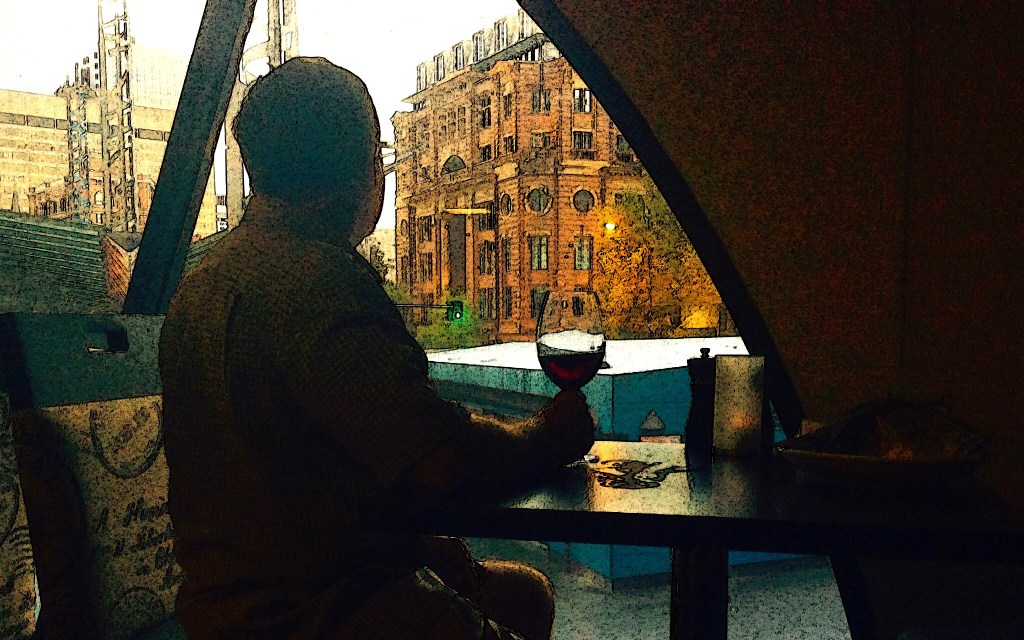
    To the reader: In a social sense we all have a comfort zone; an interactive range of capability. In the cave dwells the ‘home alone’ introvert. Oblivious to external distractions, he happily crafts an inward-facing palace of private pleasures. His windows on the world are guarded lookouts; portals that provide protection as much as they do vistas over new horizons. His home is an introspective exhibition of self-sufficiency… he looks forward to your company, but rarely seeks it.

    To the poet: I write from the vantage point of a cave. A metaphorical-mobile-cave that has no fixed address. The metaphorical-mobile-cave is appointed with modern amenities and adapts well to its surrounding conditions. In this sense, it’s a versatile-metaphorical-mobile-cave with its own sense of respectful hospitality. The cafe is my cave… a poet’s paradise.


    Three Complications
    Three Complications


  • Brittle Surface

    Brittle Surface

    Then there’s the other playground, hidden
    from the cast of eyes, from the field of view.
    Given shape of whispers, a forbidden
    terrain that no survey could map as true.
    Due regard, a somewhat wise precaution.
    As with a grain of truth in rumour’s mill,
    this place has no scale of good proportion.
    All things can be ground to a common swill:
    ’til there’s nothing left of confidence,
    just the remnants of dignity, respect,
    and honour; nothing but shallow pretence,
    a bastion of moral poverty … wrecked.
    . Play, ground away, under spiteful attack,
    . Brittle is its surface; ready to crack

    © Tim Grace, 22 August 2012


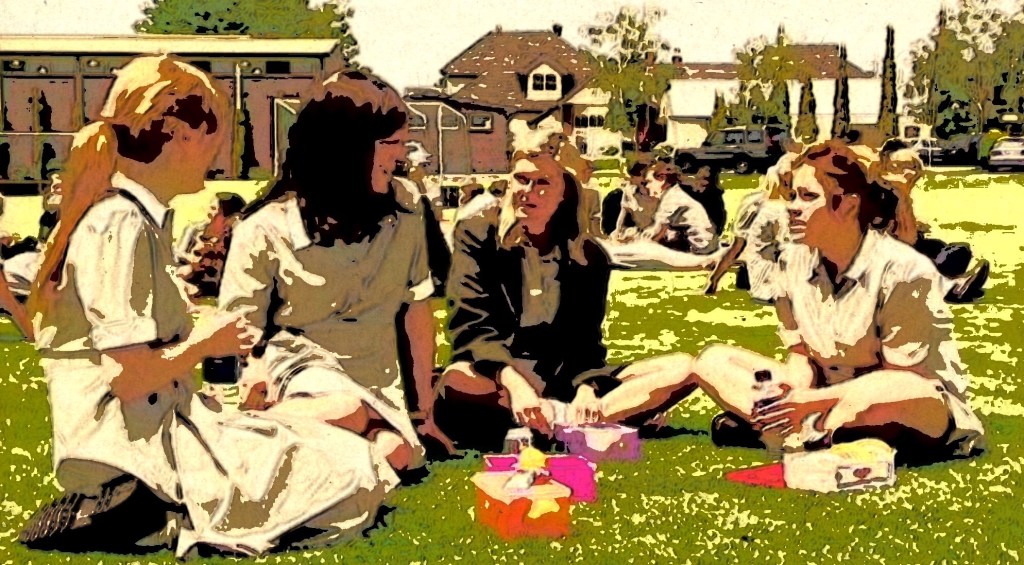
    To the reader: As a school principal, I watched with horror the spiteful subterranean attack of girls on each others’ friendships. Damage to dignity inflicts a cruel wound; one that festers long after its initiation. The attacks were often highly orchestrated and finely targeted at a hapless victim. The remedy was to some extent exposure but humiliation of the perpetrator was fuel to the fire. Reconciliation was the broker’s joy!

    To the poet: This sonnet was constructed to highlight the fragility of a playground. Designed with a sharp tongue in mind. An outpouring of emotion, prone to pretence and posturing. A string of words nuanced with nastiness. If you’re listening carefully there’s a reference to self-pity; an obfuscation, that distracts attention from cause and effect. The mere suggestion of ill-will is an affront worthy of indignation. Words just words… I don’t think so.


    Brittle Surface Brittle Surface
    Picture Source:
    http://youtu.be/YYfxfudoE_k