Tag: People

  • Novel Opportunities

    Novel Opportunities

    Favourable conditions affording new
    and novel opportunities to grow
    the market, to expand upon the view;
    Horizons!!! – here today gone tomorrow.
    Windows that open up to the sky, to all
    prepared to venture forth, to ride the wave
    towards new shores; prepared to rise and fall
    along with the fool-hardy and the brave.
    See that which is old become new again:
    re-released, re-branded, given new guise;
    to be let loose on green pastures; fed then
    on eternal hope, to await the prize.
    . Now is the time of opportunity.
    . Beyond now … there is no certainty.

    Tim Grace, 6 December 2011


    To the reader: Nothing ventured, nothing gained… a fool and his money are easily parted. The idea of investing in tomorrow assumes a favourable future. But common-sense tells us the future is an uncertain opportunity. Its attachment to now is fragile and with time quickly adjusts to new and unpredictable circumstances. The further from now that we invest the higher is our risk, the greater is our reward. Those that play the market need to know the rules and accept the consequences.

    To the poet: This sonnet has a complex structure that leans heavily on syntax to carry its semantics. I had attended an investment seminar and been barraged with financial jargon; way beyond my understanding. The investment industry, like any other, has a deep meta-language that translates poorly into laymen terms. As a skater, I picked up the message, guessed at its meaning… and wrote a poem! These are my notes…


    image

  • Our Daily Grind

    Our Daily Grind

    And so we go about our daily chores,
    adding and subtracting along the way.
    Consuming and then replenishing stores.
    Earning our keep, converting work into pay.
    And thus, we spin the mill, our daily grind;
    with mundane achievements barely listed;
    rarely noticed, granted but never signed.
    A backdrop for all our needs insisted;
    and this, if named, would be our daily bread.
    It’s what we do given functional sake;
    it’s the substance that lies beneath the spread;
    it’s the sliced-up loaf, not the iced-up cake;
    . By what means is this day improved?
    . By all means, in many ways manoeuvred.

    Tim Grace, 1 December 2011


    To the reader: Without monotony the human spirit can deal with routine pressures. If the grind is productive we will happily put our shoulders to the wheel. In physical terms, the mechanics of ‘return on effort’ can be expressed as a mathematical transfer of energy in a closed system. In philosophical terms, motivation is the lever; its efficiency improves with recognition and reward.

    To the poet: I’m currently reading a book about how the Beatles wrote their lyrics. As described, some were inspired and others simply milled themselves into processed vinyl; through a ‘Hard Day’s Work’. Without the daily grind, without the hack-work, there was nothing to nurture the beautiful moments of lyrical inspiration penned by John, Paul; and occasionally George. A Beatles’ Album, with its highs and lows will outstrip a ‘best of compilation’ … if inspiration is the measure.


    our daily grind
    our daily grind
  • Constant & Endless

    Constant & Endless

    I am the universe, of all things made.
    I am the nothingness, that vast expanse.
    I am the treasury of life’s parade.
    I am the first step, I am the last dance.
    You are the timely natural consequence
    of that which occurs and comes to pass.
    You are the perfect, ideal, confluence
    of all things given to a common class.
    We are the harvest, the expectation;
    we are the whole, much greater than its parts.
    We are the wonder, the fascination;
    we are the child of Science and the Arts.
    . Together… one drop in a constant stream.
    . Together… one stitch in an endless seam.

    Tim Grace, 27 November 2011


    To the reader: A description of everything must include thought; not just the enactment of thought. Any mental configuration is a construct of the universe. To claim that anything, once thought, doesn’t exist is a fallacy. Our power to imagine does not exist outside the universe. If we imagine an omnipotent power then such a Thing exists. Any claim that the Thing does not exist is as questionable as the original figment of imagination that created the Thing. We can argue about the Thing but not of its existence … it has been thought, therefore it exists; for good or ill.

    To the poet: In providing commentary to this cluster of poems it’s obvious that at the time of writing them (in late 2011) I was conscious of the sonnet’s fourteen-line shape. There’s a regular use of four-line blocks visually similar; architectural in design. The stanzas are built like reinforced pillars preparing the way for a capstone-couplet. Some where, I recall reading, the sonnet is a poetic form that mirrors the Golden Ratio.


    constant & endless constant & endless


  • Peace Extols

    Peace Extols

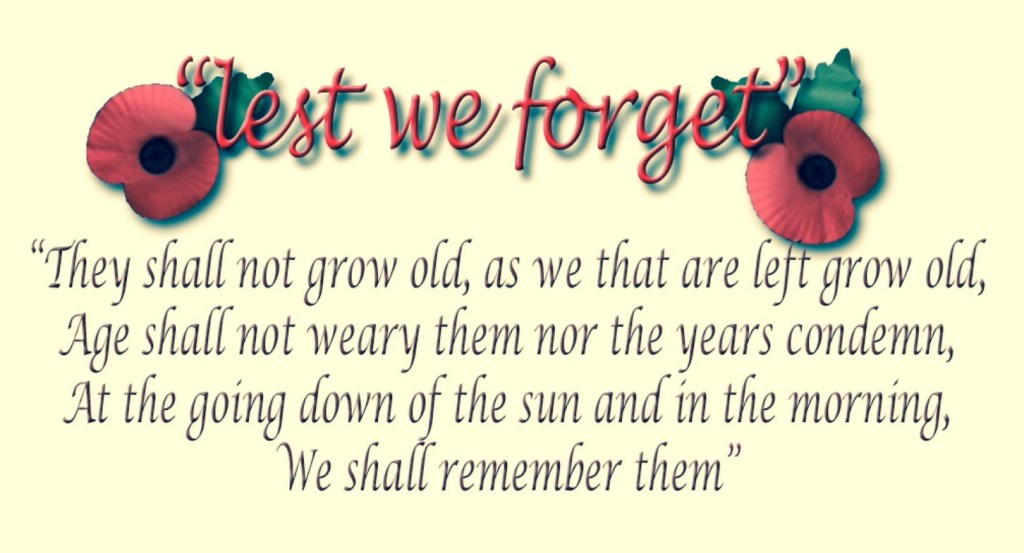
    Most days come and go, not so with this one.
    This one lingers somewhat longer than most.
    This one reminds us of the good we’ve done.
    Of this ‘one day’ we neither brag nor boast.
    There’s a sombreness about this ‘one day’.
    It’s the ‘one day’ of all days when we pause
    to acknowledge the fallen and to pray
    that in their memory we recognise the cause
    that gave them their reason to sacrifice,
    so selflessly, their gold and silver themes;
    and then to give, regardless of the price,
    a new set of hopes, a new set of dreams.
    . Let this ‘one day’ bring comfort to their souls,
    . for they have earned the rest that peace extols.

    © Tim Grace, 11 November 2011


    To the reader: Sombre and respectful, as they are, collective commemorations are reassuring; an inter-generational confirmation of commitment to each others’ national interests. Often sprinkled through the calendar that ‘one day’ is loaded with patriotic symbolism. That ‘one day’ bares the burden of testimony. We are reminded of heroic deeds of self-sacrifice and strength of character; drawn to action in the face of unimaginable fear. Those that died on our behalf … we will remember them; they died in war, they rest in peace.

    To the poet: The current of a flowing river is to some extent just a mathematical calculation. Given no reason to do otherwise, a river that follows its direction without resistance or impedance will behave predictably; without much character. This sonnet begins like that… four steady sentences to begin with. But then, the river of words begin to flow. The next eight lines blend to form a single ribbon of sense – punctuated to give it an uneasy rippling; an agitation that finds stoic resolution; at end, the reassurance of peace.


    peace extols peace extols


  • As Viewed

    As Viewed

    We fall off horses, and topple off bikes.
    We scrape our knees, and lose a bit of skin.
    We shelter under trees when lightning strikes.
    We take our chances, we grizzle and grin.
    What of this squabble, this roughly cut edge?
    What of this soufflé that refuses to rise?
    What of this contract, of this broken pledge?
    What of this promise that fortune denies?
    We’d all like more of what we now possess:
    more bricks and mortar, more silver and gold.
    We’d all like more of those things that impress:
    more wisdom, patience and truth to behold.
    . As viewed in perspective things get wised-up,
    . As viewed in proportion things get sized-up.

    © Tim Grace, 21 November 2011


    To the reader: Proportion and perspective … what are the differences; what are the similarities? Is it that things regardless of perspective will always remain in proportion; or have I just made that up? Alone, are the two prone to corruption and distortion; is one the other’s verification; defence against absurdity? Is there such a thing as a complimentary counterpoint? And is that what it means to keep things in perspective and maintain a sense of proportion; sized-up and wised-up… eminent plausibility.

    To the poet: This poem is about difference but perversely line by line its structure looks similar and sounds repetitive. The continuous stream of alternating content runs the risk of overwhelming the reader with trivial content. The first four lines declare a common experience – is that perspective?. The next four lines ask what to make of all this… is that proportion? And then what remains is a matter of opinion…


    as viewed as viewed


  • I have a bike…

    I have a bike…

    I have a bike, but I rarely ride it…
    I can always find a reason not to…
    Always something else to do beside it…
    Lame contrivances that claim “I’ve got to…”
    Weak-kneed excuses that can’t be weighed-up;
    that validate avoidance; that hold back
    progress. Mere substitutes; made up
    distractions with amplified fold-back;
    with magnified pitch too loud to ignore…
    too easily attached to a should-do
    set of options that add ‘neither/nor’
    to a definitive list of could-do.
    . We put good ideas in concrete casements,
    . that’s why we keep bikes in locked-up basements.

    © Tim Grace, 19 November 2011


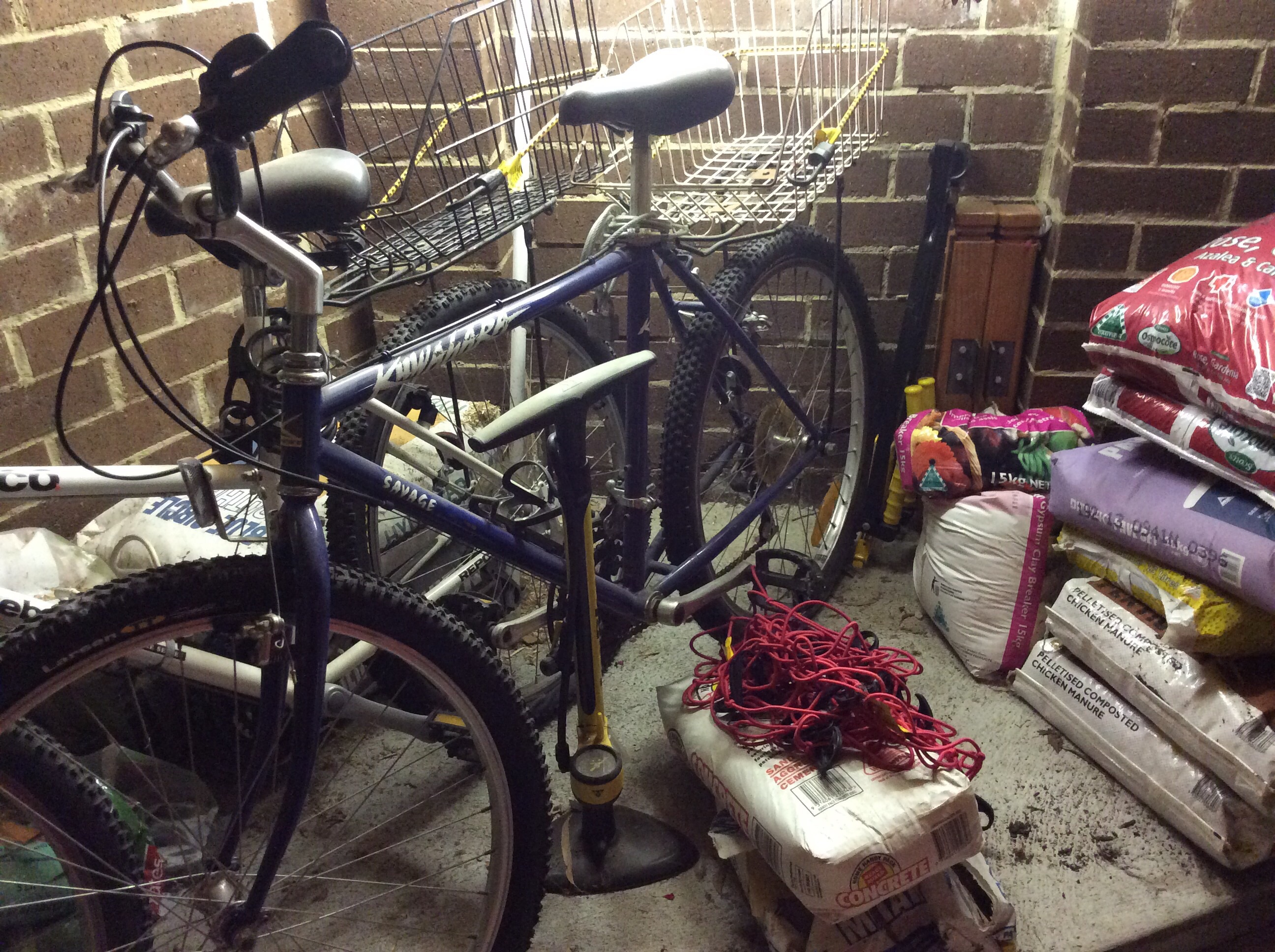
    To the reader: How many flat-tyred bikes are there languishing in basements? Mine is one of them. It was quite a nice mountain-bike when I bought it; a comfortable ride. With annual rapidity, the ageing bike gets a hopeful make-over. And with that yearly pilgrimage comes a wander through the local bike-shop. As the distance between purchase and repair widens the futility of my efforts becomes more pronounced. Not all is lost… I do own a very high-tech bicycle pump!

    To the poet: This sonnet is more experimental than it is successful. The double-barrelled rhymes tug at the narrative; dragging it ever closer to puzzle over poem. It doesn’t hurt to occasionally contrive a rule in the name of literary exercise. The pull of pattern over purpose is a challenge worth accepting. With the end-game tightly managed there came the need for greater emphasis on the logical flow of the meta-text.


    i have a bike
    i have a bike