Tag: Love

  • Like-For-Like

    Like-For-Like

    What of mimicry that honours the past?
    It’s somewhat amazing that like-for-like
    replacements have the talents to recast
    an event – so true, a match would strike!
    True, as in truth; so believably real.
    Real, as in genuine; a copy good.
    Good, as in that with the best to reveal.
    All things being equal it’s understood
    we appreciate a ‘genuine fake’
    as long as it’s ‘true, real, and good’ in shape.
    We value the effort that it must take
    to resemble, mimic, copy and ape.
    . True, real and good – the marks of excellence,
    . altogether bound – without pretence.

    © Tim Grace, 10 June 2012


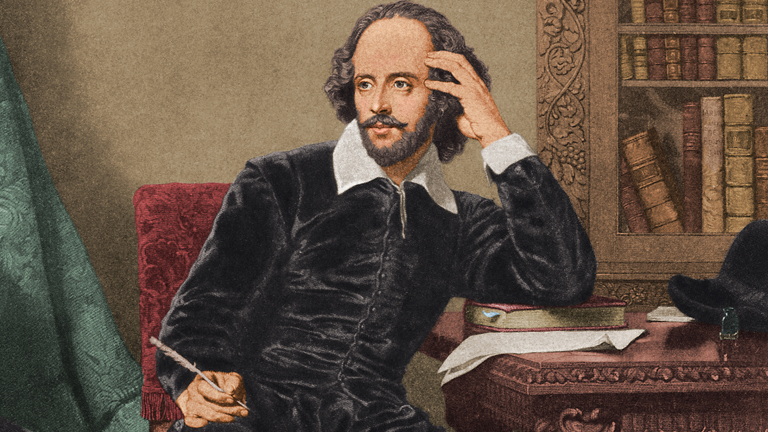
    To the reader: Of love, Shakespeare unpacked its elements as fair, kind and true. Time and time again he returns to this theme. There’s a sense he’s not fully satisfied with previous attempts; and so, has another go at getting it right. Sometimes the approach is quite subtle, on other occasions he’s openly deliberate in assemblage. Sonnet 105, is a prime example; one in which poetry is out-played by structural mechanics… it’s as much a riddle as it is a rhyme.

    To the poet: Imitation is the sincerest form of flattery (according to Charles Colton). On that basis, I had a go at describing ‘excellence’ with its elements being true, real and good. The first task is to establish purpose and, then as Shakespeare did, sequentially assemble its elements into a plausible list of contributing factors. From purposeful to plausible is two-thirds finished; the final third requires polish… it’s as much a puzzle as it is a poem.


    like-for-like like-for-like
    Picture Source:
    http://cp91279.biography.com/1000509261001/1000509261001_2013980530001_William-Shakespeare-The-Life-of-the-Bard.jpg
     

  • Chorus

    Chorus

    Through chorus, we express the universe:
    as the single voice of a crowded thought;
    as spontaneous chant without rehearse;
    as the wisdom of mobs and witty retort.
    Through chorus, our communal silk is spun:
    as tapestries sewn of collective thread;
    as blankets of comfort layered as one;
    as patches of cloth on a quilted bed.
    Through chorus, we conduct a life-long beat:
    as rhythmic stimulants that resonate;
    as echoes bouncing through dancing feet;
    as musical moments that modulate.
    . The frequency of life is harmonic
    . Through chorus, we tune-in to its tonic.

    © Tim Grace, 20 May 2012


    To the reader: As a young child, of the 1960s, I grew up amidst a communal chorus; love was the word. Crammed into every three minute pop-song was a catchy refrain; a repeatable, memorable melody that bounced either side of a metrical verse. In that distant world the chorus was an invitation; a come together crescendo that united a generational voice. In full, the memory of a song fades; what’s left is the chorus.

    To the poet: The fourteen lines of a sonnet easily convert into the simple pop-song formula of three verses (quatrains) and a repeatable chorus (from the final couplet). This sonnet tinkers with that relationship. Upon reflection, the result shows the difference between poetry and song-writing. A lyric needs room to lilt and requires very little internal strength. With too much internal strength melody struggles to sing.


    Chorus
    Chorus
    Picture Source:
    http://youtu.be/9eUowTV0ZFA
  • Free Will

    Free Will

    He came, he went, left me none the wiser.
    More or less, it seems, this was his intent.
    I am, through him, left the improviser.
    It’s mine: mine to wonder, mine to invent,
    mine to discover; with free-will to dream.
    I am, myself, an independent soul.
    And so it was. He left me here to redeem
    from his departure – that gift – a morsel
    of truth so simple, so perfect, so brief;
    and yet so difficult to comprehend.
    I am free to doubt and state disbelief:
    to question his way to my journey’s end.
    . This then is the gift of my father’s breath,
    . I need no longer fear the time of death.

    © Tim Grace, 8 April 2012
    (Revised: 20 August 2023)


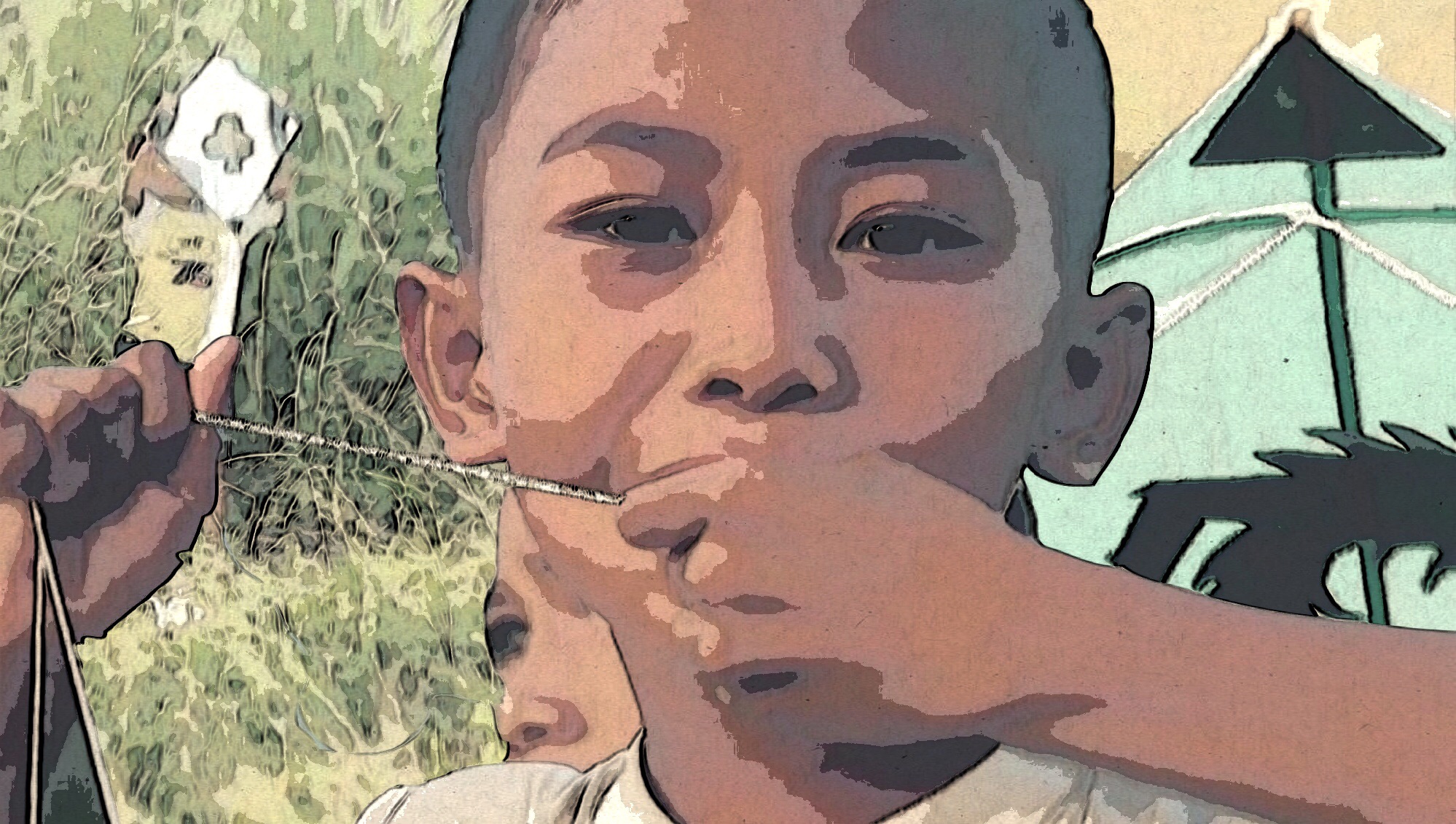
    To the reader: The perfect gift is free-will. What a clever deception. It’s like a kite; useless without string. Hand a child a beautiful kite and after days of frustration he or she will soon ask for the attachment. Upon receiving the greatest gift of all we are burdened with responsibility; we are chained to free-will’s insatiable curiosity; indebted to its reciprocal loop of expectation. The moral burden of free-will is unforgiving; ultimately, I must account for my transgressions … for the choice was mine.

    To the poet: A bundle of tangled thoughts about parenting and the delegation of authority through moral expectation. Religious overtones abound… capitalise the ‘H’ in ‘he’ and you have a sermon; without, it’s a son’s contemplation of his father’s developmental influences: distantly demanding, vaguely judgemental and omnipotently present… your choice; but have you thought about the consequences and can you afford the cost? They are yours alone to bear.


    free will Free Will
    Picture Source:
    http://youtu.be/jOXyvo2ID_o


  • One More

    One More

    One more than many. One amongst the crowd.
    Of all amassed, of all assembled,
    you are the one of all who’s most endowed
    with the touch of difference; unresembled:
    uncopied, unmatched, unequalled; unique.
    You are the diamond in a crown of jewels.
    You are the highest mount; a lover’s peak.
    You are the exception that breaks all rules.
    You are the singular presence, where dwells
    perfection, where at one point all things meet.
    Within you perfect love is made, where swells
    affection; through your oneness all things complete.
    . At one with love you have tamed love’s thunder,
    . you have brought to heel cupid’s brand of wonder.

    © Tim Grace, 10 February 2012


    To the reader: Being the chosen one is flattering. It’s nice to be given attention; to be drawn out of the crowd as something special. But quite a perverse honour if you’re an admirer’s anonymous obsession. More so, if you are the one that through compare is beyond compare. Do you actually exist, or are you an imagined tool that consummates desire? Is the relationship unrequited? No matter, the infatuation delivers a brand of private climax. (WS – Sonnet 154)

    To the poet: Depending on emphasis, the meaning of “one more lovely” is quite different to “one more lover”. And there’s the invitation to play with words. In both senses the expressions are literal but have a figurative overlay that creates room for interpretation. So “one more – than many” can be a numerical statement offering infinite potential. Or, “one – more than many” can be a flattering statement offering distinction beyond the norm. Both interpretations are at one with my “one more” intent … (TG – Sonnet 155)


    image

  • Love and Art

    Love and Art

    It’s all about connecting the connections.
    It’s making sense of senses; aligning
    touch to a feeling, heart with affections.
    It’s the dance of life; all things combining.
    It’s rhythms giving meaning to a twist.
    It’s the whisper appealing to a wish.
    It’s the invitation too tempting to resist.
    It’s the meal shared, prepared as though a dish.
    It’s all about the partnership of play,
    making time to pay attention, closing
    doors, opening minds, as moments melt away;
    it’s harmony: love and art composing.
    . The art of love is appreciation.
    . The love of art is its imitation.

    © Tim Grace, 3 January 2012


    To the reader: Love is an artful relationship. By mutual agreement love reveals its simple beauty. Interpretation of love is a critique of responsiveness. Shakespeare’s measure was “fair, kind and true” (s105). The mutual creation of love is organic; full of context and meaning – adding pleasure to mere survival and existence. We fall in love to fully appreciate the art of life; to make life an art.

    To the poet: Sometimes we write of love as a subject, about which characters and events revolve and intermingle. Other times, we write of love as an object, about which we describe its parts and possibilities. The ‘art of love and love of art’ is a neat palindromic phrase that finds itself interpreted in the final couplet of this sonnet… art for art sake, love for love sake; together bound.


    love & art
    love & art:
    picture source: http://youtu.be/KbmHMCA4lNI


  • A Lover’s Loss

    A Lover’s Loss

    When the rose of last year’s love was not replaced,
    she whispered “I loved you” and shed a tear.
    She closed her eyes and through her memory traced
    his pattern; she imagined he was near.
    Filled heavy with acceptance, her tear swelled,
    wet her lashes and rolled upon her cheek.
    This tear was not wept, this tear quelled
    the weeping worry; no mourning did it seek.
    There was no need for other tears to flow.
    Tenderly, and for just a moment brief,
    she held this tear and then she let him go…
    gone to soul; to find comfort and relief.
    . A lover’s loss is not for time to keep,
    . It’s far better kept where the soul is deep.

    © Tim Grace, 11 September 2011


    To the reader: I remember watching a Twin Towers documentary, describing remnant lives, a decade after the attack. It was clear that many emotional towers had taken devastating hits and were still struggling to rebuild any semblance of structural strength. Gradual resolution of the inexplicable loss of a loved-one, an intimate partner, is a torrid journey of repair; never complete … when the weeping is done, enduring, endearing Love is forever expressed in a single tear.

    To the poet: … and there ends my deliberate set of love poems; some about Love, others for Love, and a few in Love. Shakespeare wrote of Love as both spirit and soul. As spirit, Love is an attractive energy that fuels our motivation to intimately bond. As soul, Love is a figmented expression our passionate desires. Blessed with Love (spirit and soul) we are granted the human condition; ever challenged to balance on the one-hand energy and on the other passion; the humours: dispositions, preferences, propensities, and temperaments.


    image