Tag: literature

  • Things of Interest

    Things of Interest

    Things, nameless remnants, objects in a drawer;
    trinkets that tumble out of time and place.
    Garage gadgets, artefacts of war;
    unidentified objects, out of space,
    out of reason, out of function and fit:
    oddities, obscurities, curios
    long since departed from inventor’s wit;
    having lost the memory of ‘who knows’.
    Relics in a box, contents in a trunk,
    a job-lot of stuff, a deceased estate
    to be sold-off cheap, to be bought as junk:
    what’s good for nothing makes a paper weight.
    . Nothing more nameless than a nameless thing.
    . All deserve a title – be it subject or king.

    © Tim Grace, 17 February 2013


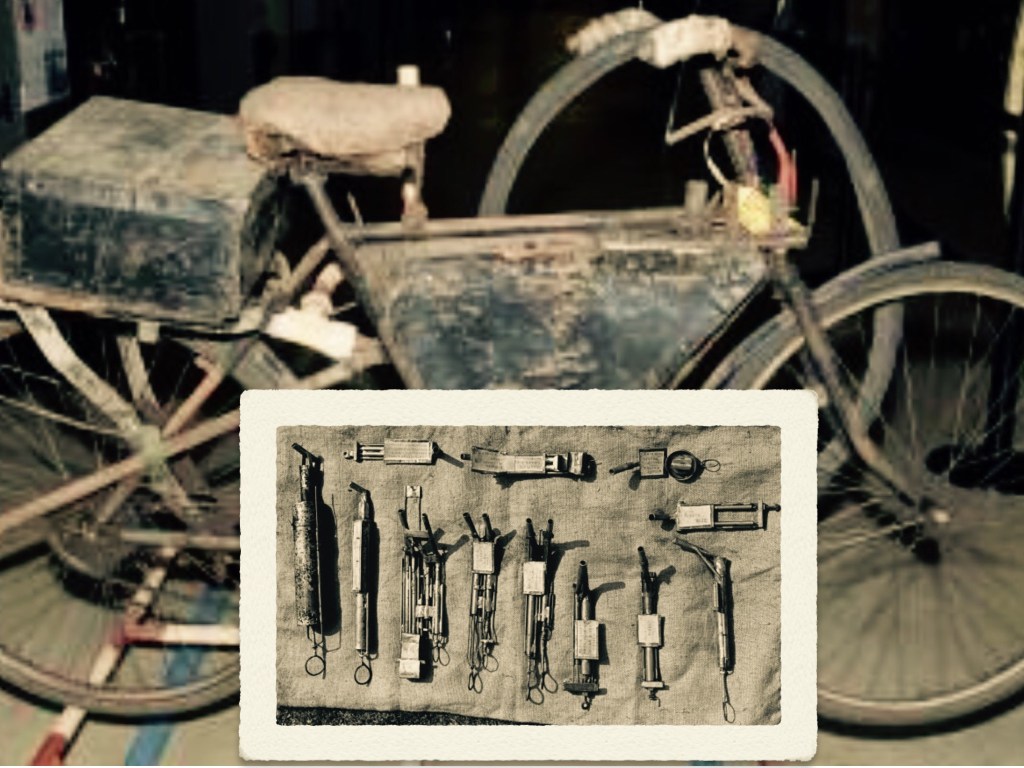
    To the reader: I discovered an eccentric great uncle: the bird man. He was featured in a national display of urban characters known for having an inventive wit related to ‘things’. Uncle Henry Grace, was a bird-listener. He rode the country-side listening to warbles. Fittingly, he then invented his own form of warble-notation to capture distinctive ‘calls of the bush’. Then, he would create tin-whistles that imitated the various cheeps and chirps. A century later they are ‘things’ of interest; curios.

    To the poet: In its first-draft this sonnet began with: ‘Objectification, the stuff of things’… borrowed (I remember) from the more contentious notion of ‘Subjectification, the sport of kings’. Quite a nice beginning, but the rest of the sonnet was hopelessly lost in trivial detail. And so, the long task of re-writing began. A complete upheaval takes some effort. Holding on to the essence, discarding all else … that’s the thing.


    Things of Interest
    Things of Interest
    Picture Source:
    http://trove.nla.gov.au/work/36318721?q=henry+grace+whistles&l-availability=y&l-australian=y&c=picture&versionId=46737536
  • All But Lost

    All But Lost

    Lost objects: misplaced, dropped, or stolen;
    buried; put down through absence of mind
    Lost bravado: diminished, unswollen;
    deflated; rigid support now declined.
    Lost causes: with the best of intentions;
    unfulfilled; promises stalled and delayed.
    Lost rewards: accrue treasured dimensions;
    benefits foregone; with bonus unpaid.
    Lost directions: said purpose gone amiss;
    somewhere becomes nowhere; set poles apart.
    Lost investments: without jackpot or bliss;
    shrewd can be clever; with losses that smart.
    . Lost meanings: in the hand of ancient scribes,
    . Lost cities: gone meandering with tribes.

    © Tim Grace, 3 February 2013


    To the reader: Lost is a location none of us set out to find. Technically, I suppose it’s as much a place as any other. Lost is where the misplaced gather. Lost is a nebulous noun that, through vowel-association, finds its place in the good company of: last, lest, list and lust. It’s origins are from Old English tongues, where it evolved from words associated with perish; as in gone missing.

    To the poet: Being a pedant is not a poetic prerequisite; however, having a creative interest in words is a desirable attribute. Pulling apart, rebuilding and associating the word ‘lost’ sparked my sustained interest. Whether the pursuit and discovery was worthwhile I’m not sure. All things considered, I clarified in my own mind the difference between a lost object and a lost cause.


    All But Lost
    All But Lost
    Picture Source:
    http://youtu.be/_8jzqKNDkgM
  • That Final Breath

    That Final Breath

    Sadly, one certainty of life is death.
    And so, it is for all of us to end.
    Somewhere, there awaits our final breath.
    Inhaled, not for exchange, but to expend.
    This breath, of all breaths, is to be remorsed.
    It’s the breath most wasted and least returned.
    Consumed for the purpose of life’s exhaust;
    of continuation, it’s least concerned.
    Somewhere, then, this final breath sits in wait…
    to be swallowed deep but not ingested.
    This breath has destiny; a half-used fate;
    incomplete, resolute, uncontested.
    . But for one-breath, we have life’s abundance.
    . It’s through this-breath, that we meet redundance.

    © Tim Grace, 3 February 2013


    To the reader: Not breathless, simply exhausted of life. It’s the last breath taken and not returned. Delivers a terminal solution. The act of living is respiration. Recycled air; a generous spirit. Acts of goodness get taken for granted. We begin and end our lives with a gasp. Air is a rich and abundant resource. Not a trivial keep-worthy trinket. Not to be held for longer than needed. Its living purpose is spent and renewed.

    To the poet: In ‘to the reader’ I collected together eleven sentences loosely connected to the topic of breath. Each sentence is ten-syllables long and follows on from the previous; but it’s not poetry. The difference has something to do with a missing thread of consciousness. The thread of poetry is tied by the poet and un-ravelled by the reader; one gives the other receives … together we breathe the spirit of art.


    That Final Breath
    That Final Breath
    Picture Source:
    http://youtu.be/s7HHyAN60qI
  • Best at Dawn

    Best at Dawn

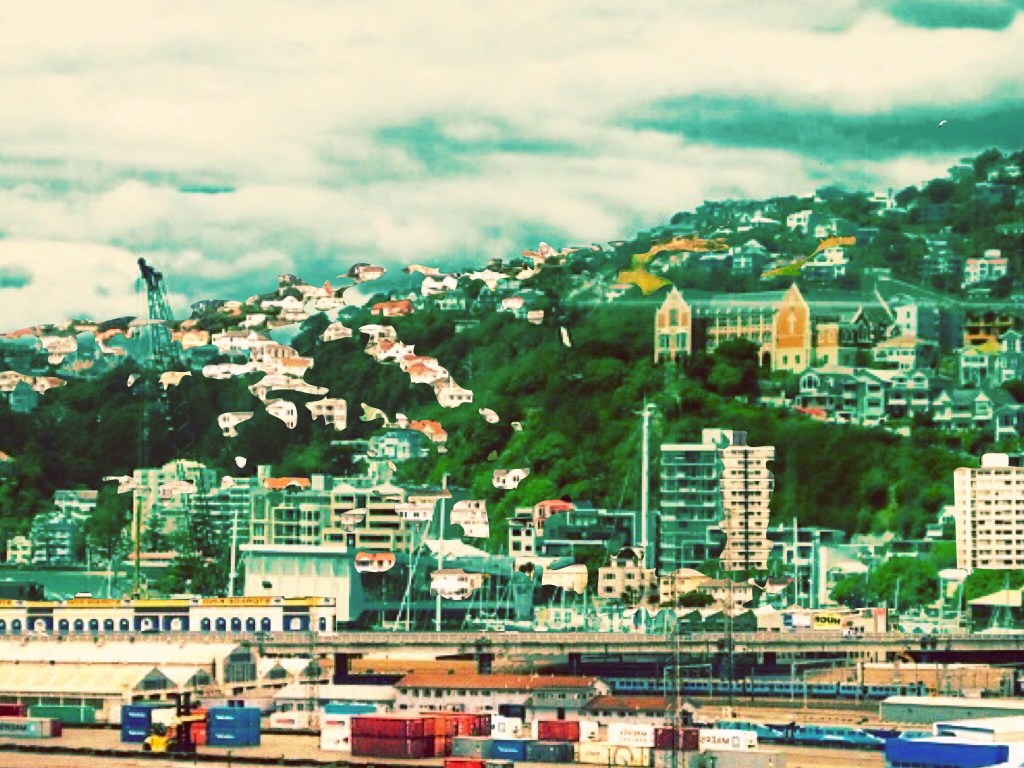
    To a hillside, a crop of houses cling,
    overlook a harbour; a city-port.
    White-washed walls absorb a sunlit morning.
    Train-tracks and traffic underline a thought.
    Birds, gulls and terns, etch the sky with traces
    of a coastal breeze; pelicans are drifting.
    There’s a long wharf with cargo in cases.
    Cranes begin a day of heavy-lifting.
    Yellow bus gives way to a staggered start;
    the zig-zag pattern of a day takes shape.
    A city’s plan runs the way of nature’s art;
    suburban portrait draws a cityscape.
    . From the suburbs a cityscape is drawn;
    . sunshine (as the artist) draws best at dawn.

    © Tim Grace, 21 January 2013


    To the reader: A new day deserves a fresh dawn. The shadows of yesterday cast aside. And so it was in New Zealand when I woke to a brand new vista. The harbour was already abuzz with import/export activity; an intermingling of nature and business trading terms of interests. The hillside-suburbs, slow to wake, were beginning to stir. Life resembling art…

    To the poet: … and who was the artist? The sun. In every respect, this consummate colourist was controlling the medium. The pallet was crisp, not saturated, with cool blues and deep greens. A yellow hue was attending to dark remnants of lingering night. The solid canvas of horizontal swatches became animated with small features of meandering life … drifting, sifting; lifting the day on its way to a zenith noon.


    Best at Dawn
    Best at Dawn
  • Persistent Wind

    Persistent Wind

    A persistent wind, agitating dust;
    careless intruder, unwelcome entry.
    Full of bravado, a blustering gust;
    unsettling a layer of certainty.
    A persistent wind, feeding fuel to fire;
    craving attention and demanding note.
    Temperamental breeze, a funeral pyre;
    no whimsy whistle works as antidote.
    A persistent wind, a buffering blow;
    cuts across the bow and ruffles feathers.
    Strips a tree of foliage and Autumn’s glow;
    this resistant fiend smites all endeavours.
    . An ill-wind, the likes we all must suffer;
    . should be endured with brunt or buffer.

    © Tim Grace, 17 January 2013


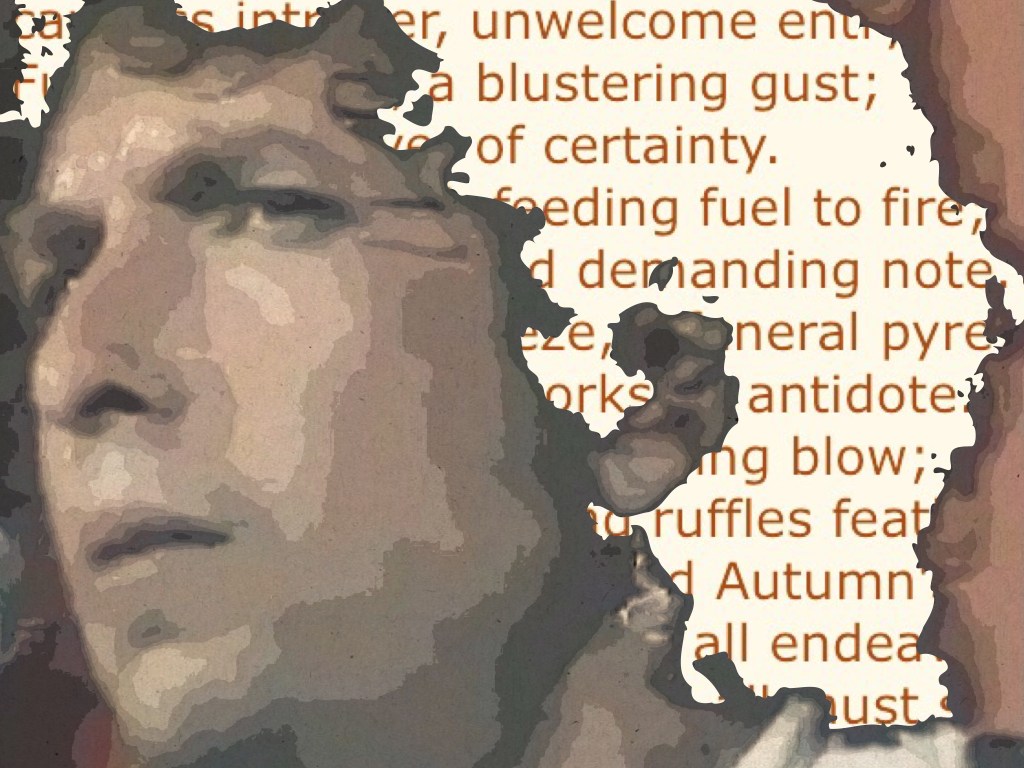
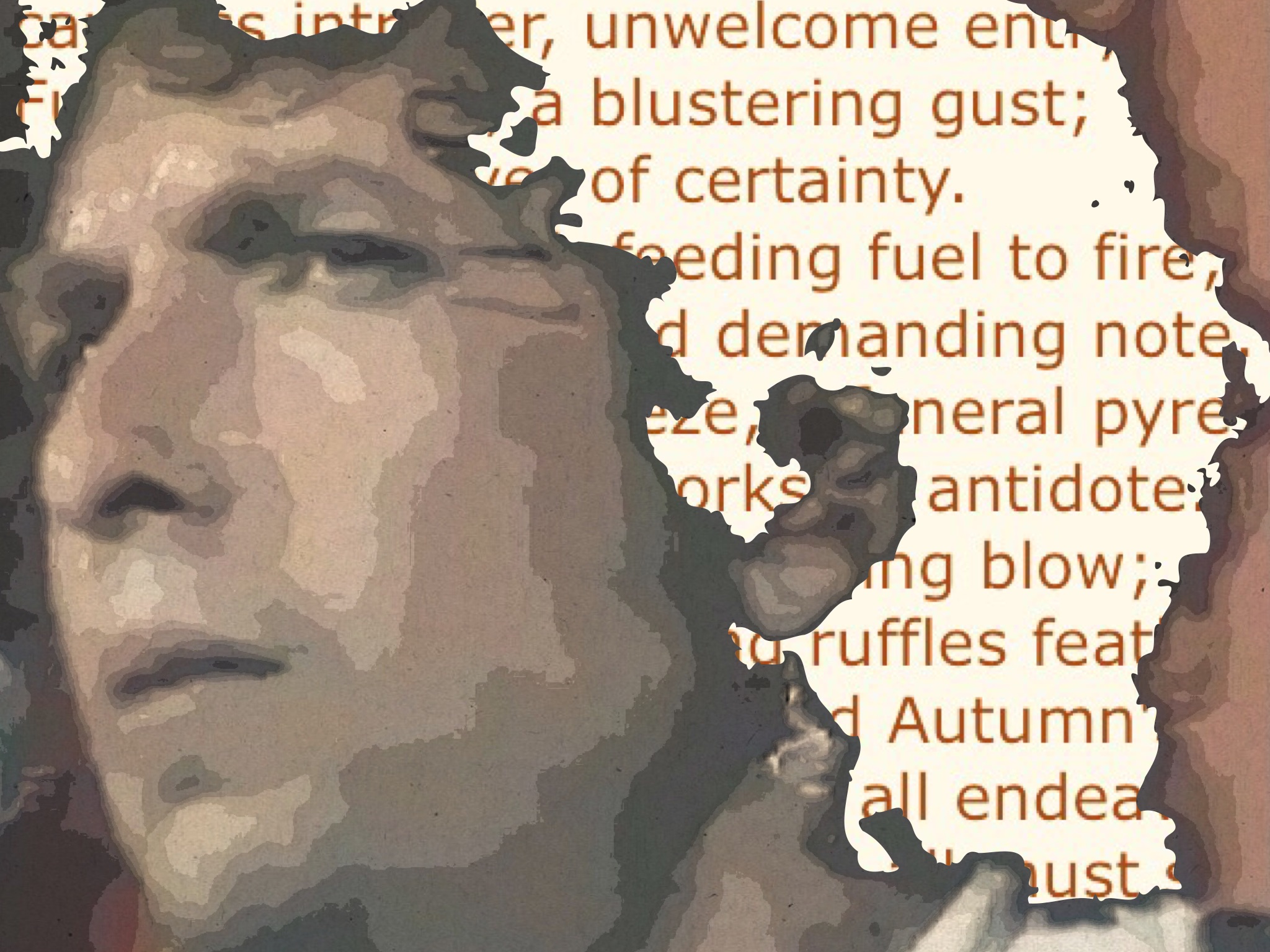
    To the reader: A cutting breeze strips a day of comfort. Each of the senses responds with agitation. In defence, we can either face the challenge or turn our back. To face the challenge requires head-on resistance; a regardless attitude that stiffens to the breeze. Turning-the-back is an obstinate show of defiance. Should we brunt or buffer? Somewhere between passive and aggressive there’s an appropriate response… ‘the answer is blowing in the wind’.

    To the poet: It wasn’t until I began writing ‘to the reader’ that I realised I had written a sonnet describing Bob Dylan… a persistent wind. He arrived in the early 1960s on a gust of rising social awareness; and decades-on, he’s still shaking trees and rustling leaves. Now identified, I re-read the sonnet with the brusk-breeze personified; I have faced the wind.


    Persistent Wind Persistent Wind
    Picture Source:
    http://youtu.be/oqEcFUW9Ai4
  • Today I’m late

    Today I’m late

    Usually, one of the early risers;
    from sun-up, noting texture of the day.
    Mostly ready, for the day’s surprises;
    well-prepared, well-postured, for come what may.
    But today I’m late, I’ve lost advantage;
    just one of many, recently arrived.
    Left to share a script on a crowded stage;
    just one of the collective, so contrived.
    Late… my expansive day has been confined.
    I’m now a post-script that time has stolen;
    an after-thought, yet to be assigned.
    I’m a conscript, a left-over colon.
    . With an early start, you design your day,
    . Leave it too late, and to a script you’ll play.

    © Tim Grace, 1 January 2013


    To the reader: As routine activities become more general they acquire a network of dependencies. My morning routine is like that. It might appear that I’m up early and out the door to do some writing. Not so, it seems. Small changes to parts of my morning mission can torpedo the enterprise. With a small series of delays, I find myself cornered in a crowded café. No words can describe my…

    To the poet: Writing about writing is an introspective task; somewhat therapeutic, slightly poignant. A metacognitive indulgence that’s occasionally excused by a patient reader; one with a forgiving nature. Unpacking this sonnet, reveals its block-like construction. Inevitably, piece-by-piece, the puzzle is connected; rules are followed and so it lazily meets its final couplet… late to arrive at its conclusion.


    Today I'm Late
    Today I’m Late