Tag: Events

  • Dark Lady?

    Dark Lady?

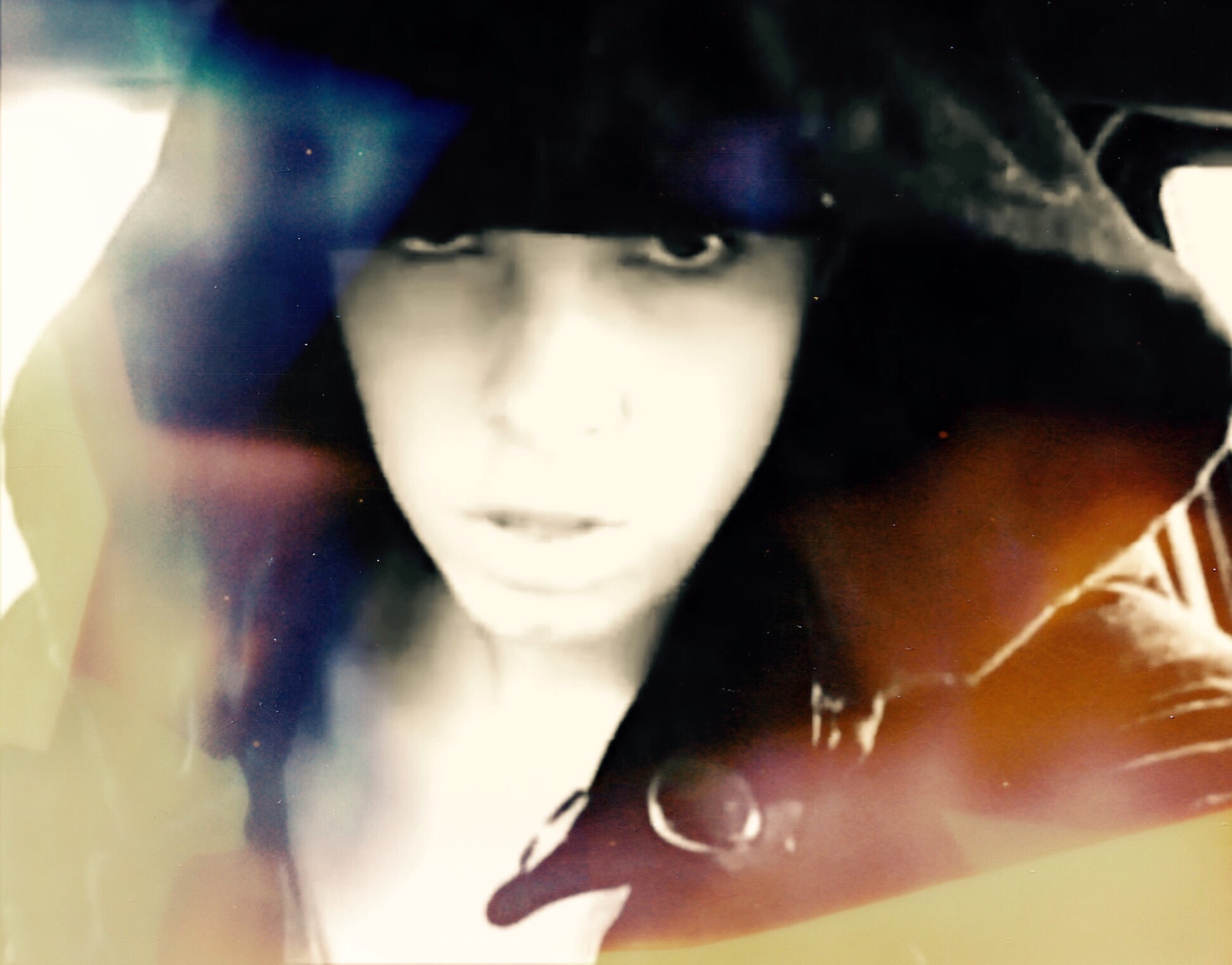
    Is she the dark lady that last night claimed
    she knew the provenance of broken dreams?
    Is she the same woman who last night aimed
    her demons in my direction? It seems
    she holds a deep quarry of dredged-up digs;
    a deep pit of misery; a pack of black cards
    that she plays to her advantage; reneges
    at will… cheats … and then with honour guards
    her dignity; a thin veil of powder;
    a dusting, a coating, sheer nonsense;
    more transparent as the voice gets louder:
    more desperate, more dismal, more dark and dense.
    . Who is this lady that delights in black?
    . What shady memories does she welcome back?

    Tim Grace, 23 December 2011


    To the reader: Temper fuelled rage is an ugly and primitive demeanour that rises from the brain’s deeper recesses. For most of us we learn to control that ‘cantankerous monster’ as we outgrow the deployment of two-year old tantrums. For some, that taming was not so complete; producing an unpredictable and cranky adult temperament. In the grown-up world, there’s a social contract that demands a rational mind. Keeping an ‘even keel’ through stormy weather is not easy. Managing frustration and torment without resorting to anger is a prized habit of mind; well worth the effort in the preservation of long-lasting relationships.

    To the poet: The angry tirade, often delivered in a single passage of free-flowing vitriol, is intended to over-ride the calm response. Throughout an angry exchange the tarry is designed to be quick and the verbal blows are short and sharp. The aggressor in an angry exchange will escalate the intensity… their ploy is to attack not defend. Any attempt to de-escalate will meet with hostility. This sonnet is bookmarked by two sets of questions… the answer lies within.


    dark lady? dark lady?

    Picture Source: http://youtu.be/0sqMBOjrUeg
     

  • Christmas Bells

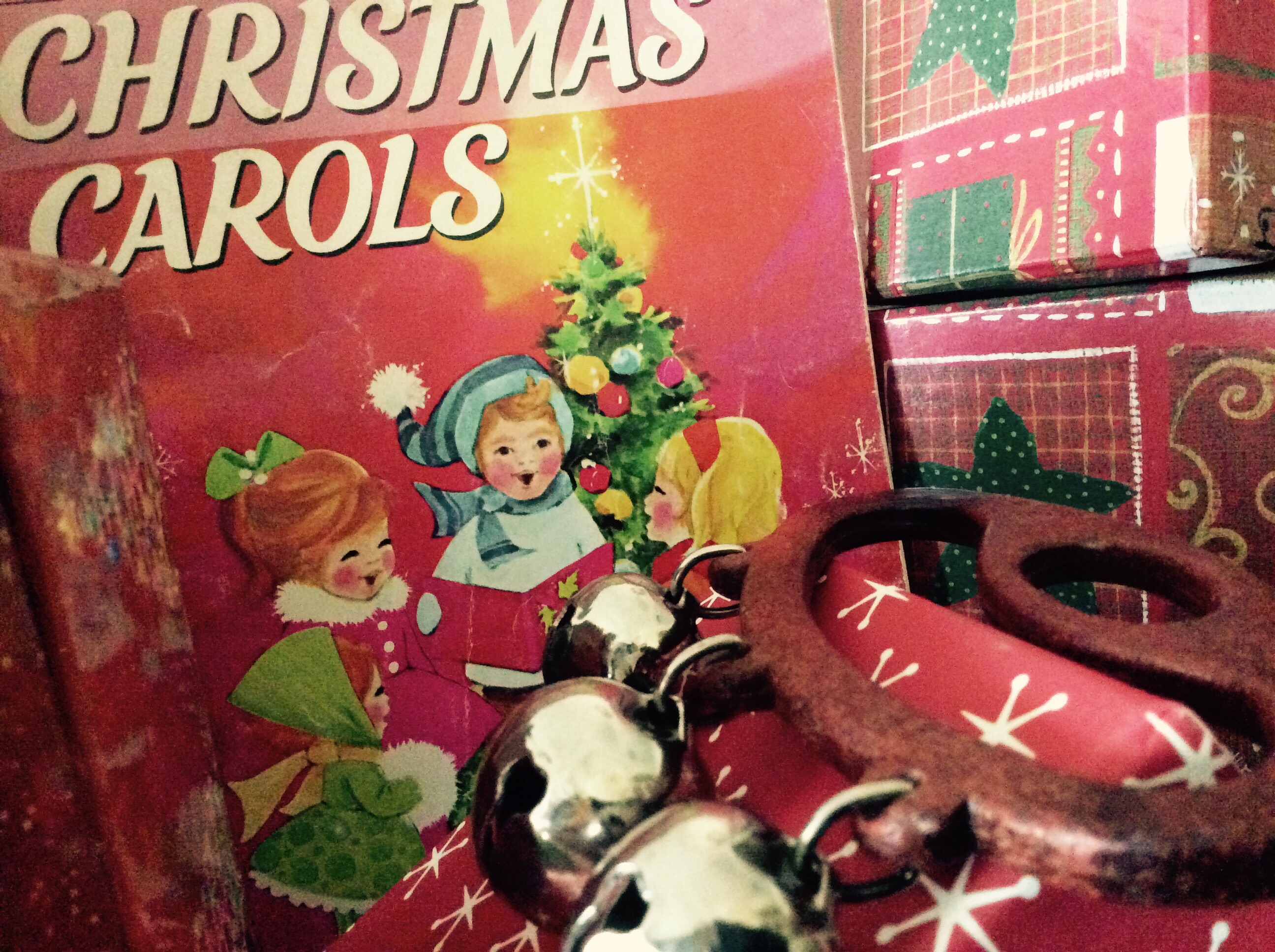
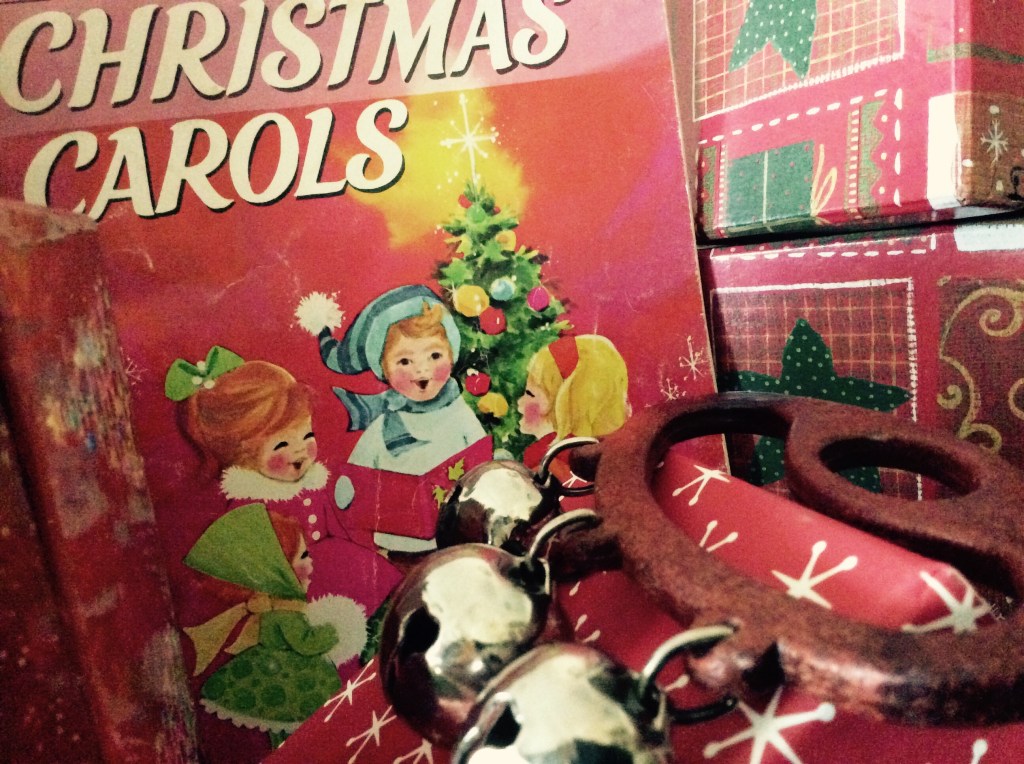
    Christmas Bells

    It’s not for Christmas bells to gong or clang;
    it’s not for them to peal a raucous ding.
    Much better they’d be given space to hang;
    above December’s list of songs to sing.
    Much better they’d be, not to steal the rhyme;
    not to pound the tune with a cymbal’s clash.
    Much better they’d be, with a subtle chime;
    it’s not for them to sound too bold or brash.
    It’s not for Christmas bells to pull on rope;
    nor assume the role of prima donna.
    Much better they’d be, spreading festive hope;
    Lifting spirits is their role of honour.
    . The sound of Christmas is a jingling bell.
    . It’s the gift of Christmas that does us well.

    Tim Grace, 14 December 2011


    To the reader: The merry sound of Christmas is a small cluster of jingling bells. For the festive season we can put aside the strident trumpets and the pounding drums; preferring jingling bells as soft accompaniment to a chorus of carols. The nativity scene is at peace with bells-a-jingling. Bells are responsive instruments that react to the slightest movement with a tinkling trill. Their volume nicely equates to their quantity; the more the merrier!

    To the poet: This sonnet is harmless, hopefully not charmless, in delivering a festive message. Christmas carols rise to a crescendo and then fall out of favour; as with seasonal fruit, we gorge and then reject. Carols, and likewise this sonnet, are often overcome with a lightweight message that requires technical assistance for rescue. Strained merriment is hardly convincing.


    christmas bells christmas bells
  • Reason’s Reference

    Reason’s Reference

    For millennia we have scribed our thoughts;
    put pen to paper and as such preserved
    all manner of inspiration… all sorts
    of wonder. So conscripted, we’ve conserved
    in good faith the font of reason’s reference.
    Forever more attached, writ and listed:
    sentenced, word-by-word, the very essence
    of a flourish: styled but never twisted.
    Written as to permeate our culture,
    bold-stroked messages indelibly inked
    to imitate form, or shape a future
    world; built upon words, most beautifully linked.
    . It’s the cursive script of pen or quill,
    . that reveals the hand of a writer’s will.

    Tim Grace, 14 December 2011


    To the reader: I was wondering… were the Egyptians able to turn a poetic phrase in hieroglyphic form? In search of an answer, I stumbled on the ‘Lettrist Movement’ led by Isidore Isou; post the second world war. Lettrism’s Manifesto rallied against the atomised letter and the destructive power of the word. Far from enabling freedom of thought, lettrists perceived letters and words as insidious links in a constricting chain; manipulated by the literati. According to Lettrism, the hieroglyph does less damage in transporting and translating an experience across a thoughtful medium such as poetry. I’m still wondering…

    To the poet: Letterism aside, preservation of a word-based poem requires a script that will authentically transport a message through time and space; so that some time later… the distant reader can retrieve their own uniquely crafted assembly of ideas. In scripting a poem, the skill is in the crafted management of its future impact on the reader. Used too functionally, too literally, the script can lack fertile nuance and starve the text of ambiguous translation; for at the heart of reading and writing poetry is creative interpretation.


    reason's reference
    reason’s reference


  • Motive Bound

    Motive Bound

    The mathematician talks of flocking:
    the collective assemblage of like forms;
    to do with central tendencies, stocking
    efficiencies (see the way the bee swarms).
    It’s all about clustering formations,
    and the non-random shape of a system.
    It’s all about patterns and representations,
    and how nature does its best to twist them
    into combinations of advantage.
    The V-shape of Canadian geese,
    the shuffling of penguins, edge-to-edge;
    best use of energy and fuel’s release.
    . It’s through use …  a solution’s shape is found.
    . Nature’s cleverness is to motive bound.

    Copyright, Tim Grace, 6 December 2011


    To the reader: Patterns form to establish efficient relationships. A functional pattern of behaviour will serve some purpose and deliver some benefit. It will be useful and convenient; at best, powerful and protective. Geese do the power-flock to conserve individual energy in flight. Penguins perform the protective-flock as they shuffle to insulate the pack from cold. The interesting thing about flocking is that it’s a collective intelligence constructed through the system for individual benefit. Belonging is a self-serving commitment to and for the common good.

    To the poet: Playing with a natural phenomenon is an interesting poetic exercise. Usually, the idea will be sparked by a snippet of science that reveals a curious insight. A little research is essential and useful in delivering a glossary of terms. As with the ‘flocking’ theme, it’s often the case that the idea will have already gained public interest and momentum as a talking point. A poet’s work is to play with ideas, to express them creatively; in memorable shape and form.


    image


  • Novel Opportunities

    Novel Opportunities

    Favourable conditions affording new
    and novel opportunities to grow
    the market, to expand upon the view;
    Horizons!!! – here today gone tomorrow.
    Windows that open up to the sky, to all
    prepared to venture forth, to ride the wave
    towards new shores; prepared to rise and fall
    along with the fool-hardy and the brave.
    See that which is old become new again:
    re-released, re-branded, given new guise;
    to be let loose on green pastures; fed then
    on eternal hope, to await the prize.
    . Now is the time of opportunity.
    . Beyond now … there is no certainty.

    Tim Grace, 6 December 2011


    To the reader: Nothing ventured, nothing gained… a fool and his money are easily parted. The idea of investing in tomorrow assumes a favourable future. But common-sense tells us the future is an uncertain opportunity. Its attachment to now is fragile and with time quickly adjusts to new and unpredictable circumstances. The further from now that we invest the higher is our risk, the greater is our reward. Those that play the market need to know the rules and accept the consequences.

    To the poet: This sonnet has a complex structure that leans heavily on syntax to carry its semantics. I had attended an investment seminar and been barraged with financial jargon; way beyond my understanding. The investment industry, like any other, has a deep meta-language that translates poorly into laymen terms. As a skater, I picked up the message, guessed at its meaning… and wrote a poem! These are my notes…


    image

  • Common Threads

    Common Threads

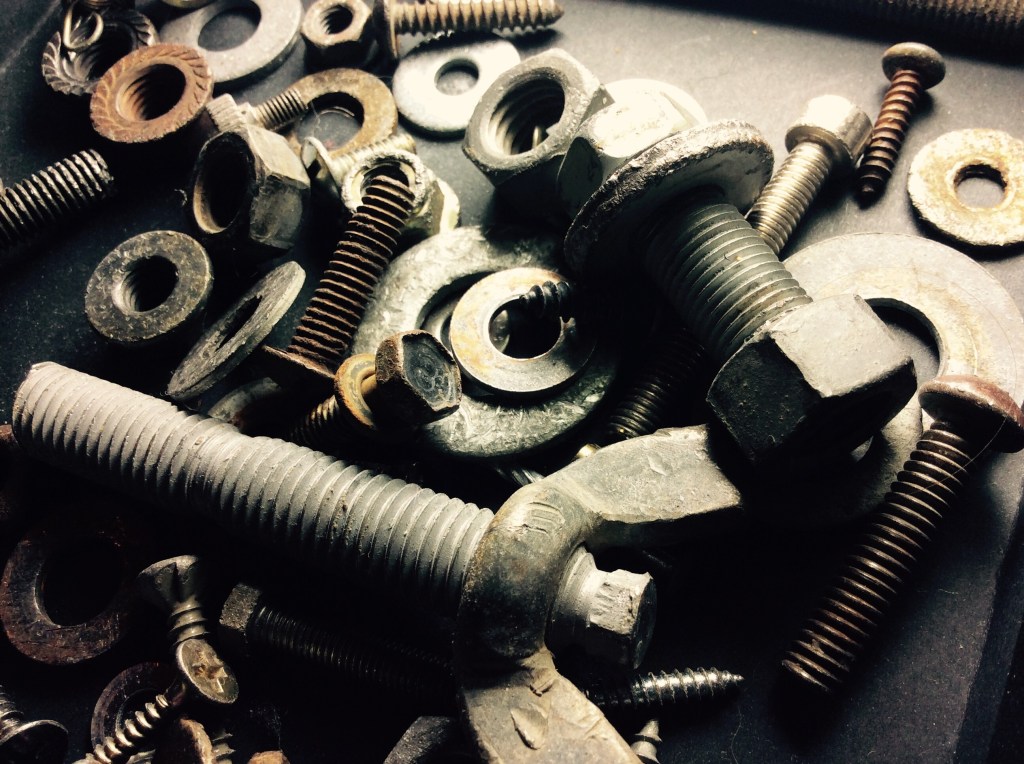
    I collect nuts and bolts by the roadside,
    it’s an odd assortment of random finds.
    Some are obvious and easily spied:
    they are those that shine before the rust binds
    itself to their surface. New to the road
    they have not nestled into hidden nooks,
    nor taken the hit of a heavy load,
    they retain the shape of their fresh made looks;
    in every sense new to my collection.
    As alluvial pickings they hold
    the shimmer and shine of self-selection;
    unweathered, yet to have their history told.
    . So, what of this collection can be said?
    . Nothing more true… than its a common thread.

    Tim Grace, 29 November 2011


    To the reader: Late 2011, I was seeking more from work than work could offer. Tedium was broken with a break for lunch that included a walk around the neighbouring streets. Always the tinkerer, I have an eye for nuts and bolts and this led to a surprisingly large, and quickly accrued, collection of threaded metal. An odd amusement but easily construed as metaphor: the world unwinds as road spill.

    To the poet: Hardly a great poem, but then again, it actually describes a very real and raw time in my working career; when the most stimulating part of the day was a lunchtime walk. Each piece of road-spill is a poem in itself. The shiny collectables are obvious and attractive, but as in this poem it’s through them we describe the true character of a common thread; toughened steel.


    common threads common threads