Tag: Events

  • Heavy Handed

    Heavy Handed

    A blunt instrument has its rationale:
    simple and direct; an obvious choice.
    It’s the wham-bam … SLAM … solution with snarl;
    the “said and done” answer in active voice.
    The mallet has enough nudge to persuade
    a shift of placement; when handled with care.
    The club, a more aggressive tool of trade
    is nonetheless useful for crude repair.
    “Bigger the problem, bigger the clammer!”
    In many respects I suppose that’s true;
    Justifies a heavy-handed hammer:
    “Nail down the batten that won’t take a screw.”
    . In the best of hammers there’s a sweet spot,
    . a point at which cold steel becomes red hot.

    © Tim Grace, 6 May 2012


    To the reader: For my tenth birthday I was given a real tool box; an initiation gift of sorts. The hammer made particular impact. As a step-up from previous toys, this hammer expressed itself with style and performed with precision. The frustration of ‘bash and split’ was soon replaced by an understanding of ‘propper’ nailing and nudging. A good hammer knows its own strength, but prefers to act with gentle and judicious persuasion.

    To the poet: ‘Heavy Handed’ seems appropriate in titling this sonnet. In woodwork terms, the nail bent, the hammer slipped, the wood split; and the thumb bruised. The joinery is clumsy. Nailing down a poem does require a convincing script; but the degree of persuasion should not be visible in the final product. In this sonnet, the finish includes far too many construction issues; its faults are on full display… apologies from a bashful poet.


    Heavy Handed Heavy Handed
    Picture Source:
    http://youtu.be/sSqyqj58i8M


  • A Fallen Thought

    A Fallen Thought

    I have swept the path of last Summer’s leaves;
    it’s late April, so prepare the parade.
    Salute the fallen; sombre Autumn heaves
    a sigh; recalls the cover of green shade.
    Now, on my shoulder rests a golden leaf.
    What am I to do? Brush it to the ground?
    How do I interpret this small motif:
    as commemorative fall; from tree unbound?
    Between my shoulder and the ground there’s space,
    just enough space, to think about good cause.
    There’s time, just enough time, to put in place
    a thought… a moment for reflective pause.
    . In fluttering leaves there’s a story told,
    . it’s a narrative, that turns green to gold.

    © Tim Grace, 23 April 2012


    To the reader: In temperate Australia, the autumnal month of April is adorned with commemorative symbolism. The imagery includes bravery and mateship woven into wreathes of green and gold. As the leaves of Summer flutter softly to the ground, there’s a sombre passage of reflection; space and time to remember the fallen before winter turns the foliage to mush. Those who fought for peace, now rest in peace… lest we forget.

    To the poet: A nice sonnet that turns a small personal incident into something more socially significant; and that’s the point of poetry. Through the obvious we discover truth; between gaps we discover opportunity; from now we interpret the moment – but only if we take notice. As poets, we need to observe what is and isn’t happening; for between these occurrences speaks possibility… through the poet’s eye we imagine the universe.


    A Fallen Thought
    A Fallen Thought
    Picture Sources:
    1. http://youtu.be/E56YcMbnCO4
    2. http://youtu.be/eY3ASysJfCQ


  • He Left

    He Left

    He came, he went, he left her with the baby.
    Then (as though hardly-done) he moped his lot.
    The burden of self-pity said: “save me,
    I am lost – stripped of cause and future plot”.
    And what of the mother with child in arms?
    In receipt of half the chattels, just things
    stuffed in a bag: no niceties, no charms.
    A bag full of feathers, nothing like wings.
    Who knows what the child was thinking. He smiled
    from beneath an Easter bonnet; no blame,
    no shame; a child’s forgiveness reconciled
    to bear the burden of his parents’ frame.
    . Children – forgive them for they do not know;
    . forsaken of the gifts that you bestow.

    © Tim Grace, 21 April 2012


    To the reader: It had obviously been a long day of angry disputation. This was the moment of uncoupling. A dreadful determination to unpack the family. She had taken their child to a family restaurant and was awaiting the father’s arrival. He arrived with a plastic bag of bare essentials. With remnants exchanged, the child (from beneath an Easter Bonnet) glanced between the two… later … the father sat alone; weeping in a pool of self-pity.

    To the poet: The second of two sonnets that reference arrival and departure. “He came, he went” with no conclusion. His legacies include an onerous gift in wrappings of self-pity. And so it is we often feel confused and bereft… the victims of choice. The April message of Father and Son was an influence on both sonnets. But neither makes extended reference to Easter; just enough to draw upon its key themes of forsaken and forgiven love.


    He Left He Left
    Picture Source:
    http://youtu.be/5sOqy_A01Kw


  • Free Will

    Free Will

    He came, he went, left me none the wiser.
    More or less, it seems, this was his intent.
    I am, through him, left the improviser.
    It’s mine: mine to wonder, mine to invent,
    mine to discover; with free-will to dream.
    I am, myself, an independent soul.
    And so it was. He left me here to redeem
    from his departure – that gift – a morsel
    of truth so simple, so perfect, so brief;
    and yet so difficult to comprehend.
    I am free to doubt and state disbelief:
    to question his way to my journey’s end.
    . This then is the gift of my father’s breath,
    . I need no longer fear the time of death.

    © Tim Grace, 8 April 2012
    (Revised: 20 August 2023)


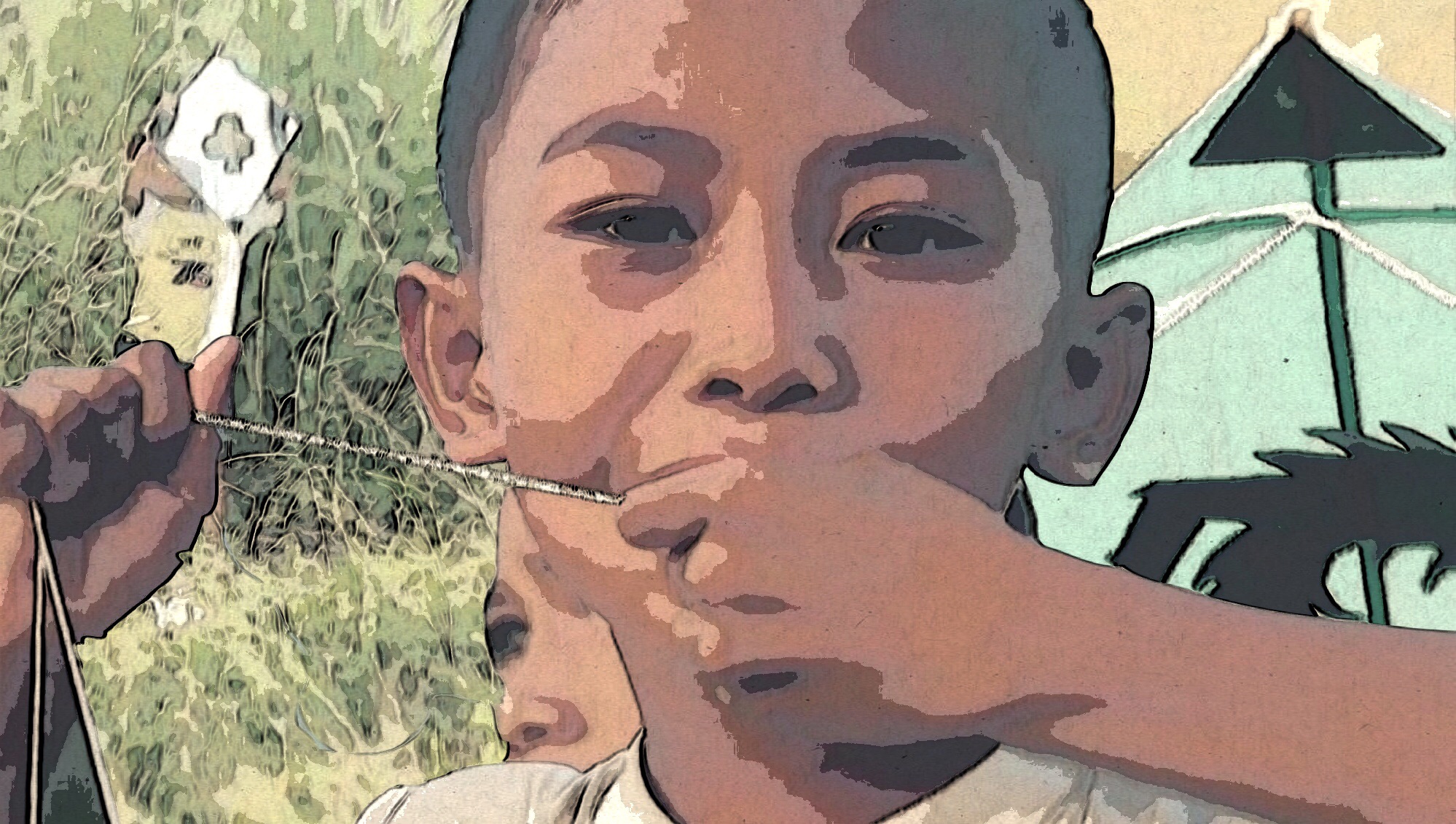
    To the reader: The perfect gift is free-will. What a clever deception. It’s like a kite; useless without string. Hand a child a beautiful kite and after days of frustration he or she will soon ask for the attachment. Upon receiving the greatest gift of all we are burdened with responsibility; we are chained to free-will’s insatiable curiosity; indebted to its reciprocal loop of expectation. The moral burden of free-will is unforgiving; ultimately, I must account for my transgressions … for the choice was mine.

    To the poet: A bundle of tangled thoughts about parenting and the delegation of authority through moral expectation. Religious overtones abound… capitalise the ‘H’ in ‘he’ and you have a sermon; without, it’s a son’s contemplation of his father’s developmental influences: distantly demanding, vaguely judgemental and omnipotently present… your choice; but have you thought about the consequences and can you afford the cost? They are yours alone to bear.


    free will Free Will
    Picture Source:
    http://youtu.be/jOXyvo2ID_o


  • Angling

    Angling

    All I did was drop a line, nothing more
    than simply give you cause to contemplate.
    It was not my chin that dropped, not my jaw
    that took umbrage; not me who bit the bait.
    You could have let it go, let it dangle.
    Instead, you gave it a tug, you tested
    the line; turned what was slack into tangle.
    It was you who floundered, then protested.
    Nonetheless, you did nothing to resist
    it’s ascorbic tang; and so, there you hang,
    dangling from a string of words, a long list
    of ponderings that promulgated pang.
    . What lures fish from the safety of rocks?
    . It’s the slightly plausible paradox.

    © Tim Grace, 21 January 2012


    To the reader: It doesn’t take much to create a fuss over a line of words. Retracting that string of thought is difficult; it gets snagged so easily. On a good day a contentious thought might be openly aired; on a bad day it becomes a most enticing deep-water bait. As it sinks a small school of fish nibbles its edges; but then, along comes a shark with far bigger intentions. Discretion being the better part of valour decrees the warranted loss of hook, line and sinker… one should never angle for a fight.

    To the poet: This sonnet did follow an argument over the previous sonnet regarding silos. Why two people would choose to angrily debate the virtues of a silo I don’t know. Nonetheless, it spawned a good piece of purgative poetry. The poem has some satisfying sub-elements that I enjoyed merging into its deeper layers of construction; for later in depth analysis.


    angling Angling
    Picture Source: http://youtu.be/rG1xOUIykhY


  • One More

    One More

    One more than many. One amongst the crowd.
    Of all amassed, of all assembled,
    you are the one of all who’s most endowed
    with the touch of difference; unresembled:
    uncopied, unmatched, unequalled; unique.
    You are the diamond in a crown of jewels.
    You are the highest mount; a lover’s peak.
    You are the exception that breaks all rules.
    You are the singular presence, where dwells
    perfection, where at one point all things meet.
    Within you perfect love is made, where swells
    affection; through your oneness all things complete.
    . At one with love you have tamed love’s thunder,
    . you have brought to heel cupid’s brand of wonder.

    © Tim Grace, 10 February 2012


    To the reader: Being the chosen one is flattering. It’s nice to be given attention; to be drawn out of the crowd as something special. But quite a perverse honour if you’re an admirer’s anonymous obsession. More so, if you are the one that through compare is beyond compare. Do you actually exist, or are you an imagined tool that consummates desire? Is the relationship unrequited? No matter, the infatuation delivers a brand of private climax. (WS – Sonnet 154)

    To the poet: Depending on emphasis, the meaning of “one more lovely” is quite different to “one more lover”. And there’s the invitation to play with words. In both senses the expressions are literal but have a figurative overlay that creates room for interpretation. So “one more – than many” can be a numerical statement offering infinite potential. Or, “one – more than many” can be a flattering statement offering distinction beyond the norm. Both interpretations are at one with my “one more” intent … (TG – Sonnet 155)


    image