Tag: Events

  • Tangled Remnants

    Tangled Remnants

    Where once a solid form existed,
    There’s nothing left but shard,
    Tangled remnants, split and twisted,
    Tossed without regard.
    Earth ripped and roughly gashed,
    Features stripped and shattered,
    Levees broken, structures smashed,
    Strewn about and scattered,
    And in amongst this mangled mess,
    There stands a man forlorn,
    Too numb to feel distress,
    Too tired to weep or mourn,
    . At crisis points, when faith is shaken,
    . It’s then, when man feels most forsaken

    © Tim Grace, 18 March 2011


    To the reader: Natural disasters tally-up a cruel toll. Impacts are deep and far-reaching. Headlines describe upheaval, deluge and inundation. Apart from individual trauma, social rupture compounds the devastation into widespread despondency. Forlorn despair grips tight; testing humanity’s collective will and resilience. Fortitude offers repair… but that takes time to accept; first comes loss and grief.

    To the poet: Piecing together a poem from fractured snippets of human misery is a delicate process. The depth of emotional content delivers a glossary of hackneyed headlines. As poet, with vicarious voice, one can reference common parlance and translate trite commentary but not without the risk of superficial opportunism. Take care, disaster awaits the thoughtless.


    tangled remnants tangled remnants
     

  • One Truth Remains

    One Truth Remains

    What we know can be deceptive,
    Exact, but not complete.
    It’s the fool who is receptive,
    To the charlatan and cheat.
    The truth is far more subtle,
    And difficult to grasp.
    It’s open to rebuttal,
    It’s the bastard of a rasp.
    What’s real through comprehension,
    (as absurd or somewhat strange)
    Is worthy of a mention…
    But sensitive to change.
    . Throughout our lives one truth remains,
    . Wisdom thrives where confusion reigns.

    © Tim Grace, 23 February 2011


    To the reader: Lack of knowledge begets assumption. Doubt accommodates the leap of faith, the jumping to conclusion; the guess. It also makes room for curiosity and wonder. For better or worse doubt provides a vacant opportunity. The cheat makes good use of doubt by cleverly distorting what seems to be a plausible reality. The charlatan, a cheat on steroids, makes vacancy a marketplace for the gullible; more fool us.

    To the poet: Although written in three quatrains, this sonnet for the most part reads well in double-lined sentences. The even lines tend to echo the sentiment of the preceding odd-line. With this odd/even progression the poem builds its logical form and structure. Treating the two lines as a single sentence reduces the number of free standing elements and tightens the message; through fewer inserted thoughts.


    one truth remains one truth remains


  • Be … His…

    Be … His…

    Be soothed, mellow is his voice,
    Take comfort, pleasant is his tone,
    Be secured, anchored to his choice,
    Take steps towards his zone,
    Be open to suggestions,
    Give permission to his means,
    Be prone to his impressions,
    Give way to setting scenes,
    Be willing, under his cajole,
    Rest aside reason and debate,
    Be content, consent to his control,
    Rest easy, in this deeply altered state.
    . He has you in a sleep-filled trance,
    . Exposed … to his control of circumstance.

    © Tim Grace, 21 February 2011


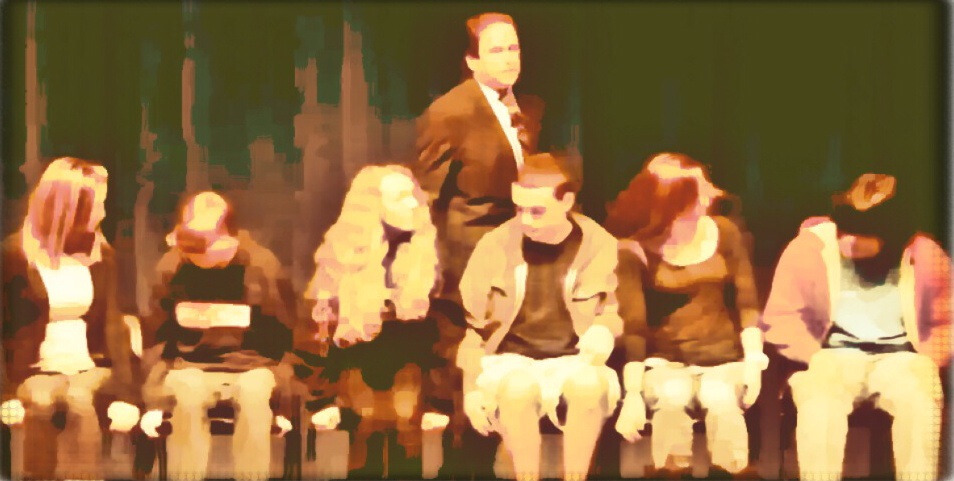
    To the reader: Being a hypnotist’s dummy, I imagine, requires nerve. The value of surrender, I suspect, warrants the investment. Being susceptible to another’s authority has me fearful of exposure and embarrassment. As an onlooker, I enjoy the theatre of comic hypnotism. The dramatic elements of powerless submission are bewildering; and often amusing. There seems to be no battle, resistance is futile; but only for those who choose it so… quite strange!

    To the poet: Wooden boxes can be made using all manner of decorative joints. Function is a necessary factor, but aesthetics delivers the essential ornamental purpose. The same is so for this poem which in a functional sense communicates an idea; nothing too important. Over function, of more interest is its shape and pattern. The pairing of lines is emphasised at front and end, the quatrains are internally repetitive and the rhyming is simple; all to good effect.


    Be ... His ... Be … His …


  • Streamlined

    Streamlined

    Those who struggle can not swim,
    They meet their own resistance,
    Suffer they from heavy limb,
    That will not last the distance.
    Those who swim in part submerged,
    With half their heart committed,
    They tire soon, as poorly served,
    By shallow breaths acquitted.
    Those who swim with buoyant ease,
    They suffer not fatigue,
    They ride the water’s gentle squeeze,
    And thus they swim in league.
    . Lapse not in to heavy thinking,
    . Burdened … to the point of sinking.

    © Tim Grace, 20 February 2011


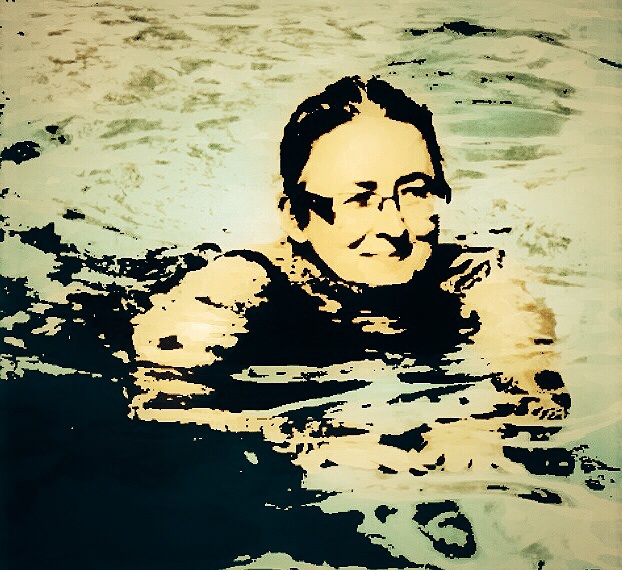
    To the reader: The art of swimming. Going with the flow. Immersed in a liquid moment. At one with your surroundings. If you watch the experts, the trick seems to be a combination of style and technique; together, delivering a confident stamina. Swift buoyancy. There is no struggle. A great swimmer gives more meaning to ‘stroke’ than any dictionary could offer.

    To the poet: Loose in its sonnet structure this poem divides into three verse-like quatrains. As with lanes in a pool the quatrains mark out meaning. In this case, the first two sets of four define the struggle of a non-swimmer in competition with water. The next four lines refer to the swimmer in league with water. Natural swimmers work in partnership with water, they are fluid and streamlined; poetry in motion.


    streamlined streamlined


  • Four Strings

    Four Strings

    To the strains of a string quartet,
    The classics claim the night,
    With four strings and not one fret,
    The chords are sheer delight.
    Feel the warmth of Vivaldi’s Spring,
    The late harvest, reaping scores,
    The crescendo, hanging on a string,
    The fertile note, the pregnant pause,
    Brahm’s in accompaniment, mellow,
    As the sound of water over stones,
    To finish (with yiddish temperament) the cello,
    Draws a long bow; in sombre tones.
    . The living sounds are beautifully matched,
    . They often come with strings attached.

    © Tim Grace, 18 February 2011


    To the reader: The soft sounds of a string quartet float with reassurance; buoyant. The four piece band with full emphasis on melodic harmonies; tuneful. The result, a beautifully balanced accompaniment to a night on the rolling waves; far from all at sea. Nervous introductions, delivered in broken English, were translated into masterful renditions of music’s classical best.

    To the poet: Nothing like being there. Nonetheless, a good poem extends the moment; outlasts the experience and aids retrieval. Ditties, like snapshots or snippets, are framed with little purpose beyond a statement of ‘I was here…”. Through deeper recollection, the experience can’t be surpassed, magnified or replicated; it can be synthesised. The poem, for just a moment, can make sense of all things at once.


    four strings four strings


  • With Due Regard

    With Due Regard

    As much as work describes me,
    I resist its total claim,
    It’s one book in the library,
    With others in the frame.
    It’s not that I resent my work,
    Or treat it with disdain,
    I do my best, try not to shirk,
    I tolerate its strain.
    The daily grind, I grin and bare,
    There’s value in its fibre,
    But I keep in mind, that without care,
    I’m swallowed by this tiger.
    . With due regard and balanced ration,
    . Labor hard and toil with passion.

    © Tim Grace, 14 February 2011


    To the reader: Time off work, an extended break, triggers the benefits of rest and reveals another side of me. The weight of expectation lifts, the daily grind softens, and the pace of life eases. How much of myself is defined by me at work; not at rest or play. Me at my most industrious; that busy highly driven self, is that the best of me. The non-working part of me is just as creative, just as inspirational but so rarely applied as my description.

    To the poet: An investigation of self. A matter of I-dentification. How much ‘I’ will a reader tolerate. A poet is responsible for sharing ‘I’ statements that can be generalised. To extract any mention of self from a poem constructs an aloof voice Too much introspection reads like self-indulgent therapy. At some point there’ll be a happy ‘me’dium.


    due regard due regard