Tag: english

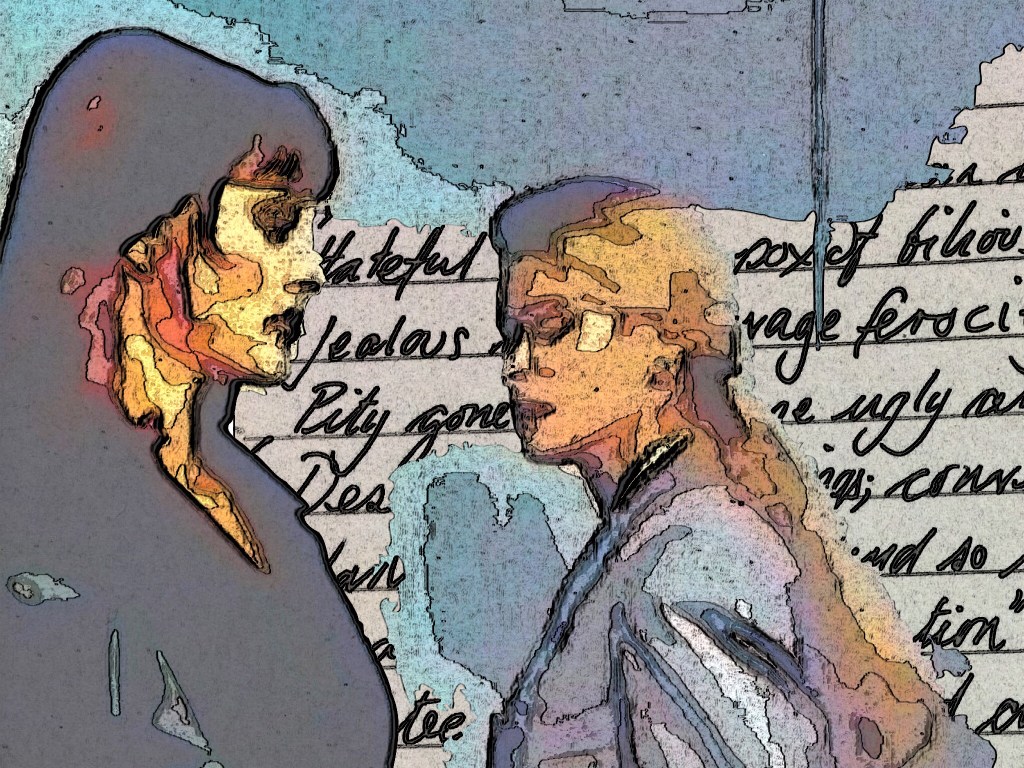
  • Animosity

    Animosity

    No curse more worse than animosity.
    Hateful envy, a pox of bilious bile,
    jealous anger, savage ferocity,
    pity gone putrid, ugly and vile.
    Desires become cravings; converted
    wants become needs; crudely, love becomes lust;
    good things strangled, hopelessly perverted…
    so steel turns to rust, and diamonds to dust.
    Animosity will foul its own nest:
    over-paint a masterpiece, self-corrupt
    the elegance of beauty crudely dressed.
    The curse of animosity – one-upped!
    . The success of others (not yours to own)
    . If not resolved, will turn a heart to stone.

    © Tim Grace, 22 December 2012


    To the reader: Animosity is a stifling energy. Characteristically, it’s an emotional state that directs spiteful anger at a rival who has gained a perceived ‘unfair advantage’ in the relationship. From small issues problems fester and spiral out of all proportion. Resolution is unlikely to occur without some helpful intervention that manages to recalibrate the tension. Animosity is more often quelled than it is quashed.

    To the poet: A sonnet that taps into raw-emotion needs to anchor its rancour hard and fast. There’s little room to escalate slowly. The first line: “no curse more worse than animosity” unravels the expose; and the avalanche torrents forth. In a poem like this, the rush of verbiage is propelled on the back of poetic ploys that are easily translated into expected rhythms and solid rhymes; given a liberal dose of assonance, consonance and alliteration.


    Animosity
    Animosity
    Picture Source:
    http://youtu.be/sTxBOzjxDn4
  • Desk Message

    Desk Message

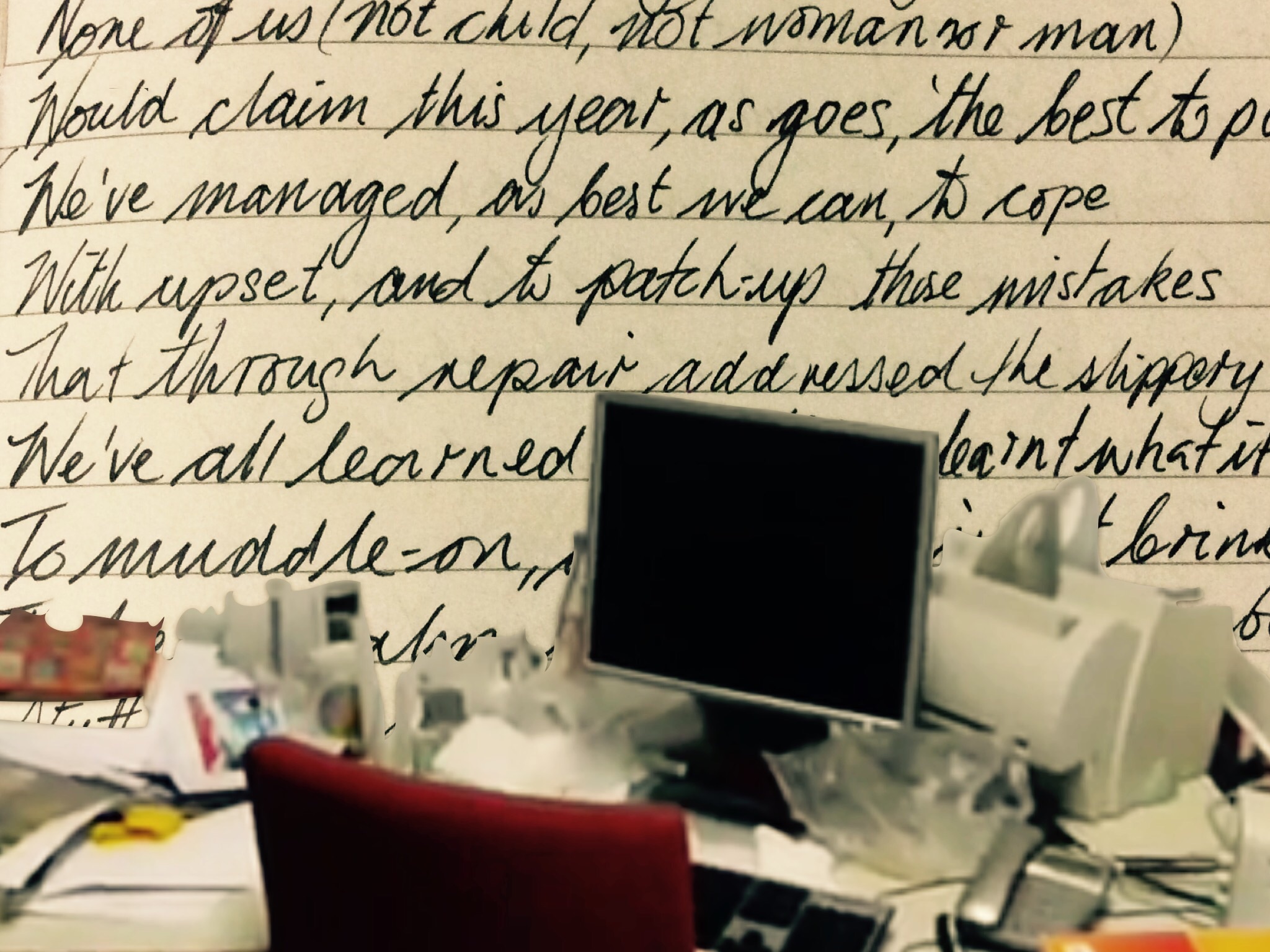
    Not a year that went exactly as planned:
    melodrama, tragedy and high farce.
    Controversial guests that denied the bland
    intent of pleasant passage come to pass.
    We’ve managed (despite these guests) to cope
    with upset, and to patch-up those mistakes
    that through repair addressed the slippery slope.
    We’ve all learnt something: learnt what it takes
    to muddle-on, to pull-back from the brink;
    to keep calm; bunker down and take it slow.
    With stoic grit, we’ve learnt to neither blink
    nor shrink from scandal’s shame or worry’s woe.
    . We are the better for adversity.
    . So claims the wisdom of perversity.

    © Tim Grace, 6 December 2012


    To the reader: I worked with a colleague who muddled his way through a year of workplace calamities. Piles of paperwork spilled over his desk; nothing got finished; technologies failed, and deadlines passed. With such hopeless organisational skills, other staff watched-on in dismay. His boss gave up all hope of a supervised solution; so the problem just got worse. The disconnect widened and office isolation became entrenched.

    To the poet: I left a card somewhere on his desk. An end-of-year message that added precarious height to an existing pile of paper. And so began this sonnet. It’s not about ‘him’ more informed by his various predicaments. His office isolation (somewhat self-imposed) reminded me of brackets. Brackets (here exampled) recognise a necessary petition of parts; inclusive features, distinct in nature… describes him well.


    Desk Mess-age Desk Mess(age)
    Picture Source:
    http://youtu.be/zqQby6sZ2rU
  • Shine

    Shine

    Shine through the darkness, penetrate the night.
    Dawn beneath the shadows that overcast
    those slumbering diamonds desperate for light;
    uncovered memories, bejewelled to last.
    Shine between the cracks of that shattered dream.
    Gloss over edges that diminish hope,
    polish up the threads of a golden seam;
    discovered passions, rekindled to cope.
    Shine upon a steel breeze, amend its mood.
    Take the black dog and heat its cold intent
    with warmth; the antidote is attitude;
    recovered talents, refashioned to vent.
    . Depression’s remedy is a light touch,
    . a glimmer of hope, that will shine as such.

    © Tim Grace, 2 December 2012


    To the reader: For the discerning adolescent ear, Pink Floyd filled a ‘head space’ that responded to the musical dynamics of depth and complexity. The sound of other bands, including the Beatles, could tolerate the phonic limitations of an old record player. But, to best appreciate a Pink Floyd album it had to be dust-free and scratch-less. With the right hi-fi system, Pink Floyd could transform a bedroom into a theatre of ethereal sound.

    To the poet: Pink Floyd’s first album ‘The Piper at the Gates of Dawn’ (1967) contains eight lyrics penned by Syd Barrett. Read as poetry, it’s clear Syd knew how to craft a song; he knew the rules, and had a versatile bank of ‘tips and tricks’ in his wordsmith quiver. As an exercise, I wrote this sonnet as a sampler; at the same time acknowledging the traumatic demise of a shining star … condensed to a ‘crazy diamond’.


    Shine Shine
    Picture Source:
    http://youtu.be/qGd1eiLKY_8
  • I Love You

    I Love You

    From love, love borrows that which love has lent.
    When love says: “I love you” love says the same.
    And so love is a circular argument.
    It’s a roundabout affair; claim for claim.
    “Good night” love says, the same is love’s reply.
    “Sweet dreams” love says, anointed with a kiss.
    “Sleep tight” love says, so starts a lullaby.
    When love says “I’m here” there’s nothing amiss;
    Love’s partner is love, together complete.
    It’s through confirmation that love endures.
    “I love you” said once, deserves repeat.
    “I love you” and “I love you” reassures.
    . Upon love’s roundabout, spins love’s intent,
    . With each return, there rides love’s sentiment.

    © Tim Grace, 18 November 2012


    To the reader: The structure of the heart has it working two-parts as one. The circulation of a life-force makes it the ideal metaphor for ‘love-central’. With responsive rhythm, the heart renews and refreshes. It’s no coincidence then, that living and loving are such united motivations. Together they fulfil our physical and emotional needs; one fuels, the other fires.

    To the poet: Sentiment is an ink that never fully dries. Its wet nature bleeds and smudges at the slightest touch. To control the flow of sentiment takes the skill of a water-colourist. The risk of over-working is ever-present; accident and incident are heavy handed partners. Sentiment is a translucent medium that washes over page and canvas with diffusive effect; a touch too much and recognition is lost.


    I Love You I Love You
    Picture Source:
    http://youtu.be/oyCgQtCXXn8
  • Fears Not Dust

    Fears Not Dust

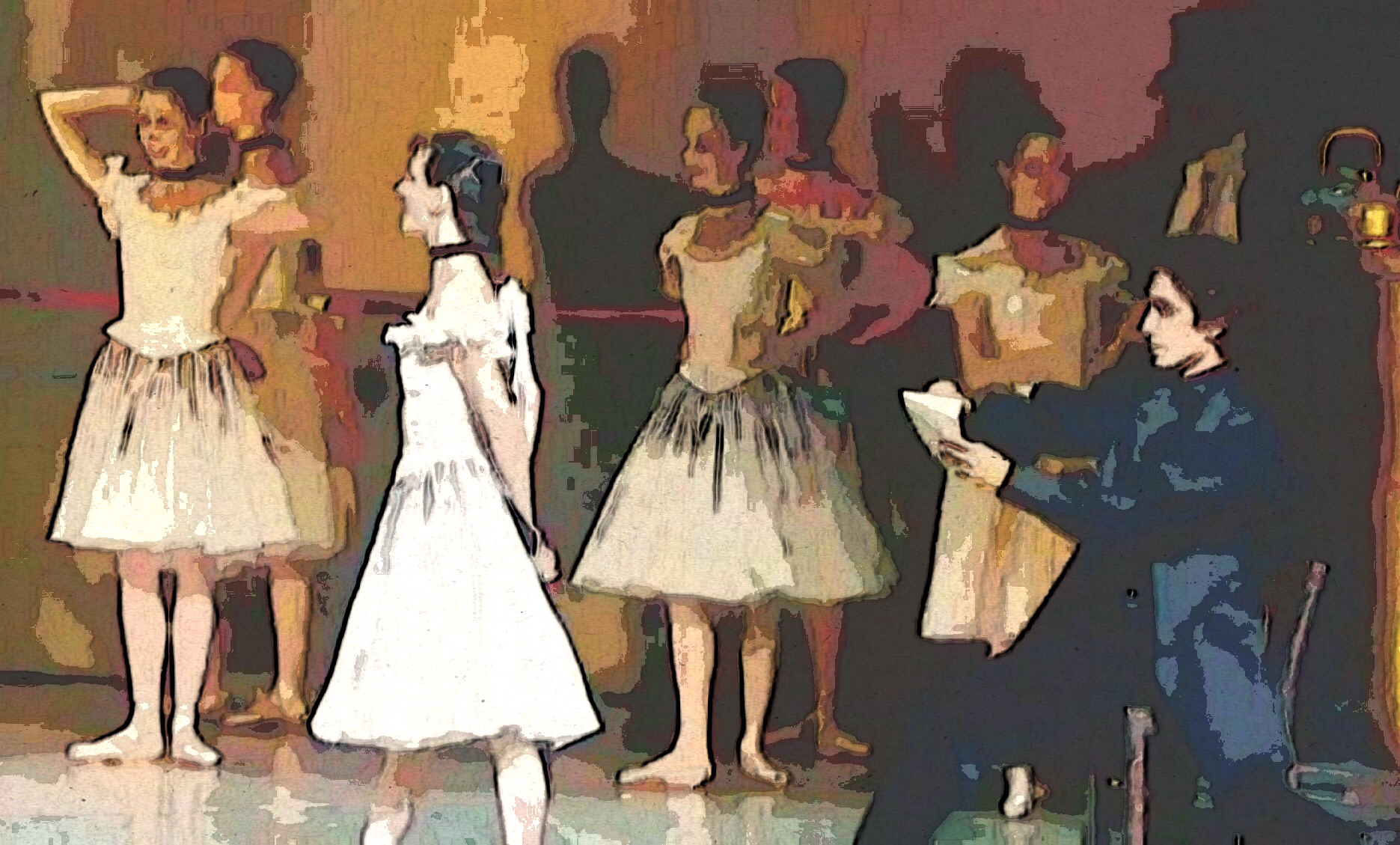
    Degas fears not dust, but the hand of man.
    His art is that of motion not of bronze.
    His shuttered frame’s neither still nor frozen.
    From moment to moment his art responds.
    He seeks the illusion of transfered weight;
    forward leaning movements lunging at space.
    He seeks expression through a fluid state;
    liquid locomotion spilled into place.
    See the bathing women, the jockeyed horse,
    the ballerinas giving curtain call,
    the girls with flowers, and himself of course;
    none paint a picture showing life at stall.
    . The subtle suggestion of swing and sway,
    . Creates the impression of dance at play.

    © Tim Grace, 4 November 2012


    To the reader: “What’s more static than a statued dancer?” Degas was challenged by the limitations of ‘snapshot’ art. The idea of capturing a static scene brought him little interest. His more intriguing challenge came through art that suggested something beyond the instant of creation. Through pose and posture, Degas gave his subjects impetus; his scenes momentum. Therein lies the power of degas … in every moment there’s fresh potential.

    To the poet: Like moths to light, experts love controvacy:”Degas, one suspects, was turning in his grave. Before his death in 1917, he repeatedly expressed concern that charlatans might highjack his legacy by casting his sculptures in bronze and selling them to collectors, and is said to have told his fellow painter Georges Rouault, ‘What I fear most is not dust but the hand of man.’” And that article in Bloomberg Business (by William D Cohan) triggered my poetic interest.


    Fears Not Dust Fears Not Dust
    Picture Source:
    http://www.medici.tv/mobile/la-petite-danseuse-de-degas-patrice-bart-world-premiere-opera-garnier
  • Out of Nothing

    Out of Nothing

    Make something out of nothing. Justify
    effort. Zero sum. Write a nil report
    on emptiness with white clouds on blue sky.
    Null and void substance. Abstractions of nought.
    Make something out of nothing. Vacant plot
    is fertile ground. Those yet to be employed
    give vacuous answers to diddly squat?
    No. Nothing’s wasted, dismissed or destroyed.
    Make something out of nothing. Emphasise
    oblivion’s negative force. Contrive
    an essence that permeates emptiness.
    New things from no things; from all things derive.
    . Emptiness – surely it’s something of sorts.
    . Needs invention through series of thoughts.

    © Tim Grace, 28 October 2012

    or…

    Make something out of nothing, zero sum
    the universe with far too many noughts.
    Measure the emptiness of kingdom come;
    biblical proportions in bleak reports.
    Occupy heaven with a vacant stare;
    a blank expression holds no depth of field.
    Focus on oblivion … who’s to care
    that eternity has its future sealed.
    Porous impressions given a thin coat
    of certainty beyond a lick of paint.
    Into the distance we adopt remote
    orbits; avoiding gravity’s restraint
    . Exploring principles of uncertainty
    . through the empty eyes of modernity.

    © Tim Grace, 15 May 2016


    To the reader: We have so many ways of describing the absence of anything else; from oblivion to nirvana. In oblivion, nothingness, like all else, has no value. In the vast void of oblivion’s estate all good purpose is lost; given to waste. Nirvana, on the other hand is a transcendental realm of nothingness. We reach ‘Nirvana’ through a heightened state of being; where upon, through the absence of all else, we find eternal happiness beyond the necessities of existence.

    To the poet: “What’s nothing but the invention of nought” This sonnet is a far cry from the draft I wrote in October, 2012. In its original form, the text was strangled by internal reference to a poorly defined subject. Failure was somewhat understandable as the poem’s confused protagonist was nothing more than nothing. In the final version, I’ve stripped away the physical narrative to emphasise the transcendental phrasing … meaning on its way to nothingness.


    Out of Nothing
    Out of Nothing
    Picture Source:
    http://youtu.be/A1evxMA7yYw