Tag: behaviour

  • Why Do Some Things?

    Why Do Some Things?

    Why do we fear what we don’t understand?
    What makes ignorance the beast that it is?
    Why do we crush what we cannot command?
    How does good reason make sense of all this?
    Does logic lend favour to a good cause?
    Does logic distinguish fiction from fact?
    Does logic consider the pregnant pause?
    Does logic rationalise the random act?
    Sadly, the answer is ‘no it does not’.
    Some things defy logic; leave us confused.
    Some things are awkward, contentious and hot.
    Some things intrigue us, and leave us bemused.
    . A reasonable logic is common sense.
    . A logical reason is consequence.

    © Tim Grace, 28 December 2013


    To the reader: Common sense contributes to the real-life application of experience in the face of new circumstances. In a logical sense, taking a ‘common’ approach to problem solving is a bit hit and miss. Logical approaches reduce the impact of bias and error; distancing head-strong habits from heart felt emotions; favouring the cool calculation. All very-well, but hardly suited to the quirky-nature of human behaviour. We do what we do often to deliberately defy logic, to be unpredictable … don’t ask me why!

    To the poet: The challenge was to defend common sense. Over logic; which at best, questions irrational sentiments and contributes to good judgement. To address the challenge, the sonnet’s three stanzas rally to explore “Why… Do… Some things …” Ironically, through logical entanglements, the final couplet struggles with the delivery of a summative punch.


    Why Do Some Things? Why Do Some Things?
    Picture Source:
    http://youtu.be/LQoAg49NgMo
  • Dog House

    Dog House

    Where live those demons, where do they reside?
    Long-stay lodgers, cluttering cavities,
    residential tenants, hard to abide,
    hard to accommodate … depravities.
    Where live those phobias that tease and taunt?
    Reckless wranglers, robbers of niche and nest.
    Thieves, gypsies and thieves, that endlessly haunt
    contentment; pull upon the softest leash.
    Where live those mongrels, that doggedly drain
    all sense from sensibility, larking
    larrikins, bedroom bandits, once again
    prove themselves mad, yes… barking!
    . Where lives lunacy, where does it locate?
    . It lives in a kennel, barks at the gate.

    © Tim Grace, 15 September 2012


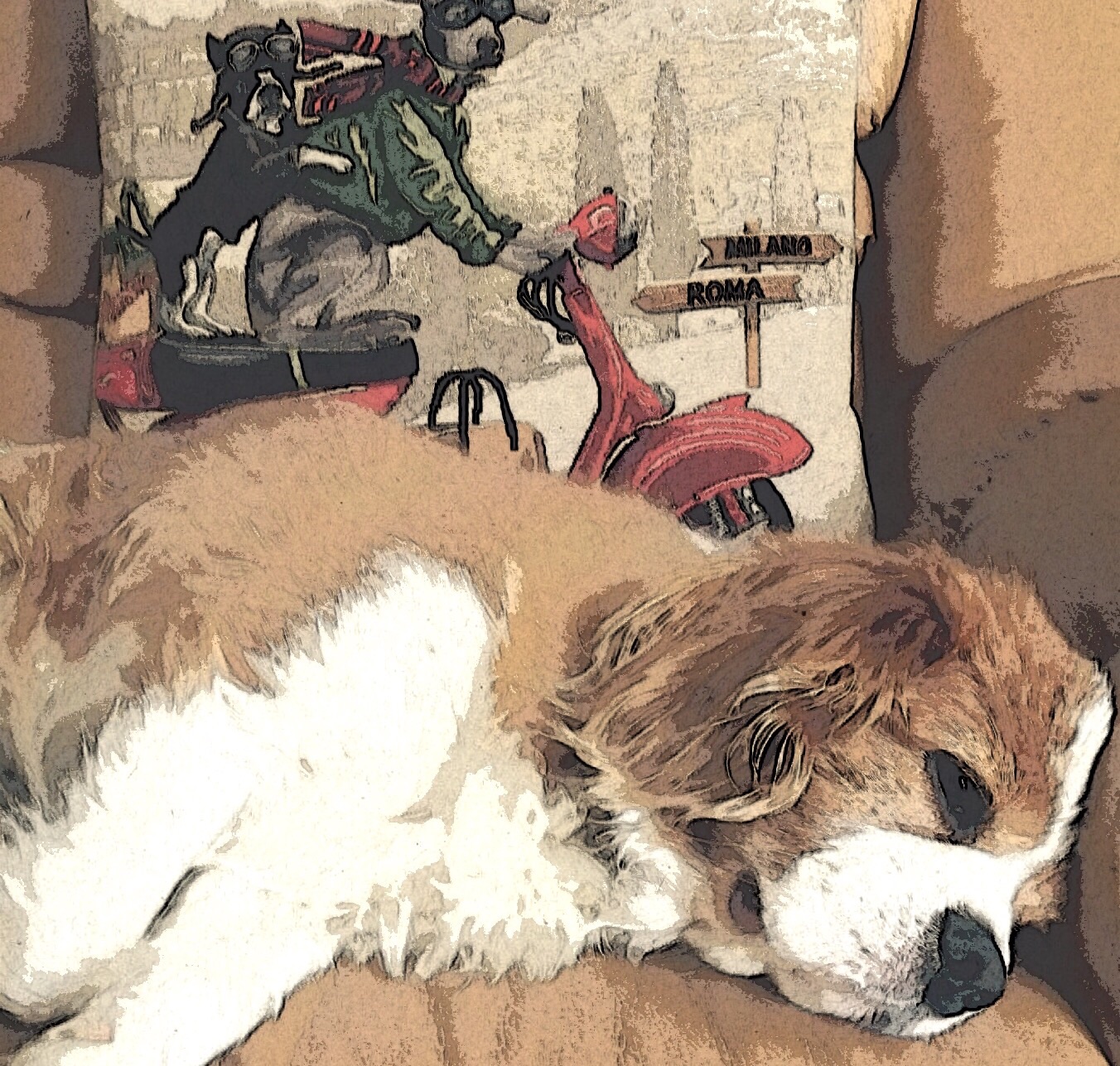
    To the reader: I think dog-ness needs to be recognised as a disability. My canine residents are daily afflicted by a host of phobias; translated into all manner of quirky behaviours. Between stimulus and response their processing is spontaneous and erratic; predictably, the product is most often a “dog’s breakfast”. As chaos calms, there’s a small sense of reflection but never enough to suggest that sanity will ever prevail.

    To the poet: As a descriptive piece, this poem delivers a litany of pet perturbances. I love my dogs but they do have some very annoying habits that warrant occasional relegation to the metaphorical dog-house. Obviously, it was important to workshop the sonnet. I’m happy to report that both dogs agreed it was a perfect likeness of the other.


    Dog House Dog House