Blog

  • Graphite Smudge

    Graphite Smudge

    Heavy clouds, a graphite smudge
    Scraped across the page.
    Waves against the sky-line nudge
    The view to form a stage.
    To the left a distant promontory,
    Slips into the sea,
    The unspoken commentary,
    Of a day that’s yet to be.
    To the right the yachts are reeling
    Against a stubborn moor,
    Eager to be keeling
    As they did the day before.
    . The day is but a sketchy draft,
    . A script both fore and aft.

    © Tim Grace, 19 September 2010


    To the reader: This wordscape ties together the natural forms of a dawning day at the coast. A beautiful but not unique coast. A familiar coast to anyone who has looked across a bay to view a thin line of sand dividing the sea from green cascading hills. Picture perfect moments, as with mental postcards, become the long lasting memories of time and place. It’s the perfectly familiar view that with a rising sun stamps the scene as finished; with nature’s signature attached.

    To the poet: That a poem might be framed to a wall in place of a picture is a tall order. The confines of a poet’s language are less universal than are the strokes of a painter’s brush. But in this sonnet the words attempt to place themselves on the page so as to replicate, not just describe, the scene. As suggested, the poem has a sketchy tone to its verbal drafting which provides the elements with a sense of movement and animation.



    graphite smudge graphite smudge
  • Tread Lightly

    Tread Lightly

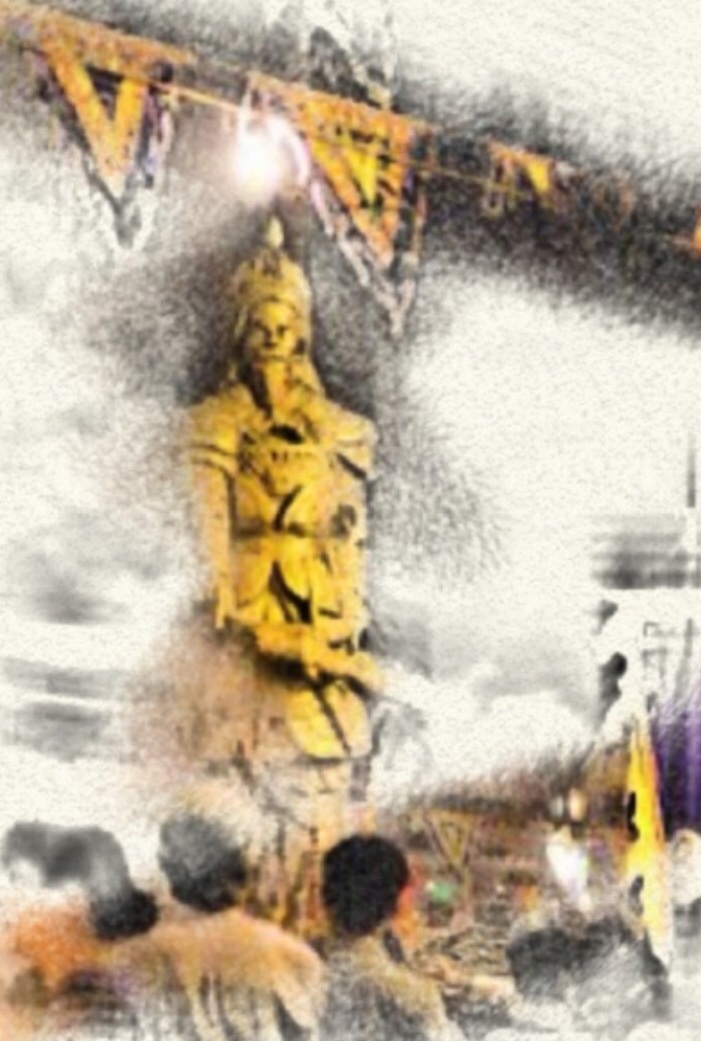
    The cobra takes position
    Defensive in its stance
    Considers its condition
    With survival in its glance.
    The guard upon his sentry
    In demeanor is alike
    He monitors the entry
    And readies for a strike
    Take notice of his figure
    Tread lightly on his patch
    Do nothing that might trigger
    The ignition of his match
    . Beware the enemy in wait, the spontaneous debate,
    . Take care the masking of a trait … too late, too late.

    © Tim Grace, 13 August 2010


    To the reader: Around the world our dignitaries are guarded by ceremonial sentries. The guards are garbed in symbolism and perversely create a deliberate and distracting point of interest. The aloof but alert nature of a guard is what creates public curiosity and draws our attention away from the protected investment. Every gesture of guardianship is nuanced with reference to a larger more potent force lying in wait … ready and prepared to strike if called upon to do so.

    To the poet: Short lines and simple statements in three sets of four. The first four describe a cobra coiled with the tension of a tightly wound spring. The middle four describe the counterpart; the guard in wait, the sentry at attention, the guard on guard. The final four holds together the allegory with ambiguous use of ‘his’ as either cobra or guard. The lines in the last couplet are long and stretch the use of rhyme a little too far.


    tread lightly tread lightly
  • Not a Temple

    Not a Temple

    In the midst of all humanity
    At the centre of our core
    Where commonsense and sanity
    Bring reason to the fore.
    There’s a comfortable liaison
    An inner peace of mind
    Free from all invasion
    From tanglement and bind
    Here we find tranquility
    A balancing of thoughts
    The essence of stability
    A sanctuary of sorts
    . Somewhere transcendental – a perfect line
    . Not a temple, neither monument nor shrine.

    © Tim Grace, 6 August 2010


    To the reader: Finding tranquility in the midst of chaos is no easy task but it’s a key to surviving the rat race. To some extent spiritual establishments provide a solid but artificial solution. They offer a sanctum of silence from which to escape into isolation until the self is sufficiently restored. The more mobile and accessible solution is to draw upon inner resources that overcome the confusion of chaos through quiet reflection. For me, restoration is achieved through meditative moments with a coffee or pen in hand.

    To the poet: To highlight the difference between a transcendental state and a spiritual place this sonnet plays with positional phrases; the first three lines begin with in, at, and where. The second four lines, themselves in a mid-point, enter the inner sanctum of the self at peace. The last of the four line stanzas is descriptive of an essence given a substantive location … albeit transcendental.


    not a temple not a temple
  • Careful Stride

    Careful Stride

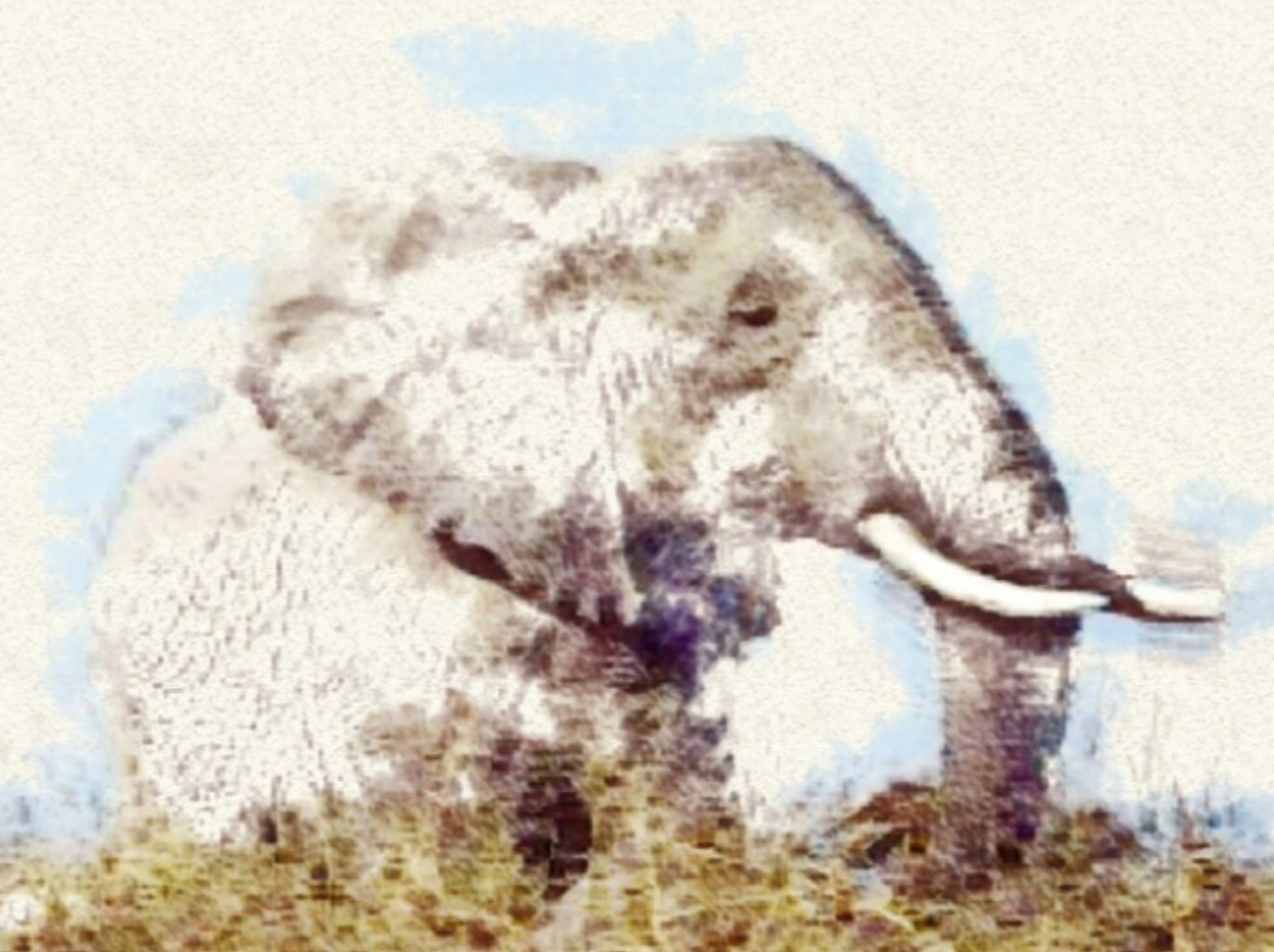
    I rode upon an elephant
    By name of Raja Khan
    His pedigree was excellent
    The pride of Pakistan
    In stature he was solid
    A figure fine and firm
    As strong as he was stolid
    An impressive pachyderm
    Aloof and somewhat nervous
    He earned his reputation
    Through dedicated service
    To palace transportation
    . With careful stride and gentle sway
    . He set the pace of a yesterday.

    © Tim Grace, 10 May 2010


    To the reader: I imagine days of empire being stiff as starch; stodgy. Stifled by establishment that imposed upon the underclassses rigid rules and regulations designed to further entrench the advantages of birth and social position. But, attached to my construction of the past is a stolid image best portrayed by the permanence of a slow moving pachyderm. In the elephant’s gentle sway I see remnants of a yesterday when circumspect rhythms gave poise to forward motions.

    To the poet: A simple little poem, neat and compact; some might say trite. A parlor painting lost of real significance but nonetheless holding its place on the wall as it has done for many generations. The very short lines are packed with alliteration and because of brevity tend to over emphasize the forced rhymings. In an attempt to help the narrative flow unbroken through the sonnet I’ve given it no punctuation … save the final period.


    careful stride careful stride
  • The Card

    The Card

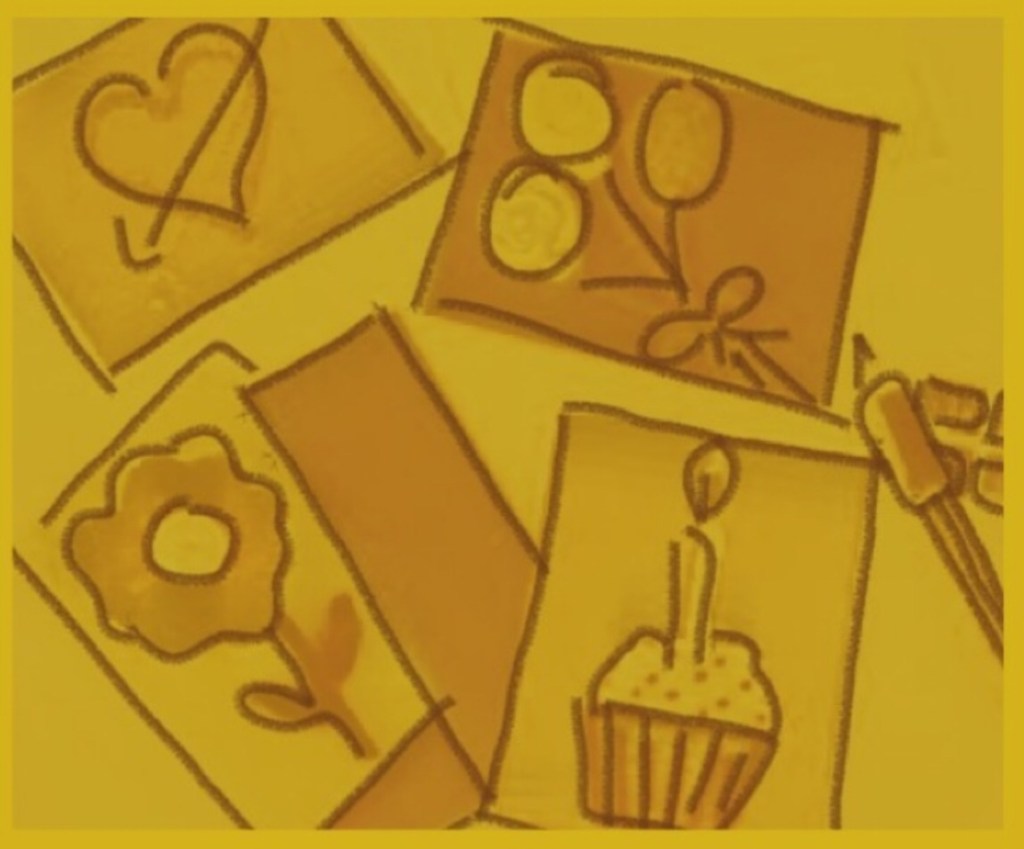
    The card said “get well soon”
    It granted “wisdom and future wealth”
    The card wished “the best of fortune”
    Along with “happiness and health”.
    The card wished “the best of travels”
    “Bon voyage and safe return”
    The card is deep with wishing wells
    For those who are drawn to yearn.
    The card laments both grief and loss
    With kindly words of solace,
    The card provides a temporary gloss
    A wish if not a promise.
    . The card is wise with thoughtful adage,
    . Delivers hope in place of ravage.

    © Tim Grace, 3 April 2010


    To the reader: The card is an expression of considered thought delivered as an accompaniment. When the moment has gone and all remains is a chance to reflect it’s then the card finds its purpose. More than a note, a card requires careful selection and then more so personalization. In drafting the card’s message, the art is to maintain a genuine voice in the construction of a unique and/or memorable truth.

    To the poet: The card as a singular object with multiple functions is the focus of this sonnet. Each couplet begins with ‘The card…’ and then picks up on a range of cliched phrases that have populated cards on mantel shelves throughout time. In writing about ‘the’ card rather than ‘a’ card allows this sonnet to generalize the simple principle as expressed in the final couplet.


    the card the card
  • Ever the Measure

    Ever the Measure

    None of us would stand a chance
    If time did have its way,
    With the certainty of circumstance
    At odds we’d have to stay.
    If time was let to run its course,
    To stop and start at will,
    We’d live our lives in deep remorse
    And all would be there still.
    If time ignored the pendulum
    And tomorrow never came,
    We’d have no rules on when to come
    And the prompt would have no claim.
    . The power of the hour we may hope to regulate,
    . But ever is the measure we are left to contemplate.

    © Tim Grace, 10 April 2010


    To the reader: At best we only ever grow to understand the value of time. If not to be wasted, time’s ultimate currency of conversion must be experience. Spending time to understand time is therefore a worthwhile pursuit … a pursuit we call planning. Through planning we maximize opportunities to work with, rather than against, the tyranny of time.

    To the poet: The long/short syllabic rhythm of the first eight paired lines are satisfying. Later in my sonnet writing I buckled under and became more consistent in adhering to the Shakespearian iambic-pentameter. At this stage, I was using my own natural (naive) rhythm that appears to be expressed in a ratio of about 8 to 6 syllables per pair of lines. The last two lines (the final couplet) are very long and contain internal rhymes that might be clever, but do nothing to help the poem end on a rhythmic high.


    ever the measure ever the measure