Blog

  • Authority

    Authority

    Authority, as per regulation,
    will justify suppression,
    will authorise translation
    and standardise expression.
    It will stamp approvals, make decrees,
    issue fines and warnings.
    But when it comes to birds and bees,
    and the beauty of good mornings,
    what use is there in forms to sign;
    what good is that affording?
    It doesn’t help the sun to shine,
    nor the crowd in its applauding.
    . Art made tongue-tied by authority,
    . gives voice to no majority.

    © Tim Grace, (WS-Sonnet 66: line 9) 27 April 2011


    To the reader: To wield authority is an art-form not easily crafted into institutional practice. As institutions grow in size and status they instinctively adopt self-protective procedures that distance themselves from face-to-face exposure. The protective force-field is governance; more or less the rules of engagement. To be satisfying, our interaction with authority needs to bare some resemblance to the flow of natural order… if not creative then at least flexible; adaptive to change.

    To the poet: Without structure sonnets easily wander off track. Conversely, they can’t bear too much heavy engineering. Through natural rhythms, the mechanical hardware of a sonnet is disguised as rhyme and reason. As with authority, a bureaucratic approach to poetry can over-govern its artistic bent; a tongue-tied sonnet results.



    authority authority
     

  • Missing Sonnet

    Missing Sonnet

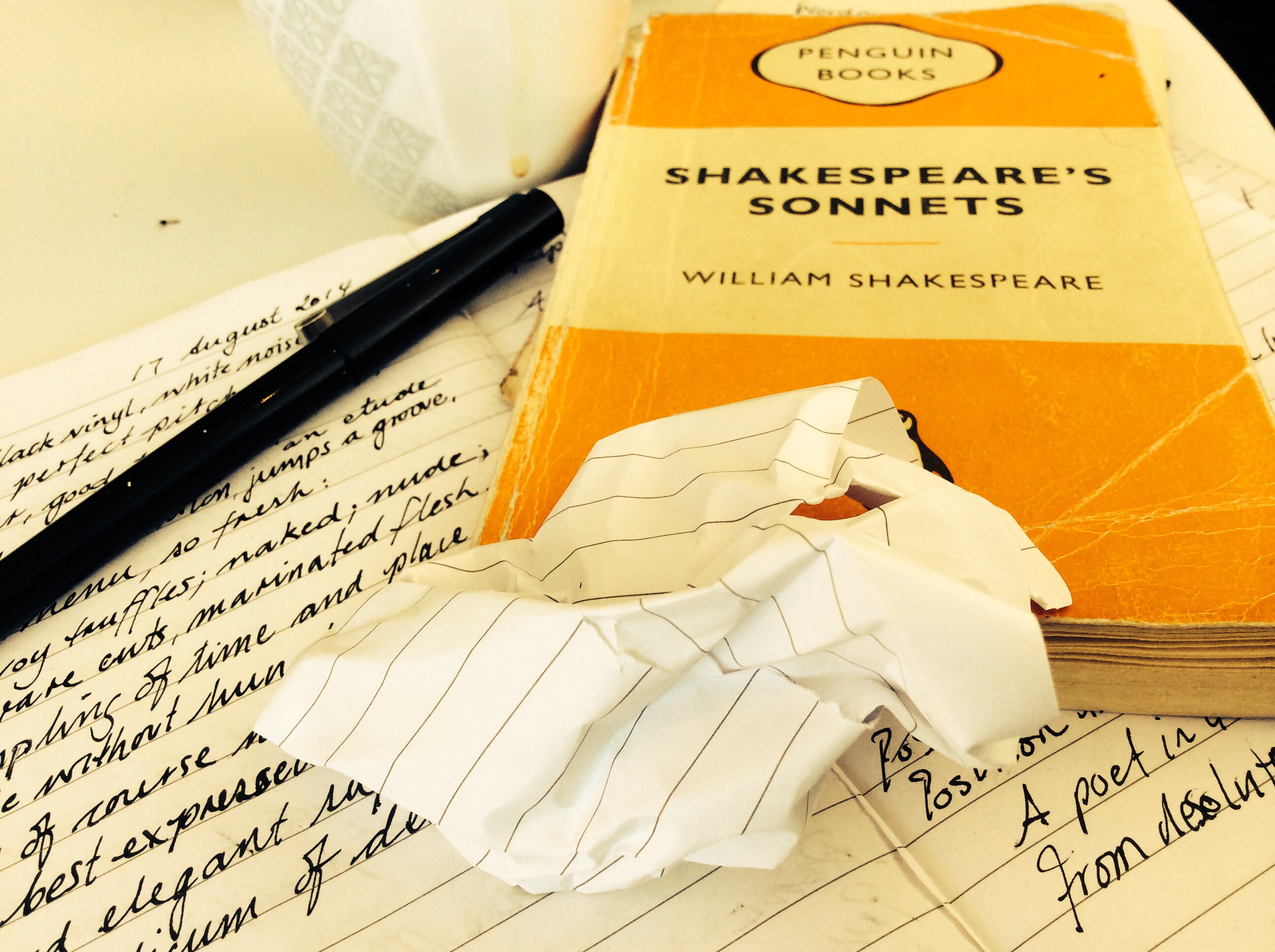
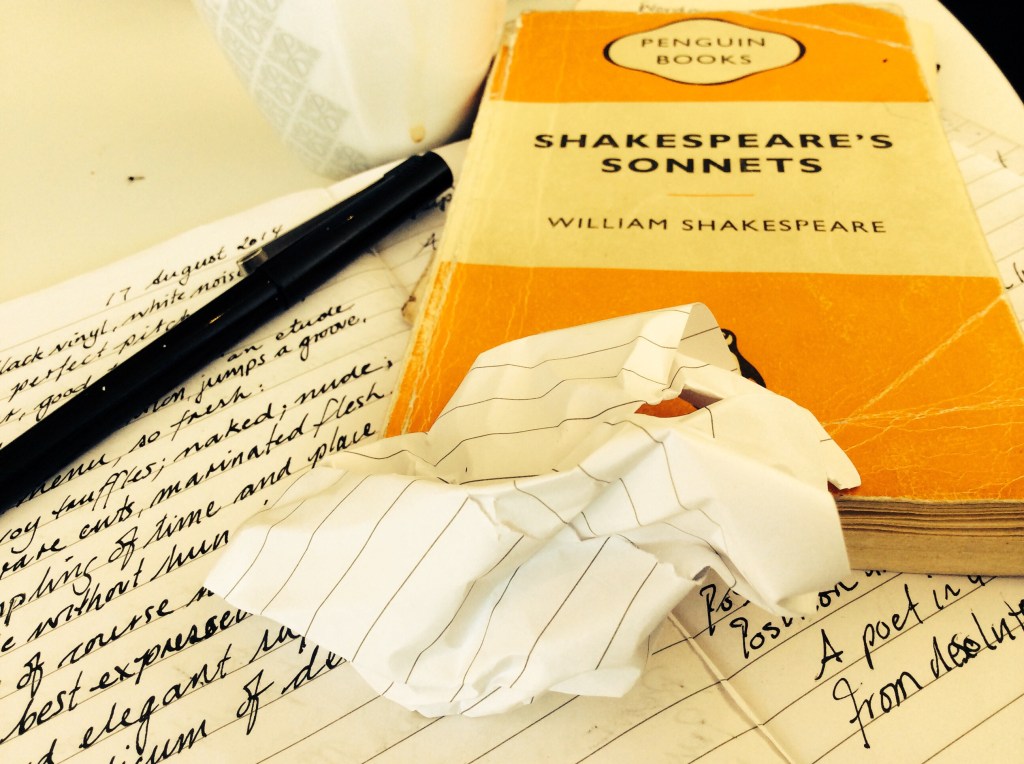
    The case of the missing sonnet unfolds,
    Layers of intrigue yet to be revealed:
    One, the sonneteer vehemently upholds
    That crucial evidence has been concealed;
    Two, he claims the sonnet (to date his best)
    Was finished and the draft had gone to print;
    And three, as aggrieved plaintiff, he’d suggest
    The weight of evidence does more than hint
    That the crime was payback, a vendetta,
    A deliberate and well executed
    Act of retribution; Every letter,
    Every word, in every way disputed.
    . Why take possession of what causes grief?
    . What’s the obsession… it beggars belief?

    © Tim Grace, 29 September 2011


    To the reader: A lost object has the potential to be found; it’s not yet fully gone. Retrieval is usually a simple matter of retracing steps; upturning the obvious. Annoyingly, in the lost-zone, while it lasts, there dwells frustration and self-doubt. But, having acquitted yourself of simple misplacement there comes the temptation to attribute blame to others. They become the culprits.

    To the poet: This is the first sonnet, sequentially but not chronologically, to have fourteen lines loaded with ten syllables each. The first line also adheres to the pattern of iambic-pentameter with paired emphasis bouncing from heel to toe. It’s also a sonnet that, for my pleasure, reads across the lines as a single passage of thought. As structured, this sonnet works well as a self-contained package.


    missing sonnet missing sonnet


  • Durability

    Durability

    Durable strength – be it strong and able;
    with resilient build, with spinal structure;
    be it rugged, be it tough and stable;
    forms a shape that’s hard to rupture.
    Dependable strength – with guts and grit;
    there when a crisis comes to crunch;
    there when needed; there in the midst of it;
    a powerhouse; a pool of potential punch!
    Disabled strength – crippled and lame;
    buckled and bent with nothing to harness;
    a spent force, nothing but a crying shame;
    a collapse of faith, be it more or less.
    . Strength – not given break or buffer,
    . under weight will cause us all to suffer.

    © Tim Grace, (WS-Sonnet 66: line 8) 25 April 2011


    To the reader: The concept of strength has been a long-held theme of mine … an early poem read: ‘My strength is such I can not yield, and therein lies my weakness; a gentle touch can pierce my shield and shatter my completeness’. In Shakespeare’s sonnets he often refers to strength in terms of resilience, with fatigue being its major draw of energies: “Tired of these, for restful death I cry … for these would I be gone.”

    To the poet: Durable, dependable and disabled strength. When giving a sonnet its structure there’s an endless pattern of combinations from which to choose; some patterns work better than others. Too obvious and the pattern becomes trite, too subtle and the effort is lost to all but the deepest of readers. In this sonnet, the visual and aural cue of strength’s dual dimensions leads the reader to your desired definition.


    durability durability


  • Bell and Trumpet

    Bell and Trumpet

    It’s not that she was pure of heart
    and this was crudely broken.
    Nor was it that she played no part
    in how rudely she was woken.
    It wasn’t that her heart had died
    through a lover’s cruel neglect.
    Rarely were her thoughts applied
    to a life she should respect.
    This maiden in a sense secured
    a self-imposed displacement.
    With ravenous greed she so procured
    a deal that bought debasement.
    . Take not the heart inside – as would sell a strumpet.
    . When virtue is commodified – sound the bell and trumpet.

    © Tim Grace, (WS-Sonnet 66: line 6) 21 April 2011


    To the reader: Virtue and grace are beautiful qualities; so easily tarnished. The corruption of beauty is mostly defiled by an external influence. An ugly and crude influence with no respect for nature’s dignified design. Occasionally, the corruption is an internal fester that sullies from within. Sadly, self-corruption destroys the heart and soul and dims the shine of inner-beauty.

    To the poet: To be labelled a strumpet is no good thing. The word’s etymology describes a crude pedigree: a hussy, a harlot; in short a shameless prostitute. Seems the word travelled through time accruing a coterie of associated meanings. From its notion of crudeness came ‘to strum’. To strum, as in to play coarsely, ineptly, on a stringed instrument.


    bell and trumpet bell and trumpet


  • Correct and True

    Correct and True

    Half right; is correct in fact.
    It’s free from error’s damage.
    It’s twice been checked and so exact.
    It’s the best that we can manage.
    Half right is true and so ideal.
    It’s there in a lover’s kiss.
    It’s passionate and full of zeal.
    It’s perfect as it is.
    Right is then a two-faced coin,
    as would carry yang and ying.
    Principles that we can join
    to make a good and proper thing.
    . Good reason often comes to plight,
    . for rarely does it prove twice right.

    © Tim Grace, (WS-Sonnet 66: line 7) 21 April 2011


    To the reader: To be completely right a solution must be both correct and true. Correctness requires abidance with the facts. To be true requires loyalty despite false attraction. Half-right solutions are not, therefore, wrong; they’re just not completely right. According to circumstance, the half-right solution (being correct or true but not both) is all that’s needed. In love be true, otherwise correct.

    To the poet: Semantics and pedantry are to be handled with care. Splitting meaning for no good purpose can be perceived as mischievous; spoiling for a fight. Exploring the difference between two words (correct and true) in light of a common theme (rightness) was hopefully revealing; more so than troublesome. The choice of one word over another is a qualitative decision.


    good reason good reason


  • As Hoisted High

    As Hoisted High

    At focal points, as hoisted high,
    Our heroes stand aloft,
    And so exposed to passers by,
    They’re all too often scoffed.
    Some are standing there aloof,
    And gaze toward the yonder,
    Of claim to fame there’s little proof,
    And so the doubtful ponder.
    Others more in comfort stand,
    With gentle disposition,
    Still it is that some demand,
    The deepest inquisition.
    . What of gilded honour, shamefully misplaced?
    . Careful that our heroes are not wrongfully disgraced

    © Tim Grace, (WS-Sonnet 66: line 5) 20 April 2011


    To the reader: Our heroes are exposed to levels of scrutiny that we lesser mortals need not suffer. With fame, I assume, comes a one-to-many ratio of intangible relationships. As that ratio increases (favouring the crowd) so too the potential for a distorted message. Managing a hero’s branding must be no easy task. The temptation, of others to add a little notoriety to fame has perverse benefits; a lucrative attraction for those seeking coat-tail profits.

    To the poet: Assonation, as described in dictionary terms, relates to corresponding sounds; particularly that of vowels. As poems develop they naturally gravitate towards a group of sounds. In this poem ‘and’ resonates as a conjunction of thought and extension of sound; it acts as the overture to stand and demand … an assertive prompt!


    hoistered on high hoisted on high