Category: reading

  • So Be It

    So Be It

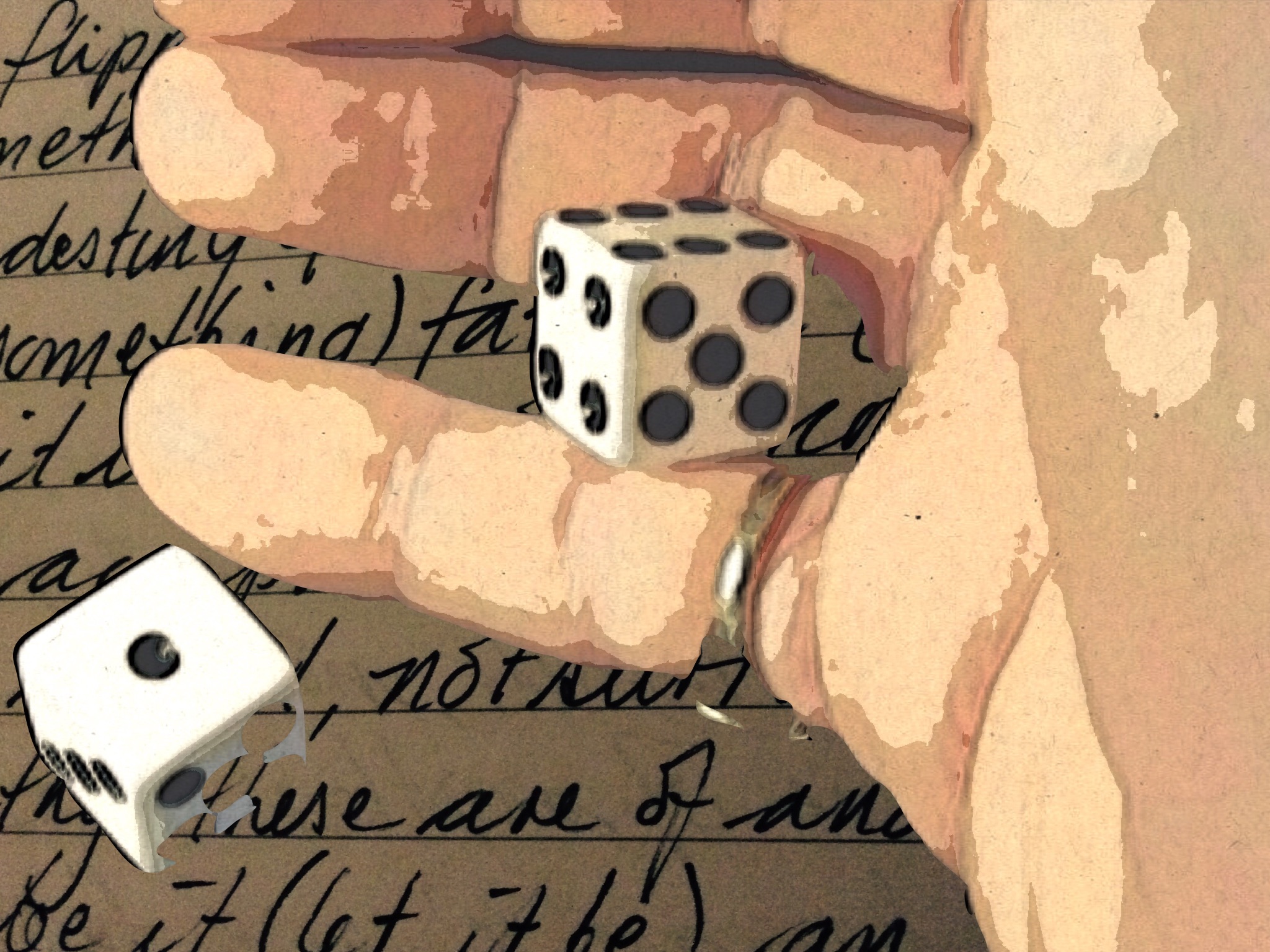
    So be it. Luck and chance have had their fun:
    coins flipped, dice tossed, cards dealt with nonchalance.
    So be it. In the end the deed is done;
    that flippant toss invites a strong response.
    As it is. You now have a given stack:
    Heads not tails, six over one; King not Ace
    As it is. No point missing what you lack;
    take what you’re given, put a plan in place.
    Be as may. Accept that which comes to pass.
    Concede to consequence, be resolute.
    Be as may. Be game. Be as bold as brass;
    Become that which by chance allows you route.
    . So be it, as it is, or be as may
    . By way of luck, or chance, it’s yours to play.

    © Tim Grace, 30 June 2013


    To the reader: Educators increasingly talk about gamification of learning through the lens of human psychology. Observation of ‘gamers’ in action shows a persistent response to challenges on the basis of social rewards. A social-gamer gains kudos and reputation for increasing levels of skill; admired by his or her significant community of peers. Behaviours associated with belonging reward the value-adding learner; they are badged with success.

    To the poet: As I move slowly through the editing process, there’s a pattern appearing. When I meet a stubborn-draft (poorly finished) the easiest solution is to rediscover the original hook; and obviously, hang everything off that – as much as it will bear. And so, the three-word stem for every second line allowed this poem to be reframed with some semblance of original inspiration. Making-do with what you’ve got.

    So Be It
    So Be It
    Picture Source:
    http://youtu.be/FeyhpQRQJew
  • Unravelling Dimensions

    Unravelling Dimensions

    Sadly, the remains are but frailties:
    crumbling pillars and collapsing pylons;
    fragile columns; diminished faculties;
    cancerous concrete; corroded irons;
    frayed exposure; unravelling dimensions
    stripped of the scaffold that prevents collapse.
    Footings, as anchored to loose connections,
    probabilities reduced to perhaps.
    Platforms of understanding turned on edge:
    uncertainty – an awkward intrusion;
    short-term remedy – with no long-term pledge;
    a mortarless mix – dust and dillusion.
    . Crumbling columns collapse; ruins remain.
    . No rhyming couplet can loosen the strain.

    © Tim Grace, 26 April 2013


    To the reader: Dementia is a cruel affliction. The brain retires its function and loses its grip on day-to-day realities. Learnt routines are no longer spontaneous, simple sequences are interrupted and confusion increasingly describes the state of mind. As problems compound there’s a step-down effect; delusion and dismantling go hand-in-hand; finally, connections become tenuous and recognition becomes featureless.

    To the poet: My father is suffering the slow decline of dementia. In the beginning stages he would read my sonnets with editorial license, holding on to rules but glossing over nuance that could no longer catch his attention. Years on, the crafted string of words are meaningless. His highly analytical brain has lost its refined capacity to decode and decipher. And so, I write about him; the subject of my thoughts.


    Unravelling Dimensions
    Unravelling Dimensions
  • Things of Interest

    Things of Interest

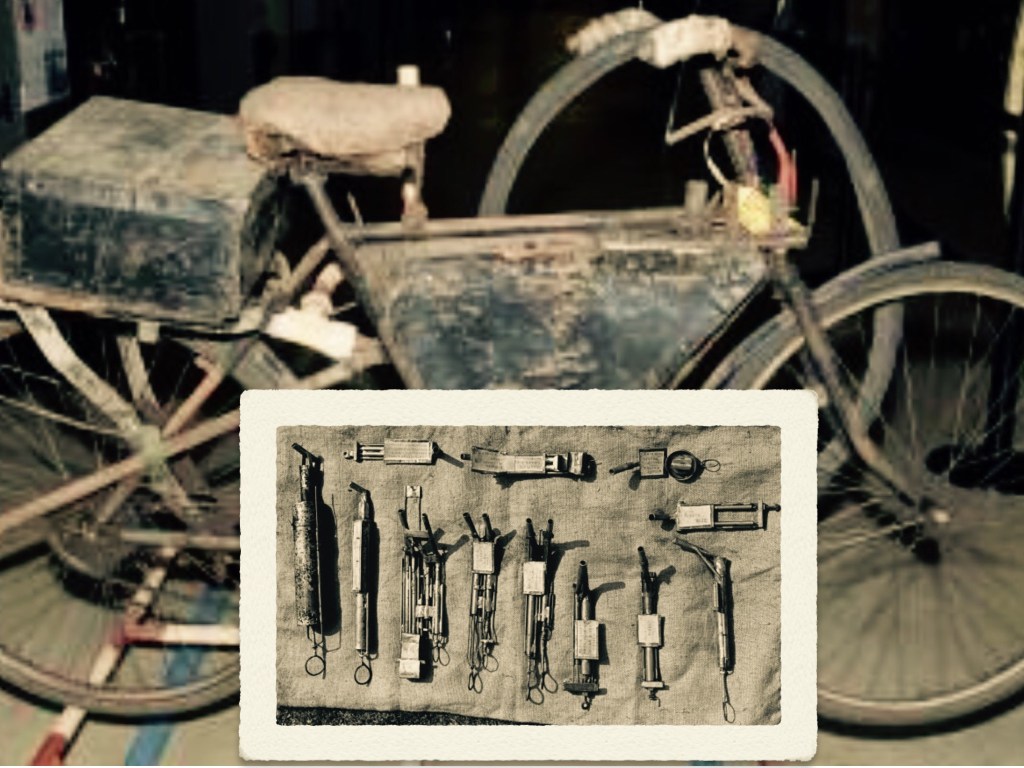
    Things, nameless remnants, objects in a drawer;
    trinkets that tumble out of time and place.
    Garage gadgets, artefacts of war;
    unidentified objects, out of space,
    out of reason, out of function and fit:
    oddities, obscurities, curios
    long since departed from inventor’s wit;
    having lost the memory of ‘who knows’.
    Relics in a box, contents in a trunk,
    a job-lot of stuff, a deceased estate
    to be sold-off cheap, to be bought as junk:
    what’s good for nothing makes a paper weight.
    . Nothing more nameless than a nameless thing.
    . All deserve a title – be it subject or king.

    © Tim Grace, 17 February 2013


    To the reader: I discovered an eccentric great uncle: the bird man. He was featured in a national display of urban characters known for having an inventive wit related to ‘things’. Uncle Henry Grace, was a bird-listener. He rode the country-side listening to warbles. Fittingly, he then invented his own form of warble-notation to capture distinctive ‘calls of the bush’. Then, he would create tin-whistles that imitated the various cheeps and chirps. A century later they are ‘things’ of interest; curios.

    To the poet: In its first-draft this sonnet began with: ‘Objectification, the stuff of things’… borrowed (I remember) from the more contentious notion of ‘Subjectification, the sport of kings’. Quite a nice beginning, but the rest of the sonnet was hopelessly lost in trivial detail. And so, the long task of re-writing began. A complete upheaval takes some effort. Holding on to the essence, discarding all else … that’s the thing.


    Things of Interest
    Things of Interest
    Picture Source:
    http://trove.nla.gov.au/work/36318721?q=henry+grace+whistles&l-availability=y&l-australian=y&c=picture&versionId=46737536
  • That Final Breath

    That Final Breath

    Sadly, one certainty of life is death.
    And so, it is for all of us to end.
    Somewhere, there awaits our final breath.
    Inhaled, not for exchange, but to expend.
    This breath, of all breaths, is to be remorsed.
    It’s the breath most wasted and least returned.
    Consumed for the purpose of life’s exhaust;
    of continuation, it’s least concerned.
    Somewhere, then, this final breath sits in wait…
    to be swallowed deep but not ingested.
    This breath has destiny; a half-used fate;
    incomplete, resolute, uncontested.
    . But for one-breath, we have life’s abundance.
    . It’s through this-breath, that we meet redundance.

    © Tim Grace, 3 February 2013


    To the reader: Not breathless, simply exhausted of life. It’s the last breath taken and not returned. Delivers a terminal solution. The act of living is respiration. Recycled air; a generous spirit. Acts of goodness get taken for granted. We begin and end our lives with a gasp. Air is a rich and abundant resource. Not a trivial keep-worthy trinket. Not to be held for longer than needed. Its living purpose is spent and renewed.

    To the poet: In ‘to the reader’ I collected together eleven sentences loosely connected to the topic of breath. Each sentence is ten-syllables long and follows on from the previous; but it’s not poetry. The difference has something to do with a missing thread of consciousness. The thread of poetry is tied by the poet and un-ravelled by the reader; one gives the other receives … together we breathe the spirit of art.


    That Final Breath
    That Final Breath
    Picture Source:
    http://youtu.be/s7HHyAN60qI
  • Persistent Wind

    Persistent Wind

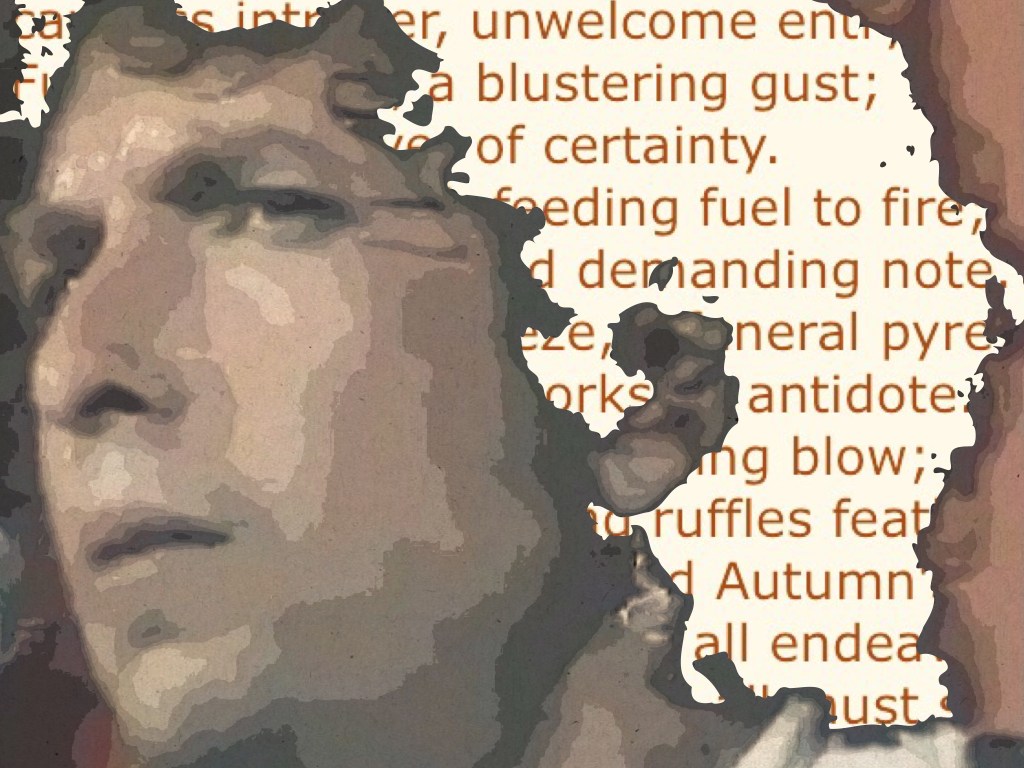
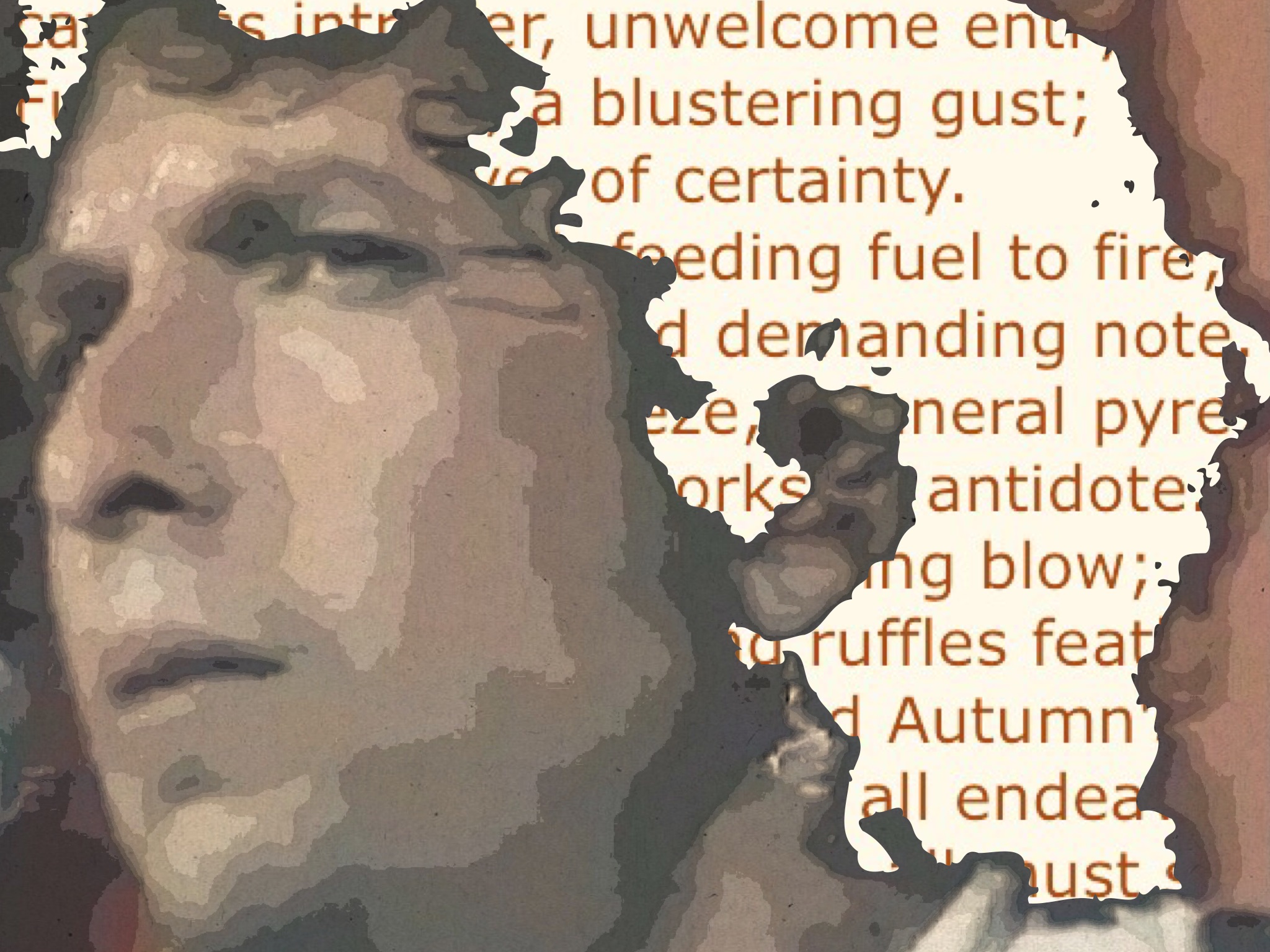
    A persistent wind, agitating dust;
    careless intruder, unwelcome entry.
    Full of bravado, a blustering gust;
    unsettling a layer of certainty.
    A persistent wind, feeding fuel to fire;
    craving attention and demanding note.
    Temperamental breeze, a funeral pyre;
    no whimsy whistle works as antidote.
    A persistent wind, a buffering blow;
    cuts across the bow and ruffles feathers.
    Strips a tree of foliage and Autumn’s glow;
    this resistant fiend smites all endeavours.
    . An ill-wind, the likes we all must suffer;
    . should be endured with brunt or buffer.

    © Tim Grace, 17 January 2013


    To the reader: A cutting breeze strips a day of comfort. Each of the senses responds with agitation. In defence, we can either face the challenge or turn our back. To face the challenge requires head-on resistance; a regardless attitude that stiffens to the breeze. Turning-the-back is an obstinate show of defiance. Should we brunt or buffer? Somewhere between passive and aggressive there’s an appropriate response… ‘the answer is blowing in the wind’.

    To the poet: It wasn’t until I began writing ‘to the reader’ that I realised I had written a sonnet describing Bob Dylan… a persistent wind. He arrived in the early 1960s on a gust of rising social awareness; and decades-on, he’s still shaking trees and rustling leaves. Now identified, I re-read the sonnet with the brusk-breeze personified; I have faced the wind.


    Persistent Wind Persistent Wind
    Picture Source:
    http://youtu.be/oqEcFUW9Ai4
  • Today I’m late

    Today I’m late

    Usually, one of the early risers;
    from sun-up, noting texture of the day.
    Mostly ready, for the day’s surprises;
    well-prepared, well-postured, for come what may.
    But today I’m late, I’ve lost advantage;
    just one of many, recently arrived.
    Left to share a script on a crowded stage;
    just one of the collective, so contrived.
    Late… my expansive day has been confined.
    I’m now a post-script that time has stolen;
    an after-thought, yet to be assigned.
    I’m a conscript, a left-over colon.
    . With an early start, you design your day,
    . Leave it too late, and to a script you’ll play.

    © Tim Grace, 1 January 2013


    To the reader: As routine activities become more general they acquire a network of dependencies. My morning routine is like that. It might appear that I’m up early and out the door to do some writing. Not so, it seems. Small changes to parts of my morning mission can torpedo the enterprise. With a small series of delays, I find myself cornered in a crowded café. No words can describe my…

    To the poet: Writing about writing is an introspective task; somewhat therapeutic, slightly poignant. A metacognitive indulgence that’s occasionally excused by a patient reader; one with a forgiving nature. Unpacking this sonnet, reveals its block-like construction. Inevitably, piece-by-piece, the puzzle is connected; rules are followed and so it lazily meets its final couplet… late to arrive at its conclusion.


    Today I'm Late
    Today I’m Late