Category: reading

  • Slivered Light

    Slivered Light

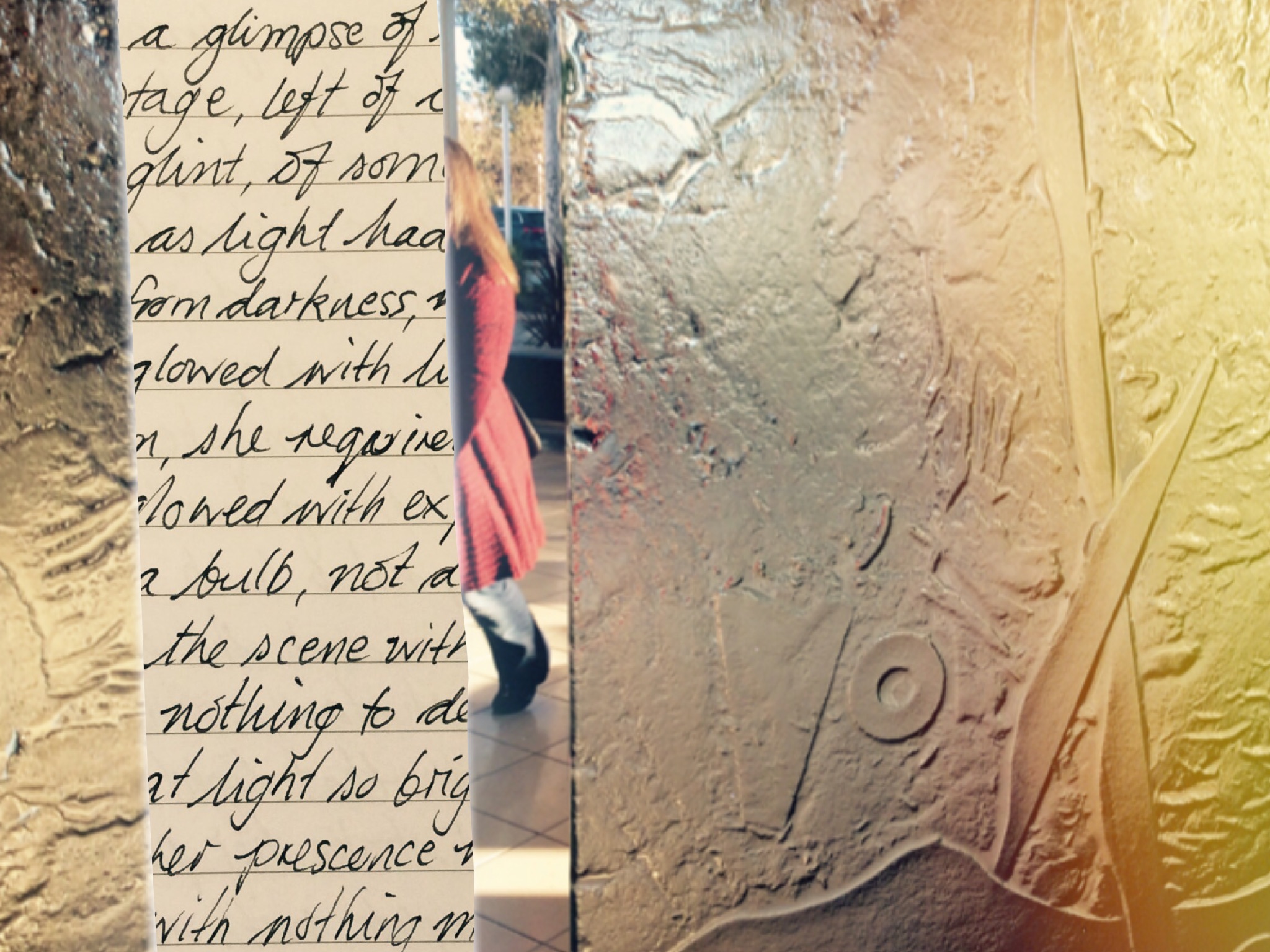
    Nothing more than a glimpse of slivered light;
    delivered right of stage, left of centre.
    Just a hint, a glint, of something bright;
    so she came, just as light had sent her.
    She was not drawn from darkness, not from pitch;
    far more rich, she glowed with lumination.
    She posed no question, she required no switch;
    far from this, she shone with explanation.
    Not a candle, not a bulb, not a torch;
    too warm to scorch the scene with burning flames.
    She cast no shadow, nothing to debauch
    the instant truth that light so brightly claims.
    . With a light stroke, her presence was revealed.
    . She came complete, with nothing more to yield.

    © Tim Grace, 14 March 2014


    To the reader: Light’s revelation can slowly dawn to uncover what darkness hides. Vast horizons emerge as night becomes day. Light can also cast an instant beam of illumination. Delighting the eye with small surprises. In just a slivered glimpse, the eye captures a passing moment… a flash of brilliance. Within that slivered aperture is the essence of art’s sensuality… form is given shape.

    To the poet: Art is responsive. It can be reactionary in a spontaneous fashion; impromptu and unrehearsed. It can also be reflective in a mulled-over sense; practiced and refined. Mercurial-art is more likely to be associated with an artist’s unique character… a flash of brilliance. Lingering-art has time to contemplate and wonder; time to lose its originality … as form is given shape.

    Slivered Light
    Slivered Light
  • With Influence

    With Influence

    Communicates with influence; he does,
    he states it as it is – impressively.
    He situates a phrase; gives emphasis,
    he waits – delivers it expressively.
    He orchestrates his audience; at ease,
    he waits for sense and sensibility.
    He situates a pause; an awkward tease,
    he baits the line with sensitivity.
    He modulates his tone; to rise and fall,
    creates an uplifting draft – wafterly.
    He contemplates what might be possible;
    skates the surface, and nurtures novelty.
    . He agitates his company; he stirs,
    . he celebrates the mix – as it occurs.

    © Tim Grace, 13 February 2014


    To the reader: Tangles can be fun to unravel. I remember, as a child, finding balls of discarded fishing line on the beach. A mess of sand and tackle, endlessly wrapped in coils of knotted nylon thread. The business of unravelling had little purpose to it. I was learning that through frustration you could find satisfaction. Within most things we do, there’s an opportunity to play with ideas; to craft creative solutions – for pleasure’s sake alone.

    To the poet: It wasn’t until late in the editing process that I stumbled on why this sonnet was proving a stubborn beast to massage into shape. I’d forgotten that the “Oh, so clever poet!” had decided to apply an extra set of rhymes to the beginning of each line. Something he thought might have been fun to do but later regretted. Upon reflection the extra-effort has probably detracted from the final outcome; and so it is.


    With Influence
    With Influence
    Picture Source:
    http://www.newyorksocialdiary.com/guest-diary/2013/liz-smith-history-at-its-most-monumental
  • And so become…

    And so become…

    Let go of your dependencies; let go.
    Let go of what has gone forever more.
    Cut free of insecurities; and so,
    lay claim to your capacities. Be sure
    that what you have, you have in all good faith;
    all good faith, that underwrites the absence
    of certainty. Believe in what you have.
    Believe in the goodness of good intents.
    Take hold of opportunities; take hold,
    take hold of that which offers more to come.
    Seize the moment; as the nettle. Be bold
    in your intent; for pluck outplays a strum.
    . Let go of insecurities; and so,
    . become an opportunity to grow.

    © Tim Grace, 26 January 2014


    To the reader: To be a free agent assumes a level of independence that few of us have license to acquit. Over time we accrue a host of responsibilities, dependencies and expectations that nail us to the floor. Up and leaving is not so easy. Before departing on a free-spirited journey there are things to do. Leaving behind a trail of unfinished business is hardly inviting a warm welcome upon your return. Sure, let go, but take good care … of things before you leave.

    To the poet: Strength of message can be bolted to a sonnet. In this free-flowing lecturette I’ve assembled a few commonly known phrases; then, replaced any expected conjunctive using a generous spray of repetition. The repeated elements, through the creation of emboldened space, establish room for emphasis. I’ve not repeated the message, simply repeated the pattern surrounding it.


    And so become ... And so become …
    Picture Source:
    http://youtu.be/jBN2_YuTclU
  • Nine Squares

    Nine Squares

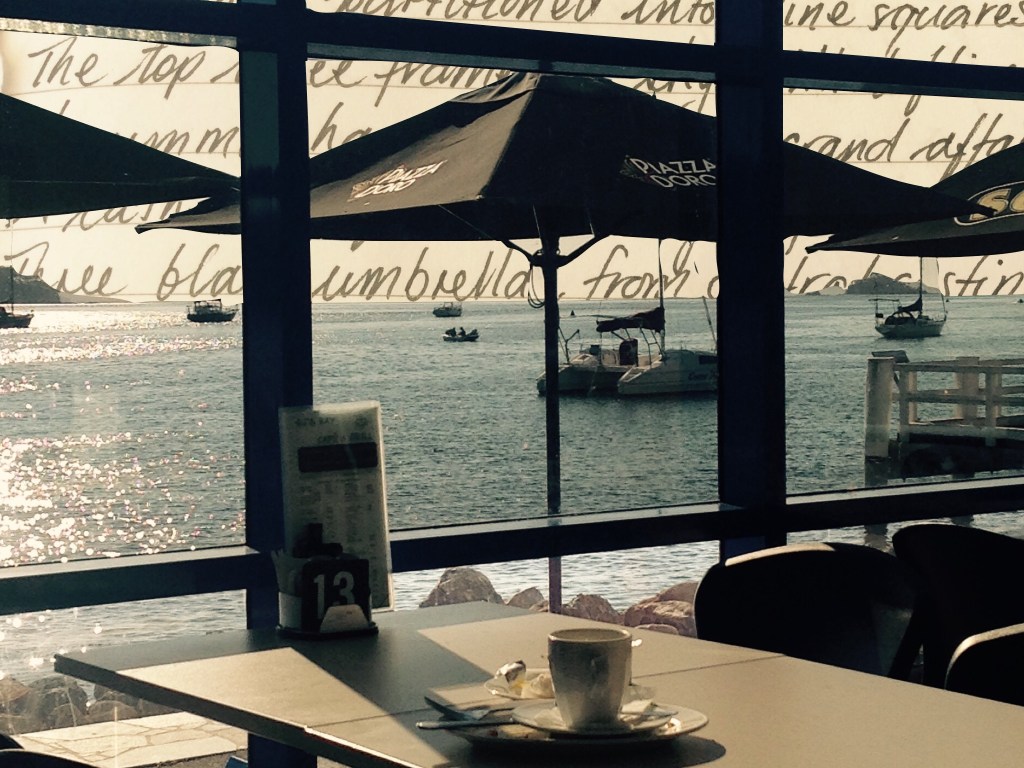
    A window partitioned into nine squares.
    The top three frame the sky with loftiness.
    A summer-haze gives rise to grand affairs;
    a cathedral of blue with gold finesse.
    Three black umbrellas, from central casting,
    flank the populated panes; overhang
    a series of light lunches, short lasting
    courses: round plates, round tables; ying and yang.
    A long list of legs fill the bottom panes
    with passing trade; pedestrian traffic;
    litany of litter and gravy-stains;
    a base-load of footsteps; demographic.
    . Plain-glass windows with horizontal stretch.
    . Nine squares, three rows… a panoramic sketch.

    © Tim Grace, 21 January 2014


    To the reader: Window frames define space. Some selectively give border to a scene; while others set no limits to a vista. Either way, a sheet of squared glass delineates one view-point from another; inside from out; here from there. This invisible but very physical medium is a lens through which we look out upon a passing parade.

    To the poet: Another observational sonnet. In most cases, my poetic outlook is uninterrupted, I see through the structural frames of reference to focus on a scene of interest. In this case, I was obviously struck by the window’s pre-defined partition of the visual arrangement. One large window; a tessellation of space: nine squares, three rows … a panoramic sketch.


    Nine Squares Nine Squares
  • In Loose Contort

    In Loose Contort

    From that which lies about us we construct
    plausible solutions; scenarios
    that help explain what life, by chance, has plucked
    as this day’s harvest of ripe curios:
    people, events, time and place alongside
    those artefacts, those things that decorate
    this impromptu muddle; unqualified
    mess – by chance an entanglement of state.
    What lies about us is about us strewn.
    A momentary arrangement that becomes
    itself revealed as a glimpse; and so soon
    becomes the fresh source of infinite sums.
    . We are in pieces, patched together, wrought
    . of all things about us; in loose contort.

    © Tim Grace, 14 January 2014


    To the reader: I’m a constructivist; intrigued as I watch organic plasticity contend with constant adaptation to non-organic obstacles. Without adaptive agility, existence is a fragile and brittle proposition. At the centre of my own survival guide is a stoic statement of resilience: things change and people adapt. Every heart-beat, every breath, is designed to extend or improve engagement with time and place.

    To the poet: Poetry and fluid mechanics have a lot in common. Both seek to understand and/or harness the nature of flow. Fluids, just like poems, derive their character from internal and external forces that influence their dynamic state. The 1960’s hit-song ‘Poetry in Motion’ is a great example of syllabically static lyrics interacting to create the effect of a constantly rolling wave.


    In Loose Contort
    In Loose Contort
    Picture Source:
    http://youtu.be/EjjMH_PdCvI
  • What if then?

    What if then?

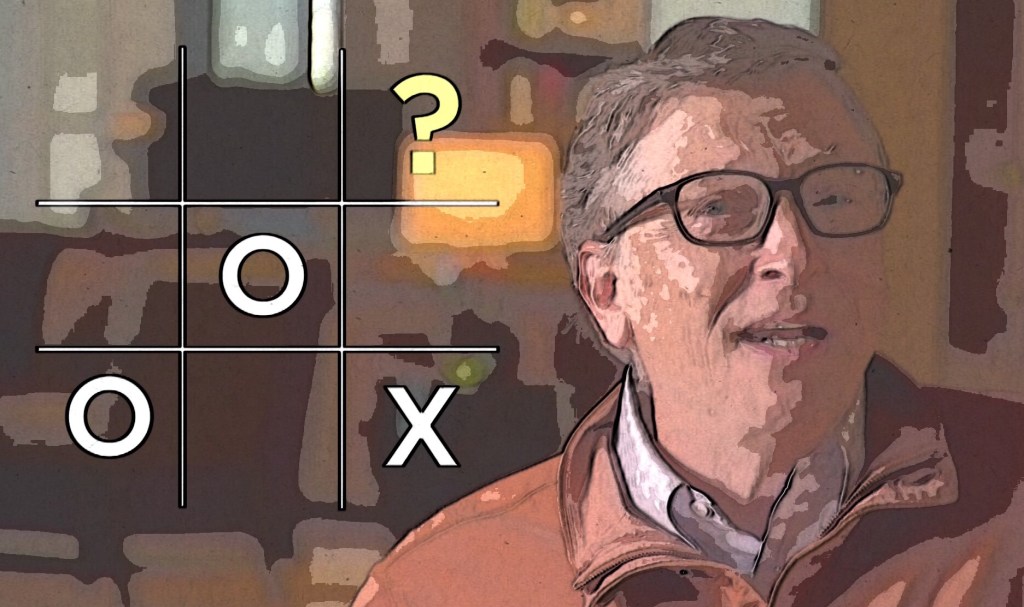
    ‘If’ is temperamental and hardly worth
    the effort it requires to hold it still.
    ‘Then’ is non-committal, swings back’n’forth
    then comes, then goes, then pendulums at will.
    In separate states ‘they’ push’n’pull apart;
    good order suffers – everyone’s confused.
    ‘Then’ makes a mockery of a clean start.
    ‘If’ takes liberties (not to be excused).
    What if/then in union these two are brought
    to heel; made to see reason; in a sense?
    What if/then, as bridled, these two are taught
    to harness the logic of consequence?
    . Then good reason will support a good guess;
    . therefore, what follows will also impress.

    © Tim Grace, 10 January 2014


    To the reader: If/then logic is a basic tool of computer programmers. Coded scripts embed consequential actions that take place according to if/then decision-making processes. Evaluators use if/then sequences to unravel cause and effect relationships. And, our socio-cultural institutions apply If/then statements to establish and reinforce behavioural codes of conduct; law and order. Without a logical connection between ‘if’ and ‘then’ the two stand at odds and create confusion.

    To the poet: The sonnet relies on a sequence of nested references that by association resonate with a reader’s interest. To engage curiosity, a loose level of ambiguity creates intrigue; and to add a twist, many sonnets feature what is known as a volta. The volta provides a turning point at which the direction of the poem changes; moves towards some form of resolution. In this sonnet the volta consumes the final quatrain; setting up space for the answer which comes in the final couplet.


    What if then?
    What if then?
    Picture Source:
    http://youtu.be/m2Ux2PnJe6E