Category: Uncategorized

  • Social Offence

    Social Offence

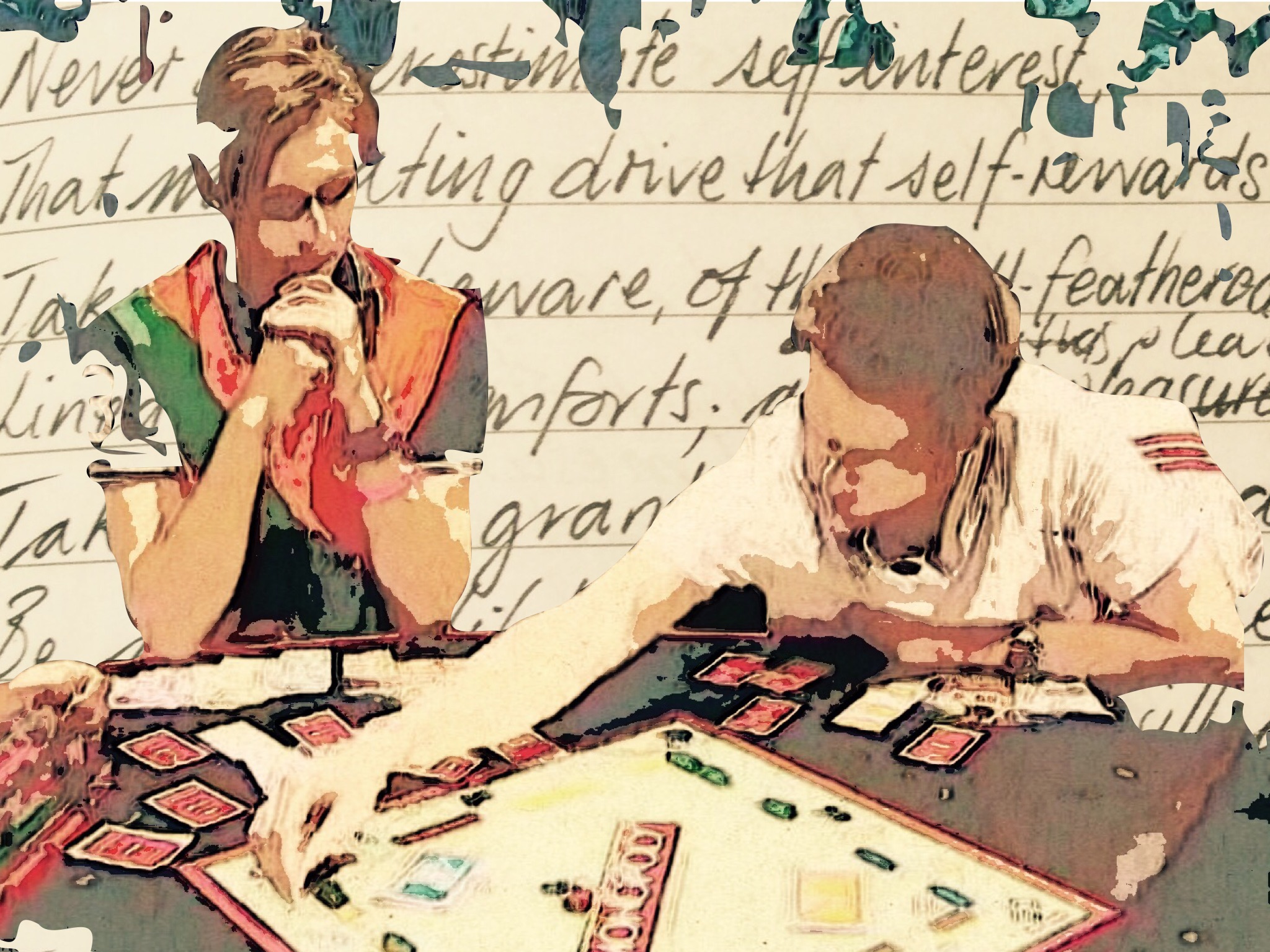
    Never under-estimate self-interest:
    a motivating drive that self-rewards.
    Take note, observe the well-feathered nest,
    lined full of comforts; as pleasure affords.
    Don’t take for granted self-interest’s desire;
    don’t be gullible or slow to your feet;
    don’t be surprised by what Self will acquire;
    don’t be the lender who has no receipt.
    Take heed, be ready, keep track of the score.
    Self seeks advantage, full measures the gain.
    Take nothing for granted, rest not assure,
    Self seeks indulgence; treats else with disdain.
    . Indulgence of self at others’ expense.
    . A cruel investment … a social offence.

    © Tim Grace, 4 May 2013


    To the reader: Possession brings them pleasure and reassurance. Put crudely, their conniving motivation is greed. They are the players who want more than is their fare share; cunning manipulators that contrive a self-serving solution. The psychology of greed would find its origins in an unresolved, deep-seated, sense of lacking… ‘poor me’ seeking restitution; ‘poor me’ retrieving what I’m owed.

    To the poet: In the writing of a poem like this there has to be some emotional investment in its authorship. In its composition, it has to express annoyance and disappointment; some skin in the game. As I put pen to paper, I draw upon genuine feelings of frustration to validate my argument, to test its impact and authenticity. In its reading, I need to recognise those same unclaimed investments… the emotion must be raw and real.

    Social Offence
    Social Offence
    Picture Source:
    http://youtu.be/RZwmPBP2JHI
  • Unravelling Dimensions

    Unravelling Dimensions

    Sadly, the remains are but frailties:
    crumbling pillars and collapsing pylons;
    fragile columns; diminished faculties;
    cancerous concrete; corroded irons;
    frayed exposure; unravelling dimensions
    stripped of the scaffold that prevents collapse.
    Footings, as anchored to loose connections,
    probabilities reduced to perhaps.
    Platforms of understanding turned on edge:
    uncertainty – an awkward intrusion;
    short-term remedy – with no long-term pledge;
    a mortarless mix – dust and dillusion.
    . Crumbling columns collapse; ruins remain.
    . No rhyming couplet can loosen the strain.

    © Tim Grace, 26 April 2013


    To the reader: Dementia is a cruel affliction. The brain retires its function and loses its grip on day-to-day realities. Learnt routines are no longer spontaneous, simple sequences are interrupted and confusion increasingly describes the state of mind. As problems compound there’s a step-down effect; delusion and dismantling go hand-in-hand; finally, connections become tenuous and recognition becomes featureless.

    To the poet: My father is suffering the slow decline of dementia. In the beginning stages he would read my sonnets with editorial license, holding on to rules but glossing over nuance that could no longer catch his attention. Years on, the crafted string of words are meaningless. His highly analytical brain has lost its refined capacity to decode and decipher. And so, I write about him; the subject of my thoughts.


    Unravelling Dimensions
    Unravelling Dimensions
  • Ten Times Over

    Ten Times Over

    In pursuit of perfection’s guarantee
    we chase that which is better than the best.
    Nothing could not “ten times the better be”
    as steadied, then readied, for Time’s cruel test.
    All the world’s treasuries do not stand still;
    those with gold glint, with crystals shimmer.
    Those animated vaults of potential
    are the genesis of hopeful glimmer.
    Flushed with abundance, they lack not any
    of the comforts that come with fortune’s care.
    That which is ‘one’ finds itself with ‘many’
    and so on, ten times, produces an heir.
    . Ten times the merrier, ten times the wealth.
    . Ten times the better, through sickness and health.

    © Tim Grace, 20 April 2013


    To the reader: The idea of abundance sounds agrarian to an urban ear. As a man of his time, Shakespeare was an advocate of reap and harvest, stack and store; his reference was a time of uncertainty. Ten times the better be… seems his ideal solution to a number of problems. The simple model derives sufficient resources from a stash of plenty. It’s about making the most of what’s available, to ensure today’s waste or laziness is not tomorrow’s sorrowful regret.

    To the poet: In a few of Shakespeare’s sonnets he refers to ‘ten’ as a number of good use and satisfaction. Ten times the better be for all manner of circumstances; from procreation (WS-S6) to imagination (WS-S38) for happiness (WS-S37) and amusement. And so began my sonnet (TG-S217)) about over-reaching for the sake of abundance; ever the need for surplus … just in case.


    Ten Times Over
    Ten Times Over
    Picture Source:
    http://youtu.be/XWumLIZZaYc
  • Victory Entombed

    Victory Entombed

    Once again, death rejoices a new grave,
    a soiled-over body, a buried soul;
    welcomes The Dead (Le Mort) to Hades’ cave;
    adds a fresh bag of bones to its countless toll.
    The spoils of victory entombed, encased
    in a casket of clay, in wet mud drenched,
    dispirited, disposed of, laid to waste,
    laid to rest in pieces; so long entrenched.
    ‘So Long’ farewelled, given back; dust to dust…
    But listen, through the dirge, the Angels sing.
    ‘Hark’ the Angels sing (as so the Angels must)
    “Where, Oh Death, is your victory, your sting?”
    . Through nothingness Death must surrender all,
    . beyond nothingness – Eternity’s call.

    © Tim Grace, 22 March 2013


    To the reader: He was 94 at death. An Uncle. An only son. An alcoholic… a troubled soul… a widower with children… a mechanic… a reformed alcoholic… a preacher; a man who found redemption. At life’s end, a man who had travelled a long and arduous journey of self-discovery. An adored father… a revered brother… a soul at rest; freed of Death’s sting, for “I am the resurrection and the life. Whoever believes in me, though he die, yet shall he live, and everyone who lives and believes in me shall never die” (John 11: 25-26).

    To the poet: This sonnet is a layered interpretation of one man’s passage through, and beyond, the doors of death towards eternal peace. To begin with, words rattle with visual references, “but listen” (at line 10) calls upon a new register of interpretation: “Hark the Angels sing”. The dismissal of Death as an ending in itself (1 Corinthians 15:55) takes the sting out of life’s terminal destination. At Death we join the countless dead and become at last united with one collective spirit… so the story goes.


    Victory Entombed
    Victory Entombed
    Picture Source: http://youtu.be/EOga0vsuC6Q
  • Chambers of Bone

    Chambers of Bone

    The dinosaur. Well and truly buried.
    A sedimentary relic. Petrified.
    Given to the past; a long time slurried,
    muddied-over, laid to rest, fossilised.
    Entombed worrier. Stabilised in stone.
    Imprisoned posture; contorted, compressed,
    a calcified temple, chambers of bone.
    A cathedral where hides the dragon’s nest.
    The lair, from where darkness is cemented
    to shadows; re-dressed in fear and loathing.
    Where naked bones are re-fleshed. Tormented
    skeletons. Cupboards of ghoulish clothing.
    . From the dust of bones the dragons rise,
    . to be the carriers of cruel demise.

    © Tim Grace, 11 March 2013


    To the reader: The dinosaurs’ demise was dramatic but to some extent not as final as their stone graves suggest. In miniature, birds (as feathered remnants) and reptiles (as scaled mimics) echo the intriguing traits of their prehistoric ancestors. And without too much stretch of logic it’s easy to see how with a flight of fantasy we’ve invented the mythical dragon. Skeletons and rattling bones can send a shiver up the spine.

    To the poet: This sonnet begins with short sharp statements of finality: the dinosaur is dead. And being so, the dinosaur has become a larger than life assemblage of intrigue and fascination. From ‘calcified temples and chambers of bone’ the dinosaur has given birth to the dragon; a cantankerous creature renowned for having a quick and revengeful temper. Some things are best left buried.


    Chambers of Bone
    Chambers of Bone
    Pictures Sources:
    1- http://youtu.be/chmDjcxEcAQ
    2- http://youtu.be/wvESMH93PU8
  • Things of Interest

    Things of Interest

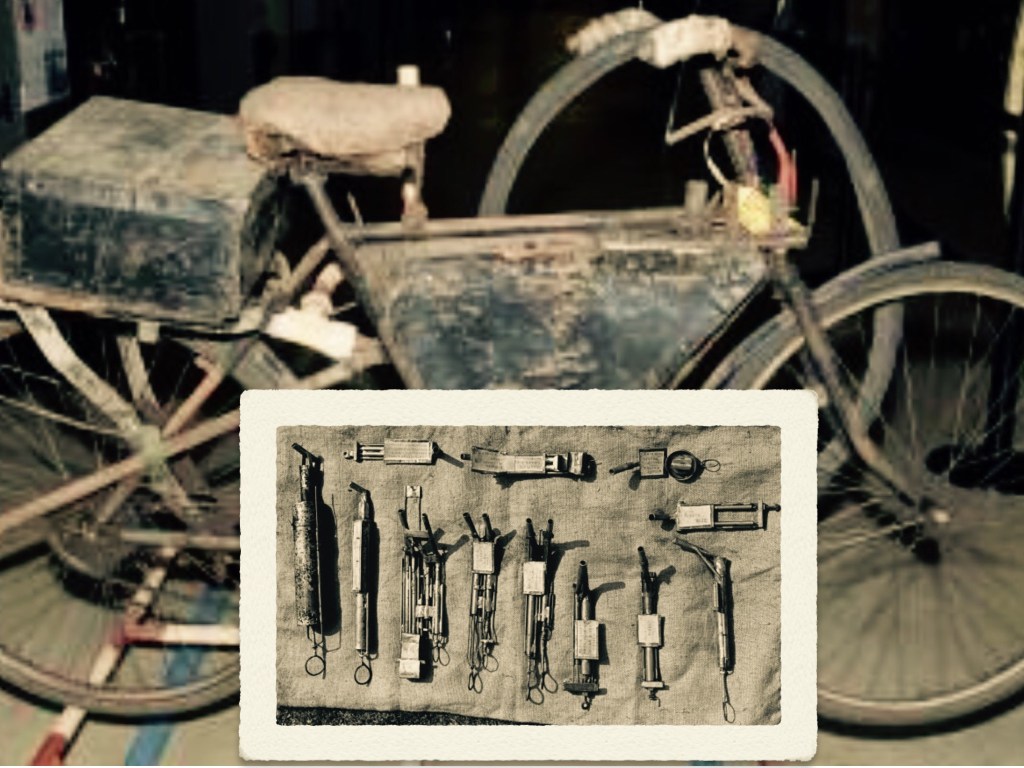
    Things, nameless remnants, objects in a drawer;
    trinkets that tumble out of time and place.
    Garage gadgets, artefacts of war;
    unidentified objects, out of space,
    out of reason, out of function and fit:
    oddities, obscurities, curios
    long since departed from inventor’s wit;
    having lost the memory of ‘who knows’.
    Relics in a box, contents in a trunk,
    a job-lot of stuff, a deceased estate
    to be sold-off cheap, to be bought as junk:
    what’s good for nothing makes a paper weight.
    . Nothing more nameless than a nameless thing.
    . All deserve a title – be it subject or king.

    © Tim Grace, 17 February 2013


    To the reader: I discovered an eccentric great uncle: the bird man. He was featured in a national display of urban characters known for having an inventive wit related to ‘things’. Uncle Henry Grace, was a bird-listener. He rode the country-side listening to warbles. Fittingly, he then invented his own form of warble-notation to capture distinctive ‘calls of the bush’. Then, he would create tin-whistles that imitated the various cheeps and chirps. A century later they are ‘things’ of interest; curios.

    To the poet: In its first-draft this sonnet began with: ‘Objectification, the stuff of things’… borrowed (I remember) from the more contentious notion of ‘Subjectification, the sport of kings’. Quite a nice beginning, but the rest of the sonnet was hopelessly lost in trivial detail. And so, the long task of re-writing began. A complete upheaval takes some effort. Holding on to the essence, discarding all else … that’s the thing.


    Things of Interest
    Things of Interest
    Picture Source:
    http://trove.nla.gov.au/work/36318721?q=henry+grace+whistles&l-availability=y&l-australian=y&c=picture&versionId=46737536