Category: writing

  • Fears Not Dust

    Fears Not Dust

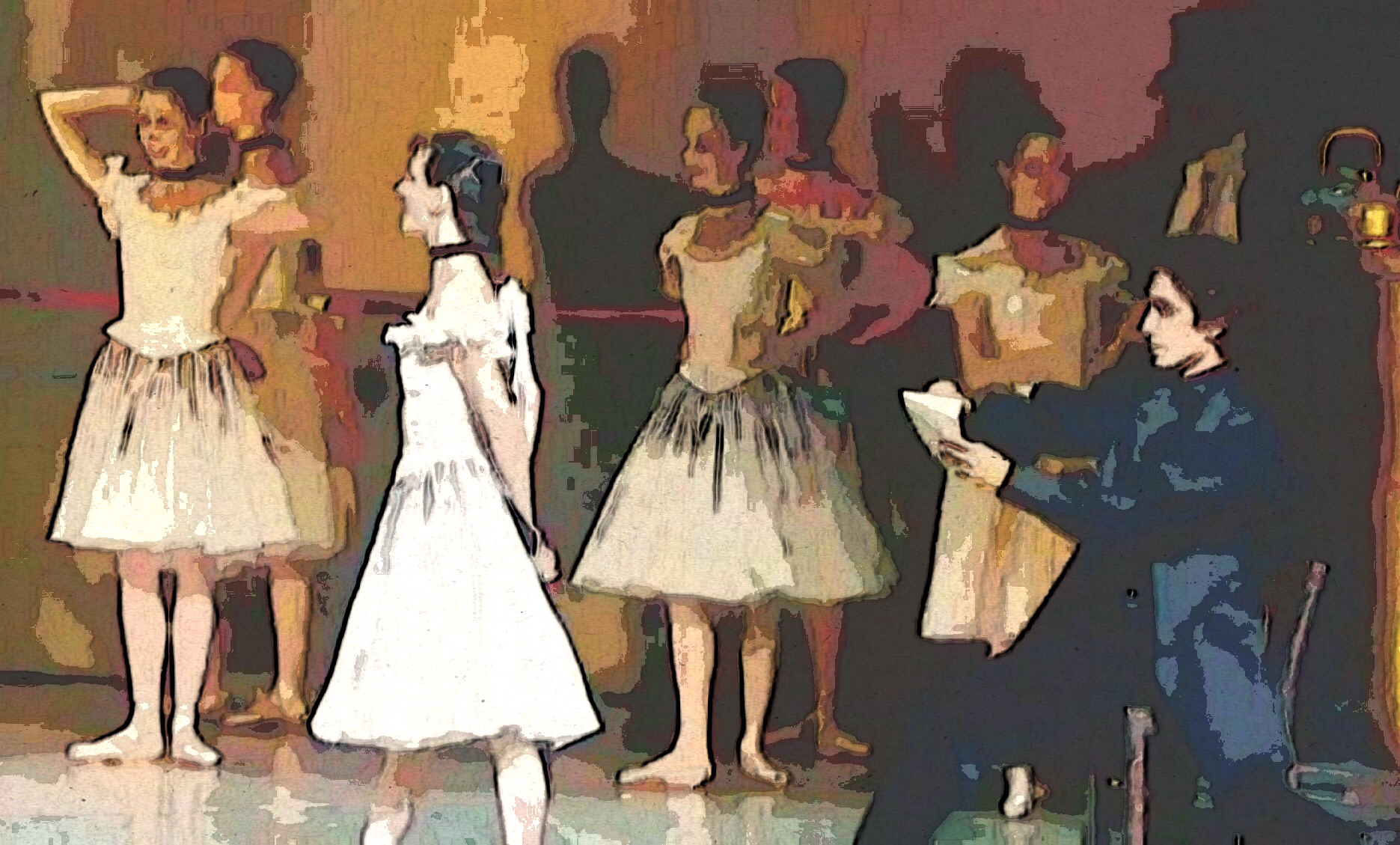
    Degas fears not dust, but the hand of man.
    His art is that of motion not of bronze.
    His shuttered frame’s neither still nor frozen.
    From moment to moment his art responds.
    He seeks the illusion of transfered weight;
    forward leaning movements lunging at space.
    He seeks expression through a fluid state;
    liquid locomotion spilled into place.
    See the bathing women, the jockeyed horse,
    the ballerinas giving curtain call,
    the girls with flowers, and himself of course;
    none paint a picture showing life at stall.
    . The subtle suggestion of swing and sway,
    . Creates the impression of dance at play.

    © Tim Grace, 4 November 2012


    To the reader: “What’s more static than a statued dancer?” Degas was challenged by the limitations of ‘snapshot’ art. The idea of capturing a static scene brought him little interest. His more intriguing challenge came through art that suggested something beyond the instant of creation. Through pose and posture, Degas gave his subjects impetus; his scenes momentum. Therein lies the power of degas … in every moment there’s fresh potential.

    To the poet: Like moths to light, experts love controvacy:”Degas, one suspects, was turning in his grave. Before his death in 1917, he repeatedly expressed concern that charlatans might highjack his legacy by casting his sculptures in bronze and selling them to collectors, and is said to have told his fellow painter Georges Rouault, ‘What I fear most is not dust but the hand of man.’” And that article in Bloomberg Business (by William D Cohan) triggered my poetic interest.

    Fears Not Dust Fears Not Dust
    Picture Source:
    http://www.medici.tv/mobile/la-petite-danseuse-de-degas-patrice-bart-world-premiere-opera-garnier
  • To some extent…

    To some extent…

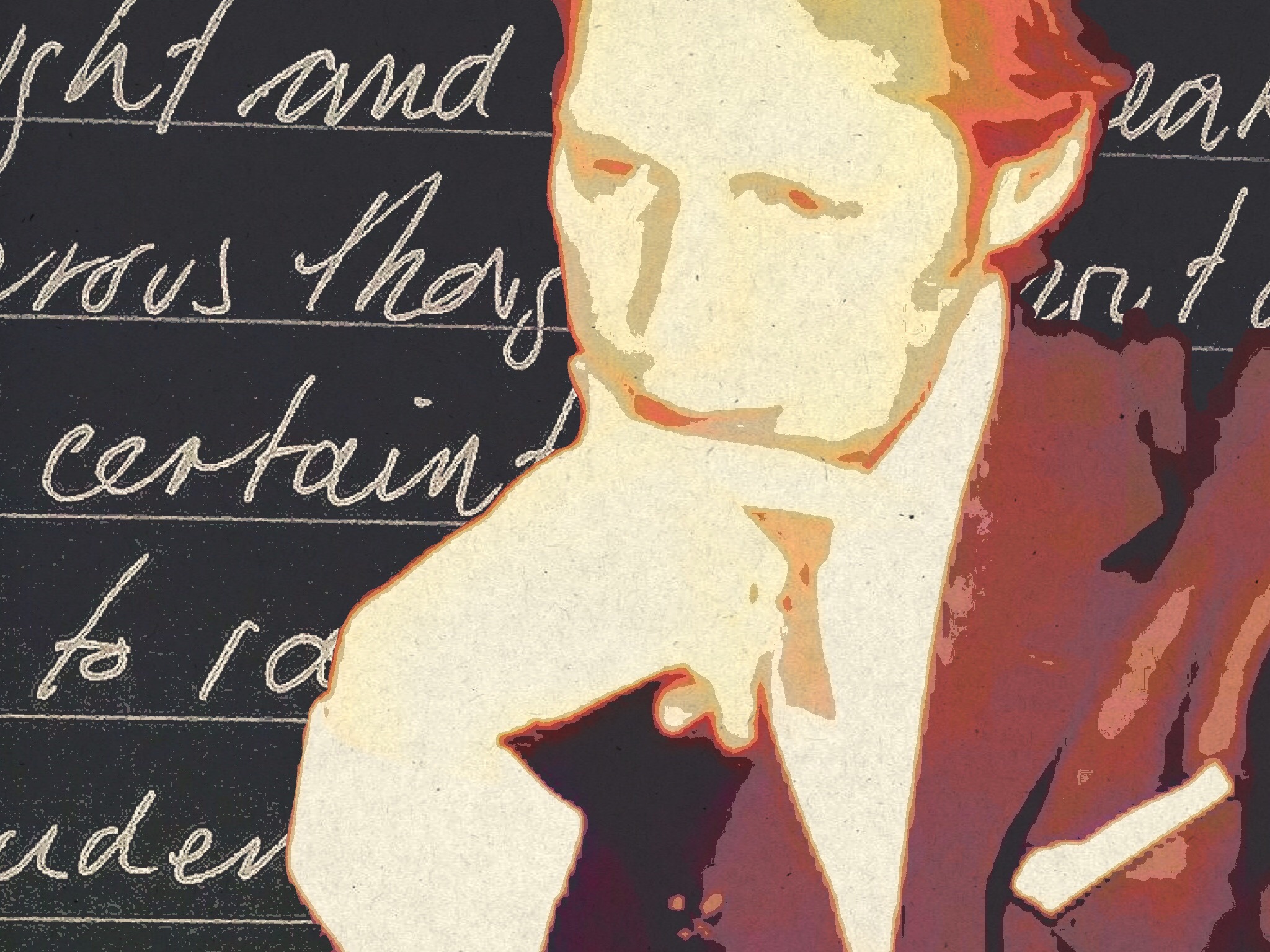
    A thoughtful pose has contemplative poise;
    its purpose is more poignant than profound.
    In posture it’s positioned and so deploys
    a line of thought before it breaks new ground.
    It’s a ponderous thought without anchor;
    not hooked to certainty, not chained to proof,
    not pitched to ruffle, or raised to ranker;
    as ever prudent it remains aloof.
    To some extent it loiters with intent;
    seeking permission before intrusion.
    Along with due regard it’s time well spent:
    ‘Blessed is the thought without conclusion’
    . Contemplation … preserves the pragmatic.
    . Reservation … rescues the erratic..

    © Tim Grace, 20 October 2012


    To the reader: Avoiding the arrogance of certainty requires reservation. For those endowed with high-powered intellects, and an impulsive nature, being thoughtful is a challenge. Their ability to be cautious in conclusion is often over-ridden by a narrow spark of brilliance that out-shines the soft-light of wisdom. Because they thrive on instancy they contrive urgent environments that demand quick solutions … but what of the question that has no answer?

    To the poet: … blessed is the thought without conclusion. To pause in a suspended state of wonder feeds imagination, fuels curiosity, opens the mind to a range of possibilities. My poetry is like that… the rules of sonnet writing conveniently slow down the thought process to a mindful state of awareness. In my opinion, being a meditative amusement, the sonnet is best cooked slowly. There are other forms of poetry that celebrate spontaneity; to them I tip my hat.


    To some extent... To some extent…
    Picture Source:
    http://youtu.be/rRKpo1_oiqY
  • Terminal Ferocity

    Terminal Ferocity

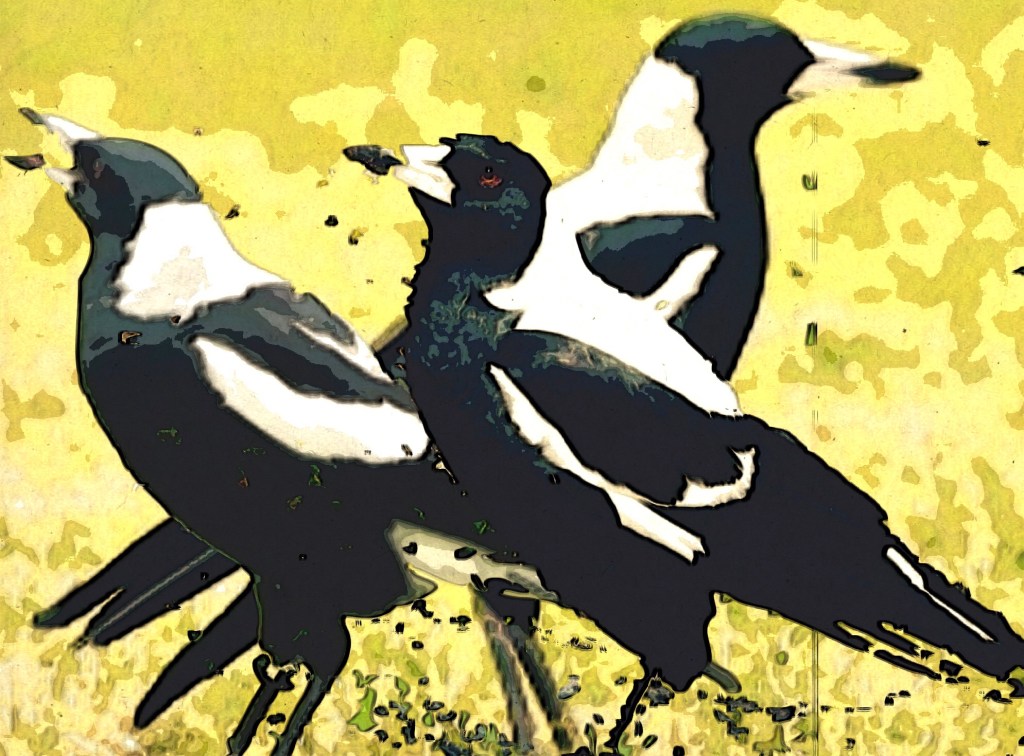
    Early in debate, two sharp points were made.
    Succinct as a dagger’s thrust; both cut deep.
    To be driven home, each decisive blade
    was further twisted; blood and guts did seep.
    The angles of intrusion were acute;
    on passage, both knives parted flesh from bone,
    lanced the stomach, and punctured lungs on route.
    They came to rest, rigid as steel in stone.
    As life bled from the wounds (of both soon dead)
    those in witness stopped in forensic pause;
    thought upon the motive and so agreed:
    “Death came to pass upon a common cause.”
    . For those who debate, agreement is death;
    . a sign of weakness … such a waste of breath.

    © Tim Grace, 14 October 2012


    To the reader: I worked in an office where heated debate would often culminate in furious agreement. Two staff-members with fiery temperaments would constantly joust and parry over common ground. For all in witness, it would have been far better these two pedants had opposing views of worthy substance. Alas, and instead, the two argued over detail and finally arrived at a consensus; long-since agreed by all else half-concerned by the menial matter.

    To the poet: “What of two minds that claim a single thought?” The two subjects of this poem are in dispute; literally. Are they the two sharp points, are they the two daggers; then again, are they the two adversaries? That subjective confusion is deliberate in construing an investigative pastiche; a crime scene of sorts. As required of this genre, a confused subject needs a vague objective; and so the plot thickens. What’s the remedy? A strong couplet that solves the riddle.


    Terminal Ferocity Terminal Ferocity
    Picture Source:
    http://youtu.be/lMDJNoWbpbI
  • A Natural Stamp

    A Natural Stamp

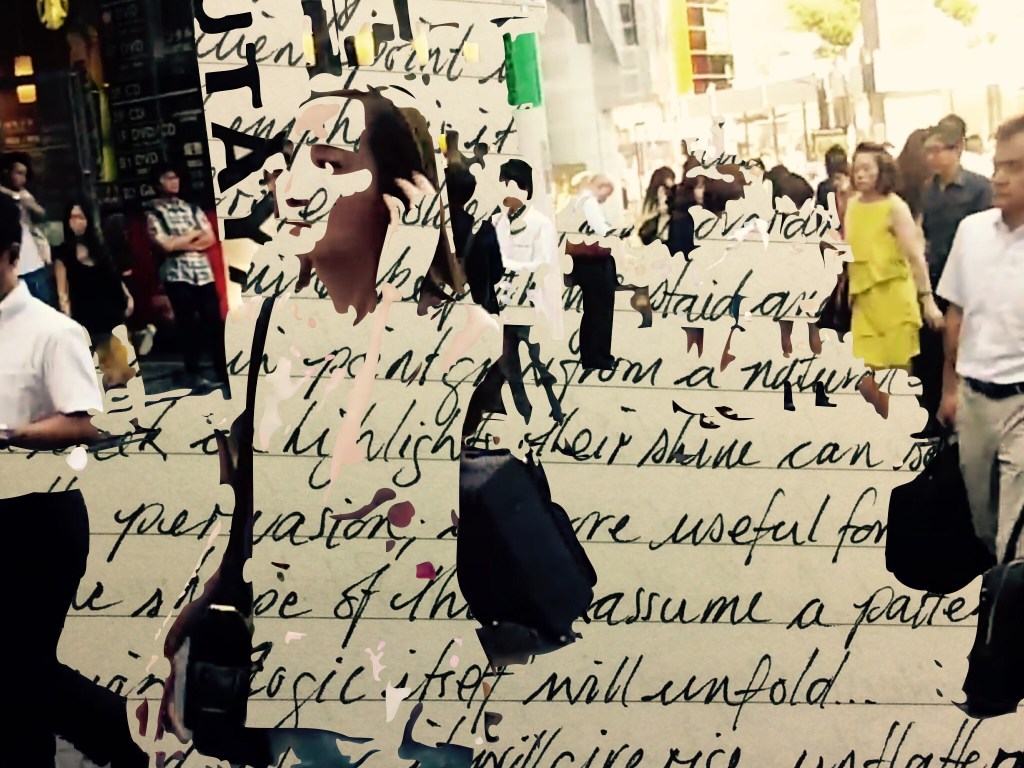
    The strength of argument is undermined
    when a salient point is overstressed.
    For combative sake, such is underlined;
    brought to fore, emboldened and overdressed.
    At front of mind keep things staid and subtle.
    Let the main point grow from a single source.
    Hold back on highlights, their shine can scuttle
    gentle persuasion (a more useful force).
    Let the shape of things assume a pattern.
    By design, logic itself will unfold
    its grand plan; and in good time, unflatten
    that which by rights should have its credits told.
    . Let the emphasis be a natural stamp.
    . Let the logic of truth light its own lamp.

    © Tim Grace, 18 October 2012


    To the reader: Fashion often begins as a bold statement that gains mainstream approval. Singularity becomes popularity. The norming effect absorbs distinction. Peaks of interest wane; become mundane… we simply lose interest in the fad. Used sparingly, boldness is an effective attention grabber; useful in assembling interest, drawing a crowd and gaining focus. Overused, it’s a crude and ugly device.

    To the poet: “Are all things to be boldly underlined?” Impacts can pack a punch and leave a lasting impression; as in a bruising affair. Then again, there’s a lot to be said for the subtle approach that through imperceptible gradations alters a line of thought or a chain of events. In poetry, novel nuance is equal to brazen boldness; our good-readers are alert to ambiguity; they’ll stop without a red-light flashing.


    A Natural Stamp A Natural Stamp
    Picture Source?
    http://youtu.be/tI7fktKY6OU
  • Variations

    Variations

    This from that‘ can be interpreted thrice;
    subtle ambiguity some might say.
    Otherwise expressed, a poet’s device;
    so that hairs might split, so that ends might fray.
    From this that‘ a simple alteration
    from the original text, an exchange
    of order, a sequenced variation:
    sleight of hand, write of passage, slightly strange,
    rightly plausible; curious, obtuse.
    That’s the poet’s ploy, that’s the poet’s choice.
    From that this‘ offers another excuse
    to alter meaning without change of voice.
    . From that this… from this that … or … this from that?
    . Noteworthy differences … or idle chat?

    © Tim Grace, 10 October 2012


    To the reader: Variations on a theme. Subtle change. One of many interpretations. The Sciences love to monitor variation; noting change with mathematical precision. In the Arts, it’s through music that variations abound. The music industry cleverly exploits the human ear’s acuity by releasing different versions of the same song, or orchestral piece, for our listening pleasure… spot the difference.

    To the poet: … another one of those puzzle poems. Word order is an important semantic tool. Sometimes it makes little difference to meaning; other times, a shift in placement can disorient the reader’s expectation. Used deliberately, a change of word order can be very effective in drawing attention to a point of difference.


    Variations Variations
  • Hastiness

    Hastiness

    Hastiness – the answer that’s come too soon:
    a gift-wrapped solution, an empty shell.
    It’s just another song without a tune;
    has momentum but nothing to impel.
    We are all too ready to jump and leap:
    jump to conclusions through hoops of faith.
    Too quick to give away what we should keep:
    ready to end; too impatient to wait.
    Hastiness – cuts loose, all that’s to follow:
    severs ties with solutions; tried and true.
    Too quick to grab at straws, thin and hollow.
    Too quick to surrender to all that’s new.
    . Hastiness – not an answer, just a fudge;
    . just an assumption, they’ll be quick to judge.

    © Tim Grace, 8 October 2012


    To the reader: Since the beginning of biblical days, through the wisdom of Solomon, we’ve been advised to avoid the lazy answer; Proverbs 21:5 states that:diligence leads to riches, as surely as haste leads to poverty”. And more confusingly we’re told to balance haste over speed (or is it the other way around?). All very well, but convenience is an attractive lure; the short-cut solution that satisfies impatience often appeals.

    To the reader: “How are we to judge without conclusion?” – The good poem reads as fresh and acute; of the moment, forever true. Hence, there shouldn’t be too many indicators of laboured inspiration. Conversely, signs of a rushed solution are markers of laziness. Somewhere, built into a poem, there needs to be both ‘point and purpose’… like ‘dollars and cents’ they are the currency of a ‘reading and writing’ exchange.


    image