Category: literature

  • Today I’m late

    Today I’m late

    Usually, one of the early risers;
    from sun-up, noting texture of the day.
    Mostly ready, for the day’s surprises;
    well-prepared, well-postured, for come what may.
    But today I’m late, I’ve lost advantage;
    just one of many, recently arrived.
    Left to share a script on a crowded stage;
    just one of the collective, so contrived.
    Late… my expansive day has been confined.
    I’m now a post-script that time has stolen;
    an after-thought, yet to be assigned.
    I’m a conscript, a left-over colon.
    . With an early start, you design your day,
    . Leave it too late, and to a script you’ll play.

    © Tim Grace, 1 January 2013


    To the reader: As routine activities become more general they acquire a network of dependencies. My morning routine is like that. It might appear that I’m up early and out the door to do some writing. Not so, it seems. Small changes to parts of my morning mission can torpedo the enterprise. With a small series of delays, I find myself cornered in a crowded café. No words can describe my…

    To the poet: Writing about writing is an introspective task; somewhat therapeutic, slightly poignant. A metacognitive indulgence that’s occasionally excused by a patient reader; one with a forgiving nature. Unpacking this sonnet, reveals its block-like construction. Inevitably, piece-by-piece, the puzzle is connected; rules are followed and so it lazily meets its final couplet… late to arrive at its conclusion.


    Today I'm Late
    Today I’m Late
  • Words Have Accents

    Words Have Accents

    Words have accents, some subtle, some severe.
    The urban banter of a rough-cut brogue.
    The soft rounded lilt that lovers revere.
    Words are responsive to fashion and vogue.
    They’re tandem partners in a common phrase,
    They’re crude expletives in a colourful verse,
    They’re gushing gaffs in superlative praise.
    They can mumble, grumble; be short and terse.
    Words can shatter dreams, mend a broken heart,
    Words have expression, and so resemble
    the whispering wind and the dashing dart,
    the babbling brook and the leaves atremble
    . Words have accents, some are rich and refined,
    . others more guttural, milled in a grind.

    © Tim Grace, 26 December 2012


    To the reader: For such little things words can pack a powerful punch. The expletive works well alone; but on the whole words are social creatures. In pairs they hyphenate easily; in threes and fours they craft a competent phrase; beyond that their assemblage constitutes a sentence. In the world of words context is everything, for without association words are reduced to meaningless sounds; mere babble vibrating through space.

    To the poet: In poetry, the word is a versatile instrument; adaptable and flexible. Adaptive in a syntactic sense, it transitions from active to descriptive modes with ease. As a flexible element, the word’s semantic nuances are powerful attachments to emotional strings. Between the right and wrong choice of word there’s a world of difference. A bit like chemistry … where a combination of elements can be volatile; evaporative and explosive.


    Words Have Accents
    Words Have Accents
    Picture Source:
    http://youtu.be/JHLMGBwAbhA
  • Trigger Point

    Trigger Point

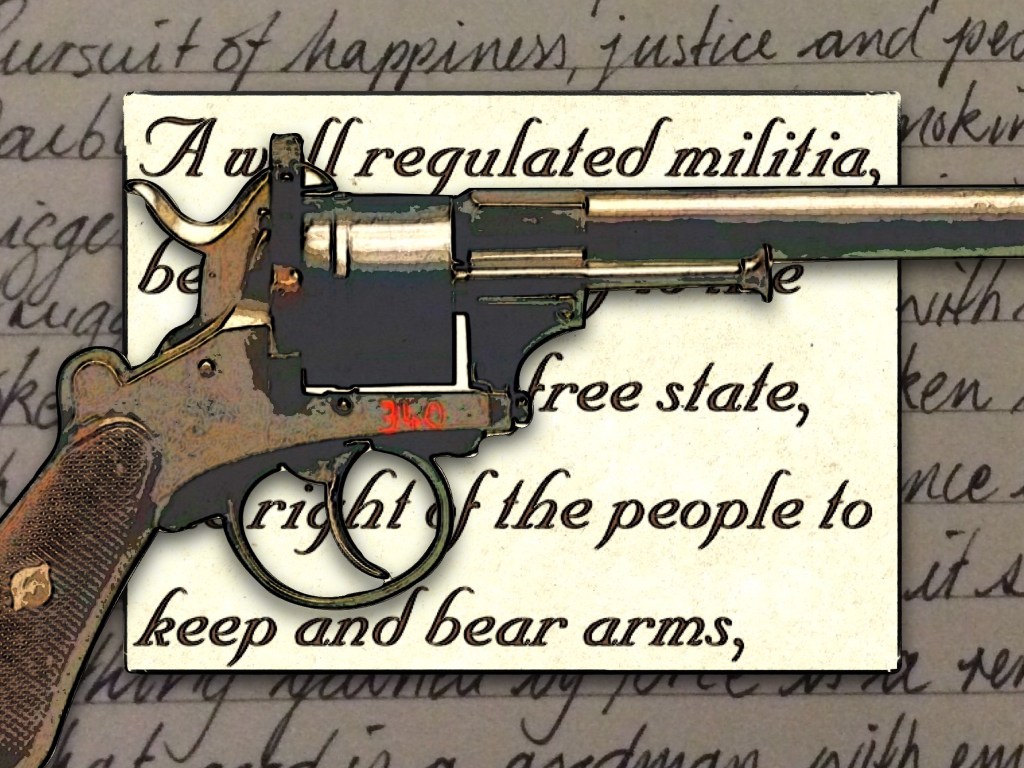
    It’s claimed ‘the gun is innocent’ … guiltless;
    absolved of all responsibility.
    A much maligned artefact, mere witness
    to bloodshed … has no culpability.
    Left then to wonder, left in state of stun.
    ‘Pursuit of happiness … justice and peace’
    Doubt’s made a target of the smoking gun.
    Trigger-point stand-off with hair-pin release.
    Struggling to make sense, tense with disbelief.
    Broken logic, broken hearts, broken dreams,
    shattered confidence; consequence is grief.
    To bear arms, not as simple as it seems.
    . Nothing gained by force is a remedy.
    . What worth is a good man with enmity?

    © Tim Grace, 26 December 2012


    To the reader: What relationship would prosper on the promulgation of fear and suspicion? Not one that values the pursuit of happiness. By nature, the trigger-happy fool is impulsive and irresponsible; prone to late apology; an after-thought. The perceived need to self-protect describes an individualistic ideology where social order is mistrusted; it’s the breeding ground for gun-toting rhetoric and double-barrelled nonsense.

    To the poet: With this sonnet my aim was broad. I took a scatter-gun approach to the target. A rat-a-tat list of ideas that sprayed shrapnel far and wide. On the rambling range, I used a metaphoric weapon that had no respect for its victim. Collateral damage was an unfortunate consequence, tolerated as expected impact. The late volta (the swivel at line 12) took final aim… in case the point was missed.


    Trigger Point Trigger Point
    Picture Source:
    http://youtu.be/Zzxwr4tdohw
  • Animosity

    Animosity

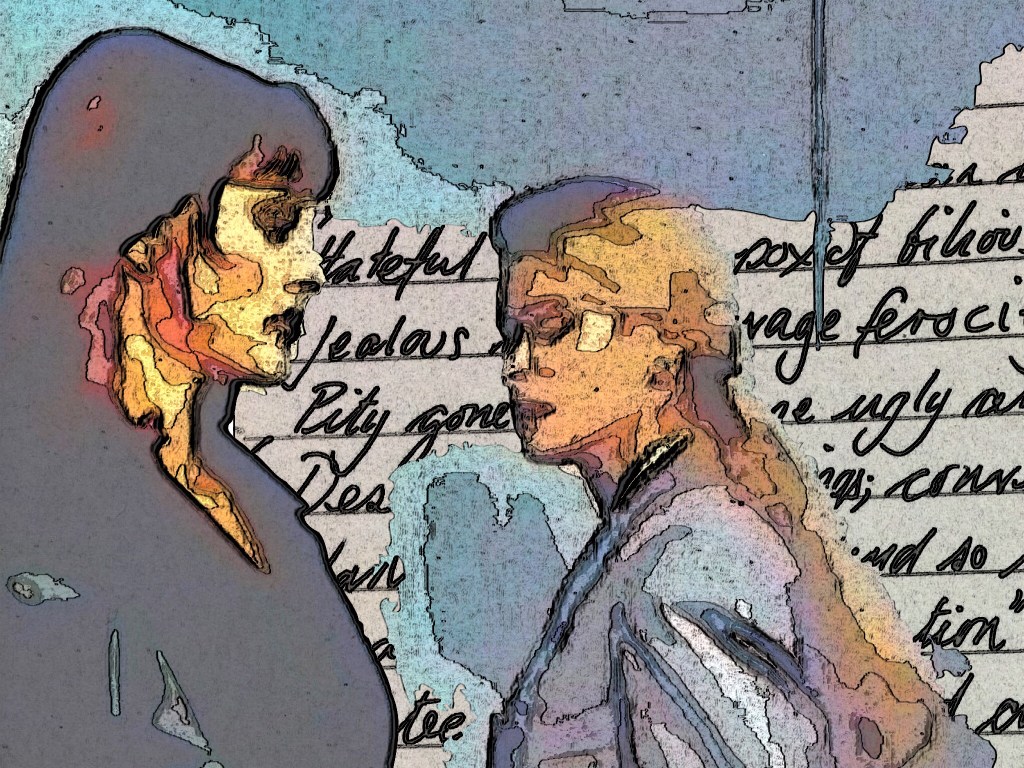
    No curse more worse than animosity.
    Hateful envy, a pox of bilious bile,
    jealous anger, savage ferocity,
    pity gone putrid, ugly and vile.
    Desires become cravings; converted
    wants become needs; crudely, love becomes lust;
    good things strangled, hopelessly perverted…
    so steel turns to rust, and diamonds to dust.
    Animosity will foul its own nest:
    over-paint a masterpiece, self-corrupt
    the elegance of beauty crudely dressed.
    The curse of animosity – one-upped!
    . The success of others (not yours to own)
    . If not resolved, will turn a heart to stone.

    © Tim Grace, 22 December 2012


    To the reader: Animosity is a stifling energy. Characteristically, it’s an emotional state that directs spiteful anger at a rival who has gained a perceived ‘unfair advantage’ in the relationship. From small issues problems fester and spiral out of all proportion. Resolution is unlikely to occur without some helpful intervention that manages to recalibrate the tension. Animosity is more often quelled than it is quashed.

    To the poet: A sonnet that taps into raw-emotion needs to anchor its rancour hard and fast. There’s little room to escalate slowly. The first line: “no curse more worse than animosity” unravels the expose; and the avalanche torrents forth. In a poem like this, the rush of verbiage is propelled on the back of poetic ploys that are easily translated into expected rhythms and solid rhymes; given a liberal dose of assonance, consonance and alliteration.


    Animosity
    Animosity
    Picture Source:
    http://youtu.be/sTxBOzjxDn4
  • Desk Message

    Desk Message

    Not a year that went exactly as planned:
    melodrama, tragedy and high farce.
    Controversial guests that denied the bland
    intent of pleasant passage come to pass.
    We’ve managed (despite these guests) to cope
    with upset, and to patch-up those mistakes
    that through repair addressed the slippery slope.
    We’ve all learnt something: learnt what it takes
    to muddle-on, to pull-back from the brink;
    to keep calm; bunker down and take it slow.
    With stoic grit, we’ve learnt to neither blink
    nor shrink from scandal’s shame or worry’s woe.
    . We are the better for adversity.
    . So claims the wisdom of perversity.

    © Tim Grace, 6 December 2012


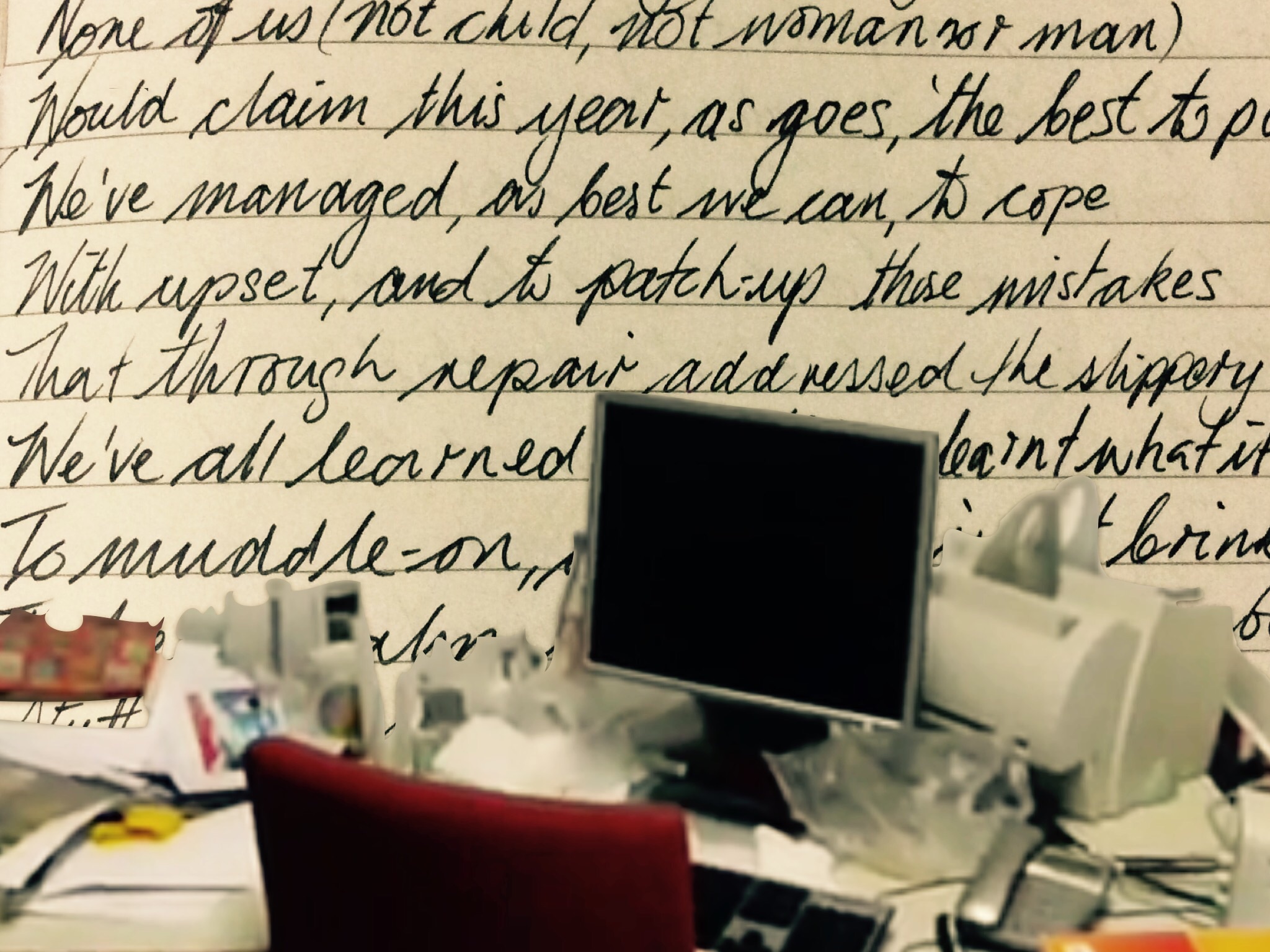
    To the reader: I worked with a colleague who muddled his way through a year of workplace calamities. Piles of paperwork spilled over his desk; nothing got finished; technologies failed, and deadlines passed. With such hopeless organisational skills, other staff watched-on in dismay. His boss gave up all hope of a supervised solution; so the problem just got worse. The disconnect widened and office isolation became entrenched.

    To the poet: I left a card somewhere on his desk. An end-of-year message that added precarious height to an existing pile of paper. And so began this sonnet. It’s not about ‘him’ more informed by his various predicaments. His office isolation (somewhat self-imposed) reminded me of brackets. Brackets (here exampled) recognise a necessary petition of parts; inclusive features, distinct in nature… describes him well.


    Desk Mess-age Desk Mess(age)
    Picture Source:
    http://youtu.be/zqQby6sZ2rU
  • a Priestley sum

    a Priestley sum

    What we know of air is a Priestley sum;
    makes an experimental masterpiece.
    Through simple observation so we come
    to learn from nature; wonders shall not cease:
    that air might be exhausted then restored;
    made stale and then repaired; broken then fixed.
    Such are the problems science has explored,
    mulled over, pondered on, and stood betwixt.
    How so that the planet breathes, breath for breath,
    exchanging one gas for another’s use?
    How so that nature freshens the smell of death,
    converts putrid soup into perfumed juice?
    . Through unity all things are so divined.
    . Make nothing separate as should be combined.

    © Tim Grace, 25 November 2012


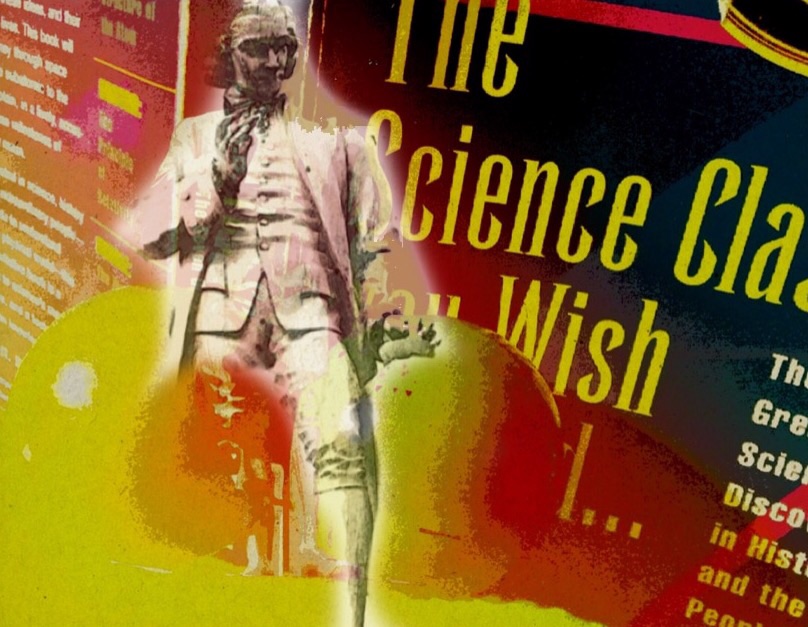
    To the reader: Throughout life, Joseph Priestly (1733-1804) travelled an awkward, and often uncomfortable, path of self-discovery. A precocious child who absorbed knowledge with sponge-like thirst. A dissenting adult who, through deep faith, sought to unify humanity’s purposeful existence. A revered polymath constricted by dogma and intolerance; a disgruntled citizen. In sum, a brave soul who introduced the world to the deity of science and rational belief.

    To the poet: Joseph Priestly was a great writer; a highly respected grammarian, alas it seems not a poet. My exposure to his masterful prosaic-skill was through his writing on the investigation of air; this kid knew how to write-up an experiment. The narrative style is intoxicating; refined and rugged… phlogisticated. The scientific brain exposed for his peers to pursue; and for all else to admire. Surely another canditate for membership of ‘The Science Class You Wish You Had…


    a Priestley sum
    a Priestley sum
    Picture Source 1:
    http://commons.m.wikimedia.org/wiki/File:Chamberlain_Square_Statue_Priestley.jpg
    Picture Source 2: http://www.amazon.com/Science-Class-You-Wish-Had/dp/0399523138/ref=sr_1_1?ie=UTF8&s=books&qid=1260482695&sr=1-1