Author: sonneteer155

  • Roomination

    Roomination

    Roomination, contemplation of space;
    four walls expanded beyond shape and size.
    Perspective’s perspective so out of place;
    distance confounds me and distorts my eyes.
    Lost measures and linear illusions;
    with points that vanish, leaving empty seats
    as evidence; compressed conclusions;
    unresolved memories, the pattern repeats.
    She leaves with her red knitting in a bag,
    the conveyor-belt of toast keeps burning;
    Benedictine eggs and the daily rag;
    room for thought; the matter’s quite concerning.
    . Wait-staff, the living furniture at large,
    . the Maitre de, the memory, in charge.

    © Tim Grace, 22 December 2013


    To the reader: Internal spaces are staged environments. Suggestive social scripts. Spatial storyboards that prescribe behavioural narratives. Static decor wrapped in layers of ambience. Light becomes warmth. Sound becomes tone. Smell becomes taste. A cast of unscripted characters becomes style. And so with warmth, tone, taste and style all playing their parts our senses come alive to the stories within.

    To the poet: Mostly, a cast of unscripted characters will play their parts so well they remain invisible; leaving me to mine. Occasionally, from within the decor there’ll rise a character of interest. In this sonnet, it was simply a young woman knitting a red-scarf. She did nothing more than that… but that was unexpected.

    Roomination
    Roomination
  • Another Man Died

    Another Man Died

    Another man died … yesterday at peace.
    Not the nameless soldier who died unknown.
    Far from that, far from that in his release.
    Time now that this rock becomes a corner stone;
    an anchored turning-point that conquers doubt.
    Time now that this voice, with its mellow twist,
    is so preserved as a whispering shout
    that resonates upon a rising fist:
    What one man can endure … so can it be.
    What one man can forgive … so too can we.
    What one man encouraged … so can it be.
    What one man imagined … so too can we.
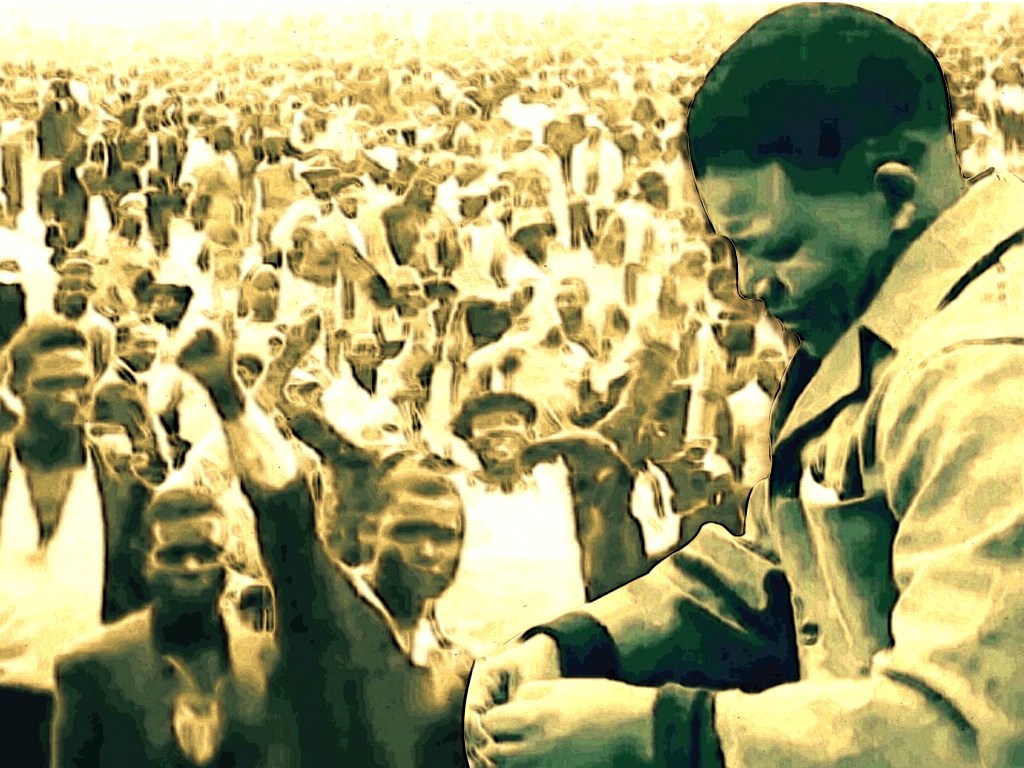
    . Now the corner stone … the rock of ages,
    . Nelson Mandela … strong and courageous.

    © Tim Grace, 8 December 2013


    To the reader: Many things to many people; always an activist. Throughout Nelson Mandela’s long life he was a motivating energy; a source of inspiration to those who wanted to realise a dream. Being the personification of ‘we shall overcome’ meant his impact on social-order was breathtaking. His demanding relationship with illegitimate authorities and corrupt systems provides the key to his strength of character which ever sought the dignity of freedom and justice for all.

    To the poet: One of a few biographical sonnets written around this time. Mostly, a singular contrast to the previous sonnet honouring the unknown soldier as a collective metaphor. The finished product bears the hallmarks of a frustrating editing process that almost worked; not completely convincing in the end. There are elements that I like: “the mellow twist … upon a rising fist” suggests a gentle strength without reference to aggression or untrammelled anger.


    Another Man Died
    Another Man Died
    Picture Source:
    http://youtu.be/g5OJ205MdKI
  • Selfless in Sacrifice

    Selfless in Sacrifice

    We do not know this young Australian’s name.
    We do not know his age or circumstance.
    He lived not for glory, died not for fame.
    Selfless in sacrifice, we owe him thanks.
    He’s just one of many who died at war;
    gave away his everything – for our sake.
    One of many who rests forever more.
    In his pursuit of peace we too partake.
    He is all of them, and he is one of us.
    He’s the collective spirit of our dead.
    He’s the me, the you, the voice, the chorus,
    the sacrifice; the ‘he’ who died instead.
    . He laid down his life, surely not in vain.
    . Let him remind us not of loss but gain.

    © Tim Grace, 7 December 2013


    To the reader: It’s Rememberance Day 1993, and Australia’s Prime Minster (Paul Keating) delivers a beautifully crafted eulogy honouring the Unknown Soldier. The speech ends with: “It is not too much to hope, therefore, that this Unknown Australian Soldier might continue to serve his country – he might enshrine a nation’s love of peace and remind us that in the sacrifice of the men and women whose names are recorded here there is faith enough for all of us…”

    To the poet: Paul Keating and his speech writer (Don Watson) stripped back the ceremonial metaphors to highlight a much stronger message about the power of ordinary people doing extraordinary deeds on behalf of others. Free of pomp, sincerity speaks with integrity … through remembrance peace becomes our future vision. I hope my conversion of the speech does it no injustice.


    Selfless in Sacrifice
    Selfless in Sacrifice
    Picture Sources:
    1 – http://youtu.be/tGh0HdG9ViA
    2 – http://youtu.be/YRkH1X9tBVU
  • Business as usual

    Business as usual

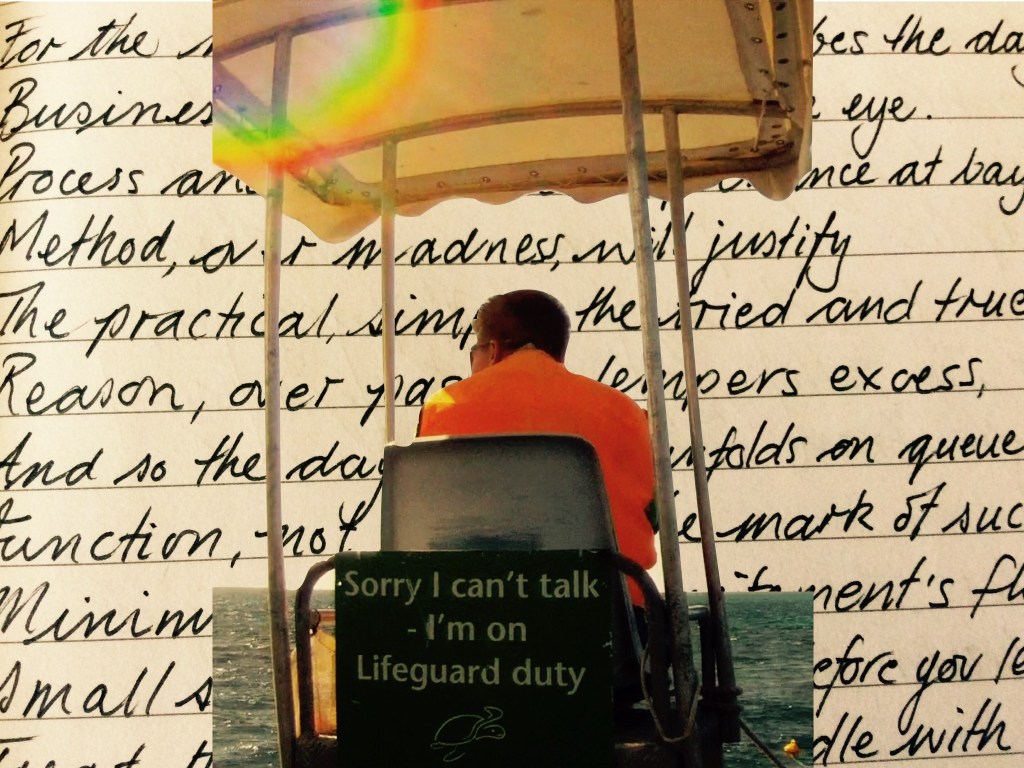
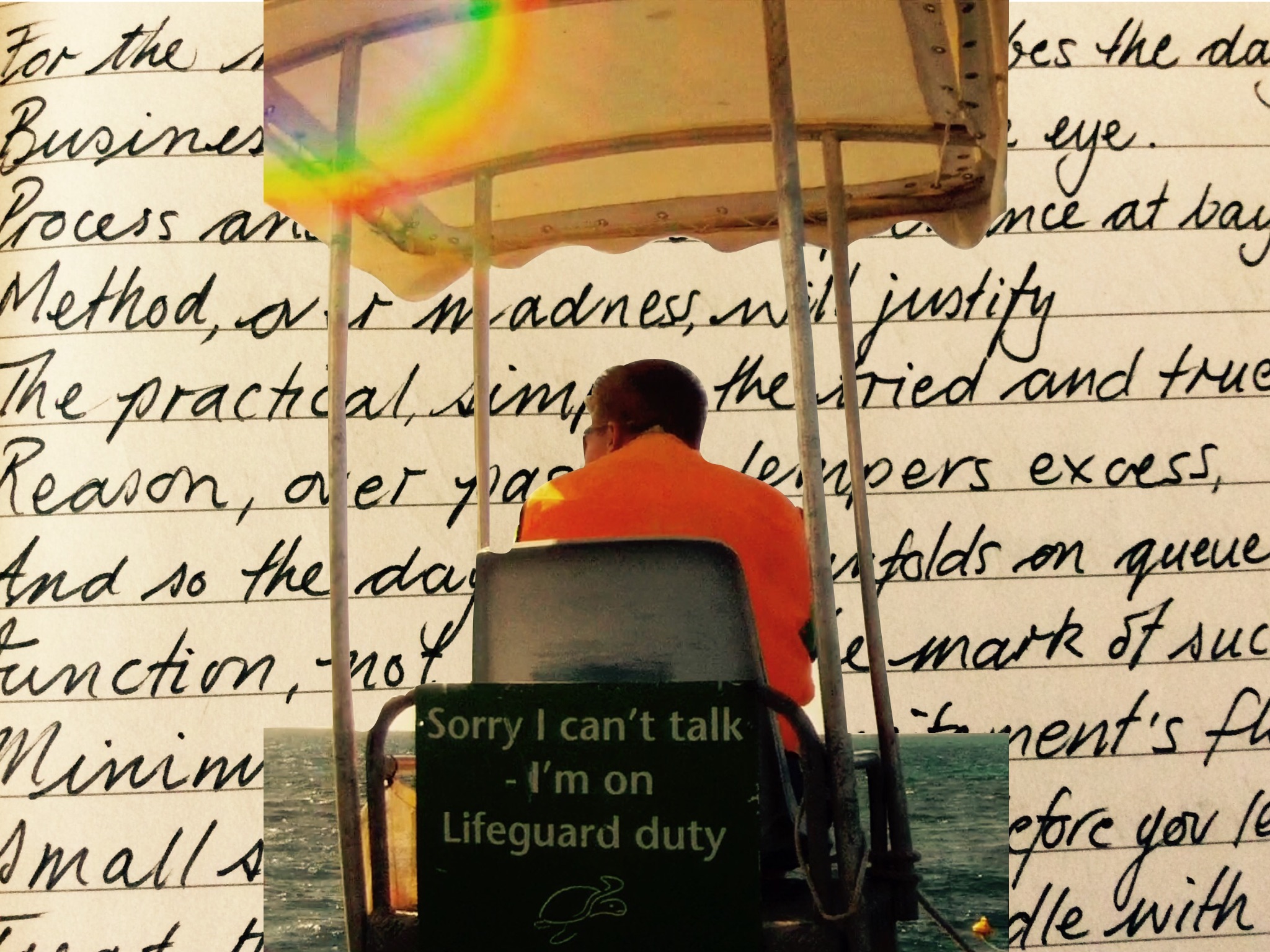
    For the most part, routine describes the day.
    Business as usual distracts the eye.
    Process and procedure keep chance at bay.
    Method over madness will justify:
    the practical, simple, the tried and true,
    reason over passion, temper’s excess;
    and so, the day proceeds, unfolds on cue.
    Function, not fanfare, the mark of success.
    Minimise the risk of excitement’s flare:
    small steps, not large, and look before you leap!
    Treat the day as hostile, handle with care.
    Treat mole-hills as mountains; as far too steep!
    . Today’s containment is alive and well,
    . With fires to dampen and seas to quell.

    © Tim Grace, 20 October 2013


    To the reader: Work has an inflated ego. This self-appointed, self-anointed, arbiter of time’s worth is a small-minded accountant. Given a badge, this officious miser of minutes scrapes from employment every last morsel of production. The yard-stick is a poorly calibrated measure of busy-ness; units of labour; toil and drudgery. The accountant’s grip on work-for-work’s sake strengthens and with throttling effect motivation is all but exhausted.

    To the poet: I’m working on a holiday… aren’t we all? Work’s relationship with rest and play doesn’t have to be adversarial. If work is a drudgery, then the distinction is probably convenient; as in, I’m ‘going to work’ suggesting a dislocation from other creative pursuits. Ideally, work, rest and play are a natural integration of life’s energies; with each contributing to an overall sense of wellbeing.


    Business as usual
    Business as usual
  • Refletions in Silicate

    Refletions in Silicate

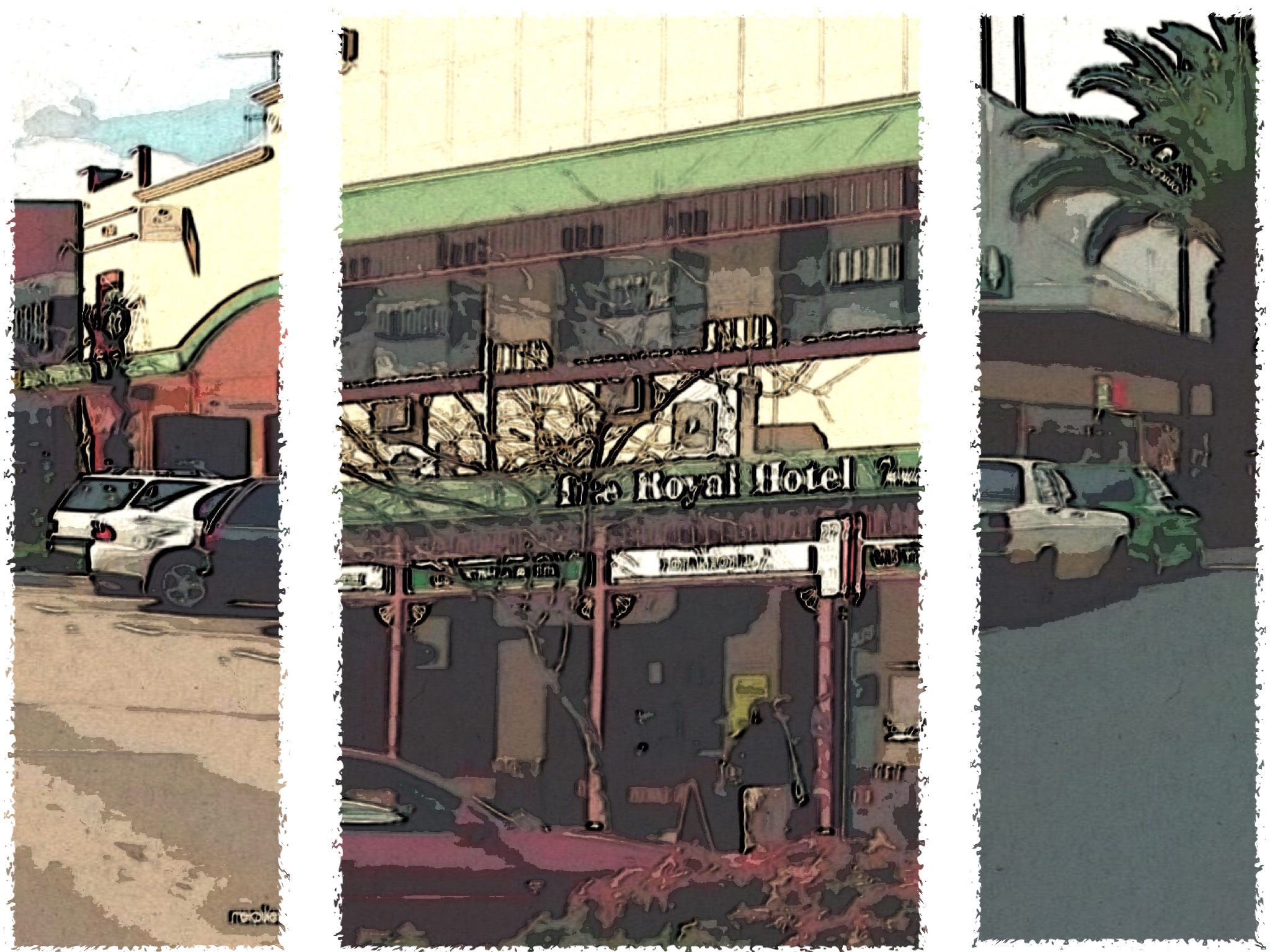
    Both sides of me – glass. Across the street – glass.
    A township’s reflection in silicate.
    I watch a car, I see it three times pass.
    Gleditsia – a sunburst in triplicate.
    Waitress serves coffee, delivers it thrice.
    A school bus on route to three destinations.
    Thread of pedestrians – a three-way splice.
    Parked vans in parallel situations.
    An over-weight figure stretches and shrinks.
    From the pavement’s perspective, three lines switch.
    A chain of clients making awkward links.
    Three panels of distortion – a triptych.
    . The arcade – a see-through kaleidoscope.
    . A visual illusion of words in trope.

    © Tim Grace, 15 October 2013


    To the reader: Taree is a small town on the central coast of eastern Australia. Over three mornings, I found myself in a coffee-spot, positioned in a neat and tidy arcade, overlooking a sleepy main-street. With glass all about me, I peered out from within my squared-off telescope and captured a kaleidoscope of reflections; as the town began its business: in country towns the streets are wide, with rows of trees on either side.

    To the poet: As a stranger in town, you are invisible on the first and second day. By day-three, however, your regular habits have been revealed and noted by the observant local. The guy behind the counter knows your coffee-preference, the waitress works around your table-setting of books and pens. There’s a polite expectation, not quite an obligation, that you explain your purpose. Towns, just like people, are a little suspicious of strangers with pad and paper.


    Reflections in Silicate Reflections in Silicate
    Picture Source:
    http://youtu.be/uQB68AaFLtk
  • Scenery at large

    Scenery at large

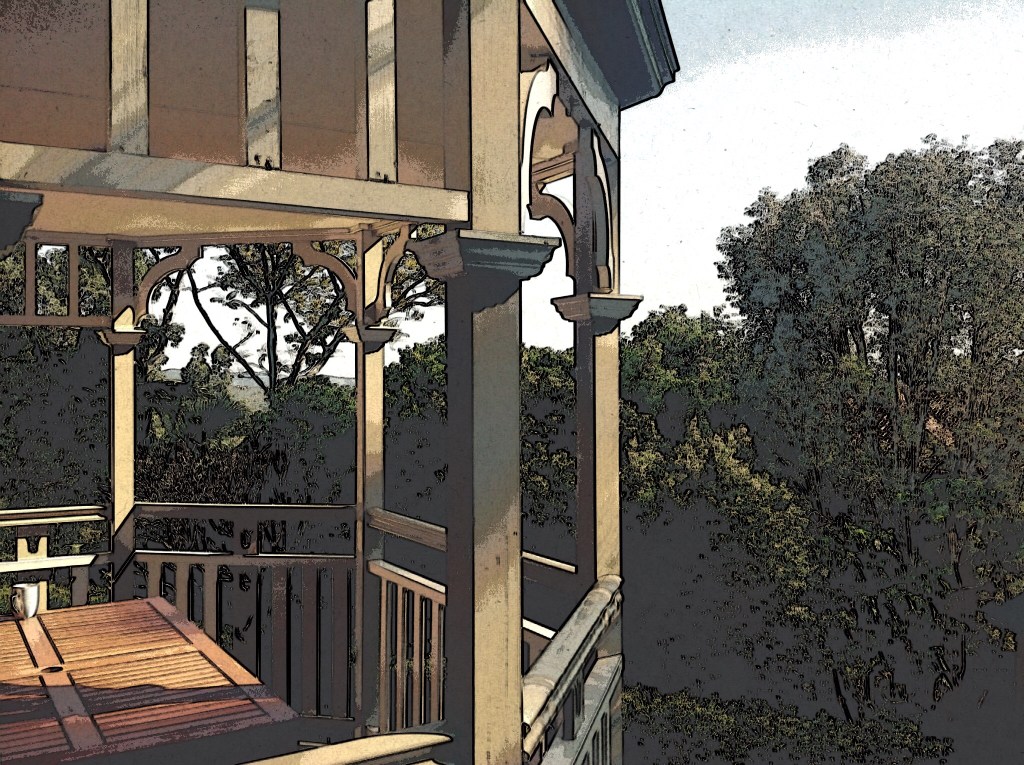
    The scenery at large is much the same.
    Division of the canvas is at scale.
    My chair’s vista, its aspect, holds its frame.
    Too much of the same; how soon the fresh goes stale.
    And so, in search of interest, I observe
    the nuance, the difference, at closer range.
    The ant upon the banister, the curve
    of filagree, the butterfly’s exchange,
    the magpie’s meanderings, the sun’s glint
    brightening my pen, sharpening its edge.
    Dislocate from distance a fine-grained hint
    of interest; extract one leaf from its hedge.
    . Beneath a broad brush there sits a fine stroke.
    . Fire finds new flame from an ambers poke.

    © Tim Grace, 9 October 2013


    To the reader: Big picture spaces have big dimensions, sized to fit larger than life characters committing acts of great courage or crimes of deep passion. Scaled-down, the miniature world has its equivalent perspectives. With the lens in macro we can watch nature’s smallest surveyors staking-out territories; acting-out tragedies… eking-out existences. All creatures great and small have a frame of reference.

    To the poet: The poet’s lens is endlessly variable. From a static vantage point, characters move in and out of fields of interest and intrigue. A single character can occupy layers of landscape; moving in and out of focus. Poets select their foreground, and from within that loose-boundary construct a depth of field. The narrative’s success relies on how convincingly a curiosity emerges and then interacts with the imagery… context is everything.


    Scenery at large Scenery at large